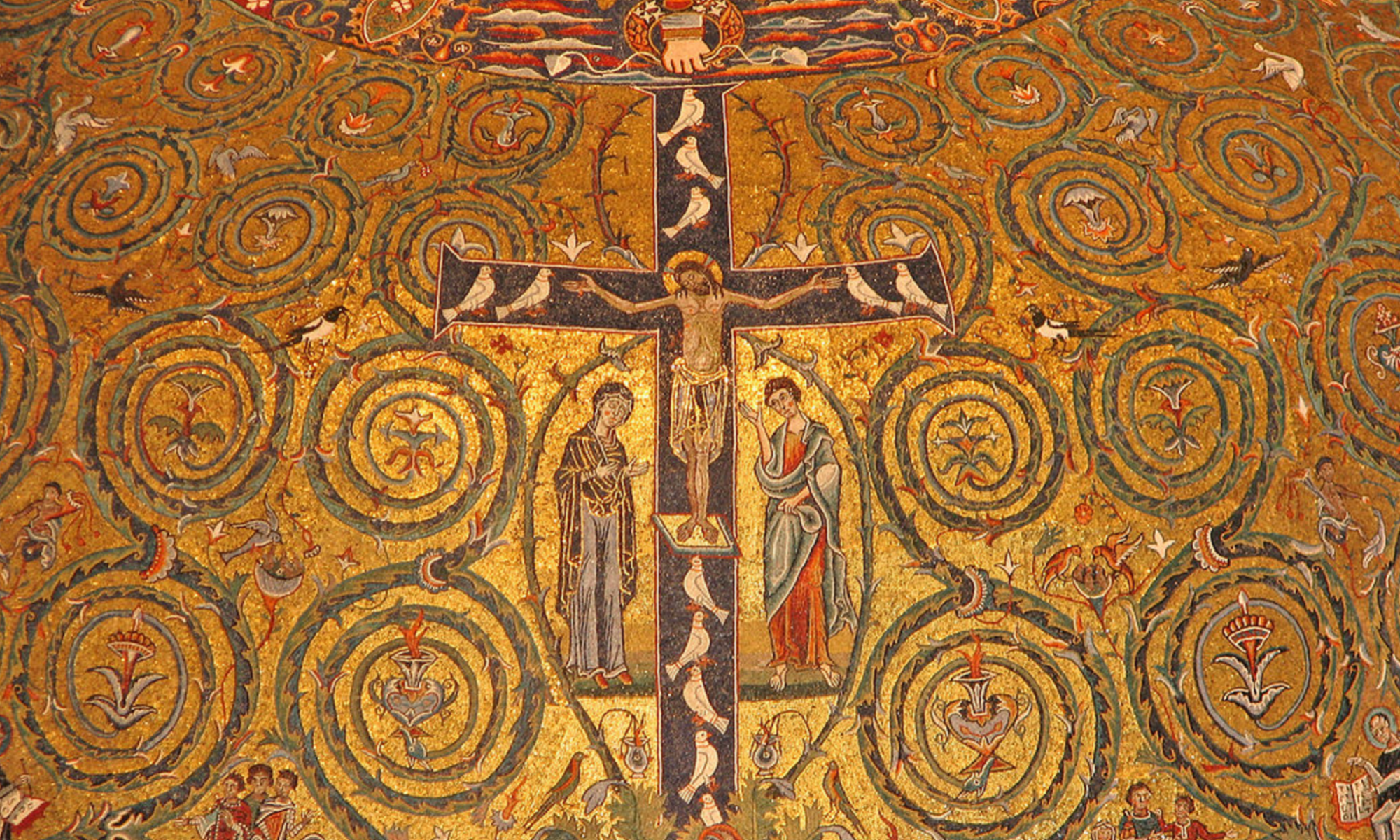
The Lost Sheep

I love Luke 15. I cannot think of another chapter of the Bible that so encapsulates the Good News of God’s eternal kindness, his unchanging mercy, his covenantal love.

Jesus is questioned when he seems to prefer spending time with sinners rather than with the rule followers. In answer, he offers three different parables, each of which paints a picture of our shared and fallen human condition and God’s response: the lost sheep, the lost coin, and the lost sons.  We tend to call the last one “the prodigal son,” but it is really a story about a merciful father and his deep desire for relationship with both of his sinful sons – the younger one who goes far away and squanders everything and the other one who “loyally” stays home, but with such a self-righteous and hardened heart.

I have already written about the lost coin. Today I would like to consider the story of the lost sheep. Several details invite deeper curiosity.

First of all, there is the shocking description of leaving ninety-nine sheep behind for the sake of finding one who is lost. It makes sense at first. Every Wisconsin farmer I’ve ever known shows amazing concern if one of their livestock are lost or in danger – both from a perspective of caring for God’s creatures as well as the serious financial consequences even with the loss of one animal. But how seriously and for how long? Doesn’t there come a point at which it no longer makes sense to leave the ninety-nine behind?

I found a much deeper answer to that question when I was reading Jean Daniélou’s hidden gem The Angels and Their Mission: According to the Fathers of the Church. He traces the thought of one early Church Father after another, and shows great consistency on the theme of “the ninety-nine” representing the heavenly angels. The eternal Son of God leaves heaven and comes down to earth to seek out and save these strange spiritual beings, the humans, who (so unlike the angels) are also bodily beings who have the capacity to change their minds and repent and be saved.

That is a massive paradigm shift for many of us, who tend to hear about the ninety-nine versus the one and proceeed to imagine ourselves on one side or the other. Rather, Jesus is telling the Pharisees and scribes that they, the tax collectors, and the rest of the sons of Adam and daughters of Eve are all on the side of the lost sheep. He makes the same point ten chapters earlier when he proclaims, “I have not come to call the righteous to conversion, but sinners.” If we are not ready to identify ourselves as sinners in need of mercy, we will not be able to receive salvation.

Another question we might be curious about is why the sheep got lost in the first place? The normal instinct of a sheep is to stick with the other sheep and stick with the shepherd. Pulling away from the herd feels scary and threatening and goes against normal survival instincts – unless there is an even scarier threat that somehow causes the sheep to seek its own security, only to find itself very far away from the shepherd and the flock, far away from any real salvation.

The biblical stories are clear – we as human beings are under attack by a cunning and fierce enemy who wills maliciously against us and plots for our ruin. John 10 describes how the enemy lies, seduces, steals, and destroys. He loves to torment human nature – especially by getting us to agree with some of his lies in a way that ruptures relationships. The more he can isolate us from God, from each other, and from our truest and deepest self, the freer reign he has to torment us.

This is not to say “the devil made me do it” – nor is that how God sees it. When he seeks out Adam in the garden, he helps Adam to get over his denial and blame-shifting and to confess the truth of what he has done. Together with Adam, you and I can say truthfully that evil chose us and that, at some point, we started choosing it back. Without dismissing culpability, we can have the deepest compassion both on ourselves and on other sinners, knowing that it all started with a malicious attack of a very evil spirit. What a contrast from the self-righteous shaming of the scribes and Pharisees, who were eager to look down on “sinners.”  And let’s face it, during these tense times, most of us don’t have to try very hard to find ourselves judging or shaming or belittling “those people” who think differently than we do or who live differently than we do. Nor is that a “conservative” or “liberal” trend; it’s a human trend that runs through all ideologies.

Another point of curiosity and wonderment is the shepherd’s quest. I was moved to tears the other day reading the description of Asterius of Amasea as I prayed the Office of Readings: “When one of them was separated from the flock and lost its way, that shepherd did not remain with the sheep who kept together at pasture. No, he went off to look for the stray. He crossed many valleys and thickets, he climbed great and towering mountains, he spent much time and labor in wandering through solitary places until at last he found his sheep.” In those moments in which I deeply identify with the lost sheep, passages like this help me feel truly blessed and chosen by God. I matter to him, not because of anything I have done, but because he desires me and wills my salvation.

Then there is the return journey home. In many ways, that is where the truly arduous work begins. The rescue itself is swift. Carrying a sheep back through all that rugged terrain is a different story – especially when the scared and shocked sheep begins doing what scared and shocked sheep are apt to do. I speak of bodily functions. Those of you who are farmers and have carried a lost or wounded animal know what I am talking about! Speaking for myself as a lost sheep that has been rescued and is being brought back to the house of the Father, I must admit that my restless spirit does not make the journey a smooth one. I am not unlike those Israelites who took forty years and much wandering to travel that 500 miles back to the promised land. If it had been a literal and linear journey, that would have meant advancing a whopping 180 feet per day (or 210 feet per day assuming they rested each Sabbath from such a grueling pace). It turns out that, like those Israelites, our journey back to the Father’s house is anything but linear. But it sure is an amazing and wonderful adventure, and it will make for a great story when we get there.

There is one final point of curiosity, namely, the amazing joy with which we are rescued and received back into the Father’s house. In all three stories, Luke 15 explodes with this theme of festive rejoicing. What God wants more than anything else is to embrace us warmly, delight in us deeply, and throw a party for us. There is so much joy in heaven – both in our rescue and in our return.

Nor is it a matter of gutting it out for decades until we finally get out of this misery. Even now, in this life, he desires us to have a taste of that heavenly partying, rest, and delight. He builds Sabbath rest into his covenant with us. Observing the Lord’s Day can become an occasion for deep delight in knowing that we are already at home in our Father’s house.

God has zero interest in judging or condemning. His deep ache is to celebrate in festive delight with his each of his beloved children. To be sure, he always honors our freedom and will never force our rescue, but he certainly will not rest in seeking us out, and in bringing us into his rest, where we will find joy beyond all imagining.

Prayer as Desire

Lent is a sacred time in which many of us resolve to be deepened in prayer. Joining Jesus in the wilderness, we are invited to allow our heart to be captivated by God the Father, growing in our identity as beloved children of God, and claiming as our own Jesus’ victory over the evil one.

The prophet Hosea describes God’s invitation beautifully: “Therefore I am now going to allure Israel; I will lead her into the wilderness and speak tenderly to her” (Hosea 2:14).

God the Father awakens desire in our hearts. Deep and authentic prayer happens to the extent that we allow ourselves to experience and grow in that desire.

Have you ever considered prayer as an experience of desire?

I would say it took me a long journey with many detours before I really began appreciating the invitation to experience prayer as desire – and this was not for lack of pursuit on God’s part! If I take the time to reflect on my life, I can recall with gratitude many moments in which God sought to woo my heart in prayer – in childhood, in adolescence, and throughout my adult years. Sometimes the experiences were profound, intense, or astounding; other times simple or subtle or sweet. There were often obstacles impeding my response.

It turns out that deeply allowing the experience of desire is not so easy as it might sound! Feeling an ache that only God can satisfy can actually be painful – not unlike the experience of intense hunger or thirst. I used to laugh at the line in Matthew’s Gospel about Jesus fasting and being tempted in the desert: “And after fasting forty days and forty nights, he was hungry.” I always used to think to myself as I read those words, “Well, duh!” But the spiritual combat of the desert – whether in Jesus or in me – is not mainly about physical hunger or bread – it is about the deep desire of the human heart that can be satisfied by God alone. We are created with an insatiable longing for him – one so intense that we rarely let ourselves experience it in full depth.

Augustine of Hippo perhaps put it the best when he prayed, “You have made us for yourself, O God, and our heart is restless until it rests in you.” We spend much of our lives, as he did, plunging ourselves in unlovely ways into the lovely things God has created – good things which would not even exist had God not created them. But they hold us back if they diminish our thirst for God.

Jesus allowed himself to go into the depths of human hunger and thirst – both physically and spiritually. He invites us to share in his experience: “Blessed are those who hunger and thirst for righteousness; for they will be satisfied.”

Have you ever felt a thirst for God, and allowed yourself to abide in that longing? Or to seek and receive a taste of him, only to long for him even more? This is the invitation prayer offers us.

Even now, at a season in my life in which I understand the invitation at a much deeper level, I still notice myself avoiding it. Sometimes I numb out or keep myself distracted with lesser pleasures and lesser desires. Other times I stay plunged into busyness or activity; if I don’t let myself slow down, I won’t feel the ache. Still other times I try to make things happen my own way – as though “getting it right” will somehow bend the will of the living God.

Thankfully God has substantially eased my frantic urge to “get it right” – whether with daily prayer or on retreats. I can think of a few retreats in my young adult years in which I felt much anxiety over whether I was spending the time rightly – as though God is stingy or particular about awakening love or showering his blessings! Thankfully he often surprised me and – at least some of the time – I let myself be surprised.

One of the benefits of being Catholic is also one of our greatest pitfalls – we have thousands of prayers and devotions we can turn to. Often, instead of slowing down and just being with God, we can easily pile on more prayers. We can begin to think of holiness as a matter of being strong enough, disciplined enough, or doing all the right things. In this posture, prayer becomes something we “do,” rather than time spent receiving, and the more we receive, allowing the desire of our heart to be expanded even more.

Experiencing prayer as desire includes an invitation to engage with all our human faculties – our thoughts, our imagination, our emotions, our memories, and even the very sensations in our bodies. Again, Augustine captures what the experience is like, describing how all five of his human senses were transformed by his desire for and encounter with the living God:

You called and shouted and shattered my deafness. You were radiant and resplendent, you put to flight my blindness. You were fragrant, and I drew in my breath and now pant after you. I tasted you, and I ache with hunger and thirst for you. You touched me, and I burn with desire to attain the peace which is yours.

There are moments in which we have no doubt we have tasted and seen the goodness of the Lord. Yet we resist! I know that I sometimes do. Sometimes it feels safer to put surrogates in God’s place, predictable comforts that don’t involve waiting or trust or surrender.

I find it helpful at times to pray slowly the opening words of Psalm 63, words deeply familiar to anyone who prays the Liturgy of the Hours. I like to emphasize the words “you” and “your” in each line to remember Him whom I truly desire:

O God, you are my God, for you I long;
for you my soul is thirsting.
My body pines for you
like a dry, weary land without water.
So I gaze on you in the sanctuary
to see your strength and your glory.

I am grateful for the experience of God awakening desire in my heart, even though it can sometimes be intense. It is good to long for the living God. Nor is it necessarily a bad thing that it took me a long time to experience a thawing of the desire he had placed in my heart. Scripture suggests that God waits until we are ready: “I adjure you, Daughters of Jerusalem, do not awaken or stir up love until it is ready!” (Song of Songs 8:4).

Hopefully, this Lent will be a season in which you and I can join with the Psalmist in praying, “My heart is ready, O God, my heart is ready!” (Psalm 57:7).

God Will Be Enough

“The Lord is my shepherd; I shall not want.”

These opening words of Psalm 23 are familiar to most. But each of us can ask ourselves honestly: Do I really believe that?

Speaking for myself, the truthful answer is both “yes” and “no.” It is one thing to know at an intellectual level that God is all-good, all-powerful, and all-loving; or to state that I believe that he will provide for all my needs. And truly, I believe these things! But I also know the bind I sometimes feel. There can be that clutch of dread or panic about impending conflict, the crushing weight of responsibility (even if self-inflicted), or the suffocating feeling that those I thought I could trust are now pulling back and leaving me unprotected. In those moments, there are parts of me that urge me to hide and isolate rather than surrender unconditionally into God’s hands. It can feel so much safer to take matters into my own hands and to feel some measure of control rather than surrendering to God – what if his love won’t be enough??

In my own case, this inner resistance I sometimes experience isn’t so much in the form of words or thoughts as bodily sensations or deeply felt feelings. One way or another, I am quite familiar with the inner cry that screams out: It won’t be enough!!

I know I am not the only one.

There is a reason why Psalm 23 is so appealing. It speaks soothing and reassuring truths to so many of us who need to hear them again and again as we internalize them. We all need to know that God is abundantly good to us. We need to know that our hunger and thirst will find deep satisfaction in him. We need to know that we will be mightily protected by his rod and always guided by his staff – never abandoned in a place of powerlessness or stuck alone in a valley of death. We need to taste and see his goodness – even in this life.

Psalm 145 offers similar strong reassurance that the Lord’s love and care will always be enough for us, and that our deepest desires and needs will be met by him:

The Lord supports all who are falling
and raises up all who are bowed down.
The eyes of all look hopefully to you;
You give them their food in due season.
You open wide your hand
and satisfy the desire of every living thing.

If you are anything like me, you may find that you strongly believe the truth of these words, and desire to live by them – AND experience inner resistance. So… What do we do when part of us screams out, “It won’t be enough!!”?

I can rattle off the things so many of us tend to do in those moments – pull out our phones, scroll through social media, eat comfort food, binge on sugar or caffeine, fantasize about ways of getting away from it all, bury ourselves in busy work, fixate on the faults of those around us, and so many more. These days, there are no shortage of surrogates we can turn to in an attempt to replace real relationships. Then we reach a point of disillusionment and realize that these things we pursued to make sure it would be enough not only were not enough, but actually depleted us. We feel frustrated with ourselves and tend to trust God even less and to want to hide ourselves even more. A vicious cycle.

Alternatively, we can open ourselves to the kindness of God and other trusted companions, and become genuinely curious about the inner conflict. Rather than fleeing the images or feelings or bodily sensations that can be so unpleasant, we can follow where they lead us. In many cases, the reason why I am having trouble trusting and surrendering to God now is because my body is remembering what I felt like way back when. If I have past experiences in which I felt deeply deprived, neglected, abandoned, unprotected, or powerless, then it makes a great deal of sense that my body would warn me in the present moment that the same danger is immanent. The situation now is radically different – but my implicit memory doesn’t know any better; it’s doing it’s just doing its job by warning me.

The ultimate answer is to be found in an experience of genuine relationships, connection and communion, abiding in love and truth, staying present to others and God – and even to those parts of myself that try to tell me that it won’t be enough.

Ironically, I think many Christians have learned how to pray in a way that keeps God at a distance – especially from the ways in which we most need his loving presence. There have been seasons in my life in which I have looked at prayer much more as a “should” or a matter of being disciplined enough or getting it right. Rather than a close connection with God, many of us either avoid the vulnerability of prayer (and shame ourselves for being “lazy”), or we stay “busy” in prayer in a way that allows us to feel safe and in control, but hinders receptivity.

God invites us to come to him as we are and receive his blessings. I have written before about the prayer of lament, in which we open up our grieving hearts to God and seek connection with him in our pain and brokenness. Whether grief, anger, lustful fantasies, overeating, bitter resentments, panic, anxiety, or deep feelings of powerlessness – what would it look like to experience these things with God? If my body is a temple of the Holy Spirit, why not tell the Holy Spirit he is welcome in my body (including where I happen to be feeling dread or shame or grief or loneliness)? Why not consecrate it all to God – giving him all the pieces? If we do not, how can we say we are loving him with our whole heart?

Similarly, what would it look like to cultivate relationships with trustworthy people in which I allow them to see and know the real me – including all the parts I’d rather hide away? Many of us were wearing masks long before this pandemic began! To be fair, we may have needed to do that for a long time. The pain of deprivation, powerlessness, or abandonment is simply too much to bear until we are in a position in life in which deep prayer and meaningful relationships are genuinely possible. When we allow ourselves to experience these relationships consistently in our lives and in our prayer, real change begins to happen.

Do you, like me, sometimes fear that God’s love or the love of others won’t be enough? Are you willing to let go of your surrogates and experience real relationships? I cannot encourage you enough to step out in faith, to renounce the lie that his love won’t be enough, and to permit yourself opportunities to receive.

Talents vs. Gifts

What are your deepest gifts? The answer may not be so obvious as you think. In our culture that values doing over being, achievements over relationships, and strength over vulnerability, our truest and deepest gifts can often be buried beneath our talents.

My whole life I have been recognized as a talented individual, and certainly have no shortage of accomplishments. So many of those moments feel hollow to me now – especially when I see truthfully how I was performing to please others and not always in touch with the deepest movements of my own heart. I hesitate to say it, but I am grateful for moments of futility and failure, powerlessness and pain. Agonizing though they can be, they provide an opportunity for the hard shell of my perfectionism to be broken open, so that I can discover God’s treasures buried within, where I tend to feel so much shame – but where in fact he has made me in his own image and likeness.

Most of my life, I tended to use “gifts” and “talents” synonymously. It was in reading the deeply wounded and deeply wise spiritual author Henri Nouwen a few years ago that I discovered a distinction: “More important than our talents are our gifts. We may have only a few talents, but we have many gifts. Our gifts are the many ways in which we express our humanity. They are part of who we are: friendship, kindness, patience, joy, peace, forgiveness, gentleness, love, hope, trust, and many others. These are the true gifts we have to offer to each other.”

As some of you know, this Dutch priest, brilliant yet troubled man that he was, found his heart repeatedly transformed by his experience in Ontario with the L’Arche community, together with his friend Jean Vanier. L’Arche provides a home and a dignified existence for those considered by society to be mentally disabled. Nouwen was amazed to discover that they were more in touch with their humanity than he was. He sung the praises of their beautiful giftedness: “But since my coming to live in a community with mentally handicapped people, I have rediscovered this simple truth. Few, if any, of those people have talents they can boast of. Few are able to make contributions to our society that allow them to earn money, compete on the open market, or win awards. But how splendid are their gifts!”

We certainly live in a culture that values talents, achievements, and accomplishments. Consider how absolutely devastating it is for so many people these days as they go through the aging process or watch a loved one do so. Obviously, these changes of season in our life are always the occasion for healthy grieving, and are never easy. But these days some people simply cannot bear it. They get stuck and struggle to see any personal dignity amidst the experience of not being able to do the things they used to do, or exercise the talents they once had, or do the fun things they once did. Seeing giftedness amidst vulnerability and weakness is especially hard for modern-day westerners. What John Paul II described as “The Culture of Death” has seduced us with a distorted understanding of the human person that exalts talents, doing, and achieving over and above giftedness, being, and relating.

Some of us who have cared for loved ones with dementia have discovered a deeper treasure. Amidst devastating sadness, we witness the long and relentless and inevitable decline of talents. The person becomes less and less capable of meaningful rational or verbal communication. But when we learn to look past the outward weaknesses and losses, we discover that emotional and spiritual connection are still very much possible – sometimes in surprising and deep ways. We are certainly invited to acknowledge our own fears and insecurities, our perceived need for control, as we experience deep feelings of powerlessness. It is often only then that we are really ready to receive and discover God’s gifts deep within ourselves, if we are willing to stay present and engage.

I am a man of many talents, but it was only in various moments of powerlessness that God invited me to rediscover who I really am. I’ve always loved the words of the poet T.S. Eliot, but these days they resonate with me more than ever:

We shall not cease from exploration
And the end of all our exploring
Will be to arrive where we started
And know the place for the first time.

In my own journey, I am only beginning to rediscover my true gifts. Among other things, I am beginning to recognize that I am a sensitive, intuitive, empathic person, capable of connecting deeply and showing transformative kindness. I look back and see that these gifts have always been there, sometimes more in the forefront, and other times safely locked away and deeply buried beneath my multi-layered defenses.

No doubt, our areas of deepest gifting from God are also those that the powers of darkness attack early and often and (at times) with great malice and ferocity. The evil one sees God’s glory shining in us, and attempts to mar it. We often falter in allowing these deep treasures to emerge to the surface because we are held captive by the subtle lies that the devil has whispered to us from our earliest years: Others will always let you down. No one will really understand you. It’s safer to hide yourself. See what happens when you trust someone! You better stay strong and successful – if you fail, no one will love you…

I could go on and on. It is for each of us to discover and renounce these lies, allowing Jesus to rescue us and unleash our truest and deepest gifts.

We often feel safer and more comfortable donning our “likeable” talents like a mask, hiding our true self. In my experience, this spiritual masking is far more of a barrier than the physical masks most of us wear during this time of pandemic. With those physical masks, I have found (to my pleasant surprise) that the eyes are still the window to the soul, and deep human connection is still quite possible! But only if you and I are also choosing to open up and be present. It takes great courage to allow access to the vulnerable places of our heart, in which our true gifts are found. When we are ready to do so, God’s wonderful treasures await us.

Radiating Christ

“One can only give God through radiating him.”

Apparently this was a mantra often repeated by the French mystic Marthe Robin. It is so true! No amount of doing or striving or “getting life right” on my part will ever be able to connect others with Jesus. But if they see him shining through me, it is an entirely different experience!

Some of you may be familiar with a beautiful prayer that is recited every day after Mass by the Missionaries of Charity – the congregation of religious sisters founded by Mother Teresa of Kolkata, now serving the poorest of the poor in 139 countries of the world. The prayer is often attributed to John Henry Newman:

Dear Jesus, help me to spread Your fragrance wherever I go.
Flood my soul with Your spirit and life.
Penetrate and possess my whole being so utterly,
that my life may only be a radiance of Yours.
Shine through me, and be so in me
that every soul I come in contact with may feel Your presence in my soul.
Let them look up and see no longer me, but only Jesus!
Stay with me and then I shall begin to shine as You shine,
so to shine as to be a light to others.
The light, O Jesus, will be all from You; none of it will be mine.
It will be you, shining on others through me.
Let me thus praise You the way You love best, by shining on those around me.
Let me preach You without preaching,
not by words but by my example,
by the catching force of the sympathetic influence of what I do,
the evident fullness of the love my heart bears to You.
Amen.

I had many Masses with those sisters early on Wednesday mornings during my years in Rome, as I worked on my doctorate. I remember this prayer speaking deeply to my heart, awakening a yearning deep within me to radiate Christ – even if I was blind at the time to some of the obstacles that I was putting in the way.

What does it mean to “radiate” Christ?

Radiating requires a relationship with Christ. It is a way of being rather than a matter of doing. That is so hard for us busy and wounded westerners, who tend to be so focused on doing or achieving or insecurely putting forward a positive image of ourselves.

If we can learn anything from the apostle Paul, we can learn that to be a Christian is to abide “in Christ.” During my doctoral studies, I learned that Paul’s letters use that phrase “in Christ,” or something very similar, 165 times! If I allow myself to be crucified with Christ, to die and come to new life in him, then it is no longer I who live, but Christ lives in me. Paul learned on the road to Damascus that Christ is not just a historical man, but one mystical person, a unity of head and members. Jesus asked him, “Saul, Saul, why are you persecuting me?” Not “Why are you persecuting my followers?” but me. Christ and his body are one. Through faith and baptism all our own efforts are put to death and we enter a new, highly vulnerable, highly childlike existence as a co-member of the Body of Christ, together with all the other members of all times and places who likewise humbly depend upon him for everything.

Jesus invites us to abide in him like branches on a vine. It is such an appealing image of what it means to exist “in Christ.” There is a profound unity of the entire organism, and a sense in which we all thrive or suffer together, grow together, and bear fruit together. But there is no question about the order of causality. It is the vine that gives life to the branches, and not the other way around! Our heavenly Father, the true vinedresser, never ceases to graft new shoots into his Son.

Radiating means receiving. Think of a stained glass window. There are so many pieces of broken glass. An isolated pane is nothing to marvel at – particularly if all is darkness! But when assembled by a master artist, and when flooded with the gift of light, what beauty and radiance!

And so it is with Christ and Christians. We are invited to be vulnerable and receptive. That can feel so scary sometimes! It feels so much easier to carve out a familiar way of doing things, in which I can maintain the illusion of being in control. Even though I pray seriously every day, I have often prayed in a way that lacks vulnerability and receptivity, approaching prayer as a “should” rather than opening up my deep desire for God and letting myself ache for him and receive from him.

Even when we let ourselves beg God like a little child, what is our begging like? Do we not sometimes beg him to help us be strong enough so that we no longer need him? It is challenging to abide like little children who depend on him for our daily bread (and keep coming back the next day and the next day). Like those Israelites in the desert, I sure am tempted to store up a bunch of that manna in a jar so that I don’t have to keep feeling so vulnerable and so dependent upon God. Control feels like safety, even though it leaves me alone and miserable.

Little by little, God is assuring and reassuring me that his love is enough and always will be enough. I can open up the rusty gates of my multi-layered fortress and let the King of Glory enter. It doesn’t matter that I still struggle with my insecurities and sins. He will shine, and there will be no doubt whose glory it is that is shining. To be holy is not to be perfect, but to radiate Christ.

We can close with wise words from the Gregory Nazianzen, an early Church Father:

He wants you to become a living force for all mankind, lights shining in the world. You are to be radiant lights as you stand beside Christ, the great light, bathed in the glory of him who is the light of heaven.

Healing and the Holy Spirit

Have you ever heard testimonies from fellow Christians about powerful healing experiences and secretly doubted or judged them? Or have you perhaps felt threatened by or resentful of the joy and freedom they seem to possess? I admit that I have!

For every person who has a powerful healing story there are dozens of others who have been reaching out for years and (it seems) experiencing no answer. Whether we have a physical ailment, anxiety and depression, a repeated sinful habit, an addiction, or relationship struggles, we can find ourselves suffering painfully for many years.

Reaching out and not being attuned to, not being heard, or not being cared for is one of the most painful human experiences. It can feel far safer to close ourselves off, to believe that healing doesn’t really happen, or to claim that it happened “back then” with Jesus but no longer happens today.

It doesn’t help that plenty of us Christians are prone to exaggerate or embellish, to draw attention to ourselves, or to avoid facing our brokenness by hiding behind a healing story. Even when real healing has happened, it can be tempting to tell a glamorous healing story that turns a blind eye to our ongoing struggles and avoids facing the toilsome work still ahead.

Isn’t it fascinating that sometimes God works powerful graces so swiftly and suddenly, and other times he seems to keep us waiting for SO long?

Lurking in the background here is perhaps the greatest theological mystery, namely, the interplay between God’s omnipotence and our human freedom. He is the all-powerful God AND he always honors the freedom he has given us. This means that the Holy Spirit works with amazing swiftness, but always in a way that respects and honors our human dignity, our desires, our receptivity, our readiness, and our freedom to choose.

Ambrose of Milan comments on this swiftness of the Holy Spirit, reflecting on Luke’s Gospel account of the birth of Jesus. The angel Gabriel comes to Mary and declares her to be full of grace. He invites her to say “yes” and become the mother of Jesus. She freely and wholeheartedly surrenders. Immediately God’s eternal Word becomes flesh in her womb, as the Holy Spirit rushes upon her in a new and special way. The result? She sets out in haste to the hill country. In the words of Ambrose, “Filled with God, where would she hasten but to the heights? The Holy Spirit does not proceed by slow, laborious efforts.”

The Holy Spirit acts with utmost swiftness. Whether impregnating the Virgin Mary, forgiving the sins of the Apostles on Easter Sunday, exorcising demons, healing the sick, or raising the dead, the Holy Spirit needs no time.

It is we who often need time. And God honors us in that need!

I know for myself that my “yes” to God’s invitation, my surrender to him, seems to come with strings attached. I have experienced many grace-filled moments in which I have given everything to him. Yet I keep discovering that I have secretly crossed my fingers behind my back. Somehow I have maintained a contingency plan, withholding some small parcel for myself just in case he doesn’t come through for me. It reminds me so much of the scene in Lord of the Rings in which Bilbo Baggins is called upon to surrender the highly corrupting Ring of Power, passing it to his nephew Frodo. Bilbo agrees and then gets up to leave the house – only to be confronted by the wizard Gandalf with the words, “You have still got the ring in your pocket.”

Like Bilbo, I can so often respond, “Well, so I have.”

And God waits – not with disdain or disappointment, but with eternal kindness and patience. He desires me to desire him. As a loving Father, he patiently watches me grow, without jumping in or coercing.

Receptivity in freedom is not a “one and done.” Even for Jesus and Mary, who were so utterly receptive to the Father’s will, so totally open to being led by the Holy Spirit, receiving was an ongoing reality. Mary was already “full of grace” (Luke 1:28) when she said yes to God – receiving ever greater blessings. She pondered God’s mysteries in her heart as she kept growing in her wisdom and understanding (Luke 2:19, 51). Luke twice tells us that Jesus himself grew in wisdom and in grace (Luke 2:40, 52).

To be truly human is to grow our whole life long. Our human existence is dynamic, not static. We are freely invited by God to become who we are. We are created in God’s own image and likeness, and called to receive love freely and give love freely as we grow in communion with God and each other. We are intended to love and be loved with ever greater depth and fullness and fruitfulness.

Desire and receptivity are key concepts here. We all have holy desires, sown in us by God the Father, who is always drawing us to himself (John 6:44) – often in undetected ways, but always in a manner that honors our freedom to say yes or no.

As we well know, our good and holy desires often get twisted and tangled up. Augustine of Hippo beautifully described the experience in his Confessions. In our unloveliness we plunge ourselves into the lovely things God has created – things which cannot even exist without him. We run far from him even though he is never far from us. And ever he pursues us, ever he invites us to open up and receive.

Desire stretches our hearts. The more we receive and truly experience the living God, the more we thirst for him. Thirst for God is quite possibly the most painful human experience of all – and the one that keeps enticing us to stretch out our hearts in receptivity. The more we willingly thirst, the more we can receive him, and the more the Holy Spirit is then unleashed to rush upon us, to flood us, to possess us, and to lead us in haste to give freely and sacrificially to others.

God alone knows all the reasons why healing does or doesn’t happen in any particular case. In some cases, we may never know in this lifetime. Often, however, what feels like a delay to us is actually a deep honoring of our desires, our receptivity, and our freedom. I believe that the single hardest human thing for many of us is to open up and receive. It is so hard to do what the Virgin Mary did in her fiat – to receive love vulnerably, freely, and wholeheartedly, setting down all our well-crafted defenses, permitting God and others to be and to stay intimately close.

Quite often, we find ourselves in a bind. One part of us deeply aches for connectedness and communion. We ache more than anything else for someone to draw near, to see us, to hear us, to be intimately close to us. And then when a good and trustworthy person actually does that, we freak out and sabotage! I am astounded at the lightning speed with which my defenses engage in situations like this.

The great spiritual question is the question Jesus asked at the pool of Bethesda to the man who had been crippled for 38 years: “Do you desire to be well?” Of course we do! All of us desire to be well, to love and to be loved. God created us for these things and planted these desires in us. But many of us are also chained by our pride and self-reliance, our hiding and self-protection. We need Jesus to break those chains by the power of the Holy Spirit. He will eagerly do so, and with even greater swiftness that our defensive reactions – if and when we deeply desire it. Some of us need many years to grow in those desires and reach a point where the strength of our desire is greater than the strength of our defenses. The Holy Spirit will never force himself – but thankfully he only needs a tiny crack to enter. Faith the size of a mustard seed is enough.

Many of us may need a long time and much breaking up of the hard soil before we are receptively willing to permit the Holy Spirit to act upon us and possess us. Likewise, after powerful moments of healing, the real work is only just beginning. Whether the healing received is physical, emotional, or spiritual (with spiritual healing always being the most important and most amazing), we are then invited in freedom to grow and mature and bear fruit. Only Jesus, through the anointing of the Holy Spirit, can liberate us. He breaks our chains, rolls away the stone that is blocking our self-created tomb, calls out forth, unbinds us and pulls off the masks that have obscured our vision. Once these obstacles are removed, his desire is for us to keep growing in our desires, to keep receiving and giving, and to bear fruit. He wants us to be true sharers in his love, his freedom, and his dignity. We are not robots of puppets. We are no longer slaves but are led by the Holy Spirit to live in the glorious freedom of the sons and daughters of God.

Conversations about faith and good works so easily get sidetracked if we don’t look at them in terms of Love. From start to finish, it is all God’s work – starting with the very desires themselves that he sows in us, continuing with the period of preparation (as long as it takes) for receiving the gift, rushing ahead in powerful moments of healing and grace, sprouting forth with new life, proceeding with everyday moments of patient and laborious growth, and culiminating with superabundant fruitfulness. From start to finish, God honors our dignity and freedom, inviting us freely to grow and mature and bear fruit in love, as we become who we are.