Nostalgia

Nostalgia is a fascinating human experience. It can be playful or delightful, as when old friends reunite. Suddenly they are in tears or side-splitting laughter as they recall long-forgotten songs or jokes or shared antics. Their recalling of story after story rekindles old connections, and everyone feels gratitude and joy. Alternatively, nostalgia can evoke a deep and wistful longing for what once was or what might have been. I have written before about the Welsh word Hiraeth. In its darker forms, nostalgia can also evoke rage or blame or contempt toward those who allegedly ruined the good things that used to be – even to the point of scapegoating and violence. If you study the history of any genocide, you will find nostalgia in the mix.

Not all nostalgia is helpful, and not all nostalgia is truthful. As Brené Brown suggests, “Nostalgia is also a dangerous form of comparison. Think about how often we compare our lives to a memory that nostalgia has so completely edited that it never really existed.”

It’s not uncommon for me as a priest to hear a resentful rant about how America used to be the greatest nation on earth, but now…those people…

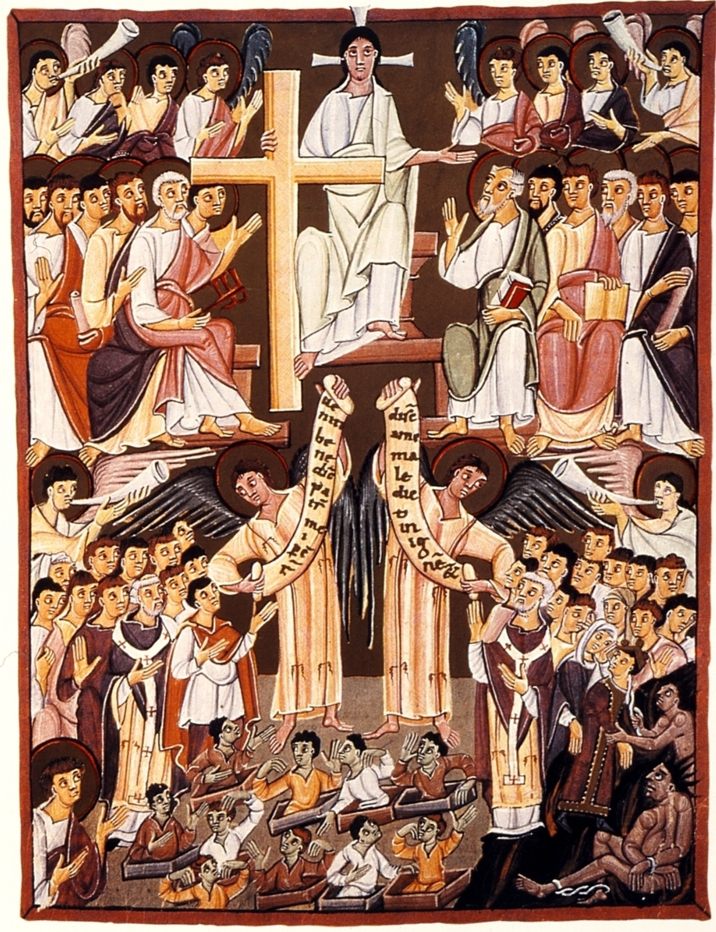
Sometimes, I will kindly and playfully ask, “Do you think that’s the story Jesus will tell us when he comes again? Is he going to assemble all the nations and every human who has ever lived to sit and listen to how much greater America was than all the other nations?” That usually gives some pause to the person. It reminds me of the school kids modifying their story when they realized that my friend (their principal) had been viewing the entire incident on the security camera.

The truth is that our American story is quite a mix of greatness and darkness. It includes some of us living privileged lives at the expense of others. Nostalgia becomes a drug to distract our notice from what it is really like to be downtrodden and oppressed. God never forgets his little ones. Judgment Day will uncover the full truth of how we choose to love and serve the poor (Matthew 25:31-46). G.K. Chesterton wrote a century ago, during an age in which nationalism was also running high. As he explained then, genuine patriotism is not loving your nation as better than all the others. It’s loving your nation because it’s your home.

Whether we realize it or not, we tend to edit our stories. Day and night (including in our dreams), our brains are at work, trying to make sense and meaning of our human experience. If it’s not safe to feel grief or hurt or anger or intense unmet desire, we are prone to tell a more pristine story about how things used to be. We will play up the beautiful and happy memories and hide away the dark or disturbing ones. We will bury our deeper longings and settle for a superficial nostalgia.

I’m nearly finished reading Erik Varden’s The Shattering of Loneliness: On Christian Remembrance. All his writings invite a healthy asceticism that helps reclaim and re-order the intense longing of the human heart. These longings are “very good,” and can only truly be satisfied through God’s plan to have us share in his divine life and become truly like Him. Our deepest nostalgia is for our heavenly homeland, which leaves its traces everywhere in this creation. We are homesick for the Kingdom of God, which is not of this world.

Nostalgia that only looks backwards will ultimately leave us disappointed, disillusioned, empty, and embittered. It will sap our Hope. This world and all the things in it are passing away. Nothing here can ultimately satisfy our intense and unquenchable longing.

Varden reflects on Jesus’ seemingly random reference: “Remember Lot’s wife” (Luke 17:32). Lot’s wife looked back, and turned into a pillar of salt. As Varden explains it, we are prone to sacrifice a good future by turning back to what is left behind. Therefore, Jesus goes on to explain that we will lose our life if we try to save it, and find our life if we are willing to give all.

This fall, I’ve been reminding people of those words of Jesus, as I travel the nineteen counties of my diocese. I’ve been facilitating a few dozen listening sessions as we launch our renewal efforts, inviting a pivot from maintenance to mission. I’ve tried to avoid the equivalent of a Pawnee Town Hall Meeting, successfully in every case but one. In order to allow everyone a voice (especially Jesus!) we’ve included silent time to reflect and write. Of course, that leaves me reading through the written reflections of over 3,000 participants.

In my reading, I am finding no small amount of nostalgia for an “amazing” past that was probably not as flourishing and carefree as the person remembers. Nor is the nostalgia limited to one political or theological ideology. Many people, understandably (but unrealistically) just want things to go back to the way they used to be. Or they just want to hold on to some small scrap. Or they blame “those people” for wrecking everything. Or they are simply resigned to ongoing decline. Can you hear the grieving process here (denial, bargaining, blame, depression)? Neither our culture nor most of our church communities know how to grieve well these days. I am noticing a palpable proportionality: the more intense the nostalgia for a supposedly glamorous past, the less imagination there is for a hopeful future.

Nostalgia that gets stuck in the past enables us to bypass our grief. It becomes toxic and ultimately lethal. It will kill our Hope. It is only when we are willing to enter together the pain of the Cross and the Tomb that we can be surprised with the Hope of the resurrection.

The Mass allows us to experience genuine nostalgia. We remember the saving events of Jesus’ death and resurrection in a way that makes them truly present. But the Mass is also a memory of the future. We gain a foretaste and anticipation of the wedding feast of the Lamb. We become again and again what we one day will be – each of us individually and all of us collectively in a one-flesh union with the Bridegroom.

There is a reason why words like hiraeth or saudade or Sehnsucht have provoked endless reflection from poets and mystics. We were created for eternal communion with the living God. We ache for a homeland that we cannot yet fully receive.  For most humans most of the time, it is easier to bury or avoid or escape that longing.  To desire and not yet possess is perhaps the greatest suffering – known and embraced by all the Saints. The more they desired, the more they joyfully received, and the more they joyfully received, the more they suffered in their desiring.

This, perhaps, is why the Saints were so often unwelcomed and persecuted, not only or even chiefly by this world, but by the very Church they loved and served. The witness of the Saints awakens longing and invites conversion from a merely human nostalgia. In the presence of the Kingdom of God, there is no standing still, no comfortable plateaus to settle on. Any earthly power or privilege will be turned on its head, and exposed – not as evil – but as inadequate for answering our deepest questions or filling our deepest longings. Idols are often the beautiful work of human hands. We don’t like to remove them from the holy place of longing in our heart that belongs to God alone. Waiting with empty hands is scary.

What are your idols? What are the idols of your civic community or of your church community? Where does most of your nostalgic energy go?

As we celebrate another All Saints’ Day, may we feel their invitation to embrace our deepest longings and renew our trust that God is faithful and true to His promises. Come, Lord Jesus!

There is a River

I am from the river.

When I was one, my family moved back to Wisconsin and purchased a little house along the Wisconsin River.

I could see the river from my bedroom window, pulled open on sweaty summer nights, or through the ice that clung to the curtains in January. The river beckoned, beautiful and dangerous: frozen yet fragile in the winter, rising and rushing in the spring, serene in the summer, reflecting bright bursts of color in the fall.

I spent thousands of hours, endlessly exploring in our backyard, between the deck and the dock I had helped my stepdad build. There, near the river, I would catch toads or turtles or grasshoppers. I would dig up worms for fishing, or get grass stains in my pants as I touched and tasted the flowers (the violets were by far the best!). More than once I wistfully watched as a ball plunged into the waters and floated away, eluding the reach of branch or cane pole.

As Heraclitus once suggested, you cannot step into the same river twice. Visiting home elicits a mixture of emotions. It’s the same basic house and yard, but remodeled, refurnished, and rearranged a few times over. The town has the same streets and many of the same buildings, yet feels noticeably different. For many decades, it was a booming paper mill town. Then they witnessed the loss of hundreds of jobs in the early 2000’s, followed by a total shutdown in 2020. What a change from my childhood and teen years, when Consolidated Papers was a Fortune 500 company and invested $400 million to build the state’s largest paper machine.

This fall, I am facilitating a few dozen listening sessions throughout my diocese, inviting our 156 parishes to pivot from maintenance to mission. For many parishes that are struggling, the invitation is felt as an immediate threat. Are we going to close?? What are we going to lose?

The Lord has often surprised me in this process, especially when I feel overwhelmed, fear failure, or put pressure on myself. It happened again a few weeks ago.

My friend showed me a brand new book by Robert Enright, Forgiving as Unity with Christ. I quickly realized – “O, this is going to be one of those books.” It’s going to take me at least six months to meander through the journaling and meditation prompts, which have already tapped deep places in my heart.

So there I was, working on wounds of resentment and unforgiveness (which include my avoidance of feelings of anger). The exercise invited me to remember a time when I received unconditional love from another human, and to enter vividly into that moment. Memories of 1999 cascaded into my imagination. At that time, I received remarkable compassion and kindness from a few friends, especially Peter. It was healing to recall the lovely ways that they attuned to me, drew near to me, held space for my raw pain, and showed empathy.

My gratitude and consolation were interrupted by the memory of how awful it was to lose Peter that November. He was only five months ordained when he unexpectedly and inexplicably died in his sleep.

Out of nowhere I found myself recalling Robert Frost’s poem “Nothing Gold Can Stay.” It opened some of my deepest wells of grief, and I sobbed, not for the first time, and probably not for the last. I was not only feeling that sudden loss of a friend, who indeed glittered like gold. I was connecting with the universal human experience expressed in Frost’s poem. In this post-Eden world, the most amazing and beautiful moments never linger. It is agonizing. We were not meant for endings.

How painful it is to be like the poets or prophets – to have huge imagination and perceive beauty and goodness where many do not. It’s thrilling and delightful. You are eager to share the goodness with others. It’s awful because, often and even inevitably, the delight evaporates. Or it gets crushed, ripped away, or (perhaps worst of all) dismissed or spurned by others, who could have delighted in it. I think here of Jesus weeping over Jerusalem (Matthew 23:37). He imagines and desires so much more goodness for them – but they don’t want it. Or, if they want it, they are unwilling to repent and receive it.

As I continued to pray, I realized the connection between my own intense feelings in the moment and what Jesus is inviting all of us into in the Rebuild My Church Initiative in my diocese. I often feel unsettled and fearful in the face of future unknowns. I keep catching myself trying to manage or control the process, fearing failure. The Lord keeps reminding me that the people of the diocese doesn’t need a project manager; they need my heart. My own experiences are a microcosm of what I’m inviting everyone else into. I have all my familiar survival strategies that feel so much more appealing than trusting and following the voice of the Good Shepherd into more abundant life.

When people first hear about “reimagining the structure of their parishes” or “pivoting from maintenance to mission,” their reaction is often one of fear, suspicion, and self-preservation. I am listening to them in their fears, while inviting consideration that we need not live our lives out of fear.

But the Good Shepherd has been prompting more in my heart. It’s not only the unknowns or the potential losses of the future that are unsettling; it’s what has already changed and changed again, but remains ungrieved. When hurts are unhealed and losses are ungrieved, our human tendency is to fight to hold on to what is already lost, perhaps even finding a scapegoat to blame for the struggles.

Case in point – the loss of Christendom. Fifty years ago, Fulton Sheen prophetically proclaimed, “We are living at the end of Christendom – not the end of Christianity.” Yet so many Christians and churches want to fight culture wars and save Christendom. Rather than weeping over the ruins and rejoicing that new growth is sprouting up, we are fantasizing that we can still stop the collapse – not unlike the Japanese soldiers on Pacific islands who had not yet heard that the war was over.

I’ve been inviting the participants at these listening sessions to reflect upon changes and losses in their families, communities, and churches that have already happened, but are hard to accept. If we don’t mourn those, we will be less capable of heeding the voice of the Good Shepherd, being surprised with resurrected life, and following him into green pastures and new experiences of more abundant life.

In addition to Robert Frost’s poem, my prayer prompted a recall of the 1990’s movie A River Runs Through It. I remembered my curious discovery in Mexico twenty-five years ago. I spotted the movie in a storefront, only the title in Spanish was Nada Es Para Siempre (“Nothing Lasts Forever”). You can’t step into the same river twice. Nothing gold can stay.

Interestingly, in Spain, the same movie bears the Spanish title of El Rio de la Vida (“The River of Life”). There is a river that gladdens the City of God (Psalm 46), running through the heavenly city of Jerusalem. That river brings healing and life and new fruitfulness (Revelation 22).

Whenever I imagine receiving from those saving streams, I sometimes sob. I feel the parched places in my heart soak in the superabundant goodness. It is wonderfully consoling and intensely painful at the same time. My desires awaken, allowing me to drink in divine life. Then, in receiving more, I ache for still more – and know that I still have to wait, mostly because of God’s kindness allowing me to go at my own pace.

In these listening sessions, the hardest questions for people to reflect on have been questions about Hope. Many of our parish communities, not to mention many of our priests, feel listless or lost! They watch their numbers diminish and fear for their very existence, feeling powerless to change. A few of them, I find, have lost all imagination for more. The felt fear is so intense, and the grip on self-preservation so tight, that there is no longer an imagination for what abundance could look like. It feels too painful and too risky to dream of a feast when you are unsure whether you will eat today or where your next meal will come from. Survival mode and scarcity tend to cling to each other.

When I am tempted to feel frustrated or judgy about this narrow-mindedness, the Lord gently reminds me of how patient and kind he has been with me in the very same attitudes. It is truly sad when I or others don’t desire the goodness or abundance that is right in front of us. Or, more accurately, we bury that desire beneath a hardened façade.

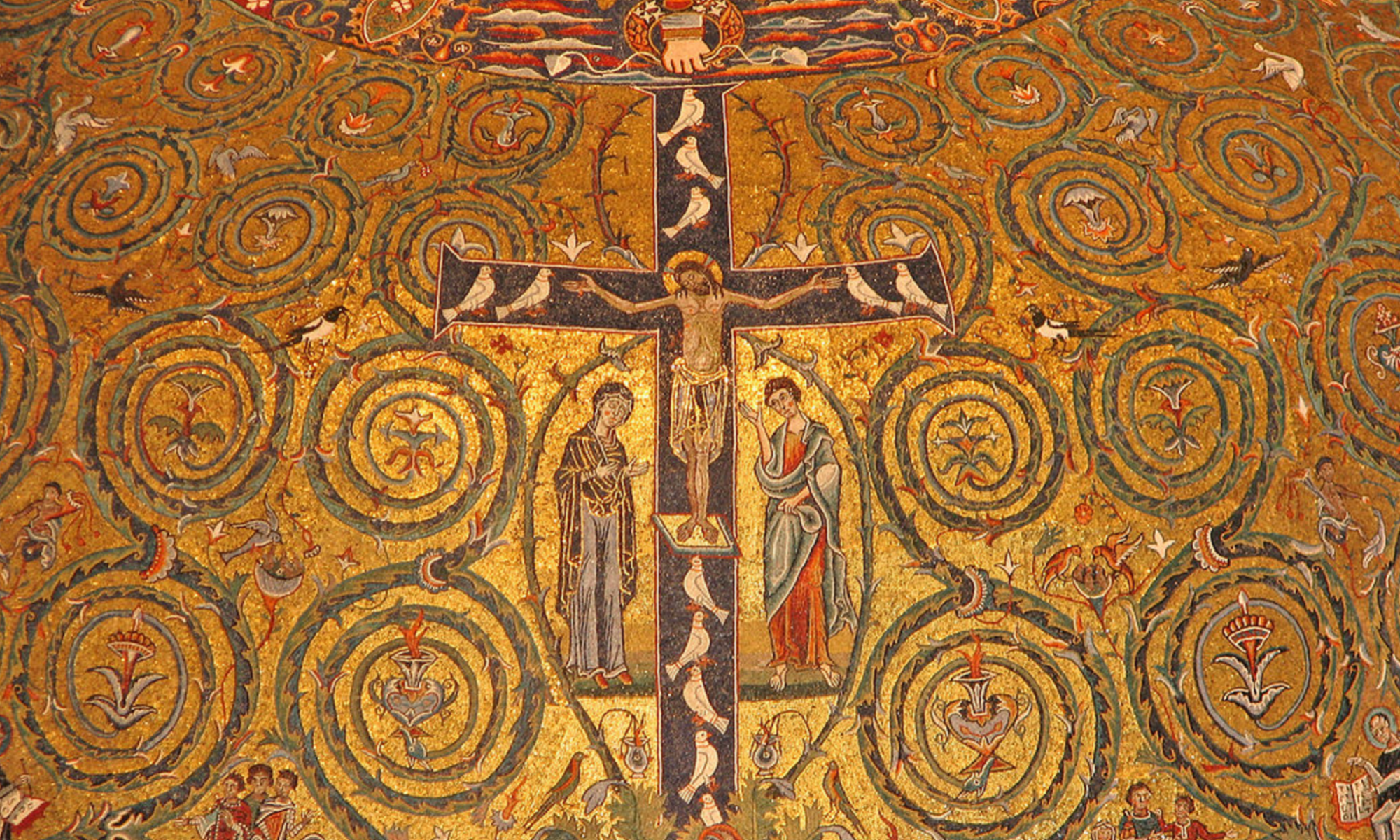
It is very much like the story told in the Pixar film Encanto. As with the Madrigal family there, it can be terrifying when the cracks of our façade begin to show, and the “identity” we had falsely propped gets exposed and collapses. But it’s always an opportunity to access the living God anew and remember who we really are. We get to go to the Cross and drink from the life-given stream that flow from the pierced heart of Jesus. He is the Good Shepherd who promises to lead us into more abundant life.

Yes, there is a river that flows through the Heavenly City. That river, too, is beautiful and dangerous. I ache for it and avoid it. That river runs through my divided heart, much like the river that divides my home town.

I am from the river.

Virtue and Friendship

More than 2,350 years have passed since the Greek philosopher Aristotle wrote the Nichomachean Ethics. I find his insights into human relationships as relevant as ever.

As I discussed in my last post, the moral virtues are not a matter of rule-following. They are the kind, patient, and consistent directing of the emotions toward that which is truly good.

How does moral virtue actually happen?

Modern philosophers (that is to say, Western philosophers of the last 500 years) keep making the mistake of trying to articulate abstract theories of ethics. Goodness is not something you define in a theory. We humans are hardwired to know goodness when we see it. No one has to teach a baby to laugh with delight, or to want to savor the good moments forever (“Again! Again!”).

Aristotle’s point of reference for virtue was not an abstract definition, nor a list of rules, but the virtuous person himself. This approach is so simple that it is often missed, even by Aristotelean scholars. Aristotle explains that most humans (those not too tangled up in their own vices and delusions) will notice virtue when they see it in another flesh-and-blood human. It is through relationship with virtuous persons that we begin to learn virtue. Over time, through the building of healthy habits, our pursuit of the good gets internalized. As we become virtuous, we are eventually able to pursue the good with relative ease, rather than having to struggle every time.

I used to illustrate these points to my high school students by viewing The Lion King. Young Simba perceived the bravery of his father Mufasa, and wanted to imitate him. He first went to the extreme of rushing into danger, and then to the other extreme of conflict avoidance (hakuna matata). Most of the animals readily recognized and followed Mufasa’s brave and just leadership, even if they themselves lacked courage. By contrast, his vicious brother Scar, in his envy and malice, refused to see his brother’s goodness, telling lies to himself and to others about what was good.

Aristotle emphasized that the very earliest human years are the most crucial for virtue formation. The same truth has reemerged in contemporary studies of neuroscience and human development. Infants and toddlers need nurturing caregivers to attune to them and to help them make sense of their emotions. When parents regularly attune to and respond, little ones learn that even their biggest emotions can be regulated. Regulated, not subjugated or suppressed! But if the parents never learned to regulate their own emotions, they will struggle to give to their children what they are not providing for themselves.

In our first moments of human existence, we are utterly dependent. We need another human to respond to us and soothe us. If that attunement and responsiveness is there most of the time, or even much of the time, we become emotionally secure. Through thousands of experiences of distress and response, our brain and nervous system learn to expect abundance and be more resourceful. We establish broad neural pathways between the calmness of our rational brain and the alarm system of our limbic brain. Little by little, we become self-regulating like the caregivers who are there for us.

Aristotle didn’t know about the nervous system, but he accurately observed how crucial early emotional development is. Without it, we will be emotionally insecure, which means that we will struggle to be virtuous. No affect regulation, no virtue. Thankfully, we can rewire our brains, but only if we become again like little children, receive our emotions with curiosity and kindness, and patiently “grow up” now in all the ways we missed earlier in life. To do all of that, we will need wise mentors and companions. In the words of Aristotle, we need to find virtuous people to learn from.

The more I’ve gotten in touch with my own emotions and learned how to engage emotionally with others, the more aware I’ve become that most human beings in our society today (including our churches) have no small amount of insecurity. I would be glad to be proven wrong on this point! But I find it true of at least 80% of the adults I meet, just as I have found it true in myself.

Again, Aristotle said it first. He describes most human beings as being either weak-willed or strong-willed. The weak-willed person sees what is good, but frequently fails to pursue it due to an intense interior struggle. The strong-willed person often does good things, but still struggles interiorly, experiencing unrest.  The vicious person (cf. Scar) doesn’t feel the struggle because he habitually rationalizes his behaviors, calling black white and white black. In Aristotle’s estimation, only a smaller number of humans are truly virtuous, emotionally regulated, pursuing the good, delighting in the good, and rejoicing in the reality that they are pursuing and delighting in the good.

This leads us to Aristotle’s reflections on friendship. The deepest and truest kind of friendship is only possible between virtuous people. Most friendships, he says, are friendships of pleasure or friendships of usefulness. Friendships of pleasure last as long as the fun times last, but dissipate when the shared pleasure passes. When tragedy befalls, it becomes clearer who your real friends are. Friendships of usefulness exist because one or both individuals are getting something out of the relationship. Both of these types of friendship are ultimately transactional. It isn’t necessarily bad to have relationships like these. It can be okay for some relationships to be mutually transactional. It’s just not a real friendship.

I would add a third kind of pseudo-friendship, calling it a “friendship of fear.” If your main motivator in life is fear, you are prone to surround yourselves with other people who feel similar fears. This shared fear-mongering allows you to gang up against “those people” who are the alleged enemy. Such was the vibe of the scribes and Pharisees, who thanked God they weren’t like those other people (Luke 18). Such was the relationship between the older brother in Luke 15 and the servant who joined with him in contempt-filled gossip as they witnessed the father lavishing a feast on the prodigal son. As with friendships of pleasure or usefulness, these fear-based friendship are also highly transactional. Because their fear is not yet integrated and moderated, such individuals are not yet ready for real friendship.

Virtuous people are capable of genuine friendship because of their emotional maturity. They are self-possessed enough that they can freely engage in mutual honor and delight. Aristotle obviously didn’t know Jesus, who was yet to be born, and so he didn’t know the great commandment: “Love your neighbor as yourself.” But his understanding of virtue and friendship provide a solid human foundation for that divine commandment. As I’ve written before, the equality taught in “love your neighbor as yourself” means that you are also invited to “love yourself as your neighbor.”

To the extent that I still have contempt for myself, I will struggle in a genuine friendship of equality. Where there is contempt, there is shame. Most of us struggle with a deeply rooted fear that we are not truly loveable. We fear being dismissed or rejected or abandoned. So we posture or build façades. We compare and compete; we envy and scorn. Show me someone who scorns others, tears them down, or calls them names – and I will show you someone who has an enormous amount of self-contempt, and is terrified of a spotlight shining on the deepest places in his heart.

Of all the emotions, shame is probably the hardest one to contend with and regulate. I do not recall Aristotle speaking on this point, but you can see that he “gets” it in the way he describes virtue and friendship. The virtuous person is happy because he desires the good, pursues the good, and delights in embracing the good. He has a healthy self-love, which is the foundation of friendship.

Friendship then allows this goodness and delight to flourish in abundance. If I am virtuous, I can see that this friend shares the same desire for and delight in the good. We can pursue goodness together and share our delight. I can desire the same goodness for my friend as I desire for myself. I can weep when he weeps and rejoice when he rejoices. My friend can delight in the fact that I am delighting in the same good as he is, and vice-versa. He sees and loves in me what I see and love in myself, and vice-versa. We can truly love our neighbor as ourselves.

As Christians, of course, this love of neighbor can surge to new heights, or descend into the depths of humility. It becomes possible to love Jesus in others, even in the distressing disguise of poverty (to quote Saint Teresa of Kolkata). In Luke 10, Jesus shows us that every human being is our neighbor, no matter how wounded or disfigured. We remain bearers of the divine image. The virtue of Charity (divine Love at work in us) allows us to be moved with compassion like the Father, causing us to move closer to littleness. It allows us to be kind to ourselves and to each other in our poverty. So many of us are still infants in our maturity, and need much kindness and compassion if we are to grow in virtue.

Most of what I share today I learned nearly three decades ago. But in so many ways I did not yet “get it.” Now that I am in a much deeper process of engaging and integrating my emotions, I find myself joyfully rediscovering old treasures. Whether returning to the wisdom of Aristotle or connecting with my earliest human needs for emotional security, it is much like the words of the poet T.S. Eliot: “We shall not cease from exploration, and the end of all our exploring will be to arrive where we started and know the place for the first time.”

Emotions and Moral Virtue

What is virtue?

When I ask that question among Christians, the conversation typically turns to shoulds and have to’s. Virtuous people do the things they are supposed to do. The job of parents and Church leaders is to make sure we do the things we are supposed to do. What is most needed in this view is moral clarity about the rules. The world is full of unvirtuous people because parents and the Church haven’t been teaching clearly enough. If only we have more clear and distinct ideas about morality, all will be well (can you hear the influence of Descartes here?).

When I ask similar questions about emotions as they relate to virtue, at best emotions are named as “neutral.” More often, they’re viewed as a threat or obstacle. We can’t trust our emotions. Morality requires us to subjugate and control them.

“Love is a choice, not a feeling,” I’ll hear Christians say. Or they will even misquote Thomas Aquinas (1225-1274) as teaching that “love is willing the good of another.”

Thomas does say something like that (Summa Theologiae I-II q. 26, a. 4). But he’s actually talking in that passage about love as a desire or an emotion, not yet love as a theological virtue.  He says that when we experience love as a desire, we want good for someone – whether ourselves or another. That desire for good may be rightly ordered or disordered. It is quite possible to want good things for others while trying to manage or control them (just look at the helicopter or Zamboni parents of my generation!).

Thomas actually sees these core human appetites as fundamentally good, and needing the direction and guidance of faith and reason. We desire pleasure and goodness; we are zealous for difficult goods. Often enough, that desire for pleasure is disordered, with a willingness to use or consume or manipulate. Often enough, our anger becomes a weapon used to harm ourselves or others.

I was blown away during my silent retreat last month. I spent much of the time praying with Matthew’s Gospel. In the Sermon on the Mount, Jesus teaches about anger and lust (Matthew 5:21-30). Occasionally, I glanced at the original Greek as well as the Latin Vulgate translation that was familiar to Thomas Aquinas. In the Vulgate, Jesus speaks of one who is angry (irascitur) or one who views another with lustful desire (ad concupiscendum). It was one of those “aha!” moments for me – this is where Thomas Aquinas gets his seemingly technical names for the “irascible appetite” and the “concupiscible appetite.” All humans have these two core appetites: a passionate zeal for righteousness and an eager desire for pleasure and delight. Fundamentally, these two inner drives of the human heart are VERY GOOD, even though, as Jesus teaches, they are in need of integration and re-ordering toward the Kingdom of God.

Thomas Aquinas uses the word “passions” to describe what we would call emotions. The word “passion” literally means something that happens to us. We passively experience it. The word “emotion” suggests an interior movement in our body as a reaction to what we are experiencing. Every emotion, in his view, is an expression of one or both of these core human appetites. True, these desires and emotions are often disordered because of the Fall – but so is our will!

Oh, how interesting it would be if Aristotle or Thomas Aquinas were alive today. They curiously and keenly observed human nature, without the benefit of contemporary neurological research. Today, I am convinced, they would be fascinated by our insights into the brain’s limbic system and prefrontal cortex. Thomas observed that humans have a “common sense” – a part of our brain that blends all of our sensory input into one unified impression. This is how neuroscientists today understand the thalamus (with the exception of the sense of smell). Thomas observed how humans can behave like hunted deer, who have an embodied memory causing them to flee at the sight of a human form. This is how neuroscientists today understand the amygdala. It’s our brain’s security system. Before any sensory input reaches our rational brain, it runs through the amygdala, which sometimes launches us into a fight, flight, or freeze response. These reactions happen automatically, within ¼ of a second. They are pre-rational.

I recall a decade ago, driving home from a Friday night football game. I suddenly sensed a large spider rappelling down an inch in front of my face. Somehow, I found my car pulled over to the curb and myself seated in the passenger seat in less than three seconds. Only then did my rational brain register the situation, with no small amount of astonishment at what I had just achieved. Imagine if it had been a bat! 

I find that so very many Christians (myself included) attempt to grow in “virtue” by no longer having emotional reactions. That approach is dishonoring of the inherent goodness of our bodies. It’s also impossible! First comes the reaction of our limbic brain. Only a few seconds later does it register in our prefrontal cortex – unless our reaction is so intense that we stay stuck in a trauma response. With time and training, our reactions can be received and redirected. But they still happen. Developmentally, this type of training takes years. It’s what is “supposed to” happen in childhood.

Virtue is not a matter of eliminating emotion, nor of subjugating or controlling it. The virtuous person habitually, calmly, and skillfully gives rational guidance and direction to emotions. That is where the prefrontal cortex comes in – the highest and most developed part of our brain. It allows us a calm noticing, which in turn allows what today is called “affect regulation.” Our emotions settle down when they feel the acceptance and calm rational presence of the prefrontal cortex. They are then willing to accept direction – just like a child who truly trusts her caregivers.

Classically, this is exactly what moral virtue is – giving calm rational guidance to our emotions so that they can be ordered toward the good. Our emotions will not authentically accept rational guidance if they are not first received with curiosity and kindness.

Here is where emotionally intelligent parenting comes in. Rather than shaming children for feeling how they feel, mature parents are able to receive the big emotions of their children. They show a curiosity and compassion for what is happening in the bodies and hearts of their children. They help them make sense of it all. Every time that happens, neural pathways are formed and reinforced.

At least 70% of the information in our nervous system flows from the bottom up – as sensory input coming from our body to our brain. When that information is received without judgment, then calm and consistent direction can be given.

Many of us literally lack the neural circuitry for virtue to happen. Sure, we can suppress or subjugate our emotional reactions. We can flog them with “shoulds.” We can exile them or lock them up. But that is not virtue. That is external compliance (perhaps even 90-95% of the time). It leaves us feeling unfree, or even living a double life.

Many people come to priests asking, “Why do I keep doing that???” I gently invite them to notice the tone of voice in their question. We can ask the same question with intense self-contempt or with childlike curiosity (or somewhere in between). Only when there is curiosity and kindness does virtue begin to be possible.

What does this mean? I would suggest that most of us Christians today are not yet in the realm of moral virtue. We have a lot of pre-moral work to do, kindly accepting and patiently integrating our emotions – all the things we needed to happen earlier in life, but did not (and probably have not for multiple generations in most of our families). When you are in survival mode, there is less space for curiosity and kindness.

That is why, when people ask me, “Where did you grow up?” I am barely joking when I respond, “Oh, I’m still growing up!” I am still coming to accept that daily reactions will happen inside of me – frequently and sometimes rather intensely. I am coming to appreciate that it is precisely my capacity to be impacted by others, to receive them vulnerably, and to be moved by their uniqueness and their beauty, that allows me to love them with honor and delight.

May we all become again like little children, allowing ourselves to be moved anew by goodness and beauty in the world around us, and especially in other humans. May we all receive the patient nurture and care that we always needed. Then it becomes possible to become truly mature and wholehearted in virtuous living.

“Mission” is a Way of Being

Greetings friends. It’s been a long time since I’ve shared any writing. A heartfelt thank you to those who have gently encouraged me to write! It brings out the best in me.

Just over a year ago, my diocese received a new bishop.  From the get-go, he has indicated a desire for our diocese “to pivot from maintenance to mission.” We began by extending that invitation to our priests, but are about to expand it to everyone in the diocese.

When you hear the word “mission,” what first enters you mind?

I find, both for myself and for others, our thoughts immediately race into tasks that we do. Historically, we recall the perilous voyages and arduous labors of Saint Paul or Saint Francis Xavier. In our present-day context, we think of all the problems needing fixing and how we can accomplish more. We form a task list and begin checking off boxes. We set measurable goals and objectives to ensure that we don’t “fail” in our mission.

It’s easy to miss the deeper truth: “mission” is a way of being, and we are already assured of victory. Mission begins with our shared identity in Christ, who is “from the Father” while abiding in perfect union with the Father.

In the Nicene Creed, these truths flash like fireworks. This very month, we celebrate the 1700th anniversary of the closing deliberations of the great Council of Nicea, which promulgated the first draft of the Creed we profess every Sunday.

Jesus Christ is “begotten, not made.” He is eternally in a relationship of equality with his Father, even though he is “from” the Father. He was not produced or achieved by the Father. He and his Father are one, in a relationship of mutual delight. The Holy Spirit is that eternal bond of love, that shared delight, that shared glory.

The bishops at Nicea borrowed philosophical terms like “consubstantial” (in Greek, homoousios) in order to express with greater precision what was always there in the Gospels. The bishop Arius and his followers were outraged at this new terminology, insisting that Jesus could not be from the Father unless “there was once when he was not.” They were not thinking of God as an abiding relationship. They were thinking in terms of before and after, greater than and less than.

The Arian heresy actually gained momentum following the Council of Nicea. Five decades later, Saint Jerome lamented the situation: “The whole world groaned, and was astonished to find itself Arian.” In 381, the bishops of the Church convened again, this time in Constantinople. They expanded the wording of the Creed, now drawing from the brilliant contributions of Gregory Nazianzen, Basil the Great, and Gregory of Nyssa – all of whom understood God as an eternal relationship.

It’s hard for us humans to imagine what eternal relationship is like. Even if God never created us or any universe at all, God would be just as good and just as great. “God is love” even without any creatures to love. And Jesus is eternally sent forth. “Mission” is his way of being in relationship.

“Mission” literally means “sending forth.” When we live in a state of felt threat and felt scarcity, we gravitate to a militaristic understanding of mission: important or powerful individuals send forth less important ones, who achieve objectives under obedience to orders. It’s a partial truth that obscures the larger reality.

Indeed, heresy causes the most damage when it is almost true. It’s more seductive that way.

In the fullness of time, the Father actually does send his Son on a rescue mission. Jesus enters this occupied world in stealth, born in an obscure town in the dead of night. Only social outcasts like the shepherds witness his birth. He lives a hidden life in Nazareth for three decades. But when he is baptized and anointed by the Holy Spirit, and audibly claimed as the Father’s beloved, the devil is clearly concerned. He tempts Jesus in the desert. He probes Jesus throughout the Gospels, seeking to unravel the identity of this divinely anointed man. Like Sauron in Lord of the Rings, the devil cannot fathom God’s actual plan. He cannot envision the eternal Son of God emptying himself and willingly sharing in all the suffering of every human. So the devil sadistically delights in the darkness of Good Friday, realizing – too late – that his kingdom has been overthrown and the human race has been rescued by the blood of the Lamb.

Yes, Jesus obediently “does” these things as one who is sent on a rescue mission. But as Thomas Aquinas (1225-1274) reminds us in his Eucharistic hymn (Verbum Supernum Prodiens), Jesus enters his Passion without ever leaving the Father’s bosom. Any earthly “doing” of Jesus flows from his secure identity as the eternally begotten Son of God. His mission is primarily his way of being, how he relates to the Father, how he relates to us, and how he invites us into relationship. Being “on mission” means abiding in abundant connection, which overflows into fruitful self-giving.

I know this core truth, but I so easily forget. I get sucked into survival mode and familiar feelings of scarcity. I feel the expectations from without and from within. I feel that old and familiar fear of failure – beneath which is an even deeper fear that no one will love me. It’s so easy in those moments to feel the suffocating pressure of “I don’t have time for that!” Then I flop back and forth between a pressurized doing and mindless escaping, neglecting what matters most, what would actually bring my relationships alive.

Writing is not what matters most for me, but it is truly good for me. It connects me with my emotions and needs, opening my imagination and childlike playfulness. It helps me abide. In this renewal project, I will bring more joy and creativity to my labors if I allow myself to abide and receive.

Part of the problem is that we in the West have been swimming in toxic waters for at least 500 years. The misguided exaltation of doing over being has become so normalized that we barely notice it. Little by little, it has infected not only our cultures but our churches as well, alluring us with its seductive power while robbing us of joy and peace.

The Gospel is indeed liberating “Good News.” As my bishop once preached, “It doesn’t depend on you – and it never has.” We get to share in the fullness of Christ, who always shares in the fullness of his Father. Secure in that love, we go into the world as Christ did, not with fear of failure or grasping for power, but with full confidence in the unshakable Love of the Kingdom. Mission is a way of being.

Truth is Relational

Truth – what is Truth?

The question of Pontius Pilate echoes through the centuries. In the modern era, you tend to find one of two extremes: a relativism that denies the very possibility of finding the Truth, or fear-based clutching onto “truth” in a way that demands rigid clarity.

René Descartes (1596-1650) is famous for his “I think, therefore I am.” His modern approach to philosophy was utterly unlike Socrates, who invited those hungry for Wisdom to pursue Truth and Goodness and Beauty in a communal encounter. and dialogue. His enquiries often left more questions than answers – but at least they were beginning to ask the right questions. By contrast, Descartes isolated himself in his room and began his enquiry with doubt and denial. He could only accept as true that which he could grasp with mathematical certainty. He insisted on clear and distinct ideas. With that insistence, he could not even accept with certainty the reality of the fire in his fireplace or the chair beneath his body. But he could not doubt that he doubted. If he is thinking, he must exist. Notice the disconnect between mind and body!

In reading modern philosophers like Descartes, Hume, or Kant, I find their reasoning itself to be meticulous. It’s their starting points that are questionable! As human beings, we do not begin as isolated thinking individuals and then reason our way out to others and the world. We begin already existing in relationship!

I understood this point well enough a quarter century ago, when I studied philosophy. Now that I have plunged into trauma research and the findings of contemporary neuroscience, I see it even more clearly and distinctly: the human capacity to accept Truth, to grow, to change, and to mature is only possible within the context of secure relationship.

Any spouses who have been in a heated argument can appreciate this point. If the other person feels threatened, shamed, or unappreciated, it does not matter how clearly and distinctly you are making your brilliant point. Genuine receptivity is only possible if the other person feels safe and connected.

Indeed, Truth itself is relational. We are created in the image of a Triune God. “God is love” – that is to say, God eternally exists as a communion of persons. He has placed into the human heart a desire for Truth, Goodness, and Beauty. Little by little, we become more capable of receiving and being received into this infinite abundance.

We see this desire best in children who are curious and full of wonder – or in adults who are willing to become again like little children. Perhaps not all Fairy Tales are true, but it is not hard for little children to believe in them! For little ones, it is normal to abide in awe and wonder in the face of mysteries they do not fully comprehend. It is normal to be surprised and delighted by new unveilings of Truth or Goodness or Beauty.

Trauma responses are a different matter. When under threat – whether immediately or over a long stretch of time – our nervous system is hardwired to survive. If I am being chased by a grizzly bear or about to be hit by a Mack Truck, there is no time or space for curiosity and wonder – nor should there be. Surviving the threat becomes priority #1, and the full resources of my brain and body are immediately diverted for that purpose.

Unfortunately, though, individuals or collective groups (families, communities, or churches) can get locked in survival mode. You can tell it’s there when you hear the black-and-white thinking, the all-or-nothing. It’s us versus them, and other humans are all good or all bad. If you grew up in a family that was stuck a trauma response, you may be able to appreciate how hard it is for each of the children to be pushed into rigid roles rather than loved and cherished in their uniqueness. When an entire society gets stuck in a trauma response, the politics get polarized, with fear and shame at the core of the messaging. In those moments, the people are especially vulnerable to the rise of a dictator. In church life, when the outside environment feels threatening, it’s tempting to circle the wagons and grasp onto a rigid dogmatism – vilifying everyone outside the circle and insisting on a possessive grasp of true or false, good or evil.

Don’t get me wrong – I love Catholic Tradition and love Catholic dogma. It’s just that most people don’t understand what dogma really is! Dogmas are not rigid lists of propositions. Rather, they set the boundaries of the playground in which we can be like children, receptively connecting with the infinite mystery of God. But God is always greater.

Brilliant theologians and mystics like Thomas Aquinas (1225-1274) always understood this point. Thomas goes so far as to say that the essence of God remains utterly unknown to us (Summa Contra Gentiles III, c. 49). He describes a dogma (an “article of faith”) as “a perception of divine Truth tending towards that Truth” (Summa Theologiae II-II, q. 1, a. 6, sc). In other words, a dogma is not itself “the truth” but rather a sign that points beyond itself to a mystery that we do not master. Elsewhere he describes what happens when a human being makes an act of faith: “The act of faith does not terminate at the proposition but at the Reality itself” (Summa Theologiae II-II, q. 1, a. 2, ad 2). In other words, we enter into a relationship with the Truth, rather than grasping or controlling it.

Even when talking about natural human knowledge (of the real things in the world around us), Thomas tends to use the Latin verb communicat. There is a communication and a communion between knower and known. Even though the knower is active in pursuing Truth, she is ultimately receptive and passive – allowing herself to be changed by the Truth, rather than create it for herself. Being in communion with the Truth is different than mastering it, possessing it, owning it, etc. The former is vulnerable and receptive; the latter is self-protective and controlling.

I see it as no accident that it is precisely in the modern era (the last 500+ years) that many Christians have retreated into a rigid dogmatism. The 16th Century in the West was marked by an intense contempt and dominating human behaviors: the resurgence of the slave trade; exploitative colonizing of indigenous peoples; and vilifying, persecuting, or killing those perceived as religious or political enemies. Meanwhile, in the academy, philosophy and science shifted away from any sense of meaning and purpose and focused instead on the imposition of power. Francis Bacon’s famous “Knowledge is power” sounds benign, but marks an ominous shift. No longer is human reasoning an effort to enter into a relationship with Truth and Goodness and Beauty and to flourish in them together (think here of Gandalf in relation to the various races of Middle Earth). No, the goal now is to master, dominate, and subdue (think of Saruman’s factory and experiments at Isengard). The same held true in political philosophy, as seen in Machiavelli. No longer is politics focused on the common good, in which each and all can flourish, but rather it becomes a matter of getting “our people” in power so that they can cast down “those people.” Us versus them. Black and white. Trauma response.

As in Lord of the Rings, the normal temptation in the face of a dire threat is to put on the Ring of Power and cast down the enemy. Only the wise and courageous are able to see the folly in that strategy. It is incredibly hard to hold out a holy imagination for goodness and collective flourishing when feeling threatened or unsafe. It’s hard to retain an unshakable confidence in the Victory that is already assured in the Blood of the Lamb – and to remember that the entire human race is invited to the Wedding Feast.

Truth does not always bring mathematical certainty, nor does it need to. When a little child is safely held by a dad or mom who is both tender and strong, the dangers and chaos of the larger world lose their menacing force. If we are open to it, we get to be held by a Father who is infinitely greater than us. We are already in relationship with him. Jesus has reconciled us, connected us with the Father and with each other. In the Body of Christ, we have all that we need. It’s a living reality that we do not master or comprehend. We just keep growing into it as we walk this pilgrimage together. May each of us rediscover that childlike wonder and vulnerability and become receptive to the Truth that always transcends us.