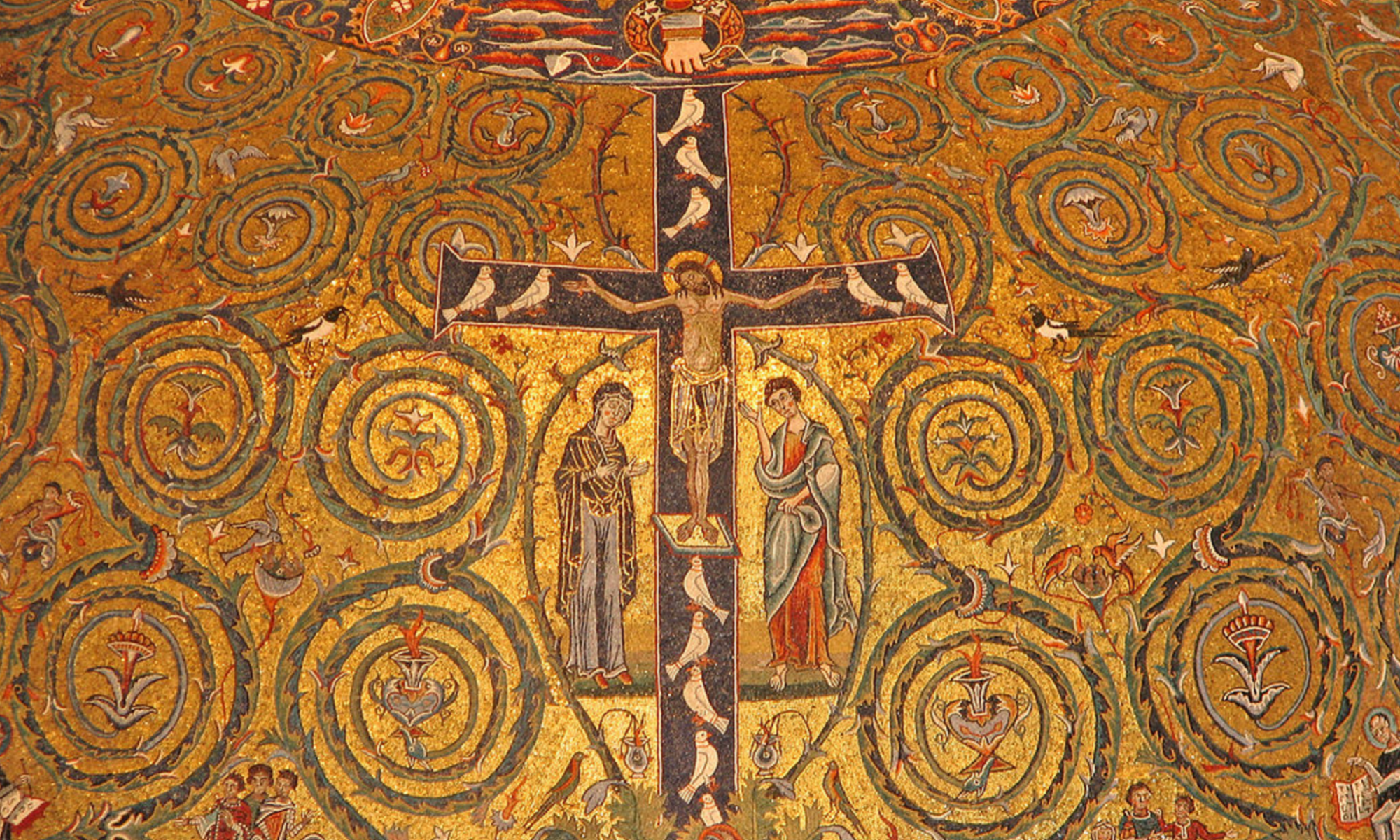
Kerygma

Your new vocabulary word for the day is kerygma.

Kerygma means “proclamation.” It is a very simple proclamation, and it changes hearts. Kerygma happens when one follower of Jesus, moved by the Holy Spirit, becomes a herald of good news, and the hearts of the hearer(s) catch fire as they hear the message. When the kerygma happens, one follower of Jesus becomes the instrument whereby the hearer actually “hears” the gospel as good news, and is moved to heartfelt repentance, responding with a resounding “YES!” that starts showing itself in a new way of living.

Kerygma moments happen again and again in the Acts of the Apostles. Peter or one of the other disciples, filled with the Holy Spirit, stand up and boldly proclaim the Good News that Jesus has risen from the dead. It’s such a simple message. Jesus died. He died because of your sins and my sins. Jesus has risen from the dead. He has the power to forgive you and forgive me. He has the power to save you and save me from death. All we need to do is repent of our sins, get baptized and place our trust in Jesus instead of ourselves. Then we can begin following him together on an amazing new journey.

Peter and the apostles, the guys who snoozed and snored while Jesus was sweating blood in the Garden, the guys who left Jesus all alone to die, the guys who denied him and abandoned him – yes, those guys –become heralds proclaiming Good News. Each time they proclaim the simple message of salvation in Jesus, hearts are moved to repentance.

Whether it moves 3,000 hearts (as on the day of Pentecost) or whether it touches just one heart at a time, the power of the kerygma is real. It’s a life-changing experience. God wants all of us to “hear” the good news in a personal way that re-orders our entire life. We change and become “all in,” surrendering ourselves to Jesus.

Notice that it has nothing to do with Peter or the other apostles being smart, or educated, or talented, or strong (they were none of those things!). Indeed, it was precisely their ordinariness and their human weakness that made the Gospel message so compelling to the hearers. These were changed men. Whatever it was that they had, the hearers wanted to experience it.

There are a few core reasons why the kerygma works.

First, it is a work of the Holy Spirit. We are cooperators, but truly led by the Spirit in the process. The same Holy Spirit who raised Jesus from the dead is at work both in the heart of the one proclaiming and the one(s) hearing. And he does his work! He is the principal agent of all evangelizing. We all have access to that Holy Spirit through faith and baptism.

Secondly, the kerygma works because the disciple who is proclaiming has actually been transformed by his personal relationship with Jesus. He’s not just talking about Faith. He’s proclaiming Jesus. Not as an abstract idea, but as a real person who has really changed his life. The change is obvious to the hearers. It attracts them. It’s an open invitation. They hear the Holy Spirit gently whispering in their own hearts, “Wouldn’t you love to have that experience for yourself?”

Thirdly, there is always freedom in the kerygma. Whether it’s Jesus himself proclaiming the Good News of the Kingdom, or those early disciples proclaiming the Resurrection, they respect the freedom of the hearers. There is no forcing or pressuring, no nagging or manipulating, no guilting or shaming. If the hearers aren’t interested, so be it. Those who proclaim the kerygma only want followers who want to follow.

How different this all is from the everyday experience of so many Catholics during the last several decades. The majority of Catholics these days are simply NOT interested in talking openly about their personal relationship with Jesus. As for those who are willing (myself included), it is with deep sadness that I admit that many of us have too often been led more by fear than by the joy of the Holy Spirit. I confess that out of a fear of failure or rejection I have engaged in pressuring, manipulating, shaming, or other methods that were totally NOT used by the early disciples. It’s so hard to trust the Holy Spirit, to wait for God’s timing, and to respect human freedom – especially when it’s our own children or spouses or friends, and especially if we tie the outcome to our own personal worth, somehow thinking were are a failure if they say “no.”

I have definitely learned, slowly but surely, to be both patient AND bold. If the person is not yet ready to hear the kerygma, so be it. But when I notice that the Holy Spirit moving, as at Pentecost, when I sense the person asking “What must I do?” THEN is the moment to proclaim the Good News of Jesus – and in a truly personal way that speaks to her experience. THEN, perhaps for the first time, that person can see Jesus as his Savior.

It is such a privilege to be a herald of the kerygma. You get to be the person who announces good news of great joy to persons who are longing so deeply for it – and it changes their lives forever. What a joy!

But there’s a deeper question. Have I ever really “heard” the kerygma myself? How can I give what I have not myself received? There, I think, is a big part of why we Catholics (yes, even we priests and bishops) have struggled so much to be bearers of good news to a world that longs for good news. We may possess a great store of knowledge, we may faithfully follow many rules. Perhaps we even had an amazing experience of Jesus long ago. But if we are not perpetually being renewed in the Joy of the Gospel, if we have not truly internalized the kerygma, if others do not see in us that Jesus is truly “Good News,” then who will care?

I encourage each of us to ask today, what has been my own experience of receiving the kerygma? When has my heart burned with joy at receiving the good news?

For me personally, there have been many “kerygma moments.” I remember the first time I went to Confession at the age of nine, how honest I was despite my deep fear, and what an incredible joy I felt afterward. I remember many moments on retreats in which God comforted my heart, deepening my desire to trust and surrender to him. I remember the witness of my friend Peter, a seminarian in his late 30’s. During a few years of intense personal struggle for me in the late 1990s (moments in which I felt very unlovable) he kept gently gazing and speaking good news into the places of my heart that feared and doubted. The Holy Spirit was very much at work, consoling my heart at a time when I deeply needed it. When Peter explained that “a good friend is someone who sees right through you – and loves you anyway” I not only grasped the words intellectually; I truly “felt” their truth. It changed me.

I remember Peter tragically and unexpectedly dying that fall of 1999, after only five months ordained as a priest. I remember surviving a fire a month later, losing nearly all of my possessions. Truth be told, I would have gladly thrown them all away to have Peter’s friendship back.  Then I remember astounding graces and spiritual encounters during the Jubilee Year 2000. I received deep healing as others prayed over me and stood with awe and gratitude as others receive astounding graces and healings when I prayed over them. God knew what my heart needed and gave it to me; he assured me yet again that I could trust him and surrender.

Even then, there were parts of my heart that I was keeping locked away and out of sight. I simply wasn’t ready yet to receive totally or to surrender totally. I continued through life as a perfectionist, secretly fueled by shame, secretly insecure about not being good enough or loveable. Too often, I tried to “get life right,” to try harder or work more. I slowly got more disconnected and burnt out, losing sight of the good news of Jesus and of my identity as a beloved child of God.

Theologically, I knew the teachings of Scripture – God loves us while we are yet sinners. Salvation is a gift. We cannot earn our way to receiving love. But that was not what I was believing internally. There were layers of my heart that had still never heard the Gospel proclaimed. I was not yet ready.

Eventually, the trials of life wore me down. A few years back, I reached a point of recognizing that my life was totally unmanageable. I wanted to be well. I was ready to die to self. I allowed myself to surrender and to become vulnerable in ways I would previously have thought impossible. I began letting myself be “seen” by a few trusted people – letting all of myself be seen, mind you.  It has allowed me, more and more, to believe with all my heart that I am truly a beloved child of God – no matter what. Now that I no longer felt like I had to perform (or at least much less frequently felt that way) I discovered, to my amazement, that old habits of sin melted away.

I still have a long way to go, but the more I have internalized the kerygma, the more I have discovered that the Holy Spirit is opening up new opportunities for others around me to receive the good news. I find myself more frequently able to show kindness and mercy because I have been learning what it is to receive it.

It’s an old axiom of the first universities in the Middle Ages: nemo dat quod non habet (“a thing can’t give what it ain’t got”). We will not be able to proclaim Good News to others if we are not allowing Jesus to be good news for us.

What about you? Have you experienced the kerygma? Ask the Holy Spirit to help you remember any “kerygma moments” in which someone proclaimed good news to you and the Holy Spirit totally changed your heart.

If you can think of those moments, I encourage you to revisit them with gratitude and allow you heart to be touched once again.

If you cannot think of any, would you like to be moved by the Holy Spirit in that way? Would you also like to experience the joy of the Gospel? If so, you can ask God for that. And you can seek out someone who has experienced it, and ask that person for help. The Risen Jesus and the Holy Spirit just might surprise you with what comes next.

“Talking Back” to evil

Many of us were raised to view back talk as bad talk. From a young age we were schooled to curb our tongue. Our 3-year-old willfulness was broken down as we learned to be “nice” and compliant. But there is a time and a place to use our will and our words to talk back. This is true in confronting situations of grave injustice, and is especially true in facing the subtle snares of the devil.

Imitating Jesus, the Desert Fathers were masters of spiritual back talk. Whether Anthony of Egypt, Evagrius of Pontus, or Dorotheus of Gaza, they didn’t take any $@#^! from the devil. They used their will and their words as weapons, quoting the Scriptures as a means of fighting back. As trained athletes of Christ, they did so calmly and patiently – but with a decisive swiftness and forcefulness. They let their “yes” mean “yes” and their “no” mean “no.” By the power of God, they sent the devil to the Cross for judgment and reclaimed their human freedom and dignity.

The unique vocation of the Desert Fathers was to go into the wilderness and devote their entire life to sharing in Jesus’ conquest over the devil. As the New Adam, Jesus reclaims and redeems our human freedom, restoring our capacity to overcome evil with good. He freely and firmly renounces the age-old traps of the flesh, the world, and the devil. The early monks made their vows of chastity, poverty, and obedience as a direct means of fighting the same fight. And they weren’t afraid to talk back when needed.

During his forty days in the wilderness, Jesus talked back to the devil. The moment he was tempted, he called upon Scripture to rebuff the evil one. When it comes to fighting temptation, sooner is always better. As with Eve in Genesis, the tempter wants to “dialogue” with us. She could have ended the conversation at his first deception (“Did God really say to you…?”). It would have been a different story. Whatever the forbidden fruit is for us, the longer we linger in debating back and forth whether to do it, the more likely we are to do it!  The devil’s deceptions and lies are so much easier to uproot as seedlings or saplings in the very early moments of temptation than they are when they become tangled trees clutching at our heart.

Saint Benedict, the model of monasticism in the West, appealed to Psalm 137:9 – a deeply troubling verse about seizing babies and smashing them on the rocks. But when applied spiritually to the experience of temptation, it suddenly makes sense. Early on, while any thoughts of temptation are yet in their infancy, while they are still small and not-yet-powerful, we can take them and dash them on the Rock that is Christ.

The Desert Fathers advocated “talking back” (antirrhēsis) as the best way to engage in that fight. Evagrius actually compiled an entire book on the subject, offering suggested Scriptures to use as weapons in confronting over 500 circumstances of temptation! Full disclosure here – I tried reading his book and gave up on it, finding his particular situations to be dated and not as relevant to my own life. But I love the concept, and have often used it in my personal life. When the alarm clock goes off and my body and spirit protest, I can quote Psalm 57, “My heart is ready, O God, my heart is ready … awake my soul … with praise let us awake the dawn.” When I am tempted to distract myself with fleshly or worldly pleasures, I can pray Psalm 62, “O God, you are my God, for you I long; for you my soul is thirsting…”

In addition to the Scriptures, the Desert Fathers used the simplest of prayers – uttering the name of Jesus. I have found it to be an incredible spiritual weapon. Saint Paul tells us that every knee must bow at the name of Jesus – even those under the earth (i.e., the evil spirits). In the very first moment of temptation, simply whispering his holy name deepens our freedom and increases our strength. We can add bodily prayers such as making the Sign of the Cross or prostrating ourselves in surrender to God’s will. Whatever works – it’s hard to argue with good results.

Notice that this spiritual “talking back” is not a dialogue with the devil. By contrast, it is much more like a willful three-year old firmly declaring “No!!” and “Mine!!” and “You can’t make me!!” We tend to look with scorn on the “terrible twos” – which actually have their peak around age three. But learning a healthy sense of “mine” versus “yours” is critically important in our human development – as is learning to let our “yes” mean “yes” and our “no” mean “no.” Jesus calls us to become like little children again. Not childish but childlike. Calling upon his power, uttering his name, or quoting his Scriptures allows our will and our words to become mighty weapons against evil – especially in the moment of temptation.

Many saints have testified to the truth that evil spirits have no power whatsoever over human freedom. We are truly God’s stewards and have a God-given authority. We can abuse that authority (indeed, that is the devil’s goal). But in the end all Satan can do is deceive or threaten; he cannot ever make us do anything. Aided by the name of Jesus and by His written Word, our freedom will triumph.

As we start another Lent, we go forth with Jesus into the desert, ready to reclaim our full human freedom.

From Contempt to Content: Leaving Lies Behind

I love the Desert Fathers. In the solitude of the wilderness, they were anything but alone and isolated. They learned to abide in communion with Jesus and with his Body the Church. Through their spiritual combat, they systematically eliminated from their lives all forms of hiding and escape, and discovered the joy of living in the present moment with God.

In the 500s, in the desert of Gaza, there lived a truly wise monk named Dorotheus. His writings reveal a deep understanding of the human heart. Among other things, he describes our tendency to hold others in contempt, and offers a path to becoming content. It is the path of humility and truth, a path that leads us away from our pride and our lies.

Last time I shared about our human skill of storytelling, both in its greatness and in its pitfalls.

Dorotheus describes how the devil hijacks our gift of storytelling. The devil is the father of lies. He works by division, fragmentation, and isolation. In our storytelling capacity (great as it is) he finds fertile ground for sowing lies about God, self, and others. He leads us on a path that winds its way from unease to judgment to outright contempt.

Dorotheus describes a threefold progression of the lies the devil sows in us: from our thoughts to our words to our deeds.

First, the devil sows lies in our thoughts. He lures us out of the present moment and into fantasy thinking. Then comes the “if only…” train of thought. We begin telling ourselves the story that we would be so much less miserable and so much more content if only we had this or that pleasure; if only we didn’t have to be doing this present unpleasant task; if only we weren’t locked into this present relationship; etc.

Regarding God, we can easily begin hearing the whispered story that he is a cruel taskmaster who constantly makes demands of us, a fun-sucking God who steals all our joy away, an unfaithful God whose promises won’t be enough for us.

Regarding our neighbor, we begin conjecturing, filling in the gaps to tell a story about what we do not really know. Dorotheus shares anecdotes of many monks whose insecurity or jealousy or judgment led them into this pitfall – such as the monk who noticed that a brother was absent from prayer on Good Friday and began fabricating the story that the missing monk had been in the garden eating figs instead of fasting and praying. It turned out the brother couldn’t possibly have been in the garden because he was abroad on an errand!

The evil one loves to shade the stories in our mind until, little by little, we grow into contempt of our neighbor, contempt of ourselves, contempt of God.

Then comes phase two: lies in our speech. We do not know the full facts about our neighbor, but that doesn’t stop us from telling the story anyway, filling in the gaps without even realizing we are doing it. How easy it is to spread gossip and start rumors! Did you ever notice how we tend to go down to a whisper when we tell stories about others? Does that make it any less damaging?

Dorotheus also describes the lies we tell about ourselves in our speech. We manipulate the facts or conceal the truth to avoid blame. We selectively highlight partial truths to present ourselves as better than we really are.

I think it is rare indeed that someone tells the humble and candid truth, without any shading or skewing or selective narrating. I look back on past emails or writing, in which I thought (at the time) I was being totally objective, just reporting the facts. I begin noticing moments in which I started editorializing or injecting my own interpretation. It’s a very human thing to do!

As an administrator, I have definitely learned how important it is to gather more facts or to listen carefully to all parties involved. Isn’t it interesting how there is always more to the story?

Thirdly, Dorotheus describes how the devil tempts us to lie in our deeds. The two-tongued father of lies wants us to lead a double life. He who masquerades as an angel of light wants us to pretend to be someone we are not, keeping parts of ourselves in the shadows. Think of the damage this has caused in the Church – leaders pretending to be holy and all the while secretly sinning and covering up the evil.

As I mentioned last time, the full truth of our human story is complex. Jesus was sinless; each of us stands in need of redemption. When we allow parts of ourselves to remain in shadows, we begin hiding those parts of ourselves from others and from self and from God. We then become slaves of shame, and become easy prey for the endgame of the devil: discouragement and despair.

When parts of ourselves remain unknown, they remain unloved and unredeemed. The devil can then weave his webs at will, tempting us to tell dark stories about ourselves, stories in which there is no longer any hope.

But there is always hope, especially where there is humility and a willingness to be vulnerable with God and others. If we are open to it, God will help us seek and find a safe community of friends, to whom we can bare our souls and be known in the whole of our complex story. This was definitely a step that I needed in my own life, and began taking a few years ago. It has helped me, slowly but surely, to shed my shame – and others have noticed a difference. I continue on the long journey from contempt to contentment, but God is with me as I pray to resist the devil’s wiles.

Dorotheus shares some profound wisdom. The devil is real, and the combat is real. Thanks be to God, who delivers us through Jesus Christ our Lord!

The Gift of Tears

Most of us dread the shedding of tears – particularly in front of other people. There are many reasons why we hold back. We don’t want to feel weak or vulnerable. We fear rejection. We fear losing control, perhaps even fear that if we start sobbing, we will never stop. Whether we realize it or not, we probably learned these lessons from word or example in family life. Whether spoken or unspoken, it was against the rules. The shedding of tears comes so spontaneously and naturally to little children. Then, rather than being guided and directed and nurtured, it comes to be seen as a threat.

I have come to learn that tears can be a precious gift from God.

I am by no means the first to make this observation. Many authors in contemporary charismatic circles talk about “the gift of tears” as a charism (a “spiritual gift” of the Holy Spirit along the lines of tongues, interpretation, prophecy, healing, etc.). True, there are individuals who experience weeping as an outward manifestation of the presence and activity of the Holy Spirit. This was all the rage in sixteenth-century Spain – to the point that authentic mystics like John of the Cross, Teresa of Avila, or Ignatius of Loyola had to warn against the faking of tears as a false expression of piety, even showing off. That risk is still there for some today, but I much more frequently find a false toughness that holds back tears.

More commonly over the centuries, tears are an expression of repentance and conversion, opening us up to love God and neighbor with fuller freedom. Examples abound in Scripture. King David weeps over his sins (Psalm 51). The prophet Jeremiah allows his eyes to stream day and night over the great ruination which overwhelms God’s people (Jeremiah 14). Nehemiah’s tears over the destruction of the Temple in Jerusalem move the heart of the Persian King Artaxerxes. This pagan ruler is so touched with empathy that he sends Nehemiah with full funding and an armed force to go to Jerusalem to fight and rebuild (Nehemiah 1-2).

In the New Testament there is the marvelous story of Saint Peter. The very moment he denies Jesus a third time, Peter experiences a gaze of mercy from him (Luke 22). The Lord turns to look upon him with full knowledge AND full love. Peter knows that he is known and knows that he is loved. He goes out and weeps bitterly. According to many Christian legends and stories, it was by no means the last time Peter would weep. His tears went on to captivate the imagination and heart of Christian mystics and artists for centuries.

What a journey of lifelong conversion Peter undergoes! From the beginning he is drawn to follow the Lord Jesus. He leaves his nets behind. He believes from day one, and never falters in his faith, even when he repeatedly falters in loving Jesus. He denies Jesus; his actions show us time and again that his understanding is only partial. The growth is prolonged and slow. Even after the Resurrection, when Peter joins Jesus on the seashore, there is still much conversion needed. Jesus asks Peter three times if he loves him – offering three renewals of love to the man who three times denied him. But there is more in the Greek. Jesus asks Peter if he loves him with agape – that self-emptying, sacrificial love that Jesus showed on the Cross. Peter answers that he loves Jesus with philia – brotherly love.  Jesus is inviting Peter to confess the full truth of his present condition. There is almost a sense of playfulness about it, certainly gentleness. Jesus is not disappointed in Peter; rather, he is encouraging him, inviting him farther and farther along the path of conversion. He doesn’t expect Peter to get there all at once, yet he speaks the truth to him with love. He encourages Peter that he will one day be strong enough to lay down his life with a full agape love. For now, Peter is not yet ready, and that is okay. Jesus just invites him “Follow me.” The rest will come in due time.

I am guessing Peter had tears in his eyes at that moment as well. It is easy to imagine him shedding tears at all the key moments of his conversion. The mercy of God unleashes our tears, and our tears unleash his mercy. It’s a wonderful, virtuous cycle.

The Desert Fathers, those mighty monks of the early centuries, often discussed tears as a marvelous gift of God. They saw tears as a powerful remedy against the evil spirit of acedia – one of the subtlest and most formidable foes we will ever face.

[If you are unfamiliar with the sin of acedia I highly recommend reading Fr. Jean-Charles Nault’s book The Noonday Devil: Acedia, the Unnamed Evil of our Times]

The deadly sin of acedia is difficult to translate. Calling it “sloth” or “laziness” can be misleading. That is just one of many possible manifestations. Indeed, in today’s world this sin is more likely to manifest itself in boredom or busyness or burnout. Our restless hearts resist staying present in the moment, seeking any alternative than abiding in God’s presence. How sad indeed to be repulsed by divine goodness and prefer our self-created madhouse of busyness and comforts, even when that madhouse becomes an unbearable hell for us. Yet how common to our human experience!

Literally, acedia is from the Greek a + kēdos – “not caring” or “not feeling.” John Climacus describes its first steps: a numbness in our soul, a forgetfulness of heavenly promises, and an aversion to the present moment as to a great burden. How many today, I wonder, are in the throes this spiritual sickness?

The Desert Fathers fought it. Their era was very much like our own. They saw the decline and fall of a once great civilization. The Greeks and Romans, plunged into pleasures, had worn themselves out. The early monks discovered that tears are a saving remedy for acedia.

First of all, our tears allow us –  like King David and like Saint Peter – to be truly humble and recognize our need for a savior. In our tears, we confess that we cannot save ourselves. Like a child in the presence of its parents, we are crying out in our need. The Lord hears the cry of the poor, and delights in those who are willing to become like little children.

Secondly, tears unthaw our frozen hearts and allow us to feel again. They lead us out of our numbness and free us to be vulnerable and dependent. Fr. Nault, in his book, offers the image of our falling tears carving out a notch in our stony hearts – a notch through which God’s mercy can pour into our sin-sick soul.

Evagrius was one of the wisest of those desert monks. We can close with his words about the gift of tears aiding us in our spiritual struggles: “Sadness is hard to bear and acedia is hard to resist – but tears shed in God’s presence are stronger than both.”

The Church as Mother

Jesus reminds us that the fields of the world are ripe for the harvest. Like the woman at the well, so many human hearts today are hungering and thirsting for meaningful accompaniment. They come to our churches seeking and searching. They often leave again, still feeling empty, undernourished, unseen, misunderstood, unaccepted, out of place, or unloved. It is so important for us to learn how to be communities that provide ample opportunities for meaningful accompaniment.

What does this look like? We have already considered many metaphors (mentoring, coaching, walking with, sharing bread, etc.). But none compares to that of motherhood. For each of us, motherhood is THE way in which we experienced the most accompaniment in our life – or didn’t, in which case we may still feel the painful effects of that void.

Motherhood is so very important, and the Church is called “mother” both in Scripture (Galatians 4:26) and throughout our history. It is not just the females, but all members of the Church who participate in that motherly role. Jesus teaches us that anyone who does the will of his Father becomes brother and sister and mother to him. How do we become a mother of Christ? According to Augustine of Hippo, by mothering new members in that one Body of Christ that is the Church – both in bringing them to birth and in the ongoing nurturing that is needed after birth.

Each Christian is born again in baptism, birthed from the womb of the baptismal font. Within our new family, the Church, we are meant to receive the slow and steady mothering we need as we grow in our newfound faith. This need was obvious in the early Church. There were droves of adult converts, and the process of accompanying them took several years by design. Once again we live in an age when a large number of our families (children and adults alike) are proceeding on their faith journey with virtually no knowledge or experience of Christianity or discipleship. There are people in our pews who do not know the basic story of Jesus dying and rising, not to mention the messiness of their personal lives. The need for a motherly presence in their spiritual and emotional life is enormous.

I can think of several things that earthly mothers provide that also apply in Church life: nurturing, caring, encouraging, attuning, calming, soothing, celebrating, empathizing, teaching, guiding, and correcting. We all need these things as children; we continue to need them as adults. In an age in which many mothers didn’t or couldn’t provide these things to their children, the need is felt all the more acutely.

Mothers nurture. They provide steady care and encouragement, reliably present to us as we grow. The growth is gradual and slow, and takes an enormous commitment on the part of a mother. Even in the largest of families, a mother is only actively nurturing a dozen children at most – but usually no more than a few at any given time. And even then it drains all that she has to give.

I find that in many Catholic parishes, the priest and maybe one or two others are looked to instinctively any time serious accompaniment is needed. If there are only 10 or 20 people in the parish in serious need of accompaniment, that works well; it’s exhausting but rewarding. But what if there are several hundred in serious need of accompaniment – and many fewer priests? Let’s not forget also that five or six decades ago there might have been a community of nuns living on site to fill in more of that motherly role. That presence of religious sisters is indeed a rarity today. But one need not be a nun to be a spiritual mother, much less be an ordained priest or a paid staff member. In our parishes, much more motherly presence is needed, and every member has a role to play. It’s a totally different model of parish life than many are used to. But if we don’t learn it, our parishes will be quite small in membership and devoid of new life. Several already are.

Mothers attune. They notice what is happening in the hearts of their children. When their child is upset, they know how to calm and soothe him. They know when to draw near, and when to back off and give space. When their child is overwhelmed or frustrated or confused, they help him make sense of the situation and grow in confidence that he has what it takes to figure out a solution.

Do we notice things in parish life? Do we attune to the people around us? Do we notice those who feel confused or anxious because they have never been to one of our liturgies before? Do we notice those who are obviously looking for something and not finding it? Do we notice those who are feeling alone and unloved, anxious or confused, burnt out or overwhelmed? Or are we so caught up in our usual routine and usual clique of friends that we walk right past them? If we do not attune and offer that attention, who will?

Mothers celebrate. They cheer on their children again and again. Under the loving gaze of a mother, children grow in confidence. Baby takes his first steps – mom cheers him on. Baby says a complete sentence – mom cheers him on. Modern brain science has helped us understand how important these celebrations are. Each time we celebrate a small step, our brains release a healthy amount of dopamine. That euphoric feeling of a successful step keeps us motivated so that we keep on trying and keep on growing.

In parish life, who does the steady cheering on for someone who is slowly coming back to faith? Who is there to notice and celebrate every little baby step that is being taken? So many people are starting out with the very basics in their faith life. Virtually every part of the experience is new to them. When someone actually notices and celebrates their growth, it is so encouraging and so motivating.

Just imagine what parish life could look like if every member was doing this kind of noticing and celebrating and encouraging – even for just one or two other people. The growth would really start to multiply!

The Church needs to be motherly, or new life and new growth will cease. Motherly presence is time-consuming. It is best done with a few people at a time. Even Jesus only tried to accompany twelve in this way! We simply cannot assume that “someone else” (our priest, our staff, our volunteers) are taking care of it. They can take care of 10 or 20 at most. Taking care of the multitude of souls that Jesus is calling is the task of each and all of us!  I encourage each of you to ask God in your heart – who are two are three individuals the Lord has placed in your heart that He especially wants you to accompany at this time? Are you willing to make a steady commitment to those individuals and go out of your way to attune, to nurture, to encourage, to cheer on, to guide, to chide, and to bring to fuller growth? As this motherly accompaniment becomes a normal part of parish life for every member, we will see amazing growth and fruitfulness. By doing God’s will, we will become brothers and sisters and mothers of Christ.

Gradualness: Lessons from John

Some Scripture passages make conversion sound so simple, like a one-and-done deal: “Immediately they left their nets and followed him” (Matthew 4:20). Would that it were so easy! John’s Gospel, by contrast, is filled with encounters and dialogues that tell the story of a gradual and lifelong conversion in the heart of the disciple.

The encounters are many: Andrew (John 1:35-41), Nathanael (John 1:45-51), Nicodemus (John 3:1-21), the Samaritan woman at the well (John 4:3-26), the woman caught in adultery (John 8:1-11), and of course Simon Peter (John 21:15-19).

Each encounter is unique, yet there is a common pattern. We might called it the S.A.L.A.D. method: (1) See, (2) Attune, (3) Love, (4) Awaken, and (5) a Difficulty Directly addressed, or even a Dart thrown by Jesus.

There are also opposite encounters and dialogues – interactions that evoke a hardness of heart, diminishing receptivity, and ultimately a rejection of Christ. Consider the disciples who cease following Jesus when he declares himself to be the Bread of Life and urges them to eat his flesh and drink his blood (John 6:25-66), or the Jewish leaders who gradually turn against him (John 8:12-59), or the intriguing Good Friday dialogue with Pontius Pilate (John 18:28-40).

Let’s now take a look at the S.A.L.A.D. acronym and the gradualness that Jesus models for us.

See. First, Jesus sees. He looks attentively at the person in front of him. I hope that we have all experienced this kind of seeing. We all need it, especially in our younger years, but throughout our life. It’s a look of love, one that says “I am interested in getting to know you.” It’s a look that desires to understand, to accept, and to encourage. It is a look that is free from expectations or demands. We just get to be ourselves in the presence of that gaze.

Think of what that look must have been like, for example, to the woman at the well or the woman caught in adultery. There were many other looks that they knew quite well: looks of judgment or condemnation, looks of leering or lust – or perhaps all of these at the same time! Jesus begins just by seeing the person in front of him, as one made by God, worth getting to know.

Attune. Secondly, Jesus attunes. He looks deeply into the heart of the individuals in front of him. He gets to know their story, their deepest desires and needs, their greatest joys and most painful heartaches, and so forth. You can tell from each of these encounters that each person felt profoundly understood by Jesus.

Unfortunately, not all of the characters in John’s Gospel are interested in being understood in this way. Some put up defenses. Others insist on wearing a mask and pretending. The same is true of many of us. Not all of us allow ourselves to be understood, even though we all desire it in the depths of our being. It is so easy to feel threatened. Then comes the pride, self-reliance, self-protection, control, power, anger, or blame. I am personally familiar with all of them! Thankfully, God has given me plenty of chances, and in his mercy has allowed my defenses to crack and crumble and collapse.

Love. Jesus loves the person in front of him. It is not a superficial or sentimental love. It is a love that sees right through people – and loves them anyway. Just one experience of love in this way can change one’s whole life. Shame is such an oppressive burden. Many of us are convinced that if others really got to know us, they would want nothing to do with us. The love of Jesus truly proclaims Good News in these dark places of the human heart.

These first three steps of seeing, attuning, and loving are far from a “Pollyanna” approach. Jesus is well aware of the faults of every person he encounters. Just as we have seen in Gregory, Alcuin, and Paul, Jesus chooses to tolerate the evils that still need reforming. The relationship comes first. Unconditional love comes first. First we must be free to be who we are; then we can become free in our acting and doing. Repentance and conversion will come in due time.

Awaken. Jesus awakens desire in the heart of his hearers. Now that they have experienced understanding and love, they once again dare to hope, and the real growth begins. Once desire is awakened, it can catch fire quickly. The Greek word is eros (cf. “erotic”) and it is not uncommon for a convert to “fall in love” with the Lord and show all the eagerness of a lover in a romance. Not only does a lover do anything and everything he can to get to know the beloved and to fall more and more in love, he also feels the urge to proclaim to all the world the wonders of his beloved. I have seen the same when people have a genuine conversion experience. Certainly we see it in John’s Gospel: Andrew rushes off to tell the Good News to his brother Simon. The woman at the well tells anyone who will hear about this man who unlocked the mystery of her entire life.

Difficulties Addressed. Finally – and this point is crucial in John’s Gospel – Jesus addresses difficulties. He waits until the right moment, when he knows the person is ready. Then he hurls a dart or a real zinger. It happens every time.

With the woman at the well, Jesus invites her, “Go, call your husband, and come back” (John 4:16). He first saw her, attuned to her, loved her, and awakened her spiritual thirst. Then he confronts her with the truth. She is ready. She confesses the truth. She has no husband. The man she is with is not her husband because she has been married five times. Note that Jesus does not make concessions to the hard life and harsh treatment that she has almost certainly endured, leading her to the point of making these choices. He does not rationalize or downplay her sin. Nor does she! He has gently and gradually brought her to a moment of conversion, so that she can receive the spiritual water for which she so desperately thirsts.

There are other examples of darts and zingers, of confronting the difficulty head on. Jesus exhorts the woman caught in adultery, “Go your way, and from now on do not sin again” (John 8:11). He jabs at Nicodemus: “Are you a teacher of Israel, and yet you do not understand these things?” (John 3:10). He reminds Pilate that he would have no authority whatsoever if it were not granted him from on high (John 19:11).

With Nathanael it is a bit different. When Jesus “sees” Nathanael, he perceives one who is ready right away. Jesus is immediately blunt, in an almost playful way: “Here is truly an Israelite in whom there is no deceit … I saw you under the fig tree before Philip called you” (John 1:47-48). We never know what Jesus “saw” under the fig tree, but can assume it was something deeply personal and not entirely edifying. Yet Jesus affectionately accepts Nathanael for who he is, promising him much greater things. Nathanael eagerly follows.

Then there is Simon Peter, the ultimate example of gradual conversion. Peter is the epitome of two steps forward, one step back. The interesting thing in John’s Gospel is that the “dart” comes at the very end, after the Resurrection, when Peter encounters Jesus on the seashore, after the catch of 153 fish.

First there is the gentle invitation to Peter to admit and repent of his threefold denial. He who warmed himself and three times denied his master by a charcoal fire on Holy Thursday is now allowed to affirm his love three times by a charcoal fire, drawing near to true warmth.

But there is more. In the original Greek of John’s Gospel, Jesus asks Peter if he loves him with agape – the ultimate gift of self in sacrifice (which Jesus had just shown in his Passion). Peter sheepishly responds that he “loves” Jesus with philia – brotherly love – and is told to feed Christ’s sheep. Peter has come so far, and still has so far to go. Jesus gently but painfully invites him to tell the full truth about his conversion. He truly loves Jesus, but is not yet ready to lay his life down for Jesus. One day he will be. He will grow stronger in due time, and will truly become the good shepherd who lays down his life for the sheep. For now, Peter’s love of Jesus is still a work in progress.  It is enough. Jesus invites him, “Follow me.”

Thus in John’s Gospel we see the human capacity to go either direction in an encounter with Jesus. Some of the characters allow themselves to be seen and understood and loved; they grow gradually in their desire and respond step by step. Others react or resist or retreat. In every case John leaves “the rest of the story” untold. We remain free to go in either direction. One thing is certain: We are either drawing closer or distancing ourselves. In such encounters with the God’s love and truth in the flesh, there is no standing still.