Fixing vs. Facing

What is your reaction when confronted with human heartache?

Do you feel the urge to fix it? To prescribe the right book, the right prayers, the right slogan, or the right regimen? Or maybe you crack a joke to lighten the mood; maybe you put things in perspective with a comparison: “Well, at least you’re not like ____________________.”

Fixing feels good at the time. We tell ourselves that we are “helping” the other person – but we are probably helping ourselves. We don’t like that feeling of heartache, and we definitely don’t like feeling powerless – so we back away from the abyss by trying to fix it.

When Job’s friends arrived, they found him sitting on a pile of dung, scraping at his scabs with a shard of pottery. They sat with him for a time, but couldn’t abide his heartache for very long. They shifted to analyzing and fixing, and thereby abandoned him in his pain. Indeed, they blamed him for it!

Giving advice is easy – and not nearly so helpful as we like to think. In some cases, it is our way of backing away from solidarity with the suffering person. In others, it is an arrogant way of saying, “If only you were more like me, your problems would go away.”

I have noticed that subtle message in myself and others – both at the individual and the collective level. I think of Casa Hogar Juan Pablo II – an orphanage in Peru founded by Fr. Joe Walijewski, a saintly priest from our diocese. I have been there five times, usually with a group of young people. The thought process at home is almost always the same – Isn’t it great that we are sending down some of our youth to go and help those poor people? We assume that our affluent (and white) American ways are so much better than theirs. We assume that we have the power, wisdom, and resources to solve their problems. If only they were more like us…

Fr. Walijewski actually saw it the other way around, dreaming of a “mission in reverse.” The mission is not our people going down to Peru. Rather, we go to Peru so that the children there can teach us what it means to be human!

And they have taught us – every time. Amidst material poverty, amidst government corruption, amidst heart-wrenching stories of loss or betrayal, we have encountered stunning beauty and joy. It exposes our own deeper poverty – what Mother Teresa called “the poverty of affluence.” Every single trip I have witnessed the shocked realization in our youths’ faces and tears: How can children possessing so little, children who have suffered so much, be so joyful? How can they love so tenderly and so vulnerably? How can we who possess so much be so joyless?

Jesus invites us to be with each other in communion – both in the agonizing sorrows of life and in the intense joys. As Paul puts it, “Rejoice with those who rejoice; weep with those who weep” (Romans 12:15). That means that the human heart of a saint is never far from tears and never far from laughter. Those who are the most open to tears are also the most capable of joy. That is because, in the Paschal Mystery, Jesus has redeemed human heartache by investing meaning into it. He invites us, not to bypass suffering and the Cross, but to follow him through it to new and abundant life – to follow where the brave shepherd has gone before.

It is only when we face the fuller depths of our humanity – in all its beauty and brokenness – that we can die with Christ and rise with him.  It is in such human encounters that the newness of the Resurrection breaks in. Those who learn to abide in the midst of heartache, staying vulnerable and receptive to God and others, will experience the surprise of the Resurrection and the joy of the Gospel. Jesus assures us that his Father blesses those who are poor, those who grieve and mourn, those who are willing to be vulnerable, those who hunger and thirst. Facing heartache allows us to receive the Father’s blessing. “Fixing” it closes us off and diminishes our receptivity.

Let’s face it – facing heartache is hard! As the great poet T.S. Eliot put it, “Human kind cannot bear very much reality.”

I think that is why, when Jesus died on Good Friday, he said “Behold – your mother!” – not just to John, but to every beloved disciple. Mary was often in situations in which she intuitively understood that God was doing amazing things. She did not at all know how it was going to be okay. I am thinking of the Annunciation, Jesus’ birth in a stable, the flight into Egypt, the cryptic words of Simeon in the Temple, the losing and finding of 12-year-old Jesus in Jerusalem, his torture and execution, and the awful watching and waiting on Holy Saturday. Again and again, mother Mary faced heartache. Again and again she waited with expectant hope and was surprised by the marvels of the Kingdom of God.

The last time the Bible tells us about Mary is in Acts 1. Following Jesus’ Ascension into heaven, yet again she abides in uncertainty and messiness. She prays with the apostles every day in the cenacle – nine days in all. It took those apostles many years and many failed attempts, but they learned to abide and receive. The Jewish feast of Pentecost arrives – the day to bring first fruits of the harvest to God. In a stunning and joy-filled reversal, God gives the first fruits to his Church in the person of the Holy Spirit. Mary recedes, and the early Church comes to birth, set on fire with the Holy Spirit.

The Church is intended by God to be a community that faces heartache vulnerably, open to the Father in holy receptivity and open to each other in true communal fellowship. Rather than trying to fix or advise others so that their story can fit into the preconceived mold of our own story, we expect the Holy Spirit to show up. We expect the Father’s blessing. We expect that the new life of Resurrection will surprise us. Fixing is too constrictive to allow space for God to do his work.

Do we have the courage to face our humanity together, and to abide together in Hope?

Gnosticism Resurrected

It seems like every Easter some journalist takes a swipe at Christianity by stirring up some “new” controversy about Jesus and the Church: Did you know that there are “other” gospels the Church doesn’t want you to know about? Did you know that there were early Christian sects who believed in very different ideas – until they were suppressed by Church authorities?

As French author Jean-Baptiste Alphonse Kerr said in 1849, plus ça change, plus c’est la même chose: “The more things change, the more they stay the same.”

As my longtime friends know, if you really want to see me fired up, just start talking about Gnosticism! Maybe it’s because I was ordained a priest on June 28, the feast day of Irenaeus of Lyons. His Against Heresies (written in A.D. 185) offer an in-depth refutation of the Gnostic sects of his day. Maybe it’s because – like Irenaeus – I truly and passionately believe in the dying and rising of Jesus. And I look to that Paschal Mystery for the answers to all our ultimate human questions.

For Gnostics, the answers are found, not in a relationship with Jesus Christ, but in esoteric insight. “Gnostic” comes from gnosis, the Greek word for “knowledge.” We find ourselves stuck in this corrupted cosmos, unable to escape. Jesus is the logos – “the Word” – but in a different sense. He comes from heavenly realms to bring secret passwords, with which we can escape this dimension and enter the pleroma – the spiritual fullness from which we are cut off.

For the Gnostics, Jesus was a spiritual being who only pretended to be human. He didn’t really take on human flesh; he didn’t really die; and he didn’t really rise. So much for Christmas and Easter! There is a reason why the early Church rejected Gnosticism so strongly, and rejected Gnostic gospels as not of God. Gnostic beliefs strike at the very heart of Christian faith: the dying and rising of Jesus as a real historical event that really transforms and restores us.

Gnosticism also distorts the original goodness of God’s creation, including our human bodies. For Gnostics, fleshly existence is a burden, a prison, or an illusion to be escaped. Such views were common in some of the other philosophies or religions of the ancient world. They are common today. Most people I know look on their own bodies with some level of shame and contempt.

By contrast, in the Book of Genesis, Jews and Christians believe that God created us humans as bodily beings, male and female in his own image. He looks with delight upon what he has created and declares our bodies to be “very good.”

We are spiritual bodies (or embodied spirits – take your pick). To be non-bodily is to be less than human. God’s plan is to divinize our bodies – not just to cancel our sins, but to cause us to share in his eternal glory, in our very flesh.

For early Gnostics, one way or another, human flesh was “less than” or corrupt. They could take that one of two ways. Some sects pursued extreme asceticism, shunning all fleshly pleasures (including sexuality and procreation) as a trap. Others were highly permissive of hedonistic indulgence because – after all – what you do with your body doesn’t matter; you are a spiritual being at your core and will one day be rid of your body.

Can you see how these early heresies are finding new life today?

Then and now there is a tendency to look upon our bodies and our sexuality with shame and contempt. Then and now there is a tendency to avoid accountability about what we do with our bodies. Genuine accountability is radically different from shaming (which plenty of Christian families and churches are good at!). Accountability means I am willing to look honestly and truthfully about how kind my choices are toward myself and others. It means I care about my relationships and am willing to repent and repair if I see that I have caused harm. It means claiming the inherent goodness of my body as a temple of the Holy Spirit. It means (like Romans 7 and 8 describe) hoping for redemption and resurrection even when bodily existence in this fallen world feels futile.

Gnosticism shows up at funerals: in the obituaries, in the eulogies, in the burial practices, and on the tombstones. A walk through a cemetery can be quite telling. Where once you found crosses and Scriptures reminding you of God’s promise of resurrection, you now find fishing poles and Green Bay Packers Helmets. Where once Christian prayer ritually remembered the story of the dying and rising of Jesus (and connected it to the baptismal faith of the deceased), there is now only a backward looking celebration of life.

Mind you, it is a blessing to celebrate with gratitude the earthly life of our loved ones. AND we Christians believe in the resurrection of the body and life everlasting. Or we used to. I find that few people actually, truly believe those two truths anymore.

The resurrected body of Jesus was the same body, yet new and different. So will it be with us. This very body – or what is left of it – will be raised from the grave (John 5:29). We will see God as he is and become like Jesus – he who is ascended and glorified in human flesh.

Gnosticism is so tempting because it avoids the pain of Hope. It is easier, in the end, to find a solution that gives up on the redemption of our bodies, and gives up on truly being transformed to be all-holy in Christ. It is easier to answer our deepest religious questions in a way that doesn’t have to enter into a relationship with the living God – and therefore doesn’t risk him disappointing us. It is easier to condemn our bodies in shame.

Disciples like Paul refuse to bypass Hope. If you read Romans 7, you see that he is a sinner like you and me – the good that he desires he doesn’t do; instead he does the evil that he hates. Then in Romans 8, Paul expresses the agony of Hope, using words like futility, labor pains, and groaning. Living a bodily existence this side of paradise often feels that way! But Paul refuses to give up on seeking his answers in the promises of Jesus Christ. Jesus will resurrect this lowly body of ours; he will redeem and restore us, causing us to be fully at peace in his Father’s presence. Where he has gone, we surely will follow – if we dare to Hope.

Jesus and Abandonment

When I ponder the final words of Jesus on the Cross, I feel intrigued by the word “abandon.” Matthew and Mark recall Jesus’ anguished cry to the Father, “My God, my God, why have you abandoned me?” (Matthew 27:46, Mark 15:34). But Luke recalls Jesus “abandoning” himself into the Father’s hands in trust and surrender, as he breathes his final breath (Luke 23:47). How can two so drastically different human experiences be expressed with the same English word?

I feel a personal connection with both experiences. The one is so full of anguish, sorrow, or panic – even fury. The other is touched with tenderness, intimacy, trust, and security. The one screams out from isolation; the other approaches in sweet intimacy.

During my college seminary years, I drew much consolation from reading Abandonment to Divine Providence by Jean Pierre de Caussade (1675-1751), a French Jesuit. His words spoke into my orphaned heart that struggled to trust and surrender in vulnerable relationships – even though I couldn’t have named the experience at the time.

During that same time, I went on my first ever silent retreat. I look back with a smile on the “me” of a quarter century ago. In my willful heart, there was both a tender longing for intimacy with God and a pharisaical legalism. Like young Saul, I threw all my zeal into the retreat. My 21st birthday came and went; a few friends even sang for me at breakfast. I smiled and blushed, but dutifully kept my silence.

I felt a longing as I recalled our high school chaplain describing the importance of his annual retreats. He had once testified to how God began speaking to him when he stayed in silence long enough. This must be how it works, I thought. So I spent a full three hours in the chapel each afternoon – mostly kneeling. But I didn’t conquer God; he conquered me. On the third day, abruptly and unexpectedly, it was as though a massive wave pulsed through the room and me. I suddenly and intensely felt the the strength and security of his providence – a sense that truly (in the words of Julian of Norwich) “all will be well and all manner of thing will be well.”

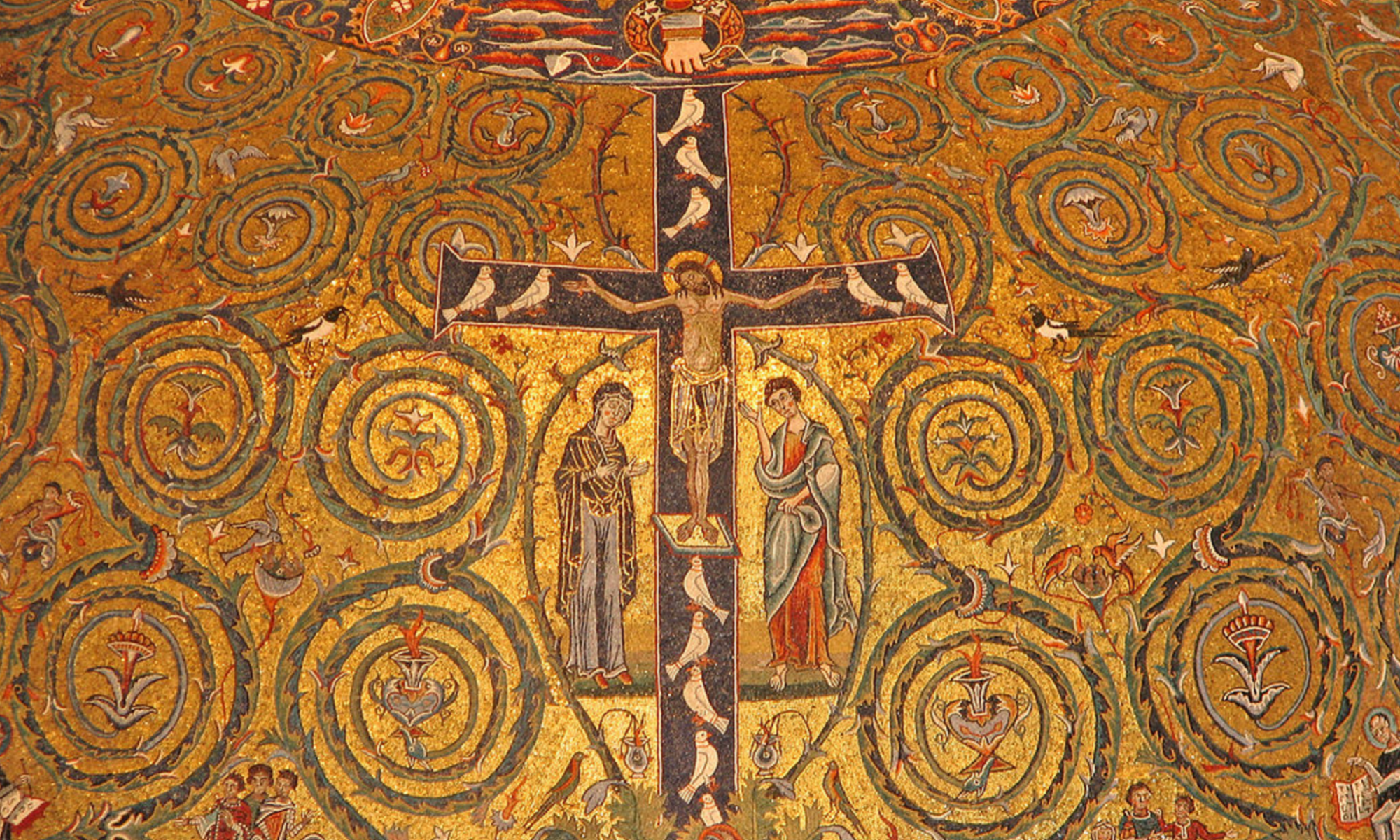
Amidst that peace and an intense desire for more of that peace, I felt convicted of all the times that I was “pushing through” the present moment. I was either enduring that which was unpleasant or devouring that which was pleasurable. Either way, I wasn’t opening myself to the gift that can only be received in the present. He helped me see how often things that felt confusing or overwhelming in the present moment actually led to abundant blessing. He flooded my mind and heart with the image of looking back down the mountain at the twisting path already walked – including steps that made utterly no sense at the time – and marveling at how no other path would have worked. He gave me some felt sense of how he sees all of these things simultaneously; all the moments are one in him; all are “now” for him. He invites me to surrender to him in the “now” of the present moment. I resist. When I left the chapel and felt the throb of circulation as the blood returned to my knees. I paused in the hallway to gaze on a copy of a Pinturicchio painting of the Crucifixion (see above). I felt a jolt of awe as I gazed upon the “now” of Jesus’ once-and-for-all sacrifice on the Cross. Beneath him lay death dismantled, overcome by his love and his shed bled. Behind him was paradise restored, and a felt sense of God’s eternal rest sustaining him in that moment of surrender. I felt Jesus’ trust in his Father and an intense desire to share in that trust.

In the twenty-five years since, I have felt both senses of “abandonment” many times over. Perhaps the most distressing situations for me are those in which I feel left alone by those I thought I could trust – suddenly facing an overwhelming and dangerous threat by myself, when I thought I would have protection and security. That feeling of abandonment is so ancient for me and so familiar. The lies can race through my head at lightning speed: They don’t understand; they don’t care; they can’t be trusted; I am all alone! In some cases, I flee and isolate myself; at other times I attack with an angry outburst and hold others to impossible expectations, as if they are supposed to revolve around my needs. The more I mature in Christ, the more quickly I notice, and the more frequently I choose a different path – or repair if I repeat old patterns.

Again and again, God has also invited me into trust and surrender, reminding me to live in the present moment and look for his gift. If I abide and gaze and receive, the gift is always there, including in those moments in which I am invited to take up my cross with Jesus.

I can only receive the gift of the present moment to the extent that I let down the defenses of my self-protection. Otherwise I limit how much I can receive, and ultimately how much I can give.

The English verb “to abandon” comes from the French abandonner. The French verb has multiple senses, which one way or another are ways of untying, releasing, or relinquishing a band that ties something together. When we do so with a committed relationship or a grave duty (e.g., parenting, governing, leadership), other humans experience abandonment in the first sense (“My God, my God, why have you abandoned me?”). But there is also an untying or letting go when we encounter beauty, when we forgive harm, when we dance, or when we connect with another person.

Jesus, in his Passion, enters fully into both human experiences of “abandonment,” and reconciles them. Those of us who have experienced abandonment in the first sense tend to have spectacular defenses against ever letting anyone close again. Jesus cries out to the Father on our behalf. Jesus also “abandons” in the second sense. He cancels the debt of our sins, releasing all claims to make us pay. He meekly surrenders himself like a lamb, even in the face of contempt, violence, and powerlessness. He releases every merely human solution and entrusts all of it to his Father. He freely submits and becomes the seed sown into the earth that bears abundant fruit. May we claim his victory and allow him to reconcile in our hearts all that impedes our own surrender.

Purity Culture – Lie #4

This is the fourth installment in a series on the “purity culture” that has attempted to protect Christian families and churches. Although claiming a well-intended goal of sheltering children from toxic influences in the broader culture, the purity culture has actually set us up for more generations of relational harm. Last time, we saw how essential it is for parents and churches to provide apprenticeship in chastity – which is only possible if we have the courage to face the shame we ourselves feel around our bodies and our sexuality. That which is not transformed gets transmitted.

When we are willing to face our own sexual woundedness, the boldest of human tasks emerges: to allow desire to be awakened within our hearts. There can be no chastity and no holiness without awakened desire. Desire is the rocket fuel that propels every saint.

Lie #4: Purity means fleeing from my desires

When it comes to unwanted sexual behaviors, the go-to answer for many a Christian has been the Monty Python solution: “Run away! Run away! Run away!”

Certainly, in the moment of temptation, it makes sense to turn promptly away, to get one’s mind and body engaged in something else, to connect with a safe person, and to reassess. But as most of you know, when an individual or a dating couple reach that moment and feel that level of arousal, they find it rather hard to change their mind. Their bodily passions betray them – or do they?

We easily forget that it is God who created our bodies, our sexual arousal, and our capacity for orgasm. These are among God’s greatest gifts to us, ordered to his glory. When Scripture describes us as being created in the very image and likeness of God, it does so at the moment of describing how God created us as sexual beings, male and female (Genesis 1:27). Our capacity for sexual ecstasy – to “stand outside ourselves” in the intensity of a love relationship – is one of the most amazing ways we are capable of imitating the communion of love that is the Trinity.

Our desires do not come from the devil. The devil cannot create! He can only present us with the good and beautiful things God has created and invite us to seek them in a disordered way that ruins us. He is the enemy of human nature. He envies us; he hates us; he seeks to ruin all that is best in us. The devil’s ultimate strategy is not to lure us into sexuality; his strategy is to ruin sexuality!

I love nerdy board games. I know it’s going to be a great game when it has hundreds of wooden pieces and multiple instruction books – both in English and in German. A common mistake of rookie players is to get too caught up in the tactics of the early rounds and lose sight of the end game. Most of the plays you make early on are setting you up for the later rounds of the game when you really hope to flex your muscles.

We can give the devil his due – he is brilliant and cunning strategist. He sneaks in early and often in our life to whisper his lies and bind us up in toxic shame. As our bodies mature (in exactly the way God designed), the devil works his early and mid-game strategy to ensure that we will feel ashamed of our bodies, our sexuality, and our capacity for intense joy and delight. When he’s the most masterful, we don’t even realize he’s been there. We develop our own inner shaming voice – which we even think to be divine. Then we start doing the devil’s work for him – cursing our own bodies, our arousal, and our capacity for honor and delight. As shame increases over the years, unwanted sexual behaviors are anything but secret delights. They leave us feeling more and more hollow and ashamed. They become a renewal of unholy vows – consummating again and again the lie that we are worthless, dirty, or unlovable. The devil’s genius is that he can take something so amazing as sex and sexual arousal and use those “very good” gifts to convince us that we are detestable.

And here we find the real context for Christian asceticism or penance. Yes, Jesus presumes that his followers will engage in prayer, fasting, and almsgiving (Matthew 6). He connects fasting to the presence or absence of the bridegroom. The real reason for asceticism is to enlarge our desires and allow ourselves to enter excitedly into the wedding feast, the nuptial union between Christ and his bride, the Church (Matthew 9:15).

Too often, “self-denial” becomes a misguided and harmful attempt to cut off desire. Then our asceticism becomes shame-driven, as we punish ourselves in a sense of unworthiness. We begin depriving ourselves of things that are authentic human needs: rest, play, joy, delight, or deeply meaningful work. By contrast, I think of Francis of Assisi. His heart overflowed with those blessings, without clinging to any of them. His radical poverty and his freely embraced celibacy, far from cutting off desire, opened him to be a man full of delight, in a fruitful way of life that has allured millions over the centuries.

Authentic asceticism is about a deeper claiming of our God-given desire. It leads to more delight, not less! We deny ourselves certain things so that we can get incredibly excited (aroused!) about greater things. Yes, Jesus speaks of “cutting off” or “ripping out” (Matthew 5:29-30). But he also warns us that it does no good to drive one demon out of the house and have seven new ones take its place (Matthew 12:43-45). Self-denial is always for the sake of bigger desire.

We are created for desire, for arousal, and for union – to experience intense delight as we receive and give love. Sexual union between husband and wife is meant to be a ritual act of worship that points as a sign to heaven itself – which is going to be a wedding feast! Godly celibacy is also fueled by eros. It is described by Jesus as a gift “for the sake of the Kingdom” precisely because it, too, is a passionate giving and receiving of love that reminds us of the heavenly wedding feast. That heavenly union is so “real” that all earthly marriages will fade away in its sight (cMatthew 22:29-30).

Yes, discipline and discipleship go together – but not for the sake of punishing or eliminating our God-given desire. The problem is not that we desire too much, but that we desire too little. Actually, desire is always there, sometimes buried deeply or tangled up among so many diversions or distractions – but every ready to be stoked into flame. Our fallen tendency is to resist going into the depths of our desire, which is where we find the virtue of Hope – the virtue of Good Friday and Holy Saturday, awaiting the Resurrection. To desire and not yet possess, to seek the beloved and not yet find him – this can be agony indeed. It is far easier to plunge into austere penances or indulgent pleasures than to abide in a holy longing. Holy longings can really hurt sometimes.

God knows how hard it is to grow in Hope. He does not unduly push or pressure us. Catholic mystics over the centuries have been enamored with the Song of Songs, that book of the Bible consisting of erotic love poetry, in which the beloved desperately seeks her lover in the dark, agonizing until she finds him. The author acknowledges the intensity of this pursuit: “I adjure you, Daughters of Jerusalem, do not awaken or arouse love until it is ready!” (Song of Songs 8:4).

Is your love of Christ ready to be awakened and aroused this Lent?

Purity Culture – Lie #3

Few would deny that we live in an age of unhealthy and dysfunctional sexuality. The “purity culture” we’ve been discussing is an understandable reaction to a real threat. But those engaging in the fight often act as though sexuality is itself the threat. That is quite a contrast from John Paul II’s description of the fruitful one-flesh union of husband and wife as an icon that makes visible the eternal love of the Trinity!

Lie #3: We have to protect our children against sexuality.

Christian families and churches vary in their messaging around sex. Some are prudish and puritanical; others openly proclaim sex as a good and beautiful gift of God. But few have healthy and helpful conversations.

It’s not merely the message that matters; it’s the modeling of the message. A family may have snappy Christmas postcards and impeccable social media posts. They may seem to have it all together. But those who have eyes to see can tell when a married couple is healthy and joyful in their relationship (including their sexuality). You can tell when they are merely pretending, when there is strain, and when there is shame and contempt. Children have fully operational right brains, and as such, they are incredibly intuitive and insightful. If their parents feel shame around their bodies, their desires, their fantasies, or their behaviors, the children will be impacted significantly. Parents who are unhealthy in their own sexuality will invariably transmit their dysfunction to the next generation – especially when they don’t admit it or talk about it.

When the Catechism of the Catholic Church discusses healthy sexuality (n. 2339), it offers the image of apprenticeship in virtue, particularly in the virtue of chastity. Rather than warning against a loss of purity or advocating a posture of protection, the Catechism speaks of gradually growing into the virtue of “chastity” – a virtue that leads to human flourishing in our expression of love and sexuality. Chastity here is not synonymous with celibacy; it applies to everyone. Chastity is a free, joyful, wholehearted, and creative giving and receiving of love – in the way that best suits the place we find ourselves (married, single, celibate, dating, engaged, elderly, prepubescent, adolescent, same-sex attracted, sick, disabled, divorced, widowed, etc.).

Our sexuality is a stunningly beautiful gift from God, one that affects all dimensions of our existence. In his intentional design, he has created us as sexual beings, male and female. He declares us “very good” in his own image and likeness. He invests us with a spark of creativity that none of the other creatures receive. Thus empowered, we are intended to be the stewards of the entire cosmos.

Christian scholars as diverse as C.S. Lewis and Pope Benedict XVI describe this divine spark of creativity as eros – the Greek word for “love” as an intense or erotic desire. Far from seeing eros as a threat, they see it as God’s greatest natural gift to the human race. The creativity of eros shows up in sex, for sure, in the amazing gift of procreation. How many mothers and fathers have held their newborn infant, marveling that this growing child came forth from their very bodies, from their one-flesh union? But eros, when directed in virtue, also fuels every other shining achievement: poetry, music, art, architecture, scientific research, discoveries, and inventions. Celibate individuals tend to be even more passionate and even more fruitful. Consider the public ministry of Jesus, the missionary zeal of Paul, the brilliant philosophy and theology of Thomas Aquinas, or the intense and alluring joy of Francis of Assisi.

Our sexuality is a precious and powerful gift. As such, it requires ongoing maturing through slow and steady growth. This process only happens well through apprenticeship. Think of a lumberjack or a blacksmith teaching his trade to children, or of Mister Miyagi teaching karate to Daniel LaRusso. They train their youth to wield something powerful – harmful if misused. It’s all the more reason to teach patiently, step by step, how those tools and methods work. Growth and mastery happen through thousands of small moments – including setbacks, conflicts, mistakes, and failures. Nor is the maturing involved simply a matter of skill or technique; it is a style of relating and a way of life.

Many of us my age and older received zero instruction from our parents around our sexuality. At best, there was “the talk” – as though one awkward conversation would yield a lifetime of virtue and holiness in one’s sexuality. When it comes to the single most beautiful gift God has given us, we offer the least guidance. Effective apprenticeship means that children trust both the teaching and the example of their parents. It means they readily go to them when they are struggling.

Perhaps the most helpful thought experiment is what happens if a child stumbles across pornography. These days, sadly, it is not a matter of “if” but only of “when.” It will almost certainly happen before the child reaches 18, and quite possibly before he or she reaches 10.

The normal instinct of the young (both mammals and humans) is to run to their parents when they unexpectedly stumble on something big or unknown or powerful. You don’t have to teach them – it happens automatically!

Why is it, then, that so few children go to mom or dad when they stumble upon pornography, or have an unexpected sexual encounter? Something has happened in their experience that warns them that it will not be safe. The more shame that mom or dad feel around their bodies and their sexuality, the less likely the children will be to go to them. It is one thing to call the body a temple of the Holy Spirit; it is another thing to treat it like one!

Early and often, children need help in understanding their bodies and what they are experiencing in their bodies. The more attuned parents are to what is really happening in the hearts and bodies of their children, the more helpful those conversations will be.

In those rare cases that children run to their parents and receive good care, they will not suffer lasting trauma. Good care includes helping them understand how normal and healthy it is to feel aroused and to feel curious, and to offer guidance on why God created us to feel that way. Then any shame involved in the experience melts away.

As well-meaning as it is to “shelter” children, we need to train them instead. Ask yourself this simple question: would you rather that your children get information and answers from you or from google?  There are real threats in the culture (internet pornography, sexual predators, and human trafficking). Truly protecting children means having healthy and helpful conversations early and often, equipping them and training them. It means apprenticeship!

Our children are as God created them to be: sexual beings with developing bodies, natural curiosity, and capacity for arousal.  That means talking with them, gradually over the years, about their bodies, their body parts, and pornography – using the correct words for all of them and an explanation that makes sense to the children at their developmental stage.

I find that parents who have had the courage to engage their own story and heal from their own shame become the most comfortable and confident at mentoring their children in chastity. Obviously the parents themselves are called by Christ to continue maturing. In many cases, there is a need of remedial mentoring. There are stories of harm or neglect from their own past that have not yet received the healing of Jesus. As parents heal from their shame and recover the glory of their own sexuality, their growth in chastity will attract and guide their children. We cannot expect our children to grow in ways that we have not grown ourselves!

Savoring and Our Resistance

What is it like for you to savor? I’m not just talking about delicious food, but any profound experience of beauty or goodness or truth. When I look into myself and others, I find that it’s surprisingly hard to stay in the present moment and savor.

We can consume and devour, insatiably wanting more, ruining ourselves or others in our gluttony or greed or lust. When we do so, there might be a flitting moment of pleasure, but no joy. More often, we do not allow ourselves even to be in the present moment. Rather, we numb ourselves and live a disembodied existence – buried in work, binging on pleasures, or staring at a screen. We find it easier to be passive spectators than actively engaged children of God. After all, we have no skin in the game when we watch the news, distract ourselves with sports, play video games, or scroll through social media.

Meanwhile, God is always seeking to allure us and amaze us with experiences of truth and goodness and beauty. What is it like to slow down and take in the honor and delight of these moments? Not to take a picture and post it on social media – but just to savor?

I struggle to savor, even though I recognize that God has gifted me with a heart that intensely delights in truth and goodness and beauty. I perceive his handiwork in places that others often don’t. Yet it’s a gift that I resist. I’m starting to understand why: I’m afraid to suffer.

When I discover a surprising new truth, I feel an intense arousal and delight, followed by even more longing. It’s as though I am four years old again. I have such an eagerness to discover the truth and surrender myself to it. If I allow myself to stay in the experience, I’ll desire to keep learning more. I’ll ask “why?” a thousand different ways. I will eventually reach moments of disappointment or sadness. I may feel alone or rejected in a mocking world that doesn’t allow time or space for such questioning. For sure, I’ll discover the limits of human knowledge. No matter how much I learn, there will always be more that I don’t know. Savoring means tolerating both the intense joy of learning and the ache of not-yet knowing.

When I stumble on human goodness, I easily cry. It can be an inspiring scene in a movie or a book. It can be a heroic moment in the everyday life of a person that I’ve known for years. Suddenly I catch of glimpse of God’s goodness blazing brightly, and the tears flow. I feel intense joy and gratitude. I feel regret for not having noticed and delighted in this goodness before. I feel that painful ache – an ache for this person’s goodness to be celebrated, an ache for more goodness in myself and others. In the depths of my heart, I long to give myself freely and wholeheartedly in sacrifice. Yet so many other parts of me are terrified of feeling vulnerable and unprotected. I resist a tenderhearted trust in God for fear of what might happen. I readily relate to Jesus in the Garden of Gethsemane in the first half of the story, but not yet in the second. I can be with him lying prostrate on the earth, begging the Father to let the cup pass. I desire also to be like Jesus standing with strength and willingly giving himself over to Judas and the mob. But I resist the vulnerability involved, and often find myself like the turtle yanking his head back into the shell – even when the shell is starting to rot on the inside.

I see beauty every day, when I take the time to notice it. Too often I feel an urge to rush past it, telling myself that I don’t have time to savor it today. When I do pause to take it in, there is so much praise and delight in my soul – and again that longing, that ache, that sense of the eternal Beauty that cannot be contained in this passing world. My intuition knows that this moment of beauty is only a glimpse, and that it is going to fade. There is such a mixture of sweetness and sadness there. It feels easier just to avoid the ache by avoiding the intensity of the beauty.

Yes, even though God created my heart for truth and goodness and beauty, I sometimes resist those experiences. I consume and devour, rather than slow down and savor. I rush on to the next thing, rather than pause and delight. I gravitate towards “rest” that is actually disengagement and numbing out – disconnecting from my five senses and my body rather than being more intensely present in the moment. It takes emotional and spiritual effort to rest in an embodied way, even when I have the time.

I experienced this resistance the other day in the face of a spectacular winter sunset. It was a Sunday evening after a very full week of work, including several overwhelming moments of frustration, powerlessness, anger, anxiety, fear, and shame. I just wanted to “chill” or “veg out,” as we often say. I turned to look around just as I was about to enter my house, and saw the entire western horizon painted with a dozen contrasting shades, all reflecting upon the ice and snow. And I just wanted to go inside and veg out. I fought an intense spiritual battle just to stand there for fifteen minutes. I kept feeling an urge to exit the scene, to pull out my phone, or to go in the house and move on to the next thing. But a wiser and deeper voice within me told me to stay and to savor.

I wept.

I wept at the stunning beauty. I wept over the resistance within my heart. I felt shame and frustration. My heavenly Father doesn’t mind my sins and struggles, but sometimes I cannot stand them.

We resist savoring because we don’t want to suffer; we don’t want to die; and we most definitely do not want to wait in hope – all the while feeling the painful longing of the “not yet.”

Isn’t it interesting that we sabotage our deepest longings? Part of us would rather be disembodied and joyless than fully alive with our five senses in the present moment. It is often the artist, the poet, the prophet, or the saint who calls us to our senses. I think of the intense delight and praise of Francis of Assisi as he savored God’s creation – all the while suffering in his longing to rebuild Christ’s Church. I think of the words of the poet T.S. Eliot in the early 20th Century: “Human kind cannot bear very much reality.” We prefer to be “distracted from distraction by distraction.” Rather than desire and dream and risk, we will settle for “living and partly living.”

God has created us for so much more, and he sent his own Son to awaken these desires in our heart. The child Jesus will awaken these longings that his Father has placed in our heart. It’s a dangerous undertaking that will lead both him and us through suffering and death – and to eternal life. Will we follow?