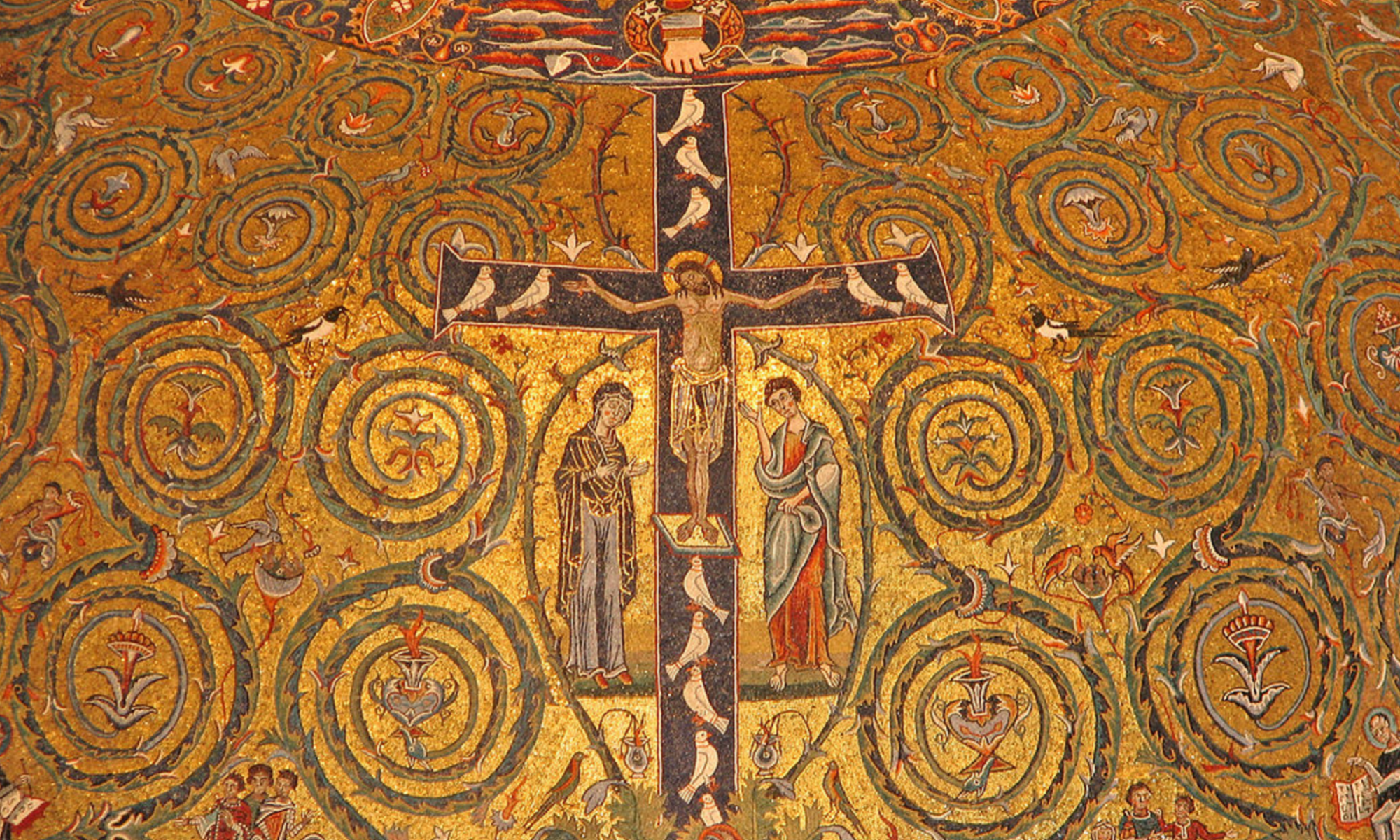
Jesus and Restorative Justice

What is justice?

The greatest minds in human history have often pondered this challenging question: Plato in his Republic, Aristotle in his Ethics, Thomas Aquinas in his Summa.  Wise women and men do not pretend to have all the answers, but they stir up our curiosity by inviting us to ask the right questions.

Justice is a theme that runs throughout the Scriptures. In God’s plan, justice is wedded to mercy (Psalm 85:10). He does not desire the sinner to die but to turn back and live (Ezekiel 18:23). He sends his own beloved Son Jesus to seek out and save that which has been lost (Luke 19:10). He does not desire to condemn the world but to save it (John 3:17). When he acts justly, it is always ultimately with a view to heal and restore the creatures he has made – if we desire it. When he acts mercifully, it is never without an invitation to tell the full truth about the harm.

Think of Adam and Eve in the garden in Genesis 3. In their shame, they hide themselves – as though from an angry tyrant who is going to make them pay. He does bring Fatherly justice – holding them accountable and explaining to them the consequences. But he also promises eventual healing and restoration through “the woman” and her offspring. Adam and Eve are unable, at first, to tell the truth about what they have done. They try to shift the blame – anything to get the attention off the shame they are experiencing. God’s questions are for their good: Where are you? Who told you that you were naked? Have you eaten from the tree? God exhibits both justice and mercy because he is a loving Father who ultimately desires our wholeness and our sharing in his glory. He never lies or ignores the truth, but he also does not desire our loss. Rather than make us pay in strict retributive justice, he sends his own beloved Son so that we can receive his mercy.

But there is so much more than a “not guilty” verdict! The Father and Jesus desire our healing, our restoration, and our wholeness! That is the primary motive for the Father asking his Son to die and rise. Jesus proclaims to his disciples that he came so that we might have abundant life (John 10:10). When he starts appearing to people after the resurrection, he brings life, joy, peace, healing, restoration, wholeness, and holiness – so much more than what they had hoped or dreamed!

How damaging it has been for some Christians to think of the death of Jesus only in the sense of paying the price for our sins. Yes, there is justice – God is a loving and truth-telling Father who does not pretend as though our sins never happened. We can only be healed and restored if we take seriously the harm that our sins have caused – the way in which we have ruptured relationships with him, with others, and with ourselves. AND the Father desires restoration, wholeness, and holiness.

Consider Jesus and Zacchaeus, the tax collector who has exploited many vulnerable people (Luke 10). Jesus eagerly seeks out Zacchaeus, who is stunned at being desired and delighted in. But Jesus also allows Zacchaeus to name the harm he has caused and work to repair it. Mercy and justice go together.

Consider Jesus and Peter in John 21. Jesus stokes a charcoal fire there on the seashore – fully knowing what he is going to do. Following the miraculous catch of 153 fish, he then invites Peter into a conversation that is simultaneously remembering, truth-telling, and healing. Peter stands once again by a charcoal fire, just like the night before Jesus died – only now Peter is allowed the opportunity to say three times that he loves Jesus. Peter experiences much distress in this experience – as Jesus knows he will. It is not a shaming of Peter, but rather helping Peter journey through and out of the labyrinth of shame as he begins experiencing healing and restoration.

Peter is much humbler in this encounter than at the Last Supper, when he boldly declared he would lay down his life for Jesus. In the Greek text, Jesus asks Peter “Do you love me?” – using the verb agapein to denote a self-sacrificing love. Peter responds (truthfully this time) that he loves him with philein – a brotherly love. Jesus foretells the eventual day when Peter will indeed love him so greatly as to lay down his life. For now, he simply invites Peter, “Follow me.” When we read the Acts of the Apostles, we see the restoration and transformation of Peter taking ever fuller effect. The risen glory of Jesus begins shining in and through him.

Repair and restoration take time. But they include a safe space in which both the one who has harmed and the one who was harmed can be heard, can tell the truth about what has happened, and can seek so much more than simply making someone pay.

I have friends who desire this kind of reform in our criminal justice system – which we all know to be broken and badly in need of repair! I am not an expert in those areas, but I hope we begin asking more of the right questions! Both Scripture and our Catholic Tradition have so much more to offer than a justice that only thinks about retribution.

As a priest, I am especially interested in how restorative justice can take root in our marriages, our families, and our church institutions. Too often, when serious harm has happened, we do not use our God-given creativity to open up a safe and healing forum in which all sides can tell the truth about the harm and seek full restoration for all who have been impacted.

Our families of origin and our church families have often failed in this area – especially when there has been sexual harm. Most people I know feel even more shame and awkwardness talking about sexuality – even though it is one of God’s most glorious gifts to us. Consequently, those who have been harmed sexually – whether by someone working for the church or by someone else – often find that neither their family of origin nor their church family is a safe haven to bring their story. I can think of more than a dozen individuals I know personally who suffered even greater betrayal because their story was not received with care.  Simultaneously, our society currently offers no path of redemption or restoration for those who have perpetrated sexual harm – they are branded as permanent outcasts beyond the reach of mercy.

Our just and merciful Father says otherwise – he desires healing and restoration for all who will receive it. As with Adam, Eve, Zaccheaus, the Samaritan woman at the well, or Peter, such restoration is only possible if we are willing to be truth-tellers – both about the harm done to us and about the harm we have done to self and others. Jesus will invite us to follow him on a healing path that includes (sometimes awkward or messy) repair. We will die and rise with him as we come to full maturity in him. In the end, if we welcome this full encounter with his love and truth, his righteousness will shine in us.

Purity Culture – Conclusion

This is the fifth and final installment of my reflections on the “purity culture” often found in Christian homes and churches. Out of fear that young people will be corrupted by the sex-obsessed culture, we sometimes miss the mark ourselves. We link shame and sexual desire together in ways God never intended; we abdicate our responsibility of providing apprenticeship in chastity; or we model a moralistic self-righteousness rather than humble growth and fruitfulness. Perhaps the biggest mistake is turning “purity” exclusively into a moral issue and/or a sexual issue. That is certainly not the biblical view nor the Catholic view.

Lie #5“Purity” is mainly about sexual morality

In the Beatitudes, Jesus teaches, “Blessed are the pure in heart, for they shall see God” (Matthew 5:7). Isn’t it interesting that most American Christians hear these words and instantly imagine sexual morality?

Yes, Jesus proceeds to address adultery and lust in the subsequent chapters. But he also addresses murder, aggression, anger, unforgiveness, and greed. He teaches about prayer, fasting, and almsgiving. He invites us to seek first the Kingdom of God, and in so doing to persevere in seeking, asking, and knocking.

Above all else, Jesus speaks from start to finish about a relationship with God the Father. He invites us into communion. He desires us to be “blessed” by our Father, who sent his own Son to die for us while we were yet sinners. We do not and cannot earn our way into relationship by good conduct. We enter our covenant with God as ones who are poor in spirit; grieving and mourning, meek and humble; aching with hunger and thirst. Jesus knows that we will be presenting broken lives to God for mending.  Purity of heart means bringing God all of the scattered pieces of our shattered hearts! It is then that real growth can begin.

In other words, when Jesus speaks of being “pure in heart,” he is inviting us to be wholly and wholeheartedly consecrated to God. That means allowing every dimension of our being to be blessed by him. It is the opposite of hiding away pieces of ourselves in shame! It was the devil who tried to convince Adam and Eve to run and hide after they had disobeyed God.

Toxic shame is perhaps the single greatest obstacle that keeps us from letting ourselves (ALL of ourselves) be loved by God and others. Many of us are more susceptible to shame because we learned to tie performance and relationships together: “I am only lovable if…” or “I am only lovable when…” To the extent that those lies have purchase in our hearts, Christian morality becomes a torment rather than Good News.

The urge to hide ourselves is challenging enough when we feel shame over moral faults. But the devil has worked still greater harm in many of us. In moments of betrayal, abuse, abandonment, or neglect, he has crept in and whispered lies – convincing us to hold contempt toward our desires, our bodies, our sexuality, or our capacity for delight. We then enter a false battle for “purity” – trying to rid ourselves of that which is best in us! If we feel shame every time we feel desire, how can we grow in healthy relationships? Hiding ourselves does not lead to intimacy.

Our shame can be healed by moving away from hiding and towards relationships: becoming truly and safely seen, known, heard, understood, and cherished – not some idealized version of ourselves, but as we currently are, a work in progress.

The Catechism of the Catholic Church (n. 2518) speaks of purity of heart as a threefold sharing in God’s purity: in our charity, our chastity, and our orthodox belief. In other words, we are created to share in divine Goodness, divine Beauty, and divine Truth.

Truth, Goodness, and Beauty – the human heart has an almost insatiable longing for all three! The devil HATES this longing in us, but cannot erase it. So he attempts to divert and distract us away from the intimacy of relationship that is at the core of all three.

Our intellects are ordered to the Truth. Purity of heart includes surrendering to the Truth whenever the evidence is in front of us. The humble heart is willing to be proven wrong – or incomplete. The arrogant heart resists the vulnerability of surrender – either through obstinate refusal to believe what God has revealed or through a dogmatism that thinks it knows everything – as though Truth is an object we could possess. The closer we get to divine Truth, the more we realize how little we truly know!

Our wills are ordered to Goodness. We long to love and be loved. And so God commands us to love him with all our heart, mind, soul, and strength, and to love our neighbor as ourselves. It is a two-way street: freely receiving and freely giving. Growing in purity of heart includes recognizing any ways in which we are blocked – either in giving or receiving. The more we love, the greater our ache to become more God-like in our love.

Our ache for Beauty flows from both our intellect and our will. Here we find the intense desire of eros that is such a glorious divine gift. No wonder the devil tries so hard to ruin it! Early and often, he entices us to curse our desire for Beauty – to feel shame around this God-given longing.

Yes, our desires often run wild – overindulging in food, becoming possessive in relationships, or wandering into sexual fantasies. That is why the Catechism speaks of “apprenticeship” in chastity. There is an appropriate pruning or discipline – not for the sake of cutting off desire, but of fully claiming it.

The word “purity” is first and foremost about our relationship with God –with sexuality as only one dimension. It is a damaging distortion to use “purity” in a moralistic sense. Instead, the Catechism of the Catholic Church devotes ten full paragraphs to the much more helpful words “integrity” and “integrality” (see nn. 2338-2347). Little by little, we learn how to put all the pieces together, aided by healthy relationships with God and others.

Becoming a whole person in our sexuality, our desires, our emotions, and our relationships is not a matter of “on” or “off,” maintaining or losing. It is a lifelong task. The Catechism proclaims this integration to be “a long and exacting work. One can never consider it acquired once and for all. It presupposes renewed effort at all stages of life” (n. 2342).

We are called to keep growing in charity, chastity, and truth our whole life long. The more we grow, the more we will long to grow. Getting a taste of God’s Truth, Goodness, and Beauty is described by many of the mystics as a “wound” – but in this case a wound of love that keeps us coming back to our lover for more. Once we begin tasting from the spring of living waters, our thirst for God intensifies. We desire more; we ache; we taste; we desire; and so the cycle of growth continues.

Apart from those living waters, we wither and die. If we only bring parts of ourselves to the living waters, the relationship will remain impartial and restricted. God desires ALL of us. The mystics desire ALL of him. Unlike lust, however, there is no devouring here. Jesus and his bride become one flesh, in a way that causes both to flourish. Every healthy and holy human relationship imitates that heavenly nuptial union. It is indeed a daunting and lifelong task to keep maturing in imitation of Christ. We need not shame ourselves or others in the process, but allow the kindness of God to keep spurring us on to deeper repentance.

“Purity Culture” – Lie #1

Ours is not an age of flourishing relationships, joyful marriages, or healthy sexuality. For decades, Christians have been concerned about the toxic environment of the surrounding culture. So we have fought culture wars, trying to get the world to be more like us.

But what about us? What about our own marriages, our own families, and our own churches? Are we really as “pure” as all that?

Many Christian families and churches have created a “purity culture” in the hope of sheltering our children and keeping them pure. It seems like a valiant fight. But has it really been helpful?

All the latest research shows that church-going Christians struggle every bit as much with abuse, neglect, pornography, addictions, codependency, marital infidelity, and domestic violence – just to name a few. Isn’t it strange to “fight” to make the world just like us when our own house lies in ruins?

Jesus has a word for that: “You hypocrites!” In the Sermon on the Mount, he reminds us to remove the wooden beam from our own eye before we attempt removing the splinter from our brother’s eye (Matthew 7:5).

On my sabbatical this past fall, I engaged in multiple trainings, all of which focused on providing care in the area of trauma, unwanted behaviors, and addictions. Each training operated with this bedrock principle: take the beam out of your own eye first! You cannot be of support to your brothers or sisters (or sons or daughters) if you have not first truthfully faced your own story and your own behaviors.

Two generations of hard fighting from the “purity culture” have yielded struggling parents and struggling grandparents. Far from sheltering and preserving our children, the rigidity has actually plunged many Christians (or former Christians) into toxic shame, dysfunctional relationships, and unwanted behaviors.

That is because the purity culture is more rooted in fear than in love. In the fog of fear, our heart is easily hijacked by lies, or by distortions of sound doctrine. In the weeks ahead, I hope to unmask some of those lies and consider what Scripture and Christian Tradition actually teach about human love and sexuality.

Lie #1: Purity as a Prize to be Lost. Far too often, our Christian churches and families have upheld a standard of “purity” as a prize to be lost. In this view, purity is black or white, on or off. Don’t be impure like those people. Be pure like these people. It’s a damaging and deceptive dichotomy, rooted in self-righteousness, presumption, and pride.

In Catholic life, the false dichotomy of “pure” versus “impure” shows up in a distorted understanding of what Church teaching means by “mortal sin” versus “state of grace.”  Many Catholics struggling with unwanted sexual behaviors feel tormented by fear and shame. They view themselves as spending most of their waking and sleeping hours in a state of sin (cut off / lost / cast out / impure). Then they go to Confession and feel great, thinking themselves “pure” again, holy again, worthy again. Notice the presumption and self-righteousness, and the lack of confidence in God’s unchanging covenantal love.

Yes, Catholic teaching and the Bible (1 John 5:17) talk about mortal sin. But the Catechism of the Catholic Church clarifies that a sin is only mortal if there is full knowledge and deliberate consent (n. 1857). Deliberate consent is not so clear when you consider the impact of trauma, addictions, or compulsive behaviors. If someone is experiencing “unwanted” sexual behaviors, repeatedly, there is likely more going on! Rather than a black or white judgment of “pure” versus “impure,” the Catechism urges us to consider the embodied human beings in front of us: “To form an equitable judgment about the subjects’ moral responsibility and to guide pastoral action, one must take into account the affective immaturity, force of acquired habit, conditions of anxiety or other psychological or social factors that lessen, if not even reduce to a minimum, moral culpability” (n. 2352).  In other words, labeling another person (or yourself) as “impure” or “in mortal sin” is a rash judgment, and often missing the mark about what is really going on.

More importantly, the teachings of Jesus focus on organic growth into maturity in him. We abide in him as branches on the vine. We grow and bear fruit in him. We are members of his body, truly holy because he is holy in us. It is much more accurate to look at sin as a disease that needs tender and loving care, rather than an ON/OFF switch. Jesus presents himself as the divine physician, here to heal all of us. He repeatedly, sometimes angrily challenges the scribes and Pharisees for seeing themselves as “pure” and others as “impure.” Pride and self-sufficiency are far more damaging than lust! We are all sick sinners in need of the divine physician – each and every day of our lives. We are all beautiful and beloved children of God, each and every day of our lives.

Even if I have just gone to Confession and received absolution, I still have a lifelong journey of conversion ahead of me. God will keep purifying me, like gold in the furnace (which is none other than the fire of his love). Meanwhile, sinner though I am, God will relentlessly pursue me in love, even if I keep going back to the same sins. Purity is not something I gain or lose. Purity is the flowering that slowly emerges as I learn to receive and give love. It is the fruit of maturity in Christ.

Apart from Jesus we can do nothing. God alone is an eternal communion of pure love, and he deeply desires us to share in his eternal love. That sharing is an “already but not yet,” a gradual growth in discipleship, a lifelong journey. We are already members of Christ’s body. He has truly given us a share in his life and his love. We can grow in maturity throughout our life. One day, we will definitively be pure as God is pure – when we see him face to face and become totally like him (1 John 1:1-3).

Yes, purity is a battle to be fought. But the battleground is not primarily in senate chambers or school boards or courtrooms. The battleground is in the desert and on Mount Calvary. The Victor is Jesus Christ, the new Adam. And we already know who wins!

Lifelong growth in purity happens when we learn to have an unshakable confidence in the victory of Jesus. We bring that victory into our own daily battles – not just with sexual seductions, but with all areas of our life. We consecrate all of it to him, in good times and in bad, in sickness and in health. We welcome his shed blood and the new and eternal covenant that alone can save us. We let ourselves be loved and let him teach us how to love. Perfect love will cast out all fear!

To be Continued…

The Baptism of the Lord

On Sunday we celebrate Jesus’ baptism. In Catholicism, the liturgical season of “Christmas” does not even kick off until Christmas Eve, and then continues long after the world has moved on to marketing promotions for Super Bowl snacks, Valentine gifts, and TurboTax.

I remember Father Jack, throughout my adolescent and teen years, quizzing the congregation, and kindly scolding those who had kicked their Christmas trees to the curb too soon.

It may seem odd for the Christmas Season to include a remembrance of Jesus being baptized at age 30. It is a mystery well worth pondering, and one I have had ample opportunity to ponder.

This particular celebration has held a special place in my heart – in part because it coincides so closely with my own birthday. Whenever my anniversary of birth is a Sunday or a Monday, the Baptism of Jesus falls on the same day.

During my nine years of seminary, my birthday often fell in the midst of an annual retreat, prior to the beginning of spring semester. Many people celebrate their 21st birthday at a bar, but mine was in the middle of my first ever silent retreat. Good little Pharisee that I was, I kept perfect silence the entire time. The next two years, my friends Chad, David, and Peter couldn’t resist teasing me about my monastic virtue – not even breaking silence when they surprised me with a chorus of “Happy Birthday.”

On those retreats, God captivated my heart with this special moment in the human history of Jesus. The event of his Baptism is meant to be experienced by each of us as his disciples. All that is his becomes ours.

“You are my beloved Son. I am well pleased in you!” (Mark 1:11)

On those retreats, these words spoken to Jesus by his Father became words spoken by the Father to me. I desperately needed to hear them. I still need to hear them.

It is one thing to profess with my lips, “God loves me.” It is another to experience it. In terms of teaching, I seriously could not have missed this doctrinal truth that God loves me. During the “warm fuzzy” era of Catholic schools in the 1980s, it seemed to be the only content taught in our religion classes– and still it didn’t sink in! No doubt, it’s why Christmas and my birthday felt so special to me as a child. They were rare moments in which I felt like I really mattered.

To be human is to matter to God. He has sent his own beloved Son to reclaim us through the shedding of his own blood. By sheer gift, he not only reconciles us, but expresses his delight in us. The words spoken to Jesus are words meant for us.

During the baptism, the Holy Spirit also shows up with his anointing. That is what “Christ” or “Messiah” means – the anointed one. This is the moment in which the Father anoints Jesus in his humanity (cf. Acts 10:38).

To be “Christian” means to be anointed with Christ. Jesus is God’s eternal Son and has no need of repentance, no need of healing, no need of deliverance, and no need of power. John the Baptist intuitively understands, and protests Jesus’ request to be baptized. But they proceed, “so that all righteousness can be fulfilled” (Matthew 3:15). God desires his righteousness to become ours – truly our own. He desires us to grow and keep growing into the holiness of Christ, which is nothing other than a communion of love in the life of the Trinity.

In one sense, the baptism of Jesus is a past event, over and done with 2,000 years ago in that tiny and not-so-tidy river that still flows into the Dead Sea. In another sense, this event is ongoing. By God’s design, all human flesh is meant to be inserted into the flesh of Christ. All human flesh is invited to the regenerating waters of baptism. All human flesh is invited to be anointed by the Holy Spirit.

We need that renewal; we need that anointing. In the Scripture readings this Sunday, the prophet Isaiah proclaims the victory that the Messiah is destined to bring – calling prisoners out from the dungeon, opening the eyes of the blind, and helping the lame to walk – all possible because the Spirit of the Lord has anointed him (Isaiah 42:1-7).

Despite my dogged self-protection and self-reliance, God repeatedly pierced my defenses on those retreats, surprising me with the honor and delight of being claimed as his own beloved son. On those retreats, my heart burned with desire in reading the messianic prophecies of Isaiah. During those timeless moments of prayer, I was able to admit humbly how blind and lame and impoverished I was – not in self-shaming, but in a kind truthfulness. That humility made it possible to receive as free gift (like a birthday present!) the renewed cleansing of baptismal faith. I realized even then that God intended those words of Isaiah for me as well. As one sharing in the anointing of Jesus, I too am chosen and called to proclaim Good News in the darkest places of people’s hearts, to call out those held prisoner in the dungeon, to grasp them firmly by the hand, to invite them to be claimed as God’s beloved and to receive the same anointing. I knew then and know now that God has called me to be an instrument of his healing. It turns out that I wasn’t ready just then to leave behind my perfectionistic defenses. So God has gently reminded and re-reminded me  that I have ongoing need of healing and anointing myself if I am to be an instrument of healing for others. I can only give if I keep receiving.

The apostle Paul invites us to participate in the baptismal rebirth and renewal that is freely and gratuitously offered in Jesus, along with the rich outpouring of the Spirit (Titus 3:4-7). Let us come into the waters of baptism with Jesus. Let us cast off the deeds of darkness and commit ourselves to live soberly, justly, and devoutly in this present age as we joyfully await in hope his glorious coming. Let us place our trust fully in his victory, freely given to us. With him and in him, let us become God’s anointed!

Savoring and Our Resistance

What is it like for you to savor? I’m not just talking about delicious food, but any profound experience of beauty or goodness or truth. When I look into myself and others, I find that it’s surprisingly hard to stay in the present moment and savor.

We can consume and devour, insatiably wanting more, ruining ourselves or others in our gluttony or greed or lust. When we do so, there might be a flitting moment of pleasure, but no joy. More often, we do not allow ourselves even to be in the present moment. Rather, we numb ourselves and live a disembodied existence – buried in work, binging on pleasures, or staring at a screen. We find it easier to be passive spectators than actively engaged children of God. After all, we have no skin in the game when we watch the news, distract ourselves with sports, play video games, or scroll through social media.

Meanwhile, God is always seeking to allure us and amaze us with experiences of truth and goodness and beauty. What is it like to slow down and take in the honor and delight of these moments? Not to take a picture and post it on social media – but just to savor?

I struggle to savor, even though I recognize that God has gifted me with a heart that intensely delights in truth and goodness and beauty. I perceive his handiwork in places that others often don’t. Yet it’s a gift that I resist. I’m starting to understand why: I’m afraid to suffer.

When I discover a surprising new truth, I feel an intense arousal and delight, followed by even more longing. It’s as though I am four years old again. I have such an eagerness to discover the truth and surrender myself to it. If I allow myself to stay in the experience, I’ll desire to keep learning more. I’ll ask “why?” a thousand different ways. I will eventually reach moments of disappointment or sadness. I may feel alone or rejected in a mocking world that doesn’t allow time or space for such questioning. For sure, I’ll discover the limits of human knowledge. No matter how much I learn, there will always be more that I don’t know. Savoring means tolerating both the intense joy of learning and the ache of not-yet knowing.

When I stumble on human goodness, I easily cry. It can be an inspiring scene in a movie or a book. It can be a heroic moment in the everyday life of a person that I’ve known for years. Suddenly I catch of glimpse of God’s goodness blazing brightly, and the tears flow. I feel intense joy and gratitude. I feel regret for not having noticed and delighted in this goodness before. I feel that painful ache – an ache for this person’s goodness to be celebrated, an ache for more goodness in myself and others. In the depths of my heart, I long to give myself freely and wholeheartedly in sacrifice. Yet so many other parts of me are terrified of feeling vulnerable and unprotected. I resist a tenderhearted trust in God for fear of what might happen. I readily relate to Jesus in the Garden of Gethsemane in the first half of the story, but not yet in the second. I can be with him lying prostrate on the earth, begging the Father to let the cup pass. I desire also to be like Jesus standing with strength and willingly giving himself over to Judas and the mob. But I resist the vulnerability involved, and often find myself like the turtle yanking his head back into the shell – even when the shell is starting to rot on the inside.

I see beauty every day, when I take the time to notice it. Too often I feel an urge to rush past it, telling myself that I don’t have time to savor it today. When I do pause to take it in, there is so much praise and delight in my soul – and again that longing, that ache, that sense of the eternal Beauty that cannot be contained in this passing world. My intuition knows that this moment of beauty is only a glimpse, and that it is going to fade. There is such a mixture of sweetness and sadness there. It feels easier just to avoid the ache by avoiding the intensity of the beauty.

Yes, even though God created my heart for truth and goodness and beauty, I sometimes resist those experiences. I consume and devour, rather than slow down and savor. I rush on to the next thing, rather than pause and delight. I gravitate towards “rest” that is actually disengagement and numbing out – disconnecting from my five senses and my body rather than being more intensely present in the moment. It takes emotional and spiritual effort to rest in an embodied way, even when I have the time.

I experienced this resistance the other day in the face of a spectacular winter sunset. It was a Sunday evening after a very full week of work, including several overwhelming moments of frustration, powerlessness, anger, anxiety, fear, and shame. I just wanted to “chill” or “veg out,” as we often say. I turned to look around just as I was about to enter my house, and saw the entire western horizon painted with a dozen contrasting shades, all reflecting upon the ice and snow. And I just wanted to go inside and veg out. I fought an intense spiritual battle just to stand there for fifteen minutes. I kept feeling an urge to exit the scene, to pull out my phone, or to go in the house and move on to the next thing. But a wiser and deeper voice within me told me to stay and to savor.

I wept.

I wept at the stunning beauty. I wept over the resistance within my heart. I felt shame and frustration. My heavenly Father doesn’t mind my sins and struggles, but sometimes I cannot stand them.

We resist savoring because we don’t want to suffer; we don’t want to die; and we most definitely do not want to wait in hope – all the while feeling the painful longing of the “not yet.”

Isn’t it interesting that we sabotage our deepest longings? Part of us would rather be disembodied and joyless than fully alive with our five senses in the present moment. It is often the artist, the poet, the prophet, or the saint who calls us to our senses. I think of the intense delight and praise of Francis of Assisi as he savored God’s creation – all the while suffering in his longing to rebuild Christ’s Church. I think of the words of the poet T.S. Eliot in the early 20th Century: “Human kind cannot bear very much reality.” We prefer to be “distracted from distraction by distraction.” Rather than desire and dream and risk, we will settle for “living and partly living.”

God has created us for so much more, and he sent his own Son to awaken these desires in our heart. The child Jesus will awaken these longings that his Father has placed in our heart. It’s a dangerous undertaking that will lead both him and us through suffering and death – and to eternal life. Will we follow?

St. Benedict and Stability

As I finish my final month of sabbatical in a Benedictine monastery, I’ll continue reflecting on their threefold vow of obedience, stability, and conversion of life. Last time we considered obedience. Today we’ll consider “stability.”

Benedictine monks vow to stay in the monastery that they enter, unless obedience sends them elsewhere. Historically, monks were sometimes sent out as missionaries, or to be abbot of another monastery. But normally their promise to God includes a definitive choice that this monastery is going to be their spiritual and physical home for the rest of their life.

Other religious communities, like the Missionaries of Charity or the Jesuits, are mobile by their very nature. They expect to be moved many times during the course of their life.

The hyper-mobile spirituality of some orders and the ultra-stable spirituality of the Benedictines each have their place in the life of the Church. The frequent call to be moved is a reminder that “here we have no lasting city” (Hebrews 13:14). It is a share in the mission of Jesus, who had “no place to lay his head” (Matthew 8:20). It prevents stagnation.  On the opposite side, fruitful growth can only happen with patience and perseverance, through ongoing relational connection. Even when serious reforms are needed – especially when serious reforms are needed – it takes a stable and patient commitment.

We live in the FOMO age in which people young and old spend much of their day avoiding solid commitments as they restlessly “connect” through social media. We live in an age in which people quite easily move from job to job, state to state, or marriage to marriage. Even when such moves are good and necessary, they are incredibly challenging for all concerned. Benedictine stability deserves our attention!

We can begin by naming what stability is not. It is not easy living with a resistance to change. Every virtue has its shadow side. A week ago, I had Mass and coffee with a neighboring community of Benedictine Sisters. One of them wisely suggested that a great temptation in Benedictine life is comfort. Comfort kills. When we settle into an easy life, we will find ourselves unhappy and stuck.  Comfortable living does not bring joy or delight. We can only experience joy if we are also open to risk or loss, to sorrow or death. There is no joy without vulnerability. Healthy relationships only survive and thrive when there is a willingness to make mistakes and repair the damage, to engage in difficult experiences, to work through healthy conflict, to admit truthfully what is not working well, and to move forward into the unknown with a trust that God will bring new life and fruitfulness. The Benedictine vow is threefold – including conversion of life. Stability without conversion brings death and decay.

The true invitation of stability is an invitation to be fully present and engaged – with God; with others; and with one’s own body, mind, and spirit. It is direct spiritual combat against acedia, sometimes called “sloth,” which is not what most people think it is! Too often acedia is viewed as “laziness” – which is to be combatted by discipline and hard work. As a recovering workaholic, I can personally testify that we can numb ourselves with lesser labors just as much as with any other drug! No, acedia, the noonday devil, is the siren call that pulls us away from being truly present, to stop feeling what we are feeling, to disconnect from our people and our environment, to hide and isolate. Yes, it can come in the form of “lazy” escapes, but the noonday devil does not discriminate in his tactics. He simply wants to lure us away from drinking in the present moment in all its fullness – and all the better if he does so without our even noticing.

Today’s restless FOMO culture is a prime example of acedia at work. FOMO (“fear of missing out”) paralyzes millions each day, keeping them glued to their smartphones while sapping their capacity to be truly present, to notice, to receive, to savor goodness, to mature, to give, and to bear fruit.

Even in the early months of social media and smartphones, I remember vividly a New York Times article in 2008, highlighting the experiment of an MIT professor with his economics students. They played a simple computer game, in which they clicked on one of three doors. Behind each door were real cash prizes. But clicking on one door caused the others to shrink, and eventually, to disappear forever. Instead of finding the door of greatest value and clicking on it repeatedly, the majority of students “kept their options open,” terrified of committing to one thing only. FOMO.

Both FOMO and comfort are enemies of authentic stability. On the one side are those who are afraid to commit, even when the pearl of great price is at hand. On the other side are those who would keep clicking on the same door even when it is no longer paying out – indeed, even when it is depleting them! Isn’t it interesting that 1,500+ years of Benedictine history also included sweeping and successful missionary efforts? Stable living in one monastery was the norm, but when those stable monks planted a foundation elsewhere for the sake of spreading the Gospel, their new monasteries often became hubs of faith, culture, and civilization. Evangelization takes much patience and time.

Benedict begins his Rule with some sage commentary on these attitudes of the human heart. He discusses different “kinds of monks.” There are solitary “hermits” (as he once was), and there are “cenobites” – those who live in a stable community life. Then there are the “sarabaites.” Rather than surrendering themselves in obedience and allowing a community to correct them, they build up a self-made rule and a self-given salvation. “Their law is what they like to do, whatever strikes their fancy … Anything they believe in and choose, they call holy; anything they dislike, they consider forbidden.” Sound familiar? It is the attitude of so many towards religion today – picking and choosing for themselves that which is good, true, and beautiful rather than allowing themselves to be changed by the living God.

Finally, Benedict discusses the “Gyrovagues,” who refuse to settle down and tend to drift from monastery to monastery, region to region. They become “slaves of their own wills and gross appetites” and “are in every way worse than the Sarabaites.” At that point Benedict effectively says he should move on, because he has nothing nice to say.

In our age that over-exalts being open-minded and keeping options open, the words of G.K. Chesterton come to mind: “Merely having an open mind is nothing; the object of opening the mind, as of opening the mouth, is to shut it again on something solid.” Benedictines understand that. They find the pearl of great price, and they commit to spending the rest of their life steadily pursing it in conversion of life. I’ll consider that third and final dimension next time!