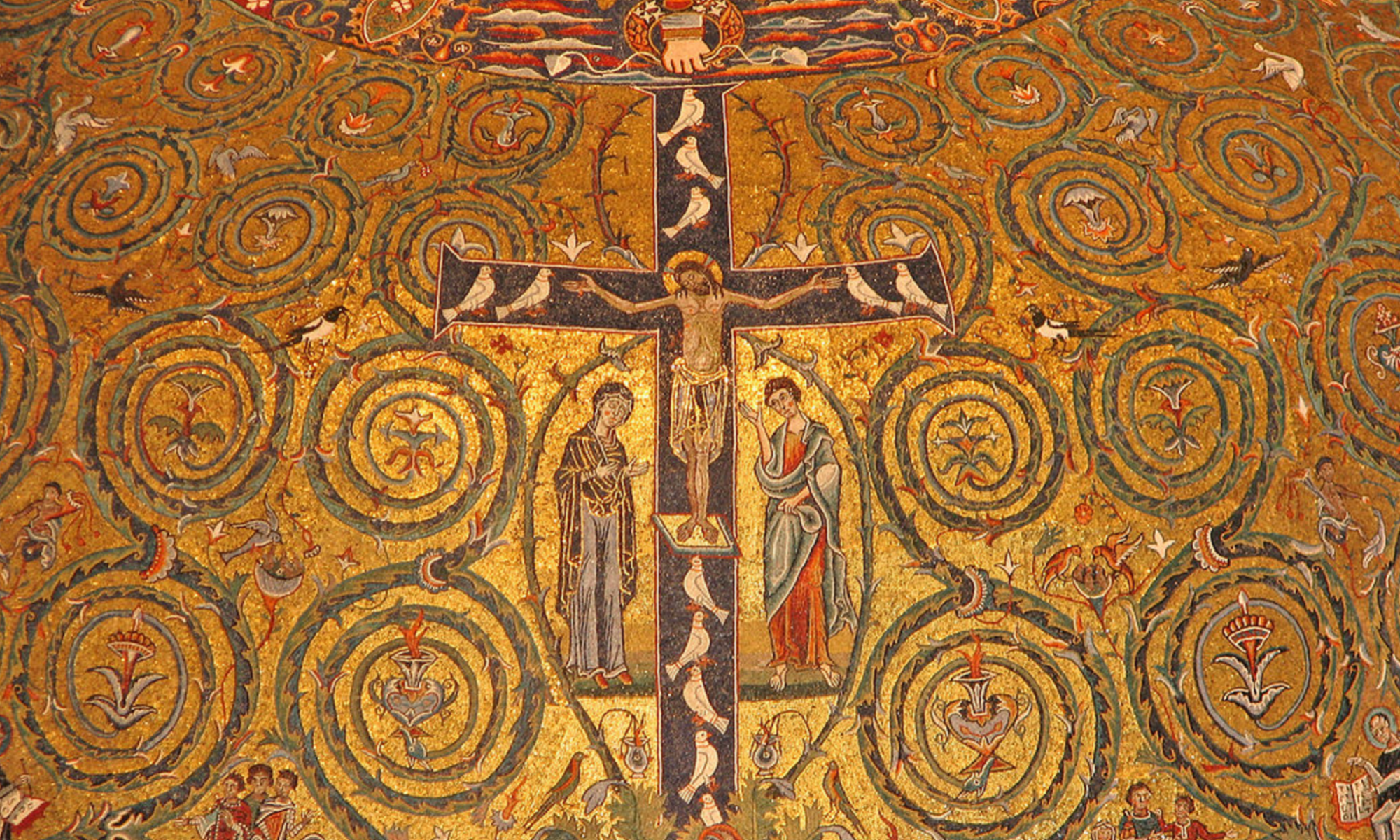
Reflections on Zechariah

Advent is a wonderful time to read the writings of the prophets. Those chosen men, frail human instruments of God, kept their hearts stretched out in expectation, even amidst woes, tears, and lament. Their provocative imagery opens up a vast horizon of Hope. Led by the Holy Spirit, they allowed the depths of their human imagination and emotion to be tapped as they plied their pen to describe God’s desire to come and save us. Many times they offer promises of his salvation that will somehow simultaneously bring a fiery intensity AND a tender gentleness. Justice and Mercy. Love and Truth.

This Advent my heart has been captivated by the final four chapters of Zechariah, which are apocalyptic in nature. Unfortunately, “apocalyptic” tends to mean “easily hijacked.” The final book of the Bible, the Apocalypse (a.k.a. “Revelation”) is the most frequently butchered book, plundered by misguided Christians as they sound alarm bells about the end of the world and claim to have all the answers. Never mind that Jesus told us clearly that no one except the Father knows when the end will actually come (Matthew 24:36), and that we ought not chase after these messianic alarmists (Mark 13:21).

Those who read apocalyptic writings in a way that is unduly fascinated with foretelling the future are largely missing the point. Whether the Book of Revelation or certain passages in Daniel or Zechariah, the apocalyptic writings in Scripture have genuine meaning and relevance for all who read the text – including the original audience; including the many millions of men and women who never saw the second coming of Jesus; including you and me.

“Apocalypse” literally means “unveiling.” The prophetic promises point to an ultimate unveiling that is “already but not yet.” We are meant to enjoy a true taste of them here and now, yet always with a sense that more is yet to come, and we are not yet ready for the fullness.

The coming realities, sharing as they do in God’s infinity, necessarily elude the full comprehension of our present finite experience. It reminds me of a famous episode of The Twilight Zone in which a little girl in her bed somehow stumbles through the wall into a fourth dimension, and her family frantically seeks to rescue her. Her limited human mind cannot process the newness of a fourth dimension. It is overwhelming and disorienting.

As great as human logic is, it can only bring us so far. Every wise theologian has understood this point. Thomas Aquinas described doctrinal propositions as tending towards the Truth, and reminded us that our Faith is not directed towards the propositions of our creed, but rather towards the Truth itself that is pointed to in those statements. God’s Truth radically transcends our expressions of it. Towards the end of Thomas’ earthly life, he had a deep mystical experience of God, after which he expressed that all the allegedly wise words he had written now seemed to him “like so much straw” in comparison to the glory he had glimpsed.

With that “already but not yet” perspective in mind, we can allow the powerful imagery of the prophet Zechariah to captivate our hearts and minds, to speak to our experience and pour blessings upon us here and now, while opening our hearts in Hope, reaching out receptively to the greater realities yet to come.

Zechariah paints a picture of lament and loss. He describes the trees grieving over the felling of many mighty and beautiful cedars, cypresses, and oaks. He describes the weeping of the shepherds over the loss of their glory, the betrayal wrought by shepherds forsaking their flock, and the confusion and woes of a flock that goes unshepherded. As a result, Zechariah foretells that two thirds of the people will fall away. The one third that remains will pass through fire like silver and gold that is tested.

Got your attention yet? To me, it is as though he is describing our present-day experience in the Church. But the point is not to be alarmist about the end of the world. Instead, we can allow the imagery to disrupt us in a way that opens up space for Hope, which is by far the deeper message of these chapters. Hope is also the reason why we read from the prophets every Advent. Again, let us remember that these words of Scripture speak to believers in all centuries, not merely our own. The point is to let them speak to us!

Zechariah proceeds to describe all the nations of the world rising up against God’s people and fighting Jerusalem. Even Judah will rise up against Jerusalem. But they will only injure themselves, like those who try to move an immovable rock. God will fight those who fight her.

Amidst these scenes of strife and loss, Zechariah offers vivid images of Hope, ones that connect closely with Jesus in John’s Gospel and with John’s promises in the Book of Revelation. Zechariah promises a fountain welling up within the house of David. Fresh water will flow from Jerusalem, during both summer and winter, to the East and the West. There will be no more darkness or cold, but only the Day. He promises the restoration of Jerusalem and the inclusion of all the survivors of these great trials – both the Jews and the Gentiles who had rebelled against Jerusalem but now repent. Cleansed by the fountain, they will gather year after year to celebrate the Feast of Tabernacles, bowing down to the King, the Lord of Hosts. On that day, each household in their own tent will find their cooking pot to be sacred to the Lord. No longer shall the Temple be a marketplace, in which people attempt to purchase holiness. Each and every vessel will receive and be filled as from the altar itself; each household will be truly holy to the Lord of Hosts.

A marketplace no more. Intellectually we understand that God’s holiness cannot be bought, and that no amount of magic or manipulation can bend Him to our will. Yet we still try. One way or another, our prayers tend to be varied attempts at praying, “My will be done!” – or more subtly, “This is what you have to do for me, God.” Much more elusive to us is the experience of freely receiving, gently abiding, and humbly depending. We have a tendency to keep grasping at a God we can control and bend to our will. Idolatry dies hard.

Jesus breaks into our brokenness with a newness that flips our paradigms upside down. John’s writings illustrate this point powerfully with the image of “tabernacles” (tents). John begins his Gospel telling us that Jesus, the Eternal Word of God, became flesh and made his dwelling among us. Literally, he pitched his tent in our midst. In the Old Testament, autumn after autumn, God’s people celebrated the Feast of Tabernacles by bringing their harvest fruits to the Temple and constructing their tents around the Temple.

In John 7 and Revelation 7, this imagery is flipped around, in a way that evokes Zechariah’s promises. Jesus goes up to Jerusalem during the Feast of Tabernacles and proclaims, “Whoever believes in me, as Scripture says: ‘Rivers of living water will flow from within him.’ He said this in reference to the Spirit that those who came to believe in him were to receive.” Revelation 7 describes a living fountain issuing forth from the Lamb once slain, and an endless Day shining forth from the Temple. The white-robed army that has endured the time of trial will be sheltered (“tented”) by God himself, day and night. Revelation 21 re-echoes that God will dwell (“tent”) with his people day and night, and will wipe every tear away.

Our tendency from the Fall until now is one of pride and self-protection. Adam and Eve tried to hide from God and cover their nakedness. We, their descendants, spend much of our lives constructing our own versions of holiness and try to become good enough so that God has to give us what we want.

Mercifully, God allows our false props to be stripped away – yes, even by means of harsh trials. They are of our own making – not his – but he turns all things to the good for his beloved children. To those not yet ready to receive and abide and depend, it feels terrifying and seems like punishment – much like the imagery at the end of Zechariah. It is then we can take great assurance in the Hope he promises: “The city will be inhabited; never again will it be doomed. Jerusalem will dwell securely” (Zechariah 14:11). When we remember that the living fountain of the Holy Spirit is always there within our hearts, that the light of the Risen Christ shines brightly, and that the Father himself will extend his shelter over us, then we can begin to take him up on his invitation to abide in his presence in Hope.

Watching for Dawn

We begin another Advent. We open our minds and hearts to the coming of Christ.

Bernard of Clairvaux speaks of three comings of Christ: (1) his first coming in humility, in the manger at Bethlehem; (2) his coming again in glory to judge the living and the dead; and (3) the invisible way in which he comes to all true believers who desire him.  In the words of Jesus, “If anyone loves me, he will keep my word, and my Father will love him, and we will come to him” (John 14:23). Jesus desires to be present to those who desire his presence.

Advent is a season of presence. “Advent” comes from the Latin adventus (“arrival” or “coming”). But adventus is a translation of the Greek word parousia – often used to describe Jesus’ coming again in glory, but literally meaning “presence.”  It is easy for some Christians to slip into gloom and doom fantasies about a future apocalypse; it is challenging to abide in the present moment, to watch and wait with sober Hope.

That is the invitation of Jesus: “What I say to you, I say to all: ‘Watch!’” (Mark 13:37). In Greek, this command to “watch” is gregoreĩte. The Christian name Gregory is derived from this invitation to sober watchfulness, so frequent in the admonitions of Jesus as well as in other New Testament writings (e.g., 1 Peter 5:8).

Gregory the Great (ca. 540-604) is one of my favorite popes and saints. He was born into a prominent Roman family – during a time in which the faded glory of Rome was quickly passing away. Much that was good and beautiful had collapsed or was about to, and Gregory had no illusions that the clock could be turned back to “the good old days.” He answered God’s call to become a Benedictine monk, and his heart desired the peaceful prayer of the monastery. However, God and others kept tapping his talents for administration during a time of great crisis. He humbly describes his struggles to remain a man of prayer amidst the administration of stressful crises that were impossible to ignore. I can relate!

Gregory was profoundly aware that his name meant “Watchman” and that the words of Isaiah applied to him: Son of man, I have made you a watchman for the house of Israel. A watchman is called to stand upon the heights, to keep his mind and heart in a place of calm, peace, loving awareness, discernment, wisdom, and creativity – so as to be a blessing to others. Such was Gregory’s deep desire, even though he felt and expressed his struggles: “Who am I to be a watchman, for I do not stand on the mountain of action but lie down in the valley of weakness?”

Whatever his pain and struggles may have been, Gregory’s holy desire to be a watchman prevailed. Constantly renewed and enlightened by Jesus, Gregory’s foresight led to the establishment of hundreds of monasteries, which preserved so much of the beauty, goodness, and truth of Athens and Rome, and which became vibrant hubs of evangelization in the centuries ahead. Gregory’s sober watchfulness allowed him to continue doing works of mercy in the present moment, but without being consumed in a false fantasy to prop up structures whose time had passed. His sober watchfulness was both deeply pessimistic and optimistic at the same time – accepting the depressing truth that the good old days were definitively gone, and simultaneously seeing with optimistic Faith new rays of hopeful light where other more frantic people were blinded by their busyness, fear, or denial. Survival mode does not tend to bring the best out of human beings. Our field of vision narrows (both literally and figuratively), and we tend to keep going back to repetitive and predictable “solutions” – as though doing it for the forty-second time will somehow yield different results. True to his name, Gregory knew how to keep getting back into his watchtower.

When reflecting on the great mystery that is the Church, Gregory offers one of the most profound descriptions I ever came across during my doctoral research. He compares the Church to the dawn:

The holy Church, seeking the rewards of heavenly life, is called the dawn, for as she leaves behind the darkness of sin, she shines forth with the light of righteousness. But while we live, it is dawn, not perfect Day … For dawn or daybreak indeed announces that the night has passed, but does not manifest the full splendor of the Day. Rather, as it dispels the night and takes on the Day, the dawn holds a light that is mixed with darkness.

The Church, on her present sojourn through history, is indeed a mixture of weeds and wheat, darkness and light, sinners and saints. The same is true of our own hearts.  Gregory proceeds:

As long as the law of the flesh clashes with the law of the spirit, and the law of the spirit with the law of the flesh, light and darkness will blend together. Thus when Paul says, “The night is far gone” (Romans 13:12), he does not add, “the Day has arrived,” but rather, “the Day is near” … The Day shall arrive when no darkness of sin triumphs. Then the Church of the elect will be fully day, when no shadow of sin is mixed with her.

What wise and Hope-filled words! He can look truthfully at his own heart and at the Church and see truthfully both darkness and light. But there is Hope. The thing about dawn is that it does NOT turn back into night. So also with the Church. The gates of hell will not prevail against her. He will be with her always. No matter how deep the darkness may seem at certain moments, we can look for the streaks of light and be assured that the dawn will break into full Day.

Our present age is eerily parallel to that of Gregory. So much that we once took for granted has collapsed, and there is no turning back the clock. The only way forward is the way through, and we can easily get discouraged.

This Advent, we can join Gregory, not to mention the original twelve Apostles who first heard Jesus’ admonition to “watch.” Heeding the invitation of the Beatitudes, we can embrace our poverty and grieve our losses – getting past our denial and blame. We can abide in the present moment, even when it feels disorienting and scary. We can stay sober and vigilant. Jesus will open the eyes of our heart, and help us to see the new light that he always brings. As promised, his Spirit is always at work, shining in unexpected places.

Being watchful disciples means attuning to those first streaks of dawn, and allowing them to surprise us with joy. We tend to have tunnel vision about how Jesus is going to answer our prayers. Jesus always tends to surprise his disciples with joy in ways they least expect. If we are sober and watchful in the present moment, our vision can be broadened again and again. Noticing with true vision the streaks of dawn, we can become eager heralds of the full light of Day that is breaking into this world.

Shame and The Day of Judgment

During this month of November, the Church’s liturgy (together with nature all around us) invites our hearts to consider the realities of death and judgment – events we prefer not to ponder, especially in our culture of comfort and hedonistic escapes.

The monks of the Middle Ages left us with a haunting, yet stunningly beautiful hymn entitled the Dies Irae, which proclaims that the Day of Judgment is at hand, and urges us to cast our hopes of salvation on Jesus Christ, as he resurrects us and tells the true story of our lives.

In elegant Latin verse, the hymn summarizes that great and dreadful Day: the world as we know it will be dissolved into ashes, the trumpet will sound, and all the dead will be raised from their tombs. Death itself and all of nature will stand agape as the Just One assembles us all before his throne. The written book will be brought forth, in which all is contained, and the stories of that book will be told publicly for all to hear. Whatever has remained hidden will be proclaimed openly. My true story and yours will be told in all fullness

At first blush, the thought of my full story being told for all to hear, full and unabridged, is utterly terrifying. When I tell my story to others, I get to pick and choose what they hear, to keep certain things in and leave other things out, to shade things my way. Not so on the Day of Judgment. My truth is my truth.

But I am learning that, rather than being a day of deep shame, the Day of Judgment (if I desire it) will actually be a day on which I am definitively healed from my shame. The very shame that fills me with dread at the thought of being seen and known is the very shame that needs to be brought to the light of day, indeed, to the light of The Day so often promised in Scripture. Until I am fully seen and fully known, I cannot truly be myself.

Is the Day of Judgment not a Day whose coming we pray for daily? Jesus taught us to pray, “Thy Kingdom come!” Many Christians often pray, “Come, Lord Jesus!” – in words that echo the last words of the Bible: marana tha (“Our Lord, come!”). If he does not come with the fullness of his truth and love, we will never become our truest and deepest selves. We will remain less than fully human.

Shame is a heavy burden, and one with which I am quite familiar. I have spent most of my life finding ways to hide my true self from others. As an infant, as a child, as an adolescent, and beyond, I learned to hide what I was really feeling (shame, sadness, loneliness, or anger). I even pretended for many years like I didn’t have those feelings at all! I learned to be “independent” and self-reliant, pretending like I didn’t need anything from others. Needing others felt shameful. Reaching out for kindness and support felt uncertain and unsafe. And all the while a deep and painful loneliness grew – undetected for many years because it was the ocean in which I was swimming for so long.

In my hiding, I developed a vast array of subtle (or not-so-subtle) defenses that proved highly effective in keeping other people from having access to my truest, deepest self. What a bind that creates! My inner self continues (as God made me) to desire deeply to be seen and known and understood and accepted for who I really am – yet the moment good people actually draw near, I still tend to react in ways that keep them at a distance. I put on one kind of mask or the other, so they can’t see the real me.

Then, of course, there are my many sins – all the ways, over the years, in which I have stumbled in my ungodly self-reliance and self-protection; the harm I have caused to others and to self; the rupture to relationships. There are my darkest or most twisted fantasies – the “if only…” thoughts or urges that I like to pretend are not really there. How could I possibly look forward to those being proclaimed publicly on the Day of Judgment?

The Dies Irae provides the answer to all this anguish after it asks similar questions. What am I to do, poor wretch that I am, in the face of so great a Judge, before whom even the just cannot be secure? Is there anyone who can plead for me on that Day?

Yes. The King of Majesty will plead for me. He freely and gratuitously saves those who desire salvation. He longs to save me.

The hymn proceeds to tell the ultimate story, the definitive story – the story of Jesus, who though divine, freely and willingly emptied himself, became one of us, and saved us in his Passion and Resurrection. When my story is perfectly united to his story, every moment of my life has new meaning. All my masks can be removed and laid to rest, my true self can be seen, and all can hear my full story – a story redeemed and transformed by Jesus. When my story is told, all can hear how Jesus was there at every moment – especially the moments of greatest heartache, heartbreak, and shame, moments in which I was betrayed, moments in which I betrayed others. All the while he was attuning to my heart, and gazing upon me with love and kindness as a beloved child of his Father. He was suffering with me and for me, weeping with me, breathing life into me, and rejoicing with me.

When we talk about dying with Christ and rising with Christ, it is so much more than a cliché! We prefer to compartmentalize, and lock away certain parts of our story. But that means leaving them unredeemed, and it means not being a whole person in Christ. Only when we allow him, the Alpha and the Omega, the true author of all human history, to take authority over all these shards and fragments, can we find ultimate resolution to the discord in our story. That means going down with him into the dark places and allowing him to shine forth with his love and truth. We all have memories in which (if we are honest) we do not truly believe that God is good. Jesus surprises us with the new life of his resurrection, and opens us to be loved even in those memories in which we feel unlovable. We don’t have to hide.

The Dies Irae has many dark notes in it, and is a beautiful hymn. It ends with stunning trust and hope in the one who loves us and so empowers us to be just and holy. Perhaps the book that will be opened on the Day of Judgment will be more like a book of music. Each of our songs will be sung. No doubt, there will be many discordant measures, bearing witness to our darkest days. But if I give Jesus permission to tell my story, it will be a song that gives great glory to God. And all those assembled will only be able to sing a resounding “AMEN!” in response – for he is Truth itself.

=======

P.S. – This piece by the CBC explores the vast musical influence of the Dies Irae over the centuries.

Kind to Self / Kind to Others

Kindness seems scarcer than ever during these days of pandemic and a pending (impending?) general election here in the United States. A little kindness goes a long way at a time in which divisions and contempt are palpable, and almost all of us feel emotionally and spiritually exhausted.

These past few weeks, I have been astounded and grateful at how frequently a simple kind and empathetic gaze into someone’s eyes elicits tears and a deeper sense of peace.

I wish I could say that it’s always easy to practice empathy and kindness. It is often challenging because I am not being kind to myself – or (to put it more precisely) I am not allowing myself to receive the kindness that I need.

God is eternally kind. That is one way to translate the oft-repeated scriptural refrain “his mercy endures forever.” The Hebrew word hesed can be translated as mercy, love, covenantal love, grace, or kindness.

God’s covenantal love abides. He always gazes upon us with kindness, even when we are at our worst. He loves us “even if…” and “even when…” He does not cease his kindness towards us just because we have ceased our faithfulness to him. “If we are unfaithful, he abides in faithfulness, for he cannot deny himself” (2 Timothy 2:13).

That is what covenantal love (hesed) does. It is an unshakable gaze of kindness that truly “sees” into our brokenness and woundedness, receiving us with blessing and delight. Think of the woman caught in adultery. My friend, Fr. Sean Kilcawley, suggests that Jesus stooped down to write on the ground because that is very likely where she was staring. At last, he catches her eye. She receives a gaze that knows her truthfully and communicates the kindness that her heart so deeply desires.

Matthew the tax collector was transformed by a similar gaze of kindness. This is the origin of Jorge Mario Bergoglio’s motto, first as a bishop and then as Pope Francis: Miserando atque Eligendo.

As a 17-year-old, Jorge had a transformational moment in Buenos Aires, on the Feast day of Saint Matthew (Sept 21, 1962). The youth unwittingly stumbled into a church, felt drawn to go to Confession, and deeply experienced the healing power of God’s mercy. He felt “seen” and he felt God’s kindness in the depths of his heart.

In his adult years, Bergoglio fell in love with the Caravaggio painting of the call of Matthew, housed in the church of Saint Louis King of France in Rome. As only art can do, the painting utilizes light and shadows to depict Jesus’ gaze, and Matthew’s shock at being truly seen AND received with kindness. His face shows a battle between hope and fear, leading to a moment of decision that he will begin to follow Jesus.

The motto itself is taken from a homily by St. Bede the Venerable, an early medieval monk in England, and one of my very favorite authors. His commentary on Matthew’s Gospel says in 3 words (miserando atque eligendo) what it takes me 12 words in English to translate (see the bold-faced words below):

“Jesus saw a man named Matthew sitting at the tax office, and he said to him: Follow me.  Jesus ‘saw’ Matthew, not merely in the usual sense, but more significantly with his merciful understanding of men.  He saw a tax collector, but by looking upon him with a gaze of mercy, by choosing him, He said to him: Follow me.”

And Matthew followed. His life was never the same after receiving a gaze of kindness from Jesus.

In Luke’s Gospel, Jesus turns and gazes at Peter with kindness right at the moment of Peter’s deepest betrayal (Luke 22:61). In other stories, this eternal kindness of God is depicted in a more visceral way. Luke describes the Good Samaritan or the Merciful Father (of the prodigal son) being “moved with kindness” at the sight – literally, moved in their guts. Both saw a deeply wounded man; both only wanted to show kindness and care – indeed, even feasting and celebration.

Kindness is a gift. We cannot save ourselves. We cannot earn God’s kindness, mercy, or love. He freely bestows it upon us, choosing and delighting in us, and  calling us into heavenly festal celebration. Unlike the devil and fallen humans, God has no interest whatsoever in condemning us. He desires all human beings to be saved (1 Timothy 2:4). But he will not force us.

My fallen human heart deeply desire this kindness – and is often terrified. One would think that receiving kindness would be one of the easiest things to do – and yet my experience tells us that it can be incredibly hard. In my pride and self-protection, I often resist! I am guessing that you do as well.

In recent years, a deep human truth has dawned upon me. Being hard on myself leads me to be hard on others. Being kind to myself frees me to be kind to others. At times I notice myself taking up old and familiar roles – peevishness, fault-finding, blaming, criticizing, or resenting. In those moments, if I let myself be truly present, if I allow myself to receive the gaze of Jesus, if I welcome the comforting presence of the Holy Spirit, I often break down and cry. I see the pride and self-reliance that is there, a shame and a relentless cruelty towards myself – thankfully less and less over the years – but still there.

I have begun to probe this hypothesis in the experiences of others, when they have come to me for spiritual counsel. It has proven true every time! If they are struggling with unkindness towards others, it turns out that their heart is itself desperately craving kindness – and often blocking it out.

I think Vincent de Paul discovered the same truth many years ago. He put it this way: “To pardon an injustice received is to heal the wound in your own heart.” As fallen human beings, we bear woundedness in our heart. The devil is a liar and a murderer from the beginning. He led Adam and Eve to disobey God, but what is worse, he convinced them that God would no longer be interested in showing kindness to them. So they ran and hid – as though God were a petty tyrant.

The story of salvation throughout the Bible and throughout human history has been one of God eagerly pursuing us with his kindness and love, and our playing hard-to-get with our hardness of heart.

When we stop fighting, lay down our arms, and allow the eternally kind God to tend to our hearts (often by opening ourselves in trust to other human beings who are his chosen instruments!), we will notice a change. We suddenly have a reservoir of kindness within us. The fruits of the Holy Spirit start showing up.

We cannot give what we don’t have. We cannot love our neighbor or show kindness to our neighbor if we do not allow ourselves to receive love and kindness. To try to do otherwise is the detestable heresy of Pelagianism. It’s time to stop being Pelagians and start being kind.

We Prefer to Polish…


Ongoing insights from the sermons of Saint Sharbel (1828-1898).

Jesus proclaims that we are the light of the world, and are called to allow our light to shine before our fellow human beings. He encourages us to keep our lanterns lit, blazing with his light amidst the darkness of this fallen world.

Saint Sharbel develops Jesus’ image further, warning us against the temptation to focus so much on polishing that we forget about shining!

A lamp can be quite ornate or quite simple. It can be impeccably maintained or dilapidated. It can be polished or grimy. But its ultimate purpose is to shine. A lamp that does not shine will not serve as a lamp. No amount of polishing will help.

Sharbel describes our tendency as fallen humans: “These lamps, human beings, are interested only in their appearance: they color their glass panes and cover them with ornaments, whereas God created them plain and transparent so as to protect and propagate the light.”

The tendency to “polish” is as old as the Fall.  We worry far more about the image of ourselves in the eyes of others than our actual love of God and neighbor. For some of us, this is a materialistic focus on clothing, hair, jewelry, facial appearance, home decor, vehicle, etc. For others, it is a focus on our status, career, achievements, awards, or popularity. For still others, it is a rigid grip or narrow focus on fixed way of doing things – forgetful of why we are doing them in the first place! We cling to our familiar habits because they feel safer to us. The whole point is lighting the lamp. We can find ourselves in a pattern of doing the same steps over and over again – refusing to notice that the light is barely flickering – or maybe even stopped shining a long time ago. In those cases, someone may even come along and show us what is broken in our lamp and the changes we will need to make if we want the light to shine. Even if they are right, we might find ourselves resisting, fighting, sabotaging, or passively undermining.

Although these tendencies are as old as the Fall of Adam and Eve, they find especially fertile soil in the current climate of social media. Those platforms, by design, allow us (literally) to project an image or an avatar of ourselves. We get to edit everything and decide what parts of ourselves to present. Then we return compulsively to see if people are noticing or liking the version of ourselves that we are presenting. We compare what we are presenting with what our peers are presenting. We feel saddened when someone else’s lamp seems to be attracting more attention than our own. There is often a great gap between what someone’s actual day-to-day life is really like (including those moments that only God sees) versus the pretend version on social media. Deep down, we know that to be true, but we play the game anyway. We become slaves in chains.

Whatever our own version of personal slavery is, the saddest part is that, rather than seeking freedom, we just allow ourselves to accept the chains as normal. We even spend hours of our time polishing them! That is the image Sharbel offers to describe our resistance to the liberating change that Jesus brings:

“A human being is born tied up with cords and bound with chains to which he becomes accustomed throughout his life … People get used to their chains; they cherish them as though they were an integral part of themselves…”

If we keep polishing our chains, they seem to shine. We are still bowed to the ground and carrying their enormous weight, unable to stand erect and see the face of God. Jesus is so willing and eager and capable of shattering our chains for us – but we resist! Our chains become precious to us. We let their shininess bedazzle us.

Sharbel describes the process in those who fight conversion: “Their gleaming chains dazzle their eyes so that they no longer see the Lord’s face. Their deafening racket prevents them from hearing his voice. They are so proud of the brilliance of their fetters and of their clanking that they cherish them. The chains may well gleam, but they are nonetheless alienating.”

I encourage you to ask Jesus to shine his light on you: What are the chains that bind you up? What especially are the things or behaviors or habits that have become so precious to you that you cling to them instead of Jesus? Anything that is not God can become a chain. Hopefully we have the courage and the truth-telling to recognize and confess our chains and then to heed Sharbel’s advice: “Instead of polishing them, break them; instead of making music with them, unfasten them so as to be free from them!”

If we insist on polishing our chains, we will remain slaves of sin. If we allow Jesus to break our chains, he will restore us as his lamps in the world. Even then, we may easily be tempted to go back to polishing or focusing on appearance, forgetting that the goal is for the lamp to be ablaze with the glory of Christ.

As Sharbel puts it, “Every human being is a flame created by our Lord to enlighten the world.” May we become who we are!

Dispelling the Shadows of Shame

I have come to realize that shame is the devil’s tactic of choice in his efforts to ruin our human existence. Certainly he entices and allures, divides and distracts. Occasionally he openly attacks, but he would much rather not. In those moments we might call upon the name of the Lord and be saved. If there’s anything the devil can’t stand, it’s being defeated yet again.

Rather than an open fight, the devil much prefers to lurk in the shadows and undermine us without our even noticing. As Kevin Spacey famously said in The Usual Suspects: “The greatest trick the devil ever pulled was convincing the world he didn’t exist.”

The devil subtly shames us with his lies, keeping us from becoming fully ourselves. If we don’t unmask him and expose him, if we don’t even notice that he’s there, he can deceive us with ease, convincing us that we are unlovable, that we must avoid being vulnerable, and that we must hide ourselves from others and even from God.

Curt Thompson wrote a marvelous book on the subject entitled The Soul of Shame: Retelling the Stories We Believe About Ourselves. He offers the image of a “shame attendant” who follows each of us around, pretending to be a loyal servant, eagerly whispering his counsel in our ear. I think immediately of Grima Wormtongue from The Lord of the Rings, who kept sapping and undermining the strength of King Theoden with his whispered distortions and lies.

Shame is all about distorting our true story. We humans are storytellers by our very nature. Even though we only know some of the facts in any given situation, we generally cannot resist filling in the gaps with assumptions about the parts of the story that we do not know. This is how rumors get started. This is why twenty different witnesses can give twenty different accounts of the same event. This is why one momentary interaction in daily life can sometimes feel like just a normal human interaction and other times can send us on a downward spiral for hours or even days.

An acquaintance walks past without stopping to talk. A co-worker asks for a status report on our project that we are behind on. A parish member asks us how our struggling child is doing in school. A friend posts social media photos of amazing family activities. A spouse offers a suggestion for how to do something differently. Any one of these innocuous experiences can cause a sudden shift. We might immediately feel the urge to withdraw or isolate or procrastinate; we might lash out at the person; we might find ourselves replaying conversations over and over in our mind, trying to find just the right response.

Behind those reactions are the whispers of our shame attendant: There you go again; you always fail at those things… You’ll never be as successful as him… You’ll never be beautiful like her… Of course she would walk away from you; why would you let someone get close to you like that?… He wouldn’t understand – no one will ever really understand you… If you make mistakes like that, no one will want to be around you anymore… You’re stuck; nothing will ever changePeople will always let you down; they’ll leave you once they really get to know you…

The devil is the father of lies and a murderer from the beginning. He sees God’s glory in us and cannot stand it. Often very early in life, he begins his carefully planned attack. He sneaks in when we are the most powerless and vulnerable, and whispers lies and half-truths into our ears. He uses a few facts to begin distorting our story. This constant whisper becomes so much a part of our life that we cease noticing it. We learn to hide and isolate, for fear of feeling vulnerable.

The hiding and isolating can come in many forms: avoidance and withdrawal, shifting the blame to others, putting on a fake persona, overachieving, or addictive behaviors. Every addiction is fueled by shame. Whereas intimate relationships run the risk of abandonment or rejection, the soothing of an addiction (sugar, alcohol, shopping, pornography, binge watching) will always be there for us, won’t make any immediate demands, and will numb the shame if only for a brief time.

Perfectionism is also fueled by shame, and often goes hand in hand with addictive behaviors. Behind every perfectionist is a shame attendant whispering why failure is not an option: I am only lovable if I am accomplished and successful; I am not lovable when I make mistakes or fail; I have to…or else… When the pressures of perfectionism become crushing and unbearable, the escape of an addiction can feel irresistible.

Shame doesn’t just infect our minds in the form of negative self-talk or accusations; it also affects our emotions and even our bodies. We are a unity of body, mind, and spirit. So we typically feel shame and even carry it in our bodies. That is why our shame reactions can be so strong and so lasting in certain day-to-day human interactions. Many of us have shame-laden memories, unresolved moments in our story that we keep hidden away – moments in which we felt totally worthless or unlovable, threatened or powerless, rejected or alone or abandoned. In those memories, our body felt certain sensations. If we ever feel those again, our brain immediately sets off its “smoke alarm” (the amygdala) and warns us that we are in grave danger – even when we are not. We react. We hide. We isolate.

The solution is so counter-intuitive. We need to be seen and known, to come to the light, to be loved and to belong. It only works if I surrender and allow all of myself to be seen and accepted and loved (including the “bad” parts I would rather lock away).  If I pull back and only project an avatar of myself, a “safe” and edited version to share with others, I will never truly be known and loved – and shame can stay in the driver’s seat, ever reminding me that there are other weaker parts of me that must be kept hidden at all costs.

To be human is to be vulnerable, whether we like it or not. The whispers of shame convince us that we must not allow ourselves to feel vulnerable. So long as we are beholden to those whispers, we are unable to be healed and integrated as a whole person. We continue to experience what Mother Teresa described as the greatest form poverty – to feel alone and unloved.

And you – what are the parts of yourself that you hide from others or from God? Are you willing to be known and seen and heard by at least a few trustworthy people, and by God? He does not pull back; he loves us for who we are and he has always loved us. He has loved us “even when…” If we ask, he will also help us find others who can play that role of loving us for who we are. Those people are there to be found – we are just afraid!

Stepping out into the experience of vulnerability can be terrifying at times (believe me, I know!). But the shadows of shame take flight the more that we allow it to happen.