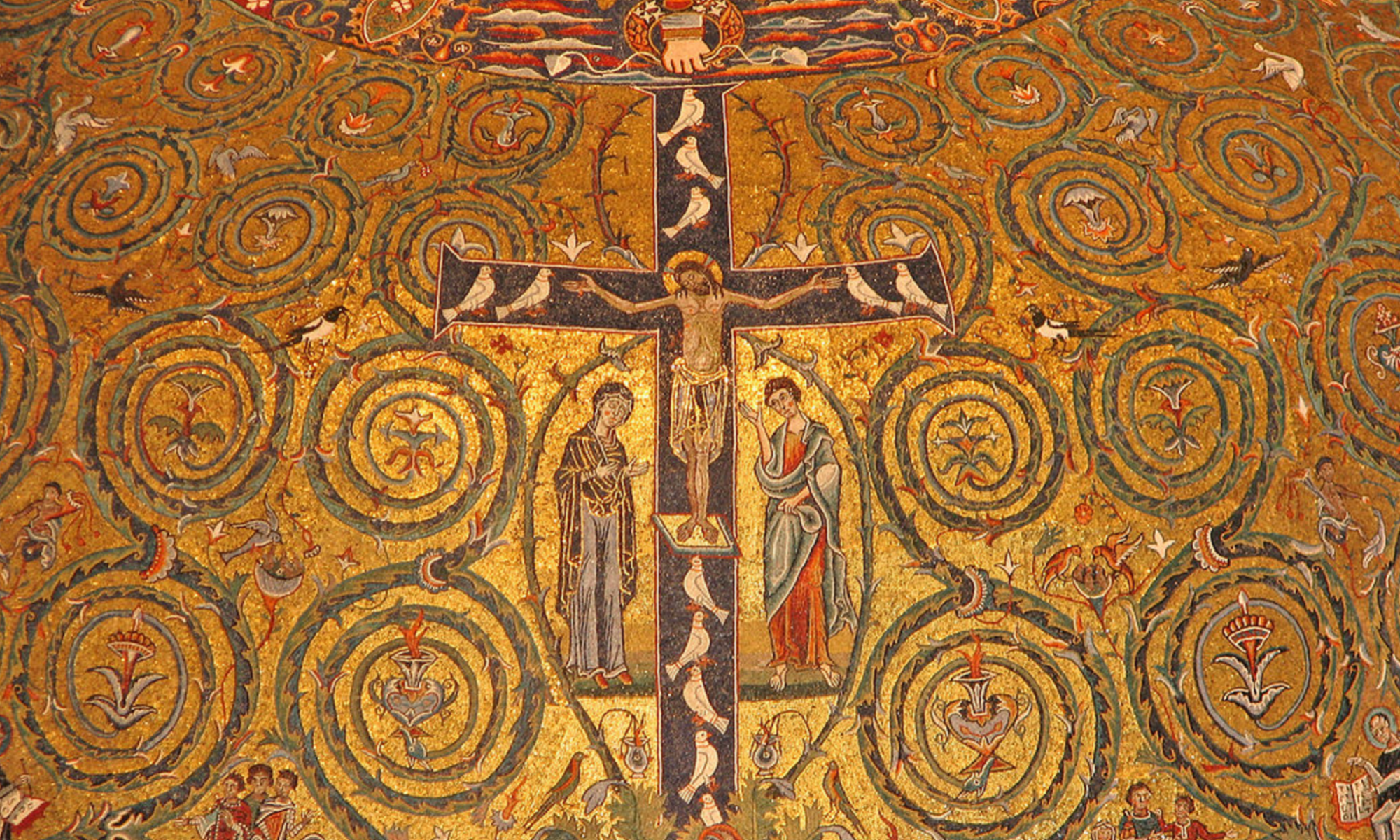
Radiating Christ

“One can only give God through radiating him.”

Apparently this was a mantra often repeated by the French mystic Marthe Robin. It is so true! No amount of doing or striving or “getting life right” on my part will ever be able to connect others with Jesus. But if they see him shining through me, it is an entirely different experience!

Some of you may be familiar with a beautiful prayer that is recited every day after Mass by the Missionaries of Charity – the congregation of religious sisters founded by Mother Teresa of Kolkata, now serving the poorest of the poor in 139 countries of the world. The prayer is often attributed to John Henry Newman:

Dear Jesus, help me to spread Your fragrance wherever I go.
Flood my soul with Your spirit and life.
Penetrate and possess my whole being so utterly,
that my life may only be a radiance of Yours.
Shine through me, and be so in me
that every soul I come in contact with may feel Your presence in my soul.
Let them look up and see no longer me, but only Jesus!
Stay with me and then I shall begin to shine as You shine,
so to shine as to be a light to others.
The light, O Jesus, will be all from You; none of it will be mine.
It will be you, shining on others through me.
Let me thus praise You the way You love best, by shining on those around me.
Let me preach You without preaching,
not by words but by my example,
by the catching force of the sympathetic influence of what I do,
the evident fullness of the love my heart bears to You.
Amen.

I had many Masses with those sisters early on Wednesday mornings during my years in Rome, as I worked on my doctorate. I remember this prayer speaking deeply to my heart, awakening a yearning deep within me to radiate Christ – even if I was blind at the time to some of the obstacles that I was putting in the way.

What does it mean to “radiate” Christ?

Radiating requires a relationship with Christ. It is a way of being rather than a matter of doing. That is so hard for us busy and wounded westerners, who tend to be so focused on doing or achieving or insecurely putting forward a positive image of ourselves.

If we can learn anything from the apostle Paul, we can learn that to be a Christian is to abide “in Christ.” During my doctoral studies, I learned that Paul’s letters use that phrase “in Christ,” or something very similar, 165 times! If I allow myself to be crucified with Christ, to die and come to new life in him, then it is no longer I who live, but Christ lives in me. Paul learned on the road to Damascus that Christ is not just a historical man, but one mystical person, a unity of head and members. Jesus asked him, “Saul, Saul, why are you persecuting me?” Not “Why are you persecuting my followers?” but me. Christ and his body are one. Through faith and baptism all our own efforts are put to death and we enter a new, highly vulnerable, highly childlike existence as a co-member of the Body of Christ, together with all the other members of all times and places who likewise humbly depend upon him for everything.

Jesus invites us to abide in him like branches on a vine. It is such an appealing image of what it means to exist “in Christ.” There is a profound unity of the entire organism, and a sense in which we all thrive or suffer together, grow together, and bear fruit together. But there is no question about the order of causality. It is the vine that gives life to the branches, and not the other way around! Our heavenly Father, the true vinedresser, never ceases to graft new shoots into his Son.

Radiating means receiving. Think of a stained glass window. There are so many pieces of broken glass. An isolated pane is nothing to marvel at – particularly if all is darkness! But when assembled by a master artist, and when flooded with the gift of light, what beauty and radiance!

And so it is with Christ and Christians. We are invited to be vulnerable and receptive. That can feel so scary sometimes! It feels so much easier to carve out a familiar way of doing things, in which I can maintain the illusion of being in control. Even though I pray seriously every day, I have often prayed in a way that lacks vulnerability and receptivity, approaching prayer as a “should” rather than opening up my deep desire for God and letting myself ache for him and receive from him.

Even when we let ourselves beg God like a little child, what is our begging like? Do we not sometimes beg him to help us be strong enough so that we no longer need him? It is challenging to abide like little children who depend on him for our daily bread (and keep coming back the next day and the next day). Like those Israelites in the desert, I sure am tempted to store up a bunch of that manna in a jar so that I don’t have to keep feeling so vulnerable and so dependent upon God. Control feels like safety, even though it leaves me alone and miserable.

Little by little, God is assuring and reassuring me that his love is enough and always will be enough. I can open up the rusty gates of my multi-layered fortress and let the King of Glory enter. It doesn’t matter that I still struggle with my insecurities and sins. He will shine, and there will be no doubt whose glory it is that is shining. To be holy is not to be perfect, but to radiate Christ.

We can close with wise words from the Gregory Nazianzen, an early Church Father:

He wants you to become a living force for all mankind, lights shining in the world. You are to be radiant lights as you stand beside Christ, the great light, bathed in the glory of him who is the light of heaven.

Healing and the Holy Spirit

Have you ever heard testimonies from fellow Christians about powerful healing experiences and secretly doubted or judged them? Or have you perhaps felt threatened by or resentful of the joy and freedom they seem to possess? I admit that I have!

For every person who has a powerful healing story there are dozens of others who have been reaching out for years and (it seems) experiencing no answer. Whether we have a physical ailment, anxiety and depression, a repeated sinful habit, an addiction, or relationship struggles, we can find ourselves suffering painfully for many years.

Reaching out and not being attuned to, not being heard, or not being cared for is one of the most painful human experiences. It can feel far safer to close ourselves off, to believe that healing doesn’t really happen, or to claim that it happened “back then” with Jesus but no longer happens today.

It doesn’t help that plenty of us Christians are prone to exaggerate or embellish, to draw attention to ourselves, or to avoid facing our brokenness by hiding behind a healing story. Even when real healing has happened, it can be tempting to tell a glamorous healing story that turns a blind eye to our ongoing struggles and avoids facing the toilsome work still ahead.

Isn’t it fascinating that sometimes God works powerful graces so swiftly and suddenly, and other times he seems to keep us waiting for SO long?

Lurking in the background here is perhaps the greatest theological mystery, namely, the interplay between God’s omnipotence and our human freedom. He is the all-powerful God AND he always honors the freedom he has given us. This means that the Holy Spirit works with amazing swiftness, but always in a way that respects and honors our human dignity, our desires, our receptivity, our readiness, and our freedom to choose.

Ambrose of Milan comments on this swiftness of the Holy Spirit, reflecting on Luke’s Gospel account of the birth of Jesus. The angel Gabriel comes to Mary and declares her to be full of grace. He invites her to say “yes” and become the mother of Jesus. She freely and wholeheartedly surrenders. Immediately God’s eternal Word becomes flesh in her womb, as the Holy Spirit rushes upon her in a new and special way. The result? She sets out in haste to the hill country. In the words of Ambrose, “Filled with God, where would she hasten but to the heights? The Holy Spirit does not proceed by slow, laborious efforts.”

The Holy Spirit acts with utmost swiftness. Whether impregnating the Virgin Mary, forgiving the sins of the Apostles on Easter Sunday, exorcising demons, healing the sick, or raising the dead, the Holy Spirit needs no time.

It is we who often need time. And God honors us in that need!

I know for myself that my “yes” to God’s invitation, my surrender to him, seems to come with strings attached. I have experienced many grace-filled moments in which I have given everything to him. Yet I keep discovering that I have secretly crossed my fingers behind my back. Somehow I have maintained a contingency plan, withholding some small parcel for myself just in case he doesn’t come through for me. It reminds me so much of the scene in Lord of the Rings in which Bilbo Baggins is called upon to surrender the highly corrupting Ring of Power, passing it to his nephew Frodo. Bilbo agrees and then gets up to leave the house – only to be confronted by the wizard Gandalf with the words, “You have still got the ring in your pocket.”

Like Bilbo, I can so often respond, “Well, so I have.”

And God waits – not with disdain or disappointment, but with eternal kindness and patience. He desires me to desire him. As a loving Father, he patiently watches me grow, without jumping in or coercing.

Receptivity in freedom is not a “one and done.” Even for Jesus and Mary, who were so utterly receptive to the Father’s will, so totally open to being led by the Holy Spirit, receiving was an ongoing reality. Mary was already “full of grace” (Luke 1:28) when she said yes to God – receiving ever greater blessings. She pondered God’s mysteries in her heart as she kept growing in her wisdom and understanding (Luke 2:19, 51). Luke twice tells us that Jesus himself grew in wisdom and in grace (Luke 2:40, 52).

To be truly human is to grow our whole life long. Our human existence is dynamic, not static. We are freely invited by God to become who we are. We are created in God’s own image and likeness, and called to receive love freely and give love freely as we grow in communion with God and each other. We are intended to love and be loved with ever greater depth and fullness and fruitfulness.

Desire and receptivity are key concepts here. We all have holy desires, sown in us by God the Father, who is always drawing us to himself (John 6:44) – often in undetected ways, but always in a manner that honors our freedom to say yes or no.

As we well know, our good and holy desires often get twisted and tangled up. Augustine of Hippo beautifully described the experience in his Confessions. In our unloveliness we plunge ourselves into the lovely things God has created – things which cannot even exist without him. We run far from him even though he is never far from us. And ever he pursues us, ever he invites us to open up and receive.

Desire stretches our hearts. The more we receive and truly experience the living God, the more we thirst for him. Thirst for God is quite possibly the most painful human experience of all – and the one that keeps enticing us to stretch out our hearts in receptivity. The more we willingly thirst, the more we can receive him, and the more the Holy Spirit is then unleashed to rush upon us, to flood us, to possess us, and to lead us in haste to give freely and sacrificially to others.

God alone knows all the reasons why healing does or doesn’t happen in any particular case. In some cases, we may never know in this lifetime. Often, however, what feels like a delay to us is actually a deep honoring of our desires, our receptivity, and our freedom. I believe that the single hardest human thing for many of us is to open up and receive. It is so hard to do what the Virgin Mary did in her fiat – to receive love vulnerably, freely, and wholeheartedly, setting down all our well-crafted defenses, permitting God and others to be and to stay intimately close.

Quite often, we find ourselves in a bind. One part of us deeply aches for connectedness and communion. We ache more than anything else for someone to draw near, to see us, to hear us, to be intimately close to us. And then when a good and trustworthy person actually does that, we freak out and sabotage! I am astounded at the lightning speed with which my defenses engage in situations like this.

The great spiritual question is the question Jesus asked at the pool of Bethesda to the man who had been crippled for 38 years: “Do you desire to be well?” Of course we do! All of us desire to be well, to love and to be loved. God created us for these things and planted these desires in us. But many of us are also chained by our pride and self-reliance, our hiding and self-protection. We need Jesus to break those chains by the power of the Holy Spirit. He will eagerly do so, and with even greater swiftness that our defensive reactions – if and when we deeply desire it. Some of us need many years to grow in those desires and reach a point where the strength of our desire is greater than the strength of our defenses. The Holy Spirit will never force himself – but thankfully he only needs a tiny crack to enter. Faith the size of a mustard seed is enough.

Many of us may need a long time and much breaking up of the hard soil before we are receptively willing to permit the Holy Spirit to act upon us and possess us. Likewise, after powerful moments of healing, the real work is only just beginning. Whether the healing received is physical, emotional, or spiritual (with spiritual healing always being the most important and most amazing), we are then invited in freedom to grow and mature and bear fruit. Only Jesus, through the anointing of the Holy Spirit, can liberate us. He breaks our chains, rolls away the stone that is blocking our self-created tomb, calls out forth, unbinds us and pulls off the masks that have obscured our vision. Once these obstacles are removed, his desire is for us to keep growing in our desires, to keep receiving and giving, and to bear fruit. He wants us to be true sharers in his love, his freedom, and his dignity. We are not robots of puppets. We are no longer slaves but are led by the Holy Spirit to live in the glorious freedom of the sons and daughters of God.

Conversations about faith and good works so easily get sidetracked if we don’t look at them in terms of Love. From start to finish, it is all God’s work – starting with the very desires themselves that he sows in us, continuing with the period of preparation (as long as it takes) for receiving the gift, rushing ahead in powerful moments of healing and grace, sprouting forth with new life, proceeding with everyday moments of patient and laborious growth, and culiminating with superabundant fruitfulness. From start to finish, God honors our dignity and freedom, inviting us freely to grow and mature and bear fruit in love, as we become who we are.

Reflections on Zechariah

Advent is a wonderful time to read the writings of the prophets. Those chosen men, frail human instruments of God, kept their hearts stretched out in expectation, even amidst woes, tears, and lament. Their provocative imagery opens up a vast horizon of Hope. Led by the Holy Spirit, they allowed the depths of their human imagination and emotion to be tapped as they plied their pen to describe God’s desire to come and save us. Many times they offer promises of his salvation that will somehow simultaneously bring a fiery intensity AND a tender gentleness. Justice and Mercy. Love and Truth.

This Advent my heart has been captivated by the final four chapters of Zechariah, which are apocalyptic in nature. Unfortunately, “apocalyptic” tends to mean “easily hijacked.” The final book of the Bible, the Apocalypse (a.k.a. “Revelation”) is the most frequently butchered book, plundered by misguided Christians as they sound alarm bells about the end of the world and claim to have all the answers. Never mind that Jesus told us clearly that no one except the Father knows when the end will actually come (Matthew 24:36), and that we ought not chase after these messianic alarmists (Mark 13:21).

Those who read apocalyptic writings in a way that is unduly fascinated with foretelling the future are largely missing the point. Whether the Book of Revelation or certain passages in Daniel or Zechariah, the apocalyptic writings in Scripture have genuine meaning and relevance for all who read the text – including the original audience; including the many millions of men and women who never saw the second coming of Jesus; including you and me.

“Apocalypse” literally means “unveiling.” The prophetic promises point to an ultimate unveiling that is “already but not yet.” We are meant to enjoy a true taste of them here and now, yet always with a sense that more is yet to come, and we are not yet ready for the fullness.

The coming realities, sharing as they do in God’s infinity, necessarily elude the full comprehension of our present finite experience. It reminds me of a famous episode of The Twilight Zone in which a little girl in her bed somehow stumbles through the wall into a fourth dimension, and her family frantically seeks to rescue her. Her limited human mind cannot process the newness of a fourth dimension. It is overwhelming and disorienting.

As great as human logic is, it can only bring us so far. Every wise theologian has understood this point. Thomas Aquinas described doctrinal propositions as tending towards the Truth, and reminded us that our Faith is not directed towards the propositions of our creed, but rather towards the Truth itself that is pointed to in those statements. God’s Truth radically transcends our expressions of it. Towards the end of Thomas’ earthly life, he had a deep mystical experience of God, after which he expressed that all the allegedly wise words he had written now seemed to him “like so much straw” in comparison to the glory he had glimpsed.

With that “already but not yet” perspective in mind, we can allow the powerful imagery of the prophet Zechariah to captivate our hearts and minds, to speak to our experience and pour blessings upon us here and now, while opening our hearts in Hope, reaching out receptively to the greater realities yet to come.

Zechariah paints a picture of lament and loss. He describes the trees grieving over the felling of many mighty and beautiful cedars, cypresses, and oaks. He describes the weeping of the shepherds over the loss of their glory, the betrayal wrought by shepherds forsaking their flock, and the confusion and woes of a flock that goes unshepherded. As a result, Zechariah foretells that two thirds of the people will fall away. The one third that remains will pass through fire like silver and gold that is tested.

Got your attention yet? To me, it is as though he is describing our present-day experience in the Church. But the point is not to be alarmist about the end of the world. Instead, we can allow the imagery to disrupt us in a way that opens up space for Hope, which is by far the deeper message of these chapters. Hope is also the reason why we read from the prophets every Advent. Again, let us remember that these words of Scripture speak to believers in all centuries, not merely our own. The point is to let them speak to us!

Zechariah proceeds to describe all the nations of the world rising up against God’s people and fighting Jerusalem. Even Judah will rise up against Jerusalem. But they will only injure themselves, like those who try to move an immovable rock. God will fight those who fight her.

Amidst these scenes of strife and loss, Zechariah offers vivid images of Hope, ones that connect closely with Jesus in John’s Gospel and with John’s promises in the Book of Revelation. Zechariah promises a fountain welling up within the house of David. Fresh water will flow from Jerusalem, during both summer and winter, to the East and the West. There will be no more darkness or cold, but only the Day. He promises the restoration of Jerusalem and the inclusion of all the survivors of these great trials – both the Jews and the Gentiles who had rebelled against Jerusalem but now repent. Cleansed by the fountain, they will gather year after year to celebrate the Feast of Tabernacles, bowing down to the King, the Lord of Hosts. On that day, each household in their own tent will find their cooking pot to be sacred to the Lord. No longer shall the Temple be a marketplace, in which people attempt to purchase holiness. Each and every vessel will receive and be filled as from the altar itself; each household will be truly holy to the Lord of Hosts.

A marketplace no more. Intellectually we understand that God’s holiness cannot be bought, and that no amount of magic or manipulation can bend Him to our will. Yet we still try. One way or another, our prayers tend to be varied attempts at praying, “My will be done!” – or more subtly, “This is what you have to do for me, God.” Much more elusive to us is the experience of freely receiving, gently abiding, and humbly depending. We have a tendency to keep grasping at a God we can control and bend to our will. Idolatry dies hard.

Jesus breaks into our brokenness with a newness that flips our paradigms upside down. John’s writings illustrate this point powerfully with the image of “tabernacles” (tents). John begins his Gospel telling us that Jesus, the Eternal Word of God, became flesh and made his dwelling among us. Literally, he pitched his tent in our midst. In the Old Testament, autumn after autumn, God’s people celebrated the Feast of Tabernacles by bringing their harvest fruits to the Temple and constructing their tents around the Temple.

In John 7 and Revelation 7, this imagery is flipped around, in a way that evokes Zechariah’s promises. Jesus goes up to Jerusalem during the Feast of Tabernacles and proclaims, “Whoever believes in me, as Scripture says: ‘Rivers of living water will flow from within him.’ He said this in reference to the Spirit that those who came to believe in him were to receive.” Revelation 7 describes a living fountain issuing forth from the Lamb once slain, and an endless Day shining forth from the Temple. The white-robed army that has endured the time of trial will be sheltered (“tented”) by God himself, day and night. Revelation 21 re-echoes that God will dwell (“tent”) with his people day and night, and will wipe every tear away.

Our tendency from the Fall until now is one of pride and self-protection. Adam and Eve tried to hide from God and cover their nakedness. We, their descendants, spend much of our lives constructing our own versions of holiness and try to become good enough so that God has to give us what we want.

Mercifully, God allows our false props to be stripped away – yes, even by means of harsh trials. They are of our own making – not his – but he turns all things to the good for his beloved children. To those not yet ready to receive and abide and depend, it feels terrifying and seems like punishment – much like the imagery at the end of Zechariah. It is then we can take great assurance in the Hope he promises: “The city will be inhabited; never again will it be doomed. Jerusalem will dwell securely” (Zechariah 14:11). When we remember that the living fountain of the Holy Spirit is always there within our hearts, that the light of the Risen Christ shines brightly, and that the Father himself will extend his shelter over us, then we can begin to take him up on his invitation to abide in his presence in Hope.

Watching for Dawn

We begin another Advent. We open our minds and hearts to the coming of Christ.

Bernard of Clairvaux speaks of three comings of Christ: (1) his first coming in humility, in the manger at Bethlehem; (2) his coming again in glory to judge the living and the dead; and (3) the invisible way in which he comes to all true believers who desire him.  In the words of Jesus, “If anyone loves me, he will keep my word, and my Father will love him, and we will come to him” (John 14:23). Jesus desires to be present to those who desire his presence.

Advent is a season of presence. “Advent” comes from the Latin adventus (“arrival” or “coming”). But adventus is a translation of the Greek word parousia – often used to describe Jesus’ coming again in glory, but literally meaning “presence.”  It is easy for some Christians to slip into gloom and doom fantasies about a future apocalypse; it is challenging to abide in the present moment, to watch and wait with sober Hope.

That is the invitation of Jesus: “What I say to you, I say to all: ‘Watch!’” (Mark 13:37). In Greek, this command to “watch” is gregoreĩte. The Christian name Gregory is derived from this invitation to sober watchfulness, so frequent in the admonitions of Jesus as well as in other New Testament writings (e.g., 1 Peter 5:8).

Gregory the Great (ca. 540-604) is one of my favorite popes and saints. He was born into a prominent Roman family – during a time in which the faded glory of Rome was quickly passing away. Much that was good and beautiful had collapsed or was about to, and Gregory had no illusions that the clock could be turned back to “the good old days.” He answered God’s call to become a Benedictine monk, and his heart desired the peaceful prayer of the monastery. However, God and others kept tapping his talents for administration during a time of great crisis. He humbly describes his struggles to remain a man of prayer amidst the administration of stressful crises that were impossible to ignore. I can relate!

Gregory was profoundly aware that his name meant “Watchman” and that the words of Isaiah applied to him: Son of man, I have made you a watchman for the house of Israel. A watchman is called to stand upon the heights, to keep his mind and heart in a place of calm, peace, loving awareness, discernment, wisdom, and creativity – so as to be a blessing to others. Such was Gregory’s deep desire, even though he felt and expressed his struggles: “Who am I to be a watchman, for I do not stand on the mountain of action but lie down in the valley of weakness?”

Whatever his pain and struggles may have been, Gregory’s holy desire to be a watchman prevailed. Constantly renewed and enlightened by Jesus, Gregory’s foresight led to the establishment of hundreds of monasteries, which preserved so much of the beauty, goodness, and truth of Athens and Rome, and which became vibrant hubs of evangelization in the centuries ahead. Gregory’s sober watchfulness allowed him to continue doing works of mercy in the present moment, but without being consumed in a false fantasy to prop up structures whose time had passed. His sober watchfulness was both deeply pessimistic and optimistic at the same time – accepting the depressing truth that the good old days were definitively gone, and simultaneously seeing with optimistic Faith new rays of hopeful light where other more frantic people were blinded by their busyness, fear, or denial. Survival mode does not tend to bring the best out of human beings. Our field of vision narrows (both literally and figuratively), and we tend to keep going back to repetitive and predictable “solutions” – as though doing it for the forty-second time will somehow yield different results. True to his name, Gregory knew how to keep getting back into his watchtower.

When reflecting on the great mystery that is the Church, Gregory offers one of the most profound descriptions I ever came across during my doctoral research. He compares the Church to the dawn:

The holy Church, seeking the rewards of heavenly life, is called the dawn, for as she leaves behind the darkness of sin, she shines forth with the light of righteousness. But while we live, it is dawn, not perfect Day … For dawn or daybreak indeed announces that the night has passed, but does not manifest the full splendor of the Day. Rather, as it dispels the night and takes on the Day, the dawn holds a light that is mixed with darkness.

The Church, on her present sojourn through history, is indeed a mixture of weeds and wheat, darkness and light, sinners and saints. The same is true of our own hearts.  Gregory proceeds:

As long as the law of the flesh clashes with the law of the spirit, and the law of the spirit with the law of the flesh, light and darkness will blend together. Thus when Paul says, “The night is far gone” (Romans 13:12), he does not add, “the Day has arrived,” but rather, “the Day is near” … The Day shall arrive when no darkness of sin triumphs. Then the Church of the elect will be fully day, when no shadow of sin is mixed with her.

What wise and Hope-filled words! He can look truthfully at his own heart and at the Church and see truthfully both darkness and light. But there is Hope. The thing about dawn is that it does NOT turn back into night. So also with the Church. The gates of hell will not prevail against her. He will be with her always. No matter how deep the darkness may seem at certain moments, we can look for the streaks of light and be assured that the dawn will break into full Day.

Our present age is eerily parallel to that of Gregory. So much that we once took for granted has collapsed, and there is no turning back the clock. The only way forward is the way through, and we can easily get discouraged.

This Advent, we can join Gregory, not to mention the original twelve Apostles who first heard Jesus’ admonition to “watch.” Heeding the invitation of the Beatitudes, we can embrace our poverty and grieve our losses – getting past our denial and blame. We can abide in the present moment, even when it feels disorienting and scary. We can stay sober and vigilant. Jesus will open the eyes of our heart, and help us to see the new light that he always brings. As promised, his Spirit is always at work, shining in unexpected places.

Being watchful disciples means attuning to those first streaks of dawn, and allowing them to surprise us with joy. We tend to have tunnel vision about how Jesus is going to answer our prayers. Jesus always tends to surprise his disciples with joy in ways they least expect. If we are sober and watchful in the present moment, our vision can be broadened again and again. Noticing with true vision the streaks of dawn, we can become eager heralds of the full light of Day that is breaking into this world.

Shame and The Day of Judgment

During this month of November, the Church’s liturgy (together with nature all around us) invites our hearts to consider the realities of death and judgment – events we prefer not to ponder, especially in our culture of comfort and hedonistic escapes.

The monks of the Middle Ages left us with a haunting, yet stunningly beautiful hymn entitled the Dies Irae, which proclaims that the Day of Judgment is at hand, and urges us to cast our hopes of salvation on Jesus Christ, as he resurrects us and tells the true story of our lives.

In elegant Latin verse, the hymn summarizes that great and dreadful Day: the world as we know it will be dissolved into ashes, the trumpet will sound, and all the dead will be raised from their tombs. Death itself and all of nature will stand agape as the Just One assembles us all before his throne. The written book will be brought forth, in which all is contained, and the stories of that book will be told publicly for all to hear. Whatever has remained hidden will be proclaimed openly. My true story and yours will be told in all fullness

At first blush, the thought of my full story being told for all to hear, full and unabridged, is utterly terrifying. When I tell my story to others, I get to pick and choose what they hear, to keep certain things in and leave other things out, to shade things my way. Not so on the Day of Judgment. My truth is my truth.

But I am learning that, rather than being a day of deep shame, the Day of Judgment (if I desire it) will actually be a day on which I am definitively healed from my shame. The very shame that fills me with dread at the thought of being seen and known is the very shame that needs to be brought to the light of day, indeed, to the light of The Day so often promised in Scripture. Until I am fully seen and fully known, I cannot truly be myself.

Is the Day of Judgment not a Day whose coming we pray for daily? Jesus taught us to pray, “Thy Kingdom come!” Many Christians often pray, “Come, Lord Jesus!” – in words that echo the last words of the Bible: marana tha (“Our Lord, come!”). If he does not come with the fullness of his truth and love, we will never become our truest and deepest selves. We will remain less than fully human.

Shame is a heavy burden, and one with which I am quite familiar. I have spent most of my life finding ways to hide my true self from others. As an infant, as a child, as an adolescent, and beyond, I learned to hide what I was really feeling (shame, sadness, loneliness, or anger). I even pretended for many years like I didn’t have those feelings at all! I learned to be “independent” and self-reliant, pretending like I didn’t need anything from others. Needing others felt shameful. Reaching out for kindness and support felt uncertain and unsafe. And all the while a deep and painful loneliness grew – undetected for many years because it was the ocean in which I was swimming for so long.

In my hiding, I developed a vast array of subtle (or not-so-subtle) defenses that proved highly effective in keeping other people from having access to my truest, deepest self. What a bind that creates! My inner self continues (as God made me) to desire deeply to be seen and known and understood and accepted for who I really am – yet the moment good people actually draw near, I still tend to react in ways that keep them at a distance. I put on one kind of mask or the other, so they can’t see the real me.

Then, of course, there are my many sins – all the ways, over the years, in which I have stumbled in my ungodly self-reliance and self-protection; the harm I have caused to others and to self; the rupture to relationships. There are my darkest or most twisted fantasies – the “if only…” thoughts or urges that I like to pretend are not really there. How could I possibly look forward to those being proclaimed publicly on the Day of Judgment?

The Dies Irae provides the answer to all this anguish after it asks similar questions. What am I to do, poor wretch that I am, in the face of so great a Judge, before whom even the just cannot be secure? Is there anyone who can plead for me on that Day?

Yes. The King of Majesty will plead for me. He freely and gratuitously saves those who desire salvation. He longs to save me.

The hymn proceeds to tell the ultimate story, the definitive story – the story of Jesus, who though divine, freely and willingly emptied himself, became one of us, and saved us in his Passion and Resurrection. When my story is perfectly united to his story, every moment of my life has new meaning. All my masks can be removed and laid to rest, my true self can be seen, and all can hear my full story – a story redeemed and transformed by Jesus. When my story is told, all can hear how Jesus was there at every moment – especially the moments of greatest heartache, heartbreak, and shame, moments in which I was betrayed, moments in which I betrayed others. All the while he was attuning to my heart, and gazing upon me with love and kindness as a beloved child of his Father. He was suffering with me and for me, weeping with me, breathing life into me, and rejoicing with me.

When we talk about dying with Christ and rising with Christ, it is so much more than a cliché! We prefer to compartmentalize, and lock away certain parts of our story. But that means leaving them unredeemed, and it means not being a whole person in Christ. Only when we allow him, the Alpha and the Omega, the true author of all human history, to take authority over all these shards and fragments, can we find ultimate resolution to the discord in our story. That means going down with him into the dark places and allowing him to shine forth with his love and truth. We all have memories in which (if we are honest) we do not truly believe that God is good. Jesus surprises us with the new life of his resurrection, and opens us to be loved even in those memories in which we feel unlovable. We don’t have to hide.

The Dies Irae has many dark notes in it, and is a beautiful hymn. It ends with stunning trust and hope in the one who loves us and so empowers us to be just and holy. Perhaps the book that will be opened on the Day of Judgment will be more like a book of music. Each of our songs will be sung. No doubt, there will be many discordant measures, bearing witness to our darkest days. But if I give Jesus permission to tell my story, it will be a song that gives great glory to God. And all those assembled will only be able to sing a resounding “AMEN!” in response – for he is Truth itself.

=======

P.S. – This piece by the CBC explores the vast musical influence of the Dies Irae over the centuries.

Kind to Self / Kind to Others

Kindness seems scarcer than ever during these days of pandemic and a pending (impending?) general election here in the United States. A little kindness goes a long way at a time in which divisions and contempt are palpable, and almost all of us feel emotionally and spiritually exhausted.

These past few weeks, I have been astounded and grateful at how frequently a simple kind and empathetic gaze into someone’s eyes elicits tears and a deeper sense of peace.

I wish I could say that it’s always easy to practice empathy and kindness. It is often challenging because I am not being kind to myself – or (to put it more precisely) I am not allowing myself to receive the kindness that I need.

God is eternally kind. That is one way to translate the oft-repeated scriptural refrain “his mercy endures forever.” The Hebrew word hesed can be translated as mercy, love, covenantal love, grace, or kindness.

God’s covenantal love abides. He always gazes upon us with kindness, even when we are at our worst. He loves us “even if…” and “even when…” He does not cease his kindness towards us just because we have ceased our faithfulness to him. “If we are unfaithful, he abides in faithfulness, for he cannot deny himself” (2 Timothy 2:13).

That is what covenantal love (hesed) does. It is an unshakable gaze of kindness that truly “sees” into our brokenness and woundedness, receiving us with blessing and delight. Think of the woman caught in adultery. My friend, Fr. Sean Kilcawley, suggests that Jesus stooped down to write on the ground because that is very likely where she was staring. At last, he catches her eye. She receives a gaze that knows her truthfully and communicates the kindness that her heart so deeply desires.

Matthew the tax collector was transformed by a similar gaze of kindness. This is the origin of Jorge Mario Bergoglio’s motto, first as a bishop and then as Pope Francis: Miserando atque Eligendo.

As a 17-year-old, Jorge had a transformational moment in Buenos Aires, on the Feast day of Saint Matthew (Sept 21, 1962). The youth unwittingly stumbled into a church, felt drawn to go to Confession, and deeply experienced the healing power of God’s mercy. He felt “seen” and he felt God’s kindness in the depths of his heart.

In his adult years, Bergoglio fell in love with the Caravaggio painting of the call of Matthew, housed in the church of Saint Louis King of France in Rome. As only art can do, the painting utilizes light and shadows to depict Jesus’ gaze, and Matthew’s shock at being truly seen AND received with kindness. His face shows a battle between hope and fear, leading to a moment of decision that he will begin to follow Jesus.

The motto itself is taken from a homily by St. Bede the Venerable, an early medieval monk in England, and one of my very favorite authors. His commentary on Matthew’s Gospel says in 3 words (miserando atque eligendo) what it takes me 12 words in English to translate (see the bold-faced words below):

“Jesus saw a man named Matthew sitting at the tax office, and he said to him: Follow me.  Jesus ‘saw’ Matthew, not merely in the usual sense, but more significantly with his merciful understanding of men.  He saw a tax collector, but by looking upon him with a gaze of mercy, by choosing him, He said to him: Follow me.”

And Matthew followed. His life was never the same after receiving a gaze of kindness from Jesus.

In Luke’s Gospel, Jesus turns and gazes at Peter with kindness right at the moment of Peter’s deepest betrayal (Luke 22:61). In other stories, this eternal kindness of God is depicted in a more visceral way. Luke describes the Good Samaritan or the Merciful Father (of the prodigal son) being “moved with kindness” at the sight – literally, moved in their guts. Both saw a deeply wounded man; both only wanted to show kindness and care – indeed, even feasting and celebration.

Kindness is a gift. We cannot save ourselves. We cannot earn God’s kindness, mercy, or love. He freely bestows it upon us, choosing and delighting in us, and  calling us into heavenly festal celebration. Unlike the devil and fallen humans, God has no interest whatsoever in condemning us. He desires all human beings to be saved (1 Timothy 2:4). But he will not force us.

My fallen human heart deeply desire this kindness – and is often terrified. One would think that receiving kindness would be one of the easiest things to do – and yet my experience tells us that it can be incredibly hard. In my pride and self-protection, I often resist! I am guessing that you do as well.

In recent years, a deep human truth has dawned upon me. Being hard on myself leads me to be hard on others. Being kind to myself frees me to be kind to others. At times I notice myself taking up old and familiar roles – peevishness, fault-finding, blaming, criticizing, or resenting. In those moments, if I let myself be truly present, if I allow myself to receive the gaze of Jesus, if I welcome the comforting presence of the Holy Spirit, I often break down and cry. I see the pride and self-reliance that is there, a shame and a relentless cruelty towards myself – thankfully less and less over the years – but still there.

I have begun to probe this hypothesis in the experiences of others, when they have come to me for spiritual counsel. It has proven true every time! If they are struggling with unkindness towards others, it turns out that their heart is itself desperately craving kindness – and often blocking it out.

I think Vincent de Paul discovered the same truth many years ago. He put it this way: “To pardon an injustice received is to heal the wound in your own heart.” As fallen human beings, we bear woundedness in our heart. The devil is a liar and a murderer from the beginning. He led Adam and Eve to disobey God, but what is worse, he convinced them that God would no longer be interested in showing kindness to them. So they ran and hid – as though God were a petty tyrant.

The story of salvation throughout the Bible and throughout human history has been one of God eagerly pursuing us with his kindness and love, and our playing hard-to-get with our hardness of heart.

When we stop fighting, lay down our arms, and allow the eternally kind God to tend to our hearts (often by opening ourselves in trust to other human beings who are his chosen instruments!), we will notice a change. We suddenly have a reservoir of kindness within us. The fruits of the Holy Spirit start showing up.

We cannot give what we don’t have. We cannot love our neighbor or show kindness to our neighbor if we do not allow ourselves to receive love and kindness. To try to do otherwise is the detestable heresy of Pelagianism. It’s time to stop being Pelagians and start being kind.