Jesus and Restorative Justice

What is justice?

The greatest minds in human history have often pondered this challenging question: Plato in his Republic, Aristotle in his Ethics, Thomas Aquinas in his Summa.  Wise women and men do not pretend to have all the answers, but they stir up our curiosity by inviting us to ask the right questions.

Justice is a theme that runs throughout the Scriptures. In God’s plan, justice is wedded to mercy (Psalm 85:10). He does not desire the sinner to die but to turn back and live (Ezekiel 18:23). He sends his own beloved Son Jesus to seek out and save that which has been lost (Luke 19:10). He does not desire to condemn the world but to save it (John 3:17). When he acts justly, it is always ultimately with a view to heal and restore the creatures he has made – if we desire it. When he acts mercifully, it is never without an invitation to tell the full truth about the harm.

Think of Adam and Eve in the garden in Genesis 3. In their shame, they hide themselves – as though from an angry tyrant who is going to make them pay. He does bring Fatherly justice – holding them accountable and explaining to them the consequences. But he also promises eventual healing and restoration through “the woman” and her offspring. Adam and Eve are unable, at first, to tell the truth about what they have done. They try to shift the blame – anything to get the attention off the shame they are experiencing. God’s questions are for their good: Where are you? Who told you that you were naked? Have you eaten from the tree? God exhibits both justice and mercy because he is a loving Father who ultimately desires our wholeness and our sharing in his glory. He never lies or ignores the truth, but he also does not desire our loss. Rather than make us pay in strict retributive justice, he sends his own beloved Son so that we can receive his mercy.

But there is so much more than a “not guilty” verdict! The Father and Jesus desire our healing, our restoration, and our wholeness! That is the primary motive for the Father asking his Son to die and rise. Jesus proclaims to his disciples that he came so that we might have abundant life (John 10:10). When he starts appearing to people after the resurrection, he brings life, joy, peace, healing, restoration, wholeness, and holiness – so much more than what they had hoped or dreamed!

How damaging it has been for some Christians to think of the death of Jesus only in the sense of paying the price for our sins. Yes, there is justice – God is a loving and truth-telling Father who does not pretend as though our sins never happened. We can only be healed and restored if we take seriously the harm that our sins have caused – the way in which we have ruptured relationships with him, with others, and with ourselves. AND the Father desires restoration, wholeness, and holiness.

Consider Jesus and Zacchaeus, the tax collector who has exploited many vulnerable people (Luke 10). Jesus eagerly seeks out Zacchaeus, who is stunned at being desired and delighted in. But Jesus also allows Zacchaeus to name the harm he has caused and work to repair it. Mercy and justice go together.

Consider Jesus and Peter in John 21. Jesus stokes a charcoal fire there on the seashore – fully knowing what he is going to do. Following the miraculous catch of 153 fish, he then invites Peter into a conversation that is simultaneously remembering, truth-telling, and healing. Peter stands once again by a charcoal fire, just like the night before Jesus died – only now Peter is allowed the opportunity to say three times that he loves Jesus. Peter experiences much distress in this experience – as Jesus knows he will. It is not a shaming of Peter, but rather helping Peter journey through and out of the labyrinth of shame as he begins experiencing healing and restoration.

Peter is much humbler in this encounter than at the Last Supper, when he boldly declared he would lay down his life for Jesus. In the Greek text, Jesus asks Peter “Do you love me?” – using the verb agapein to denote a self-sacrificing love. Peter responds (truthfully this time) that he loves him with philein – a brotherly love. Jesus foretells the eventual day when Peter will indeed love him so greatly as to lay down his life. For now, he simply invites Peter, “Follow me.” When we read the Acts of the Apostles, we see the restoration and transformation of Peter taking ever fuller effect. The risen glory of Jesus begins shining in and through him.

Repair and restoration take time. But they include a safe space in which both the one who has harmed and the one who was harmed can be heard, can tell the truth about what has happened, and can seek so much more than simply making someone pay.

I have friends who desire this kind of reform in our criminal justice system – which we all know to be broken and badly in need of repair! I am not an expert in those areas, but I hope we begin asking more of the right questions! Both Scripture and our Catholic Tradition have so much more to offer than a justice that only thinks about retribution.

As a priest, I am especially interested in how restorative justice can take root in our marriages, our families, and our church institutions. Too often, when serious harm has happened, we do not use our God-given creativity to open up a safe and healing forum in which all sides can tell the truth about the harm and seek full restoration for all who have been impacted.

Our families of origin and our church families have often failed in this area – especially when there has been sexual harm. Most people I know feel even more shame and awkwardness talking about sexuality – even though it is one of God’s most glorious gifts to us. Consequently, those who have been harmed sexually – whether by someone working for the church or by someone else – often find that neither their family of origin nor their church family is a safe haven to bring their story. I can think of more than a dozen individuals I know personally who suffered even greater betrayal because their story was not received with care.  Simultaneously, our society currently offers no path of redemption or restoration for those who have perpetrated sexual harm – they are branded as permanent outcasts beyond the reach of mercy.

Our just and merciful Father says otherwise – he desires healing and restoration for all who will receive it. As with Adam, Eve, Zaccheaus, the Samaritan woman at the well, or Peter, such restoration is only possible if we are willing to be truth-tellers – both about the harm done to us and about the harm we have done to self and others. Jesus will invite us to follow him on a healing path that includes (sometimes awkward or messy) repair. We will die and rise with him as we come to full maturity in him. In the end, if we welcome this full encounter with his love and truth, his righteousness will shine in us.

Jesus and Abandonment

When I ponder the final words of Jesus on the Cross, I feel intrigued by the word “abandon.” Matthew and Mark recall Jesus’ anguished cry to the Father, “My God, my God, why have you abandoned me?” (Matthew 27:46, Mark 15:34). But Luke recalls Jesus “abandoning” himself into the Father’s hands in trust and surrender, as he breathes his final breath (Luke 23:47). How can two so drastically different human experiences be expressed with the same English word?

I feel a personal connection with both experiences. The one is so full of anguish, sorrow, or panic – even fury. The other is touched with tenderness, intimacy, trust, and security. The one screams out from isolation; the other approaches in sweet intimacy.

During my college seminary years, I drew much consolation from reading Abandonment to Divine Providence by Jean Pierre de Caussade (1675-1751), a French Jesuit. His words spoke into my orphaned heart that struggled to trust and surrender in vulnerable relationships – even though I couldn’t have named the experience at the time.

During that same time, I went on my first ever silent retreat. I look back with a smile on the “me” of a quarter century ago. In my willful heart, there was both a tender longing for intimacy with God and a pharisaical legalism. Like young Saul, I threw all my zeal into the retreat. My 21st birthday came and went; a few friends even sang for me at breakfast. I smiled and blushed, but dutifully kept my silence.

I felt a longing as I recalled our high school chaplain describing the importance of his annual retreats. He had once testified to how God began speaking to him when he stayed in silence long enough. This must be how it works, I thought. So I spent a full three hours in the chapel each afternoon – mostly kneeling. But I didn’t conquer God; he conquered me. On the third day, abruptly and unexpectedly, it was as though a massive wave pulsed through the room and me. I suddenly and intensely felt the the strength and security of his providence – a sense that truly (in the words of Julian of Norwich) “all will be well and all manner of thing will be well.”

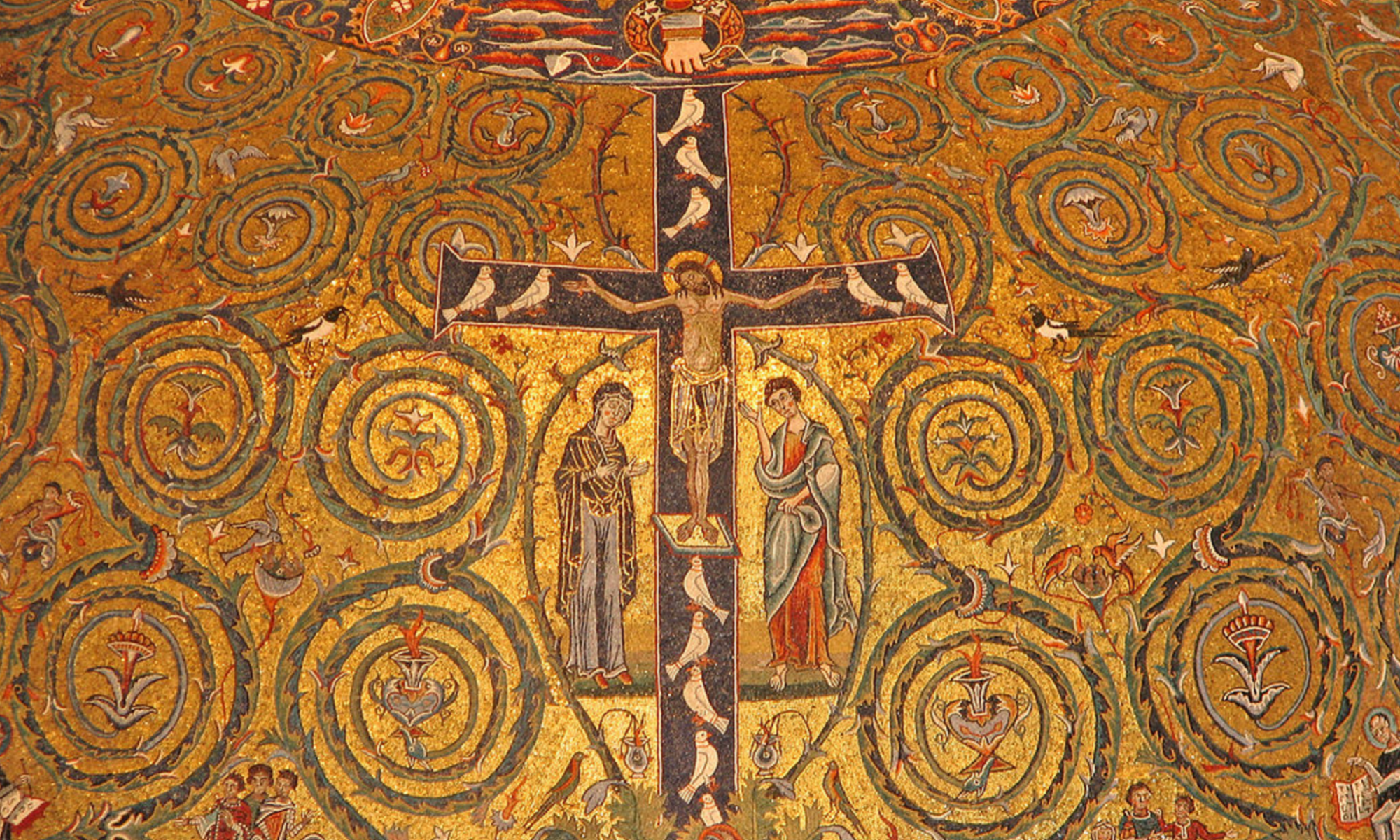
Amidst that peace and an intense desire for more of that peace, I felt convicted of all the times that I was “pushing through” the present moment. I was either enduring that which was unpleasant or devouring that which was pleasurable. Either way, I wasn’t opening myself to the gift that can only be received in the present. He helped me see how often things that felt confusing or overwhelming in the present moment actually led to abundant blessing. He flooded my mind and heart with the image of looking back down the mountain at the twisting path already walked – including steps that made utterly no sense at the time – and marveling at how no other path would have worked. He gave me some felt sense of how he sees all of these things simultaneously; all the moments are one in him; all are “now” for him. He invites me to surrender to him in the “now” of the present moment. I resist. When I left the chapel and felt the throb of circulation as the blood returned to my knees. I paused in the hallway to gaze on a copy of a Pinturicchio painting of the Crucifixion (see above). I felt a jolt of awe as I gazed upon the “now” of Jesus’ once-and-for-all sacrifice on the Cross. Beneath him lay death dismantled, overcome by his love and his shed bled. Behind him was paradise restored, and a felt sense of God’s eternal rest sustaining him in that moment of surrender. I felt Jesus’ trust in his Father and an intense desire to share in that trust.

In the twenty-five years since, I have felt both senses of “abandonment” many times over. Perhaps the most distressing situations for me are those in which I feel left alone by those I thought I could trust – suddenly facing an overwhelming and dangerous threat by myself, when I thought I would have protection and security. That feeling of abandonment is so ancient for me and so familiar. The lies can race through my head at lightning speed: They don’t understand; they don’t care; they can’t be trusted; I am all alone! In some cases, I flee and isolate myself; at other times I attack with an angry outburst and hold others to impossible expectations, as if they are supposed to revolve around my needs. The more I mature in Christ, the more quickly I notice, and the more frequently I choose a different path – or repair if I repeat old patterns.

Again and again, God has also invited me into trust and surrender, reminding me to live in the present moment and look for his gift. If I abide and gaze and receive, the gift is always there, including in those moments in which I am invited to take up my cross with Jesus.

I can only receive the gift of the present moment to the extent that I let down the defenses of my self-protection. Otherwise I limit how much I can receive, and ultimately how much I can give.

The English verb “to abandon” comes from the French abandonner. The French verb has multiple senses, which one way or another are ways of untying, releasing, or relinquishing a band that ties something together. When we do so with a committed relationship or a grave duty (e.g., parenting, governing, leadership), other humans experience abandonment in the first sense (“My God, my God, why have you abandoned me?”). But there is also an untying or letting go when we encounter beauty, when we forgive harm, when we dance, or when we connect with another person.

Jesus, in his Passion, enters fully into both human experiences of “abandonment,” and reconciles them. Those of us who have experienced abandonment in the first sense tend to have spectacular defenses against ever letting anyone close again. Jesus cries out to the Father on our behalf. Jesus also “abandons” in the second sense. He cancels the debt of our sins, releasing all claims to make us pay. He meekly surrenders himself like a lamb, even in the face of contempt, violence, and powerlessness. He releases every merely human solution and entrusts all of it to his Father. He freely submits and becomes the seed sown into the earth that bears abundant fruit. May we claim his victory and allow him to reconcile in our hearts all that impedes our own surrender.

“Purity Culture” – Lie #1

Ours is not an age of flourishing relationships, joyful marriages, or healthy sexuality. For decades, Christians have been concerned about the toxic environment of the surrounding culture. So we have fought culture wars, trying to get the world to be more like us.

But what about us? What about our own marriages, our own families, and our own churches? Are we really as “pure” as all that?

Many Christian families and churches have created a “purity culture” in the hope of sheltering our children and keeping them pure. It seems like a valiant fight. But has it really been helpful?

All the latest research shows that church-going Christians struggle every bit as much with abuse, neglect, pornography, addictions, codependency, marital infidelity, and domestic violence – just to name a few. Isn’t it strange to “fight” to make the world just like us when our own house lies in ruins?

Jesus has a word for that: “You hypocrites!” In the Sermon on the Mount, he reminds us to remove the wooden beam from our own eye before we attempt removing the splinter from our brother’s eye (Matthew 7:5).

On my sabbatical this past fall, I engaged in multiple trainings, all of which focused on providing care in the area of trauma, unwanted behaviors, and addictions. Each training operated with this bedrock principle: take the beam out of your own eye first! You cannot be of support to your brothers or sisters (or sons or daughters) if you have not first truthfully faced your own story and your own behaviors.

Two generations of hard fighting from the “purity culture” have yielded struggling parents and struggling grandparents. Far from sheltering and preserving our children, the rigidity has actually plunged many Christians (or former Christians) into toxic shame, dysfunctional relationships, and unwanted behaviors.

That is because the purity culture is more rooted in fear than in love. In the fog of fear, our heart is easily hijacked by lies, or by distortions of sound doctrine. In the weeks ahead, I hope to unmask some of those lies and consider what Scripture and Christian Tradition actually teach about human love and sexuality.

Lie #1: Purity as a Prize to be Lost. Far too often, our Christian churches and families have upheld a standard of “purity” as a prize to be lost. In this view, purity is black or white, on or off. Don’t be impure like those people. Be pure like these people. It’s a damaging and deceptive dichotomy, rooted in self-righteousness, presumption, and pride.

In Catholic life, the false dichotomy of “pure” versus “impure” shows up in a distorted understanding of what Church teaching means by “mortal sin” versus “state of grace.”  Many Catholics struggling with unwanted sexual behaviors feel tormented by fear and shame. They view themselves as spending most of their waking and sleeping hours in a state of sin (cut off / lost / cast out / impure). Then they go to Confession and feel great, thinking themselves “pure” again, holy again, worthy again. Notice the presumption and self-righteousness, and the lack of confidence in God’s unchanging covenantal love.

Yes, Catholic teaching and the Bible (1 John 5:17) talk about mortal sin. But the Catechism of the Catholic Church clarifies that a sin is only mortal if there is full knowledge and deliberate consent (n. 1857). Deliberate consent is not so clear when you consider the impact of trauma, addictions, or compulsive behaviors. If someone is experiencing “unwanted” sexual behaviors, repeatedly, there is likely more going on! Rather than a black or white judgment of “pure” versus “impure,” the Catechism urges us to consider the embodied human beings in front of us: “To form an equitable judgment about the subjects’ moral responsibility and to guide pastoral action, one must take into account the affective immaturity, force of acquired habit, conditions of anxiety or other psychological or social factors that lessen, if not even reduce to a minimum, moral culpability” (n. 2352).  In other words, labeling another person (or yourself) as “impure” or “in mortal sin” is a rash judgment, and often missing the mark about what is really going on.

More importantly, the teachings of Jesus focus on organic growth into maturity in him. We abide in him as branches on the vine. We grow and bear fruit in him. We are members of his body, truly holy because he is holy in us. It is much more accurate to look at sin as a disease that needs tender and loving care, rather than an ON/OFF switch. Jesus presents himself as the divine physician, here to heal all of us. He repeatedly, sometimes angrily challenges the scribes and Pharisees for seeing themselves as “pure” and others as “impure.” Pride and self-sufficiency are far more damaging than lust! We are all sick sinners in need of the divine physician – each and every day of our lives. We are all beautiful and beloved children of God, each and every day of our lives.

Even if I have just gone to Confession and received absolution, I still have a lifelong journey of conversion ahead of me. God will keep purifying me, like gold in the furnace (which is none other than the fire of his love). Meanwhile, sinner though I am, God will relentlessly pursue me in love, even if I keep going back to the same sins. Purity is not something I gain or lose. Purity is the flowering that slowly emerges as I learn to receive and give love. It is the fruit of maturity in Christ.

Apart from Jesus we can do nothing. God alone is an eternal communion of pure love, and he deeply desires us to share in his eternal love. That sharing is an “already but not yet,” a gradual growth in discipleship, a lifelong journey. We are already members of Christ’s body. He has truly given us a share in his life and his love. We can grow in maturity throughout our life. One day, we will definitively be pure as God is pure – when we see him face to face and become totally like him (1 John 1:1-3).

Yes, purity is a battle to be fought. But the battleground is not primarily in senate chambers or school boards or courtrooms. The battleground is in the desert and on Mount Calvary. The Victor is Jesus Christ, the new Adam. And we already know who wins!

Lifelong growth in purity happens when we learn to have an unshakable confidence in the victory of Jesus. We bring that victory into our own daily battles – not just with sexual seductions, but with all areas of our life. We consecrate all of it to him, in good times and in bad, in sickness and in health. We welcome his shed blood and the new and eternal covenant that alone can save us. We let ourselves be loved and let him teach us how to love. Perfect love will cast out all fear!

To be Continued…

St. Benedict and Obedience

“Listen carefully, my child, to the master’s instructions, and attend to them with the ear of your heart. This is advice from a father who loves you; welcome it, and faithfully put it into practice.”

So begins The Rule of Saint Benedict, one of the most enduring spiritual works of all time. Consisting merely of a prologue and 73 paragraphs, it is filled with spiritual and practical wisdom, and a keen insight into human nature.

It has been refreshing for me to hear from the Rule again, drip by drip, during these three months of Sabbath renewal, here in the midst of a community of twenty Benedictine monks. Each evening at the end of supper we listen to a few lines of Benedict’s instructions before closing in prayer.

Regardless of our calling in life, the threefold Benedictine vow of obedience, stability, and conversion of life bears lessons we can all learn from. During this installment, I will reflect on obedience.

Obedience is ultimately a matter of obeying God the Father, in imitation of Jesus, who said, “I have come not to do my own will, but the will of Him who sent me” (John 6:38). Christ’s obedience involved a total self-emptying, freely and wholeheartedly laying down his life in sacrifice. Monastic life allows obedience and self-emptying to take on a visible form. The monks vow obedience to their abbot (a name meaning “father”) and habitually submit their own will to the will of the abbot and of their elder monks.

Benedict has no illusions of abbots being perfect; rather, he is aware that often they are awful. Many of the instructions of the Rule are directed at the abbot and the grave responsibility that he bears. If there are problems or toxic dynamics in the life of the monastery, they are ultimately his fault – unless he has truly been just and loving and the faults are ultimately due to the obstinacy of the unwilling followers. He plays the role of Christ within the community, first and foremost by his example and then by his exercise of authority.

Benedict is clear about this Christ-like authority not being one of power or control, but one of humility – including attentive listening and consulting. The abbot is not to make major decisions without pulling together other monks and listening deeply to what they have to say. He bears the ultimate responsibility for the final decision, but not before listening with an open mind and heart.

As one who has often borne the burden of authority amidst multiple seasons of disorienting change and turmoil, I can relate. Sometimes I don’t like listening to truths that expose my failures or invite me to pour more of my already depleted energy into a problem. Other times I have put off making the right decision out of fear of domineering or manipulative people, leaving the righteous ones to suffer in silence. Still other times it is tempting to avoid making decisions and over-consult – hoping someone will “just tell me what to do” and rescue me from my responsibility. When we leaders (whether parents, bosses, pastors, or bishops) abdicate our authority, it is often more damaging than when we abuse our position of power. Either way, Benedict repeatedly reminds the abbot that he will give an accounting to Jesus on the Day of Judgment, when our full story will be told by the all-seeing God.

You may be surprised that I am spending so much time talking about the duties of those in authority, but it is essential to see obedience in the context of healthy and holy relationships, not within the context of power or exertion of will. Too many Christians have only known “authority” as an abuse of power or an abdication of responsibility. They haven’t experienced enough of the real thing – with the result that many today (including many ex-Christians) are only suspicious of authority. We need to take their pain seriously and listen to their stories – admitting fault and humbly repairing as justice calls for. AND we can model authentic authority and obedience, and the freedom they bring. Obedience is wonderfully freeing.

Obedience, lived well, directly overturns the strongholds of the evil one. He tempts Adam and Eve – and each of us – to replace the words “thy will be done” with “MY will be done!” In our pride and self-protection, in our fears and insecurities, in our shame and isolation, we resist the intimacy involved in freely submitting to another’s will.

Benedict describes the good fruit the grows in the heart of monks as a result of their obedience: “They no longer live by their own judgment, giving into their whims and appetites; rather they walk according to another’s decisions and directions.” Benedict’s understanding is that those who can obey and submit to an imperfect human being will be more free in submitting to a perfect and loving Father.

Obedience balances individual and communal needs, reflecting the truth that we are not isolated individuals each doing whatever we feel like, but all interconnected in relationships and called to love and serve one another. There are times in a monastery when an individual and talented monk is asked to give up his own personal dreams in order to fill a role needed by the rest of the community. The same often holds true in married life, in the workplace, or in the diocesan priesthood. In the Rule, these kinds of decisions aren’t to be made lightly by the abbot, but only through dialogue and consultation. Hopefully in a happy marriage, in a healthy work environment, or in a healthy bishop-priest relationship, there is a similar dialogue and consultation when challenging decisions need to be made, allowing freedom to move forward.

The church bells fill the Benedictine day with moments of obedience. The bells ring, and the obedient monk promptly rises from bed. The bells ring, and the obedient monk promptly lays down his work project and heads to the chapel to pray. But isn’t it interesting that the bells are rung more than once each time?  There is always the ideal of a prompt and joyful obedience that immediately springs forth, combined with a realistic accommodation for human weakness and real-life circumstances.

Pride is the ancient sin of the devil and of our first parents. Each of us daily is tempted to cry out, “My will be done!” in a hundred different ways. Obedience chips away at our pride and selfishness and teaches us to love and serve others, freely, not because “I have to.” It looks different for the monk, the employee, the spouse, or the priest. But we all are called to Christ-like authority and Christ-like obedience in healthy and holy relationships. How do you allow obedience to set you free in your daily life?

Always Ready for a Party

Authentic hospitality is one of the greatest human experiences. There is the literal hospitality of receiving and hosting a guest with a sense of delight and dignity and belonging. More importantly, there is the day-to-day openness to the experience of receiving and being received, the surprising delight that can arise in encounters that cause us to feel more authentically human and more authentically Christian. You just never know when a small foretaste of the heavenly wedding feast might unexpectedly manifest itself! But we easily miss the moment if we are not abiding in love and truth.

I’m currently in the midst of a 3-month sabbatical, and gratefully receiving the hospitality of Benedictine monks. The importance of hospitality is actually written into the Rule of Saint Benedict, that brief but adaptable treasure trove of wisdom that still inspires people of all faiths even 1,500 years after he wrote it. Benedict instructs his monks, “All guests who present themselves are to be welcomed as Christ, for he himself will say: I was a stranger and you welcomed me.”

Some of my happiest memories of childhood are moments of hospitality. I was recently asked to reflect on experiences of wholeness in my story – when I most deeply felt a sense of delight, belonging, and justice. It was a challenging exercise at first! My story includes much deprivation and going it alone. But with prayer for illumination, my memories turned to my grandparents’ home, their joy and excitement at seeing me every time I arrived, the warm embrace, the twinkle in their eyes, the offering of food or drink or toys they knew that I enjoyed, the total sense of belonging and safety. Or I thought of Christmas gatherings with extended family – the laughter, the acceptance of everyone present, and the material and emotional abundance, the ache for the moment to last forever.

During my college seminary years, I met a few friends from the South, and came to appreciate their constant readiness to show hospitality to guests. It felt dignified and important to me, and became something I’ve valued over the years. Whether my years in communal living or my years in a rectory, I’ve relished the opportunities to show hospitality to guests. Planned gatherings are fun enough, but the best moments have been the unexpected parties. I’ve learned to ensure that I have a few things on hand to be up for the occasion. As I sometimes quip, I like my living space to be ready to go “From Zero to Party in 10 Minutes.” People have appreciated the gesture more than once.

Truthfully, though, I am still very much learning the height and breadth and depth of human hospitality. There are various versions of it, not all of them equally great. There have been times where my hospitality was more about projecting an image or feeling the pressure to perform, rather than simply “being with” the guests. There have been times where it was more about subtly grasping at my own unmet needs than about serving those I was hosting. And there is my frequent tendency to get disengaged, to check out of the present moment or withdraw emotionally into my own space of isolation – and then my connection with others is diminished or lost.

Speaking more universally, when it comes to hospitality of the heart, being open and receptive to unexpected “Jesus moments” with others, I cannot truthfully say that my heart is always ready. It’s one thing to think ahead and have a few items stocked up in the pantry. It is so much more challenging to abide in love and live wholeheartedly in the present moment.

Jesus was a human being who knew how to experience hospitality – how to receive it and how to give it. There is a great vulnerability in authentic hospitality, a tender willingness to enter into intimacy. We cannot give well if we have not learned how to receive. We don’t often ponder this point, but Jesus was quite willing to receive hospitality –from the very beginning.

God though he was, Jesus began his human existence in humility and obscurity, depending vulnerably on the tender care of his mother and foster father, taking in the delight and awe showed by so many guests at his birth: the shepherds, the magi, and the angels. He spent thirty of his thirty-three years learning how to receive. Even in his public ministry, he still allowed himself to be vulnerable and receive. I think of the woman with the alabaster jar in Luke 7 – weeping, kissing his feet, and anointing him with costly perfume. Jesus does not squirm or resist, as many of us probably would. I think of Jesus’ apparently frequent visits to Bethany, cultivating a deep friendship with Lazarus, Mary, and Martha – including a willing reception of their hospitality. He even goes there during Holy Week, shortly after his entrance into Jerusalem on Palm Sunday. Even on Holy Thursday, as he enters his “Hour” of suffering, Jesus reaches out to Peter, James, and John – asking them whether they would be with him in his sorrow. And of course, there is his belonging to and receiving from his heavenly Father, as Jesus regularly withdraws – not in isolation or disengagement – but into vulnerable and intimate relationship.

Drawing from that sense of joy and belonging and abundance, Jesus showed hospitality so beautifully. One of the strongest “accusations” against him was that he welcomed sinners and dined with them! Jesus attuned to people’s hearts, noticing the desire and the movement of the Holy Spirit there (or the hardness of heart and resistance!). When there was movement, he stopped and lingered and invited them into relationship. They felt seen by him. They felt understood by him. They felt welcomed and delighted in by him. They were loved as they were, and they also realized that he was committed to their well-being and wasn’t going to fudge or fake things in the relationship. I think here of the woman at the well, the woman caught in adultery, Zacchaeus, Matthew, and Peter (at so many moments!).

I have always cherished hospitality, and intuitively understood how central it is in the human experience. I have not always appreciated the invitation to vulnerability that is there, the call to give others access to my well-guarded heart, the call to be present and engaged, to be open to unexpected surprises, to notice what God is doing in the hearts of others, to appreciate their uniqueness and to accompany them step by step in becoming who they are (versus who I want them to be!). To the extent that I abide and stay open to hospitality, I truly get to “taste and see the goodness of the Lord” – even now amidst this sojourn through a valley of tears. Such moments never last, but they are truly good – a promise and foretaste of the Day in which the joyful feasting we experience together will never end, but only become ever more delightful and more real.

Spiritual Bypass

This summer marked the 15th anniversary of the animated film Cars. The movie breathed life and personality into dozens of vehicles, including the cocky and arrogant young racecar Lightning McQueen, who unexpectedly gets stranded in the rusted and rundown town of Radiator Springs. Initially seeing no value in this long-forgotten place, he undergoes a deep conversion and learns many life lessons. He also comes to appreciate the story of the town, once great, then sliding into decline with the introduction of the I-40 bypass. Whereas travelers along Route 66 used to take their time to linger and enjoy this scenic stopping point, these days they just zoom on by along the bypass.

As many of you know, I am currently going through a few trainings for pastoral ministry to God’s beloved children experiencing unwanted behaviors or addictions. In them, I’ve come across a strikingly similar metaphor, encapsulated in the term “spiritual bypass.”

Spiritual bypass happens when you or I use our spirituality as a way of avoiding difficult experiences or undesirable emotions. In the name of being spiritual, we can actually evade and avoid the most difficult aspects of discipleship! When we do so, our bodies and souls suffer in much the same way as the town of Radiator Springs. Through chronic neglect, little by little, things begin to crack and crumble. The more this decay happens, the more we prefer to avoid, and the more alluring spiritual bypass becomes. And so the vicious cycle continues.

You can see how these cracks offer fertile soil for the weeds and rotten fruits of addictions. But addictions are only one of many such weeds. The great spiritual authors over the centuries remind us that sins of the flesh (lust, gluttony, drunkenness, etc.) can actually be less serious than envy, passive aggression, gossip, self-righteousness, or pride. Think of the story of the repentant tax collector versus the proud Pharisee (“thank God I’m not like _______”). Think of the story of the younger son and older son in Luke 15. Both are far from the heart of their father; both are avoiding his love; both are miserable.

Spiritual bypass often gets woven into the very fabric of our families and our church communities. For example, we from the upper Midwest are notorious for being “nice” – and thinking ourselves kind. Niceness is not the same as kindness! Niceness avoids conflict. Niceness pretends not to be angry. Niceness does not know how to sit with sadness, but tries to minimize or fix or anesthetize the pain of the situation. Kindness, by contrast, can be intense and messy. It takes great inner strength just to be with someone who feels deeply sad, angry, or ashamed.

In my personal journey, the Lord has definitely been inviting me and teaching me how to stay present in the face of awkward or painful situations. Historically, I did one of two things. Most of the time, I got small, hid my true self, or took the “nice” path out and compromised things that were deeply important. Occasionally I powered up, perhaps shifting my tone or raising my voice, perhaps making a subtly shaming comment that shifted the burden onto the other person. I regret those moments and the damage they caused.

But I am learning to be patient with myself as God works repairs in my heart. Healing and recovery is incredibly hard work. It’s tempting (like Lightning McQueen) to think I can re-pave the neglected and damaged street in a short time. It takes much patience and consistency – not to mention much help and encouragement from true friends. After nearly five years of diligent work walking my own healing path, I am beginning to discover that I can stay present and stay my true self even in challenging situations – without taking the bypass. Every inch of reclaimed pavement is worth celebrating.

I simply wasn’t capable for a long time because I was bypassing my own heart – including neglected streets that were crumbling in sadness, loneliness, fear, and shame. If present interactions caused me to begin feeling those things, it made sense that I would react instinctively and either flee or fight. God made us with survival instincts and defensive capacity.  For a time, we probably need these defenses. We may need, for a season, to be in a state of spiritual bypass. We can’t face everything all at once. We’re not ready until we are ready.

My heart is ready, O God, my heart is ready. So sings the psalmist. After years of preparing my heart, the Lord gently and kindly showed me how very much sadness and loneliness I had stored up. For me, the experience of coming out of spiritual bypass has been amazing, intense, and painful all at the same time. Sister Miriam James Heidland compares the experience with someone coming in from the cold with frostbite. To be in one’s heart and feeling again is both good and intense.

My prayer life has definitely shifted amidst this process. It is more tender and vulnerable, more about a love relationship with the Father, and more about receiving again and again all that I need. Ironically, I pray far more consistently. It’s less and less of a “should.” I simply need it. I need prayer. I need Jesus. I need the anointing of the Holy Spirit. And I desire all these things. I ache for them. I long to see the face of the Father. That, for me, has been the very best part about ceasing spiritual bypass. Returning to my place of heartache also opens up the freedom and capacity for my heart to ache for God. It renews and deepens faith, hope, and love.

Perhaps the best discovery of all has been to realize the stunning beauty of the human heart – my own heart and that of others. Yes, there is sin there. Yes, it’s a mess. AND we are beloved children of God, fearfully and wonderfully made, “very good” in his own image and likeness. You can’t appreciate the beauty of the town from the bypass. You have to slow down and spend time there. Then it captivates you. The beauty God has poured into the human heart is absolutely stunning – if we are willing to abide there amidst the mess.

I invite you to consider your own journey of following Jesus. In what ways do you take the bypass? Does it feel easier to avoid anger, sadness, fear, loneliness, or shame? How do you react when others around you feel or express those? How do they experience you? Do they feel safe and find it easy to open up to you about the deep things of their heart? Why or why not?

Does it feel easier to “say prayers” to open up in a tender and vulnerable relationship? Do you let yourself feel the ache of longing and desiring without yet fully possessing?

Jesus reminds us that the road is wide and easy that leads us to destruction. Taking the spiritual bypass is so appealing because it is wide and easy while pretending to be deeply spiritual. Engaging our story in the town that is our heart involves a dying and rising.

Above all else Jesus commands us to love the Lord, our God, with all our heart and mind and soul and strength. Yes, we may need to use the bypass for a time in our life, especially if we do not have the support and the resources to face the hard work that will be involved. But so long as we stay on the bypass, there are parts of our heart that are not being consecrated to the Lord, and therefore not receiving his blessing.

Wholehearted discipleship is certainly challenging! But it is worth it. You and I are worth it.