
Holy Week invites us into Hope.
Hope sounds lovely, until you actually get into the hoping. There is an often painful gap between what is and what is yet to be!
Jesus literally stands in the gap. He is the one mediator between the human race and God, who eagerly desires all men and women to experience his fullness (1 Timothy 2:4-5). Jesus burns with desire to celebrate the heavenly Passover and so share God’s abundance with his beloved children (Luke 22:15). He suffers intensely in his longing – because God’s chosen children so often do not desire what he desires for them, causing him to weep over our hardness of heart (Matthew 23:37).
Jesus stands in the gap between heaven and earth, He stands especially with the poor, the outcast, the abused, and the abandoned. In his Passion, he willingly plunges into the depths of human misery, uniting himself with all the agony that any of us have ever experienced.
My understanding of the Passion shifted significantly over the last decade as I began experiencing the healing love of Jesus. I used to focus more on how much Jesus suffered physically, how hard he tried, or how much he sacrificed. Looking at the Cross would sometimes cause me to feel that I needed to be better or do more. Without realizing it, I was restlessly striving to be “good enough” so that I could be worthy of love.
Jesus reminded me how his Passion is much more about union. He brings his love and truth into all the darkest and most chaotic moments of human existence. He willingly unites himself with the particular sufferings of each member of the human race. He brings the perfect communion of his eternal Love into each and every one of those places. We are no longer alone in our misery. Love wins.
Little by little, he’s shown me how he was always there in my most agonizing moments – not only my worst sins but also all the moments in which I ever felt terrified, ashamed, powerless, alone, abandoned, neglected, or unprotected. Some of those moments were quite early in my life. And then they’ve been reinforced again and again in no shortage of agonizing situations. It’s a very familiar story to me to feel misunderstood, abandoned, and left alone and unprotected in the face of a massive threat. In those moments, it feels not only like I’ll be alone and unprotected in the face of overwhelming chaos, but that my very lovability is on the line as I walk on the edge of that knife. Impossible pressure. Exhausting to try so hard. But so familiar to me.
On any given day, present-day struggles can still elicit embodied memories of all the times I have felt that way. In comes the seduction of the evil one for me to seize control of my life and manage things for myself. That may come in the form of a restless pressure to produce or accomplish. When that gets unbearable and exhausting, then I am prone to escaping and avoiding and self-soothing. And if I begin to feel violently tossed around in that spin cycle, I am even more prone to isolate and not want to be seen and known by others (how could they love me now?). Unchecked, that isolation and fragmentation become a living hell.
I’ve learned from neuroscience that these initial reactions happen automatically and instantly (in a fraction of a second). I’d so much rather not have the reaction in the first place. But that’s not how the brain and nervous system work. God hardwired us so that our bodies can remember, adapt, anticipate, and react for survival – before the rational brain even gets involved.
What has changed in me, little by little, is a growing gentle awareness of reactions as they start happening, and a growing invitation from Jesus to be one with him in his Passion – even when I can’t just shake it off. On retreat this summer, he showed me what it was like for him when every one of the apostles forsook him and fled (Matthew 26:56). He showed me the union between him and me in every moment of abandonment in my life. He didn’t stop these moments from happening, but he was always there, loving me and choosing me. If he and I are one in the Passion, all will be well, and all manner of thing will be well (even if it feels awful in the tension of the present).
The good fruit of this invitation is most obvious to me when he invites me to stand at the Cross of others. In those moments, I get to weep with those who weep, and to witness what it’s really like for them. I get to stand with them in the gap. I know this has been a great gift to many abuse survivors, who often feel like they are unwelcomed and unwanted in our churches. The community and/or the clergy often don’t want to be burdened with the full truth, the messy symptoms, or the painful tension of what it is like for some of the suffering members of Christ. There are times in witnessing the suffering of others that I simply feel the ache of the love of Jesus on behalf of that beloved child of God. Sometimes there are no words, but only tears or groans. They know the difference between someone standing at the foot of their Cross and someone forsaking them and fleeing.
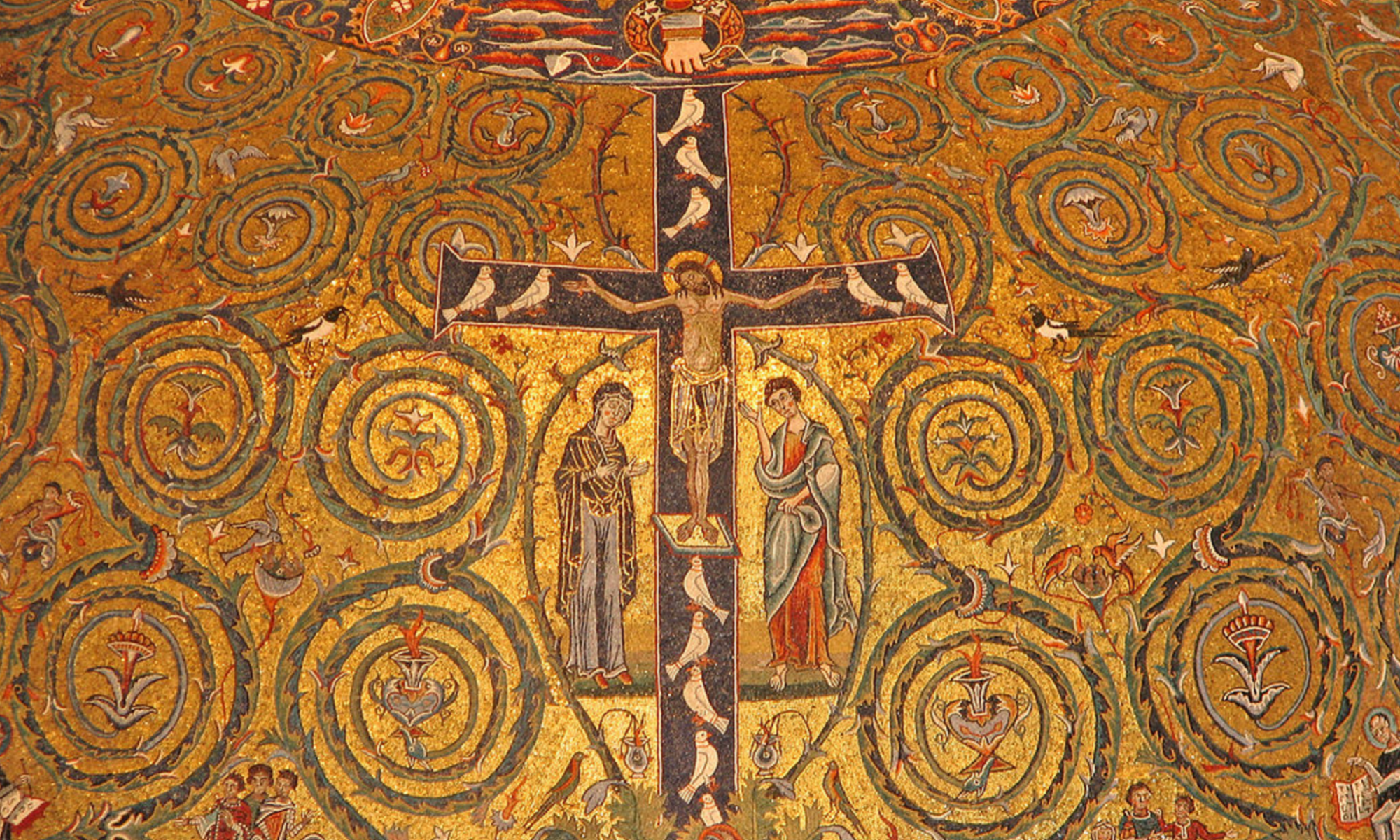
Jesus invites us as beloved disciples to stand with him at the Cross on Good Friday (and to stand with others who are painfully united with him as members of the suffering Body of Christ). He invites us to stand in the gap of Holy Saturday – trusting in his promise of goodness and resurrection and perhaps having no idea how all will be well.
Few do. In the words of the poet T.S. Eliot, “Human kind cannot bear very much reality.” We prefer to flee from the tension of Hope.
Early in my healing journey, I thought that healing would make the pain and tension go away. Had I known that I would suffer even more, I may have fled! Healing is not always the elimination of tension or pain. It’s an ongoing encounter with God’s love and truth. It shatters our loneliness and brings you and me ever more deeply into love and communion. If we look at the Saints, we see that this lived communion actually brings more suffering, even as it brings more joy and peace.
One suffering I never anticipated was seeing with ever greater clarity what is diseased and unwell in Christ’s Church. The more I heal, the more clearly I see unnamed abuses, an unwillingness to let go of power structures (not just among clergy but also in parish communities), an unwillingness to be with others in big and intense emotions, a preference to spiritualize or intellectualize, and a contempt or marginalization of people who don’t fit the culture of our comfortable club.
I know very few Christians who are really great at standing at the foot of another’s Cross. Sometimes I’ve felt judgment or contempt on this point, but more and more I realize how much it makes sense. This is where the Church was during Holy Week, when Jesus willingly entered his Passion. All of his chosen priests forsook him and fled – just as I often have. One, apparently, came back on Good Friday to stand with the three Mary’s at the foot of the Cross. Mary Magdalene and a few of the faithful women came to the tomb Easter morning (amidst agonizing tension and loss), while the chosen leaders of the Church cowered in the upper room, and most others were nowhere to be found.
I have huge Hope and imagination for what the Church could be like, as I and others begin to embrace the invitation to stand in the gap. This gives me a sense of what Martin Luther King, Jr. must have felt when he gave his “I have a dream” speech. It’s exciting to see Hope surging in the hearts of some. But it’s agonizing and paralyzing when others exhibit hostility, passive resistance, or apathy when invited to the wedding feast.
Meanwhile, you and I are invited to stand in the gap – just as Moses stood between the stubborn and hard-hearted Israelites and the God who was leading them into so much more. No amount of rational arguments or meticulous strategic planning will change people’s hearts. You can’t coerce someone to give up their precious self-preservation and survival tactics. I was so struck on retreat this summer at how Jesus lovingly chose the disciples and told them repeatedly how much they were worth in his Father’s eyes (Matthew 6:28-30; 10:31), even as he told the truth to them about their fear and their turning away from him. He knew that they wouldn’t be ready until they were ready, and that some of them would never want it.
Mother Mary is the ultimate model of Hope. At each moment of her story, she stands in the gap, waiting for God’s promises to unfold. She sees with clarity the flaws and resistance of the apostles, and stands patiently in their midst, trusting and waiting for the divine goodness she knows will ultimately emerge. And it does.
Jesus invites you and me as beloved disciples to join her and the Saints of every age, to stand in that gap, to abide patiently in the tension of already-but-not-yet, to taste and see how good God is while waiting together for so much more.

