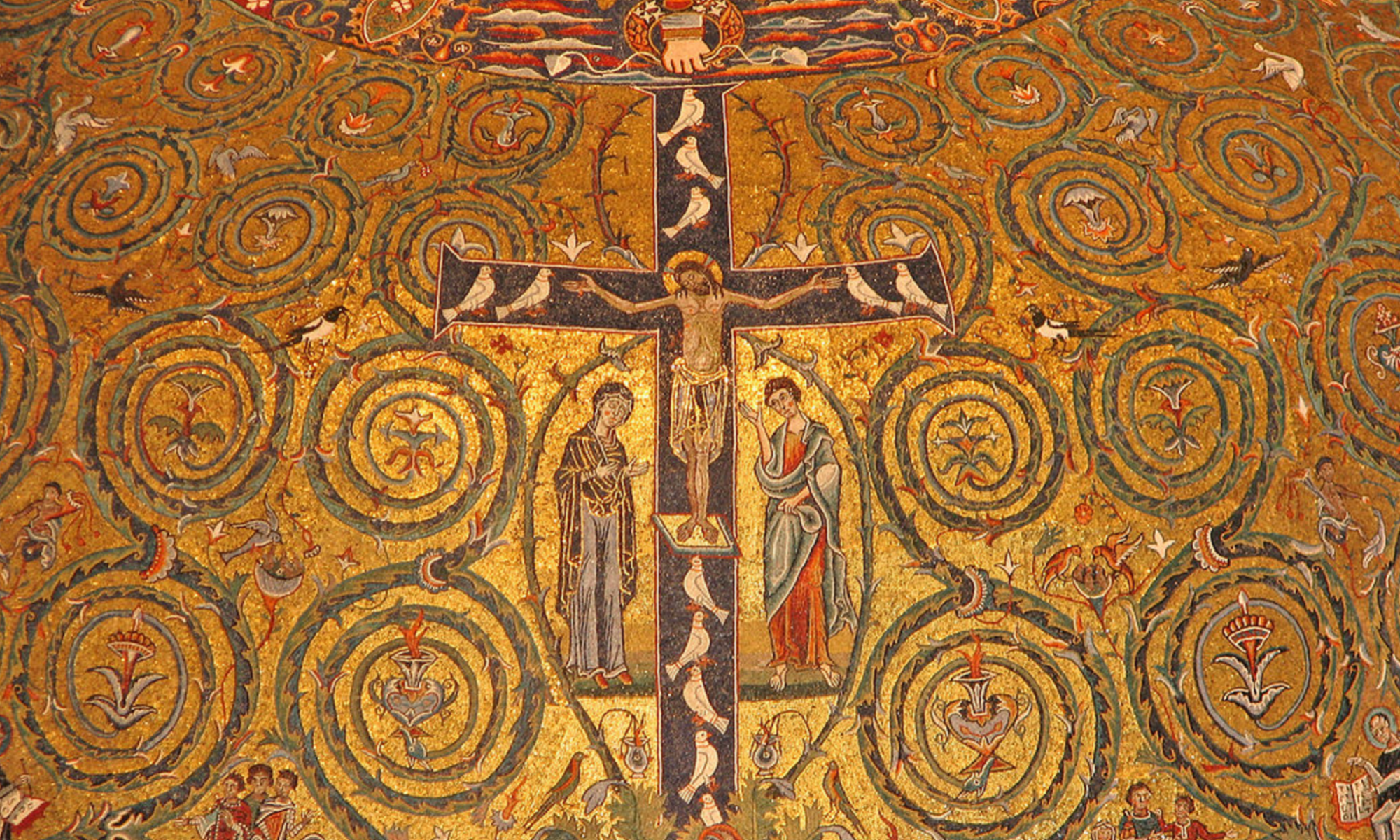
Fatherhood – Part II

How do we reclaim authentic fatherhood without succumbing to counterfeit versions of it?

The only way we can discover true fatherhood is to go back to its true source: God the Father and the eternal communion of love that is the Trinity. The Father is the source, the eternal font, without being “greater than.” The Son is from the Father, yet they are coequal in dignity and majesty. The Son eternally receives from the Father; he has his very identity from the Father. Yet he is just as fully and perfectly God as the Father is God. All that is the Father’s is his. The loving communion between them, the eternal delight they share IS the Holy Spirit.

I have been relishing Jacques Philippe’s new book entitled Priestly Fatherhood. He rejects all abusive forms of fatherhood while gently but firmly inviting his fellow Catholic priests to be icons of God’s Fatherhood. Icons are not God; rather, they draw us into the divine. Priests are invited to be loving shepherds, loving in a fatherly way as we accompany the flock into the heart of God the Father. How beautiful it is when we Catholic priests embrace our ordained identity as “another Christ” – one who manifests the love of the heart of Jesus so that others can come to see the face of the Father in heaven.

Often, we falsely exalt priestly fatherhood – putting priests up on a pedestal, pretending like we are not truly human. Our fatherhood is genuine, but it is only a sharing or a participation in God’s Fatherhood. It remains a heavenly treasure held in vessels of clay (2 Corinthians 4:7-11). When we priests forget our humanity, we begin abusing power and harming people. When people expect us priests to be superhuman, they will wear us out. Both happen far too often! God is the true Father people seek, and that means renouncing any idolatrous versions of priestly fatherhood.

Jacques Philippe names well some of the distortions of fatherhood. I would like to consider three of them: severity, absence, and chumminess. I think they are the most common abuses – not only for shepherds and spiritual fathers, but also for dads in family life!

Severe fathers harm their children, who live in fear of missteps or mistakes. The children feel like their efforts will never be good enough; they will never measure up. Sometimes the abuse is blatant: name calling, belittling, yelling, screaming, interrupting, or assaulting through physical violence. Other times, the abuse is subtler – not loving the children for who they are, expecting them to fit a certain image or mold, only showing them love or affection when they behave a certain way or play their proper role, reacting with anger or fear if they somehow bring shame on the family or expose the family’s problems to others.

Absent fatherhood is every bit as damaging, perhaps even more so. Fathers who abdicate their authority leave their children alone to face the harshness of a fallen world, to figure things out for themselves. When children feel alone, unseen, unheard, and uncared for, it doesn’t take much for them to internalize a lie of worthlessness. Something must be wrong with me.

What Jacques Philippe describes as “chumminess” is a third failure of fatherhood. Yes, it gives lots of attention to the children. Perhaps they even like it – much of the time. But it becomes a using and an exploitation – meeting the emotional needs of the father in a way that ultimately sucks the life out of the children rather than strengthening them, holding them accountable, and helping them discover their true identity.

As I read Jacques Philippe, I found myself immediately thinking of another favorite book of mine, Unwanted by Jay Stringer. It is, to date, the single best book on unwanted sexual behaviors, why they happen, where they come from, and how real transformation happens. Jay conducted research with 3,800 individuals and found some common denominators in their family of origin: rigidity, disengagement, and triangulation.

“Rigidity” is another way of describing severe parenting, just as “disengagement” is another way of describing emotional absence or lack of connection. The term “triangulation” is unfamiliar to most, but we need only turn to Genesis to find examples. Isaac and Rebekah are in a marriage covenant, but Rebekah prefers emotional intimacy with her son Jacob, while Isaac prefers their twin son Esau. Jacob continues the pattern into the next generation, choosing his own favorite son Joseph.  Joseph, at first, rather enjoys the power and privilege of this special relationship with daddy – which incites much envy and violence from his brothers. They make him pay by selling him into slavery.

Fatherhood, in its authenticity, is a humble exercise of authority that helps children to know who they are. Consistent and loving fatherhood allows children to be secure in their identity. If you read the writings of John Paul II on Theology of the Body (please do!), you will discover that our identity and our sexuality cannot be separated from one another. God created us male and female in his own image. The devil immediately and furiously assaulted that identity, seducing us into a ruptured relationship with God, others, and ourselves. We have been wounded ever since, both in our sense of identity as children of God and in our sexuality – which, more broadly speaking, includes how we relate to anyone and everyone. Most of us struggle to some degree in having healthy and holy relationships. We wear masks and hide parts of ourselves; we resist vulnerability and true intimacy – because we are wounded.

Only God the Father can restore us in our true identity, through Jesus his Son, in the Holy Spirit. Earthly fathers (both dads and priests) are given authority for the purpose of helping the children to experience God’s Fatherhood. Earthly fathers harm, but we can repair the harm. We can recognize and confess that we have been severe or rigid, that we have abdicated or abandoned, or that we have used others to meet our own needs. We can become authentic fathers who are truly icons of God the Father. We can shine the love of the Father in a world that needs it.

But how?

To be concluded…

Fatherhood

Fatherhood is under fire today. Even to talk about it can be taboo. I will take that risk. Authentic fatherhood cuts into the core of Christian faith, because Jesus reveals God as his Father. Read John’s Gospel. Read his three letters. You will hear again and again that Jesus is from the Father. He is in communion with his Father – not just as a human being now in time – but in an eternal communion of intimate love. The bond of love between them is so perfect that it IS a third person, the Holy Spirit. Jesus repeatedly expresses his desire that we come to share in this communion; he invites us to experience God as “Our Father,” to pray and relate to him in that way, both individually and communally.

This poses a problem in a world (and a Church) in which fatherhood has so often failed or harmed. Almost all of us have a distorted view of God the Father, because we are looking at him through the lens of our earthly experiences of fatherhood.

We tend to take the analogy backwards. We are thinking, “God is a Father sort of like these earthly fathers.” It is the other way around! Any authentic earthly fatherhood is rightly called fatherhood only to the extent that it is a sharing in and revelation of God’s Fatherhood.

The Catechism of the Catholic Church warns us against projecting our earthly views of fatherhood onto God:

…we must humbly cleanse our hearts of certain false images drawn “from this world.” Humility makes us recognize that “no one knows the Son except the Father, and no one knows the Father except the Son” … The purification of our hearts has to do with paternal or maternal images, stemming from our personal and cultural history, and influencing our relationship with God. God our Father transcends the categories of the created world. To impose our own ideas in this area “upon him” would be to fabricate idols to adore or pull down. To pray to the Father is to enter into his mystery as he is and as the Son has revealed him to us (n. 2779).

These days you will find anti-patriarchy and pro-patriarchy camps in Christianity. The Catechism here offers sympathy and caution to both sides! Both are speaking certain truths that need to be heard. Both sides also have a tendency to throw the baby out with the bathwater. On the pro-patriarchy side, you will often find culture warriors who are defending, not God, but worldly structures. Those structures are much more about privilege and power than they are about a true sharing in God’s Fatherhood! God is always on the side of the poor and the oppressed, and if we find ourselves blindly defending oppressive fathers (whether dads or spiritual leaders), we may find ourselves far from God! But on the anti-patriarchy side, there is an over-reaction against these abuses. They are right to acknowledge that many men have victimized, dominated, intimidated, used, exploited, excluded, and silenced. Such acts belong not only to isolated individual men, but have often been embedded within structures that silence opposing voices and blame the victim: including governments, businesses, schools, families, and our own churches. But throwing out fatherhood altogether means cutting off our access to the true Fatherhood of God. We are created to receive his blessing, and will remain miserable without it.

Without God as a Father, Jesus himself would have no identity! He simply IS the Son – eternally begotten of the Father. He invites us to discover our own true identity by receiving fatherly blessing. We need fatherhood to remember our story and to know who we really are.

Any authentic expression of fatherhood is a true sharing in God’s Fatherhood. The apostle Paul puts it this way: “For this reason, I kneel before the Father, from whom all fatherhood in heaven and on earth is named…” (Ephesians 3:14-15). More commonly, it is translated “every family,” but in Greek the wordplay is obvious: God is Father (pater) and all patria is from him. Without God’s Fatherhood, there is neither fatherhood nor any other sense of family belonging.

We begin our understanding of Fatherhood by connecting with and meditating on the Trinity. This weekend (eight weeks after Resurrection Sunday), many of our Christian liturgical traditions celebrate “Trinity Sunday.” Jesus is the Son. He is from the Father. He depends upon the Father, and draws his true identity from the Father. When Jesus is baptized, the Father claims him as his beloved Son, in whom he delights.

There are layers of truth here. The Father anoints the humanity of Jesus with the Holy Spirit and declares this human being to be truly his Son. But he is also speaking of their eternal relationship. He is eternally God’s Son – even had he never become one of us, even if he had never created human beings or a universe at all!

The Son is eternally from the Father, yet they are co-equal in dignity and majesty. There is no “greater than” or “less than” in the Trinity. If there were, then Jesus and the Holy Spirit would not truly be God! They would be somehow less than fully God.

Can you see the relevance for human versions of fatherhood or patriarchy? If our fatherhood truly reflects and draws its substance from God’s Fatherhood, then there will be no opposition between equality (on the one hand) and being a source of identity and blessing on the other. That means that we must renounce any counterfeit versions of fatherhood that want to exalt someone on a pedestal. Fatherhood is never about power or privilege. Properly understood, there is an authority there – but it is an authority that lifts others up. True fatherhood pours identity into others, helping them to discover in God the Father who they truly are.

This is true of husbands and dads, but it is also true (in a parallel way) of spiritual fathers: priests or bishops. Each in different ways are a sharing or participation in the Fatherhood of God; each causes grave harm when the God-breathed authority is usurped for the sake of power or privilege.

Perhaps that is why Jesus gave such a stern caution, “Call no man on earth your father – you have only one Father, and he is in heaven” (Matthew 23:9). In point of fact, we do call men our “fathers” – both biologically and spiritually. Paul referred to himself as a spiritual father (1 Corinthians 4:15; 1 Thessalonians 2:11-12); the Letter to the Hebrews exalts Abraham as our patriarch. Jesus is not condemning earthly fatherhood, but reminding us of its true source.

Dads are fathers. Priests are fathers. Others are father figures as well. Like it or not, we who are fatherly have a massive impact on how others form their view of God the Father. We can heal or harm their relationship with God, depending on how we embrace our calling.

To be continued…

Fixing vs. Facing

What is your reaction when confronted with human heartache?

Do you feel the urge to fix it? To prescribe the right book, the right prayers, the right slogan, or the right regimen? Or maybe you crack a joke to lighten the mood; maybe you put things in perspective with a comparison: “Well, at least you’re not like ____________________.”

Fixing feels good at the time. We tell ourselves that we are “helping” the other person – but we are probably helping ourselves. We don’t like that feeling of heartache, and we definitely don’t like feeling powerless – so we back away from the abyss by trying to fix it.

When Job’s friends arrived, they found him sitting on a pile of dung, scraping at his scabs with a shard of pottery. They sat with him for a time, but couldn’t abide his heartache for very long. They shifted to analyzing and fixing, and thereby abandoned him in his pain. Indeed, they blamed him for it!

Giving advice is easy – and not nearly so helpful as we like to think. In some cases, it is our way of backing away from solidarity with the suffering person. In others, it is an arrogant way of saying, “If only you were more like me, your problems would go away.”

I have noticed that subtle message in myself and others – both at the individual and the collective level. I think of Casa Hogar Juan Pablo II – an orphanage in Peru founded by Fr. Joe Walijewski, a saintly priest from our diocese. I have been there five times, usually with a group of young people. The thought process at home is almost always the same – Isn’t it great that we are sending down some of our youth to go and help those poor people? We assume that our affluent (and white) American ways are so much better than theirs. We assume that we have the power, wisdom, and resources to solve their problems. If only they were more like us…

Fr. Walijewski actually saw it the other way around, dreaming of a “mission in reverse.” The mission is not our people going down to Peru. Rather, we go to Peru so that the children there can teach us what it means to be human!

And they have taught us – every time. Amidst material poverty, amidst government corruption, amidst heart-wrenching stories of loss or betrayal, we have encountered stunning beauty and joy. It exposes our own deeper poverty – what Mother Teresa called “the poverty of affluence.” Every single trip I have witnessed the shocked realization in our youths’ faces and tears: How can children possessing so little, children who have suffered so much, be so joyful? How can they love so tenderly and so vulnerably? How can we who possess so much be so joyless?

Jesus invites us to be with each other in communion – both in the agonizing sorrows of life and in the intense joys. As Paul puts it, “Rejoice with those who rejoice; weep with those who weep” (Romans 12:15). That means that the human heart of a saint is never far from tears and never far from laughter. Those who are the most open to tears are also the most capable of joy. That is because, in the Paschal Mystery, Jesus has redeemed human heartache by investing meaning into it. He invites us, not to bypass suffering and the Cross, but to follow him through it to new and abundant life – to follow where the brave shepherd has gone before.

It is only when we face the fuller depths of our humanity – in all its beauty and brokenness – that we can die with Christ and rise with him.  It is in such human encounters that the newness of the Resurrection breaks in. Those who learn to abide in the midst of heartache, staying vulnerable and receptive to God and others, will experience the surprise of the Resurrection and the joy of the Gospel. Jesus assures us that his Father blesses those who are poor, those who grieve and mourn, those who are willing to be vulnerable, those who hunger and thirst. Facing heartache allows us to receive the Father’s blessing. “Fixing” it closes us off and diminishes our receptivity.

Let’s face it – facing heartache is hard! As the great poet T.S. Eliot put it, “Human kind cannot bear very much reality.”

I think that is why, when Jesus died on Good Friday, he said “Behold – your mother!” – not just to John, but to every beloved disciple. Mary was often in situations in which she intuitively understood that God was doing amazing things. She did not at all know how it was going to be okay. I am thinking of the Annunciation, Jesus’ birth in a stable, the flight into Egypt, the cryptic words of Simeon in the Temple, the losing and finding of 12-year-old Jesus in Jerusalem, his torture and execution, and the awful watching and waiting on Holy Saturday. Again and again, mother Mary faced heartache. Again and again she waited with expectant hope and was surprised by the marvels of the Kingdom of God.

The last time the Bible tells us about Mary is in Acts 1. Following Jesus’ Ascension into heaven, yet again she abides in uncertainty and messiness. She prays with the apostles every day in the cenacle – nine days in all. It took those apostles many years and many failed attempts, but they learned to abide and receive. The Jewish feast of Pentecost arrives – the day to bring first fruits of the harvest to God. In a stunning and joy-filled reversal, God gives the first fruits to his Church in the person of the Holy Spirit. Mary recedes, and the early Church comes to birth, set on fire with the Holy Spirit.

The Church is intended by God to be a community that faces heartache vulnerably, open to the Father in holy receptivity and open to each other in true communal fellowship. Rather than trying to fix or advise others so that their story can fit into the preconceived mold of our own story, we expect the Holy Spirit to show up. We expect the Father’s blessing. We expect that the new life of Resurrection will surprise us. Fixing is too constrictive to allow space for God to do his work.

Do we have the courage to face our humanity together, and to abide together in Hope?

Jesus and Restorative Justice

What is justice?

The greatest minds in human history have often pondered this challenging question: Plato in his Republic, Aristotle in his Ethics, Thomas Aquinas in his Summa.  Wise women and men do not pretend to have all the answers, but they stir up our curiosity by inviting us to ask the right questions.

Justice is a theme that runs throughout the Scriptures. In God’s plan, justice is wedded to mercy (Psalm 85:10). He does not desire the sinner to die but to turn back and live (Ezekiel 18:23). He sends his own beloved Son Jesus to seek out and save that which has been lost (Luke 19:10). He does not desire to condemn the world but to save it (John 3:17). When he acts justly, it is always ultimately with a view to heal and restore the creatures he has made – if we desire it. When he acts mercifully, it is never without an invitation to tell the full truth about the harm.

Think of Adam and Eve in the garden in Genesis 3. In their shame, they hide themselves – as though from an angry tyrant who is going to make them pay. He does bring Fatherly justice – holding them accountable and explaining to them the consequences. But he also promises eventual healing and restoration through “the woman” and her offspring. Adam and Eve are unable, at first, to tell the truth about what they have done. They try to shift the blame – anything to get the attention off the shame they are experiencing. God’s questions are for their good: Where are you? Who told you that you were naked? Have you eaten from the tree? God exhibits both justice and mercy because he is a loving Father who ultimately desires our wholeness and our sharing in his glory. He never lies or ignores the truth, but he also does not desire our loss. Rather than make us pay in strict retributive justice, he sends his own beloved Son so that we can receive his mercy.

But there is so much more than a “not guilty” verdict! The Father and Jesus desire our healing, our restoration, and our wholeness! That is the primary motive for the Father asking his Son to die and rise. Jesus proclaims to his disciples that he came so that we might have abundant life (John 10:10). When he starts appearing to people after the resurrection, he brings life, joy, peace, healing, restoration, wholeness, and holiness – so much more than what they had hoped or dreamed!

How damaging it has been for some Christians to think of the death of Jesus only in the sense of paying the price for our sins. Yes, there is justice – God is a loving and truth-telling Father who does not pretend as though our sins never happened. We can only be healed and restored if we take seriously the harm that our sins have caused – the way in which we have ruptured relationships with him, with others, and with ourselves. AND the Father desires restoration, wholeness, and holiness.

Consider Jesus and Zacchaeus, the tax collector who has exploited many vulnerable people (Luke 10). Jesus eagerly seeks out Zacchaeus, who is stunned at being desired and delighted in. But Jesus also allows Zacchaeus to name the harm he has caused and work to repair it. Mercy and justice go together.

Consider Jesus and Peter in John 21. Jesus stokes a charcoal fire there on the seashore – fully knowing what he is going to do. Following the miraculous catch of 153 fish, he then invites Peter into a conversation that is simultaneously remembering, truth-telling, and healing. Peter stands once again by a charcoal fire, just like the night before Jesus died – only now Peter is allowed the opportunity to say three times that he loves Jesus. Peter experiences much distress in this experience – as Jesus knows he will. It is not a shaming of Peter, but rather helping Peter journey through and out of the labyrinth of shame as he begins experiencing healing and restoration.

Peter is much humbler in this encounter than at the Last Supper, when he boldly declared he would lay down his life for Jesus. In the Greek text, Jesus asks Peter “Do you love me?” – using the verb agapein to denote a self-sacrificing love. Peter responds (truthfully this time) that he loves him with philein – a brotherly love. Jesus foretells the eventual day when Peter will indeed love him so greatly as to lay down his life. For now, he simply invites Peter, “Follow me.” When we read the Acts of the Apostles, we see the restoration and transformation of Peter taking ever fuller effect. The risen glory of Jesus begins shining in and through him.

Repair and restoration take time. But they include a safe space in which both the one who has harmed and the one who was harmed can be heard, can tell the truth about what has happened, and can seek so much more than simply making someone pay.

I have friends who desire this kind of reform in our criminal justice system – which we all know to be broken and badly in need of repair! I am not an expert in those areas, but I hope we begin asking more of the right questions! Both Scripture and our Catholic Tradition have so much more to offer than a justice that only thinks about retribution.

As a priest, I am especially interested in how restorative justice can take root in our marriages, our families, and our church institutions. Too often, when serious harm has happened, we do not use our God-given creativity to open up a safe and healing forum in which all sides can tell the truth about the harm and seek full restoration for all who have been impacted.

Our families of origin and our church families have often failed in this area – especially when there has been sexual harm. Most people I know feel even more shame and awkwardness talking about sexuality – even though it is one of God’s most glorious gifts to us. Consequently, those who have been harmed sexually – whether by someone working for the church or by someone else – often find that neither their family of origin nor their church family is a safe haven to bring their story. I can think of more than a dozen individuals I know personally who suffered even greater betrayal because their story was not received with care.  Simultaneously, our society currently offers no path of redemption or restoration for those who have perpetrated sexual harm – they are branded as permanent outcasts beyond the reach of mercy.

Our just and merciful Father says otherwise – he desires healing and restoration for all who will receive it. As with Adam, Eve, Zaccheaus, the Samaritan woman at the well, or Peter, such restoration is only possible if we are willing to be truth-tellers – both about the harm done to us and about the harm we have done to self and others. Jesus will invite us to follow him on a healing path that includes (sometimes awkward or messy) repair. We will die and rise with him as we come to full maturity in him. In the end, if we welcome this full encounter with his love and truth, his righteousness will shine in us.

Jesus and Abandonment

When I ponder the final words of Jesus on the Cross, I feel intrigued by the word “abandon.” Matthew and Mark recall Jesus’ anguished cry to the Father, “My God, my God, why have you abandoned me?” (Matthew 27:46, Mark 15:34). But Luke recalls Jesus “abandoning” himself into the Father’s hands in trust and surrender, as he breathes his final breath (Luke 23:47). How can two so drastically different human experiences be expressed with the same English word?

I feel a personal connection with both experiences. The one is so full of anguish, sorrow, or panic – even fury. The other is touched with tenderness, intimacy, trust, and security. The one screams out from isolation; the other approaches in sweet intimacy.

During my college seminary years, I drew much consolation from reading Abandonment to Divine Providence by Jean Pierre de Caussade (1675-1751), a French Jesuit. His words spoke into my orphaned heart that struggled to trust and surrender in vulnerable relationships – even though I couldn’t have named the experience at the time.

During that same time, I went on my first ever silent retreat. I look back with a smile on the “me” of a quarter century ago. In my willful heart, there was both a tender longing for intimacy with God and a pharisaical legalism. Like young Saul, I threw all my zeal into the retreat. My 21st birthday came and went; a few friends even sang for me at breakfast. I smiled and blushed, but dutifully kept my silence.

I felt a longing as I recalled our high school chaplain describing the importance of his annual retreats. He had once testified to how God began speaking to him when he stayed in silence long enough. This must be how it works, I thought. So I spent a full three hours in the chapel each afternoon – mostly kneeling. But I didn’t conquer God; he conquered me. On the third day, abruptly and unexpectedly, it was as though a massive wave pulsed through the room and me. I suddenly and intensely felt the the strength and security of his providence – a sense that truly (in the words of Julian of Norwich) “all will be well and all manner of thing will be well.”

Amidst that peace and an intense desire for more of that peace, I felt convicted of all the times that I was “pushing through” the present moment. I was either enduring that which was unpleasant or devouring that which was pleasurable. Either way, I wasn’t opening myself to the gift that can only be received in the present. He helped me see how often things that felt confusing or overwhelming in the present moment actually led to abundant blessing. He flooded my mind and heart with the image of looking back down the mountain at the twisting path already walked – including steps that made utterly no sense at the time – and marveling at how no other path would have worked. He gave me some felt sense of how he sees all of these things simultaneously; all the moments are one in him; all are “now” for him. He invites me to surrender to him in the “now” of the present moment. I resist. When I left the chapel and felt the throb of circulation as the blood returned to my knees. I paused in the hallway to gaze on a copy of a Pinturicchio painting of the Crucifixion (see above). I felt a jolt of awe as I gazed upon the “now” of Jesus’ once-and-for-all sacrifice on the Cross. Beneath him lay death dismantled, overcome by his love and his shed bled. Behind him was paradise restored, and a felt sense of God’s eternal rest sustaining him in that moment of surrender. I felt Jesus’ trust in his Father and an intense desire to share in that trust.

In the twenty-five years since, I have felt both senses of “abandonment” many times over. Perhaps the most distressing situations for me are those in which I feel left alone by those I thought I could trust – suddenly facing an overwhelming and dangerous threat by myself, when I thought I would have protection and security. That feeling of abandonment is so ancient for me and so familiar. The lies can race through my head at lightning speed: They don’t understand; they don’t care; they can’t be trusted; I am all alone! In some cases, I flee and isolate myself; at other times I attack with an angry outburst and hold others to impossible expectations, as if they are supposed to revolve around my needs. The more I mature in Christ, the more quickly I notice, and the more frequently I choose a different path – or repair if I repeat old patterns.

Again and again, God has also invited me into trust and surrender, reminding me to live in the present moment and look for his gift. If I abide and gaze and receive, the gift is always there, including in those moments in which I am invited to take up my cross with Jesus.

I can only receive the gift of the present moment to the extent that I let down the defenses of my self-protection. Otherwise I limit how much I can receive, and ultimately how much I can give.

The English verb “to abandon” comes from the French abandonner. The French verb has multiple senses, which one way or another are ways of untying, releasing, or relinquishing a band that ties something together. When we do so with a committed relationship or a grave duty (e.g., parenting, governing, leadership), other humans experience abandonment in the first sense (“My God, my God, why have you abandoned me?”). But there is also an untying or letting go when we encounter beauty, when we forgive harm, when we dance, or when we connect with another person.

Jesus, in his Passion, enters fully into both human experiences of “abandonment,” and reconciles them. Those of us who have experienced abandonment in the first sense tend to have spectacular defenses against ever letting anyone close again. Jesus cries out to the Father on our behalf. Jesus also “abandons” in the second sense. He cancels the debt of our sins, releasing all claims to make us pay. He meekly surrenders himself like a lamb, even in the face of contempt, violence, and powerlessness. He releases every merely human solution and entrusts all of it to his Father. He freely submits and becomes the seed sown into the earth that bears abundant fruit. May we claim his victory and allow him to reconcile in our hearts all that impedes our own surrender.

Purity Culture – Conclusion

This is the fifth and final installment of my reflections on the “purity culture” often found in Christian homes and churches. Out of fear that young people will be corrupted by the sex-obsessed culture, we sometimes miss the mark ourselves. We link shame and sexual desire together in ways God never intended; we abdicate our responsibility of providing apprenticeship in chastity; or we model a moralistic self-righteousness rather than humble growth and fruitfulness. Perhaps the biggest mistake is turning “purity” exclusively into a moral issue and/or a sexual issue. That is certainly not the biblical view nor the Catholic view.

Lie #5“Purity” is mainly about sexual morality

In the Beatitudes, Jesus teaches, “Blessed are the pure in heart, for they shall see God” (Matthew 5:7). Isn’t it interesting that most American Christians hear these words and instantly imagine sexual morality?

Yes, Jesus proceeds to address adultery and lust in the subsequent chapters. But he also addresses murder, aggression, anger, unforgiveness, and greed. He teaches about prayer, fasting, and almsgiving. He invites us to seek first the Kingdom of God, and in so doing to persevere in seeking, asking, and knocking.

Above all else, Jesus speaks from start to finish about a relationship with God the Father. He invites us into communion. He desires us to be “blessed” by our Father, who sent his own Son to die for us while we were yet sinners. We do not and cannot earn our way into relationship by good conduct. We enter our covenant with God as ones who are poor in spirit; grieving and mourning, meek and humble; aching with hunger and thirst. Jesus knows that we will be presenting broken lives to God for mending.  Purity of heart means bringing God all of the scattered pieces of our shattered hearts! It is then that real growth can begin.

In other words, when Jesus speaks of being “pure in heart,” he is inviting us to be wholly and wholeheartedly consecrated to God. That means allowing every dimension of our being to be blessed by him. It is the opposite of hiding away pieces of ourselves in shame! It was the devil who tried to convince Adam and Eve to run and hide after they had disobeyed God.

Toxic shame is perhaps the single greatest obstacle that keeps us from letting ourselves (ALL of ourselves) be loved by God and others. Many of us are more susceptible to shame because we learned to tie performance and relationships together: “I am only lovable if…” or “I am only lovable when…” To the extent that those lies have purchase in our hearts, Christian morality becomes a torment rather than Good News.

The urge to hide ourselves is challenging enough when we feel shame over moral faults. But the devil has worked still greater harm in many of us. In moments of betrayal, abuse, abandonment, or neglect, he has crept in and whispered lies – convincing us to hold contempt toward our desires, our bodies, our sexuality, or our capacity for delight. We then enter a false battle for “purity” – trying to rid ourselves of that which is best in us! If we feel shame every time we feel desire, how can we grow in healthy relationships? Hiding ourselves does not lead to intimacy.

Our shame can be healed by moving away from hiding and towards relationships: becoming truly and safely seen, known, heard, understood, and cherished – not some idealized version of ourselves, but as we currently are, a work in progress.

The Catechism of the Catholic Church (n. 2518) speaks of purity of heart as a threefold sharing in God’s purity: in our charity, our chastity, and our orthodox belief. In other words, we are created to share in divine Goodness, divine Beauty, and divine Truth.

Truth, Goodness, and Beauty – the human heart has an almost insatiable longing for all three! The devil HATES this longing in us, but cannot erase it. So he attempts to divert and distract us away from the intimacy of relationship that is at the core of all three.

Our intellects are ordered to the Truth. Purity of heart includes surrendering to the Truth whenever the evidence is in front of us. The humble heart is willing to be proven wrong – or incomplete. The arrogant heart resists the vulnerability of surrender – either through obstinate refusal to believe what God has revealed or through a dogmatism that thinks it knows everything – as though Truth is an object we could possess. The closer we get to divine Truth, the more we realize how little we truly know!

Our wills are ordered to Goodness. We long to love and be loved. And so God commands us to love him with all our heart, mind, soul, and strength, and to love our neighbor as ourselves. It is a two-way street: freely receiving and freely giving. Growing in purity of heart includes recognizing any ways in which we are blocked – either in giving or receiving. The more we love, the greater our ache to become more God-like in our love.

Our ache for Beauty flows from both our intellect and our will. Here we find the intense desire of eros that is such a glorious divine gift. No wonder the devil tries so hard to ruin it! Early and often, he entices us to curse our desire for Beauty – to feel shame around this God-given longing.

Yes, our desires often run wild – overindulging in food, becoming possessive in relationships, or wandering into sexual fantasies. That is why the Catechism speaks of “apprenticeship” in chastity. There is an appropriate pruning or discipline – not for the sake of cutting off desire, but of fully claiming it.

The word “purity” is first and foremost about our relationship with God –with sexuality as only one dimension. It is a damaging distortion to use “purity” in a moralistic sense. Instead, the Catechism of the Catholic Church devotes ten full paragraphs to the much more helpful words “integrity” and “integrality” (see nn. 2338-2347). Little by little, we learn how to put all the pieces together, aided by healthy relationships with God and others.

Becoming a whole person in our sexuality, our desires, our emotions, and our relationships is not a matter of “on” or “off,” maintaining or losing. It is a lifelong task. The Catechism proclaims this integration to be “a long and exacting work. One can never consider it acquired once and for all. It presupposes renewed effort at all stages of life” (n. 2342).

We are called to keep growing in charity, chastity, and truth our whole life long. The more we grow, the more we will long to grow. Getting a taste of God’s Truth, Goodness, and Beauty is described by many of the mystics as a “wound” – but in this case a wound of love that keeps us coming back to our lover for more. Once we begin tasting from the spring of living waters, our thirst for God intensifies. We desire more; we ache; we taste; we desire; and so the cycle of growth continues.

Apart from those living waters, we wither and die. If we only bring parts of ourselves to the living waters, the relationship will remain impartial and restricted. God desires ALL of us. The mystics desire ALL of him. Unlike lust, however, there is no devouring here. Jesus and his bride become one flesh, in a way that causes both to flourish. Every healthy and holy human relationship imitates that heavenly nuptial union. It is indeed a daunting and lifelong task to keep maturing in imitation of Christ. We need not shame ourselves or others in the process, but allow the kindness of God to keep spurring us on to deeper repentance.