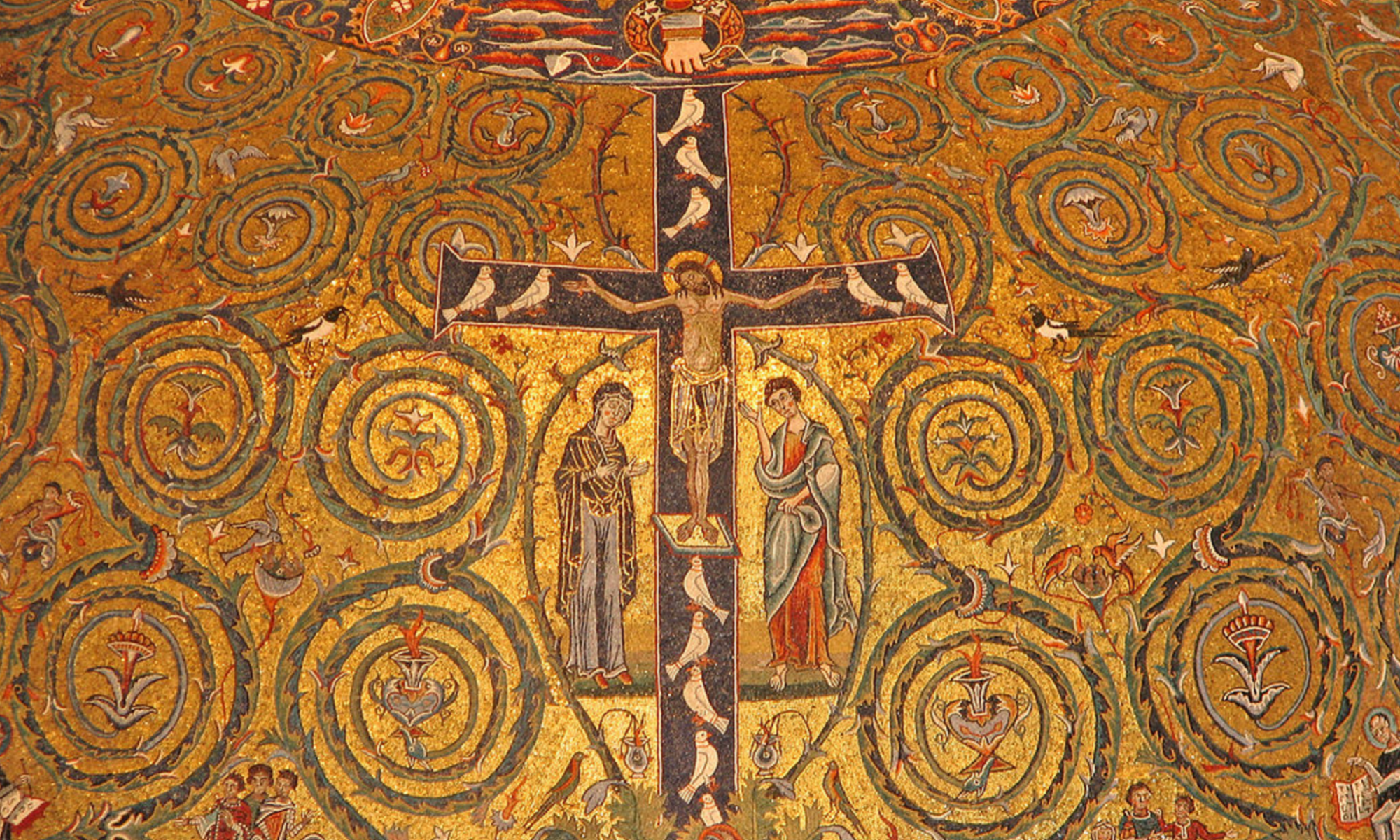
When Hope Hurts

As followers of Jesus, we are people of Hope – especially during Holy Week and Easter.

This year we will experience a Holy Week like no other – gathering the family around our tablets and TVs to view the live stream of the holiest liturgies of the year.

I think back to the middle of March – which now feels like ancient history – and remember how I wept and sobbed over the cancellation of public Masses. The part that was the most painful for me was when it fully dawned on me that our faith communities would not be gathering together for Holy Week and Easter. Having had time to process my grief, I am now grateful that we’re doing our moral duty and serving the common good by joining in the shared effort of social distancing. I’m grateful for all the creativity and innovation that has opened up new opportunities. I’m getting accustomed to Mass on facebook live and Zoom meetings. But let’s face the facts: it’s still hard.

Since the middle of March, there have been far greater hardships for many than the temporary disruption of prayer gatherings and public Masses. Some find their entire livelihood in grave peril; others are under enormous daily stress; many others have died of COVID-19 or lost a loved one.

All of us have felt our daily lives turned upside down. Almost everyone I know seems to be experiencing a significant spike in anxiety or a resurgence of unwanted behaviors. So much is uncertain and unknown; so much can change so quickly. We trust God, but it’s incredibly hard at times to keep believing that it’s somehow all going to be blessed by God as part of his greater plan.

Hope is hard. The Christian virtue of Hope is not rosy optimism; it’s not a feel-good pretending like everything is just swell. Hope involves longing and desiring, watching and waiting. Hope stretches our human hearts far beyond what feels easy or comfortable. Indeed, keeping Hope alive in our heart can be painful. It’s so much easier to try to avoid, it, numb it, or even kill it – choosing instead a path of self-soothing or self-reliance. But we cannot save ourselves.

Holy Week is a time of Hope. The death and resurrection of Jesus, his Paschal Mystery, constitutes THE human story. Without Jesus dying and rising, our human existence becomes empty, fruitless, and meaningless. On the contrary, as we allow ourselves to be plunged into those saving events, we are brought to new and more abundant life.

In the “in between” of that transformation stands the virtue of Hope, like a brave soldier standing in the breach. It can be far more agonizing than we may realize. It’s quite possible that only a few Christians these days are truly steeped in Hope.

Hope is the virtue of Holy Saturday – a day that is easily overlooked. Many are bustling about preparing for Easter; others are pre-binging on food or Netflix or some other pleasure. The invitation of Holy Mother Church – rarely accepted – is to engage in fasting and silence and prayer as best we can, to continue keeping our vigil at the Tomb of Christ, watching and waiting in Hope.

Think of the various characters in the Gospels and imagine what their experience of Holy Saturday was like. Think of Peter and the other apostles, having suddenly lost their Lord and their friend Jesus – and under the shameful circumstances of having abandoned him or denied him. Jesus had recently given a glimpse of glory to Peter atop Mount Tabor in the Transfiguration. Maybe that remembered experience emitted some faint glimmer of Hope amidst his overwhelming feelings of grief and disillusionment, fear and doubt, guilt and shame.

Think of Mary Magdalene and the other faithful women, holding Jesus in their hearts, continuing to love him even when it hurt so much. Their instinctive and intuitive Hope drew them to the tomb on Easter morning, even if they didn’t understand what was happening in their hearts.

Think of Jesus’ own mother Mary, who had borne him in her womb, nursed him, taught him to walk, taught him to read the Scriptures, taught him to pray, and so much more. Over the course of 33 years, she was more intimately close to him and held more conversations with Him than any other human being. Scripture does not record these, but Luke does tell us more than once that Mary kept pondering these mysteries in her heart. She is perhaps the one person who was not entirely surprised at his Resurrection.

But even for Mary – nay, especially for Mary – there was that agonizing in-between moment of Hope between the first day of Good Friday and the third day of Resurrection. If the experience was anything like the previous patterns (the birth of Jesus, the Flight into Egypt, the Presentation in the Temple), she knew and believed God’s promises, but did not know how those promises would be fulfilled.

That is what is so hard about Hope. It is an invitation to plunge into the depths of Jesus’ suffering – which involved far more than physical torments. He freely chose to dive into the depths of our fallen human experience – including the isolation, the loneliness, the fear, the shame, the rejection, and the abandonment that so many of us experience. When he cries out “My God, My God, why have you abandoned me?” He is crying out with and for each of us from the depths of our hearts – places we are often not willing to go ourselves, because they hurt so much. Jesus allows himself to feel the pain of rupture from God and rupture from neighbor that is part of the story for each of us who are fallen.

Then it’s our turn. Like the Virgin Mary, like Mary Magdelene, like so many of the other disciples, we are invited to keep vigil at his Tomb. We are invited to keep believing his promises – even when it seems impossible anything will ever change. For each of those followers, Easter morning was a wonderful surprise. The risen Jesus brought them joy in a way they had never imagined possible.

During “normal” Holy Weeks, Catholics show up in large numbers for Good Friday, and are often moved to tears at the torments Jesus endured on the Cross. This year, only the priest celebrant will get to kiss the Cross.

During “normal” Holy Weeks, most Catholics give little thought to the experience of Holy Saturday. This year, we all have an extended Holy Saturday opportunity. We have been given a share in Jesus’ suffering and death. In the form of all this unrest and all these unknowns, we have an opportunity to share in the same disorienting and agonizing experience of those early disciples on that first Holy Saturday. Like most of them, we do not know how long it will last, whether it will get better, or how it will get better. We surrender in Hope; we wait in Hope, even when it hurts.

We are free to choose. We can plunge fully into the deep waters of Hope. Or we can keep popping up for air. There are any number of ways we can do that. Some turn to the false soothing of food or alcohol or pornography. Others minimize or deny, pretending like it’s not really that hard (thus distancing themselves from genuine Hope). Still others crack a joke or enter into fault-finding and peevishness – anything that will distract us from the present agony of abiding at the Tomb in Hope.

These are normal ways of avoiding – and they make sense. We all do at least some of them. The truth is that tt is terrifying to be under water for a long period of time! For many of us, it feels like it will be too much or too long. Indeed, that is the whole point of being plunged into the waters of Baptism – we actually die with Christ!

We Catholics think often of Good Friday and of suffering with Jesus. This year, I invite each of us to think especially of Holy Saturday, and give ourselves permission to experience the full depth and breadth and length of Christian Hope. It is not for the faint of heart! If we allow it, it will grow and crescendo into an earthquake that will finally break open the cave of our heart; it will roll away the stone so that we, too, can be surprised by the joy of the Risen Jesus.

The Church as Mother

Jesus reminds us that the fields of the world are ripe for the harvest. Like the woman at the well, so many human hearts today are hungering and thirsting for meaningful accompaniment. They come to our churches seeking and searching. They often leave again, still feeling empty, undernourished, unseen, misunderstood, unaccepted, out of place, or unloved. It is so important for us to learn how to be communities that provide ample opportunities for meaningful accompaniment.

What does this look like? We have already considered many metaphors (mentoring, coaching, walking with, sharing bread, etc.). But none compares to that of motherhood. For each of us, motherhood is THE way in which we experienced the most accompaniment in our life – or didn’t, in which case we may still feel the painful effects of that void.

Motherhood is so very important, and the Church is called “mother” both in Scripture (Galatians 4:26) and throughout our history. It is not just the females, but all members of the Church who participate in that motherly role. Jesus teaches us that anyone who does the will of his Father becomes brother and sister and mother to him. How do we become a mother of Christ? According to Augustine of Hippo, by mothering new members in that one Body of Christ that is the Church – both in bringing them to birth and in the ongoing nurturing that is needed after birth.

Each Christian is born again in baptism, birthed from the womb of the baptismal font. Within our new family, the Church, we are meant to receive the slow and steady mothering we need as we grow in our newfound faith. This need was obvious in the early Church. There were droves of adult converts, and the process of accompanying them took several years by design. Once again we live in an age when a large number of our families (children and adults alike) are proceeding on their faith journey with virtually no knowledge or experience of Christianity or discipleship. There are people in our pews who do not know the basic story of Jesus dying and rising, not to mention the messiness of their personal lives. The need for a motherly presence in their spiritual and emotional life is enormous.

I can think of several things that earthly mothers provide that also apply in Church life: nurturing, caring, encouraging, attuning, calming, soothing, celebrating, empathizing, teaching, guiding, and correcting. We all need these things as children; we continue to need them as adults. In an age in which many mothers didn’t or couldn’t provide these things to their children, the need is felt all the more acutely.

Mothers nurture. They provide steady care and encouragement, reliably present to us as we grow. The growth is gradual and slow, and takes an enormous commitment on the part of a mother. Even in the largest of families, a mother is only actively nurturing a dozen children at most – but usually no more than a few at any given time. And even then it drains all that she has to give.

I find that in many Catholic parishes, the priest and maybe one or two others are looked to instinctively any time serious accompaniment is needed. If there are only 10 or 20 people in the parish in serious need of accompaniment, that works well; it’s exhausting but rewarding. But what if there are several hundred in serious need of accompaniment – and many fewer priests? Let’s not forget also that five or six decades ago there might have been a community of nuns living on site to fill in more of that motherly role. That presence of religious sisters is indeed a rarity today. But one need not be a nun to be a spiritual mother, much less be an ordained priest or a paid staff member. In our parishes, much more motherly presence is needed, and every member has a role to play. It’s a totally different model of parish life than many are used to. But if we don’t learn it, our parishes will be quite small in membership and devoid of new life. Several already are.

Mothers attune. They notice what is happening in the hearts of their children. When their child is upset, they know how to calm and soothe him. They know when to draw near, and when to back off and give space. When their child is overwhelmed or frustrated or confused, they help him make sense of the situation and grow in confidence that he has what it takes to figure out a solution.

Do we notice things in parish life? Do we attune to the people around us? Do we notice those who feel confused or anxious because they have never been to one of our liturgies before? Do we notice those who are obviously looking for something and not finding it? Do we notice those who are feeling alone and unloved, anxious or confused, burnt out or overwhelmed? Or are we so caught up in our usual routine and usual clique of friends that we walk right past them? If we do not attune and offer that attention, who will?

Mothers celebrate. They cheer on their children again and again. Under the loving gaze of a mother, children grow in confidence. Baby takes his first steps – mom cheers him on. Baby says a complete sentence – mom cheers him on. Modern brain science has helped us understand how important these celebrations are. Each time we celebrate a small step, our brains release a healthy amount of dopamine. That euphoric feeling of a successful step keeps us motivated so that we keep on trying and keep on growing.

In parish life, who does the steady cheering on for someone who is slowly coming back to faith? Who is there to notice and celebrate every little baby step that is being taken? So many people are starting out with the very basics in their faith life. Virtually every part of the experience is new to them. When someone actually notices and celebrates their growth, it is so encouraging and so motivating.

Just imagine what parish life could look like if every member was doing this kind of noticing and celebrating and encouraging – even for just one or two other people. The growth would really start to multiply!

The Church needs to be motherly, or new life and new growth will cease. Motherly presence is time-consuming. It is best done with a few people at a time. Even Jesus only tried to accompany twelve in this way! We simply cannot assume that “someone else” (our priest, our staff, our volunteers) are taking care of it. They can take care of 10 or 20 at most. Taking care of the multitude of souls that Jesus is calling is the task of each and all of us!  I encourage each of you to ask God in your heart – who are two are three individuals the Lord has placed in your heart that He especially wants you to accompany at this time? Are you willing to make a steady commitment to those individuals and go out of your way to attune, to nurture, to encourage, to cheer on, to guide, to chide, and to bring to fuller growth? As this motherly accompaniment becomes a normal part of parish life for every member, we will see amazing growth and fruitfulness. By doing God’s will, we will become brothers and sisters and mothers of Christ.

Images of Accompaniment

I dream of the day when each parish church will be a family in which everyone is receiving accompaniment and giving accompaniment. On that day, we will all be humble and vulnerable enough to allow ourselves to receive what we need, and will be thoughtful and generous enough to give accompaniment to others that God sends to us. On that day, it won’t just be the priests or the same couple of leaders in parish life trying to do the accompanying, but everyone, each according to his own calling and gifts. All will be accompanied and all will accompany.

There are various images that come to my heart when I think of this accompaniment: sharing bread, playing music, dancing, mentoring, coaching, walking along the path, sitting down next to someone, cultivating a garden, and mothering.

Accompaniment, at its best, is a committed relationship in which one is receiving the things he needs. Our needs are various: fellowship, listening, empathy, encouragement, affirmation, care, comfort, accountability, teaching, nurturing, guidance, and much more.

The first image that comes to mind is sharing bread together. That is literally what “accompany” means. Think of all the meals shared by Jesus and his twelve apostles – those to whom he provided consistent accompaniment, day in and day out. In the best meal experiences, all participants truly feel a sense of connection and belonging. In that spirit of openness, hearts are changed. We receive not only physical nourishment but a sense of community and belonging and purpose. Historically, those who share bread together were also those who walked the path together. They were part of a company travelling together, “companions” on a journey. Certainly our walk towards eternal life is a long journey, and we need companions.

Another image of “accompaniment” involves music. A musical accompanist is not the main attraction. Rather, his role is to be almost unnoticed in the background, boosting the confidence of the main performer(s). When the soloist or choir members make mistakes, the accompanist adjusts, helping them regain their composure and their rhythm. There is much more to accompanying than simply hitting the right notes – it’s a wonderful art of being interconnected with others and bringing out the best in them.

A related image of accompaniment is teaching someone to dance, or dancing with someone. I must say, this has NOT been a strong point for me. I think back to Homecoming my Junior year. My skills on the dance floor were duly noted by the football coach. He really enjoyed himself at the next practice, teasing me and another football player named “Bubba.” Something to the effect of filming a documentary entitled, “White Men Can’t Dance.” Anyway, those of you who love dancing know some of the skills needed – an intimate connection with your dancing partner, an overcoming of inhibitions, a willingness to make mistakes and adjust, attuning to each other and to the music, etc.

My football coach certainly knew how to tease, but we also revered him. He was an excellent mentor and coach.  He knew how to give both criticism and praise, and had our undivided attention. He motivated us beyond what we originally thought was possible. I am still deeply grateful for the incredible discipline that our conditioning drills instilled in me. My internal “smoke alarm”goes off so frequently and so falsely, warning me that something is too much for me. Occasionally it’s right, but so often it’s wrong – I can actually handle it. Coaches are so good at helping us learn those lessons. Think of how many teens look up to their coaches. I encourage you to ask yourself – what would the equivalent look like in parish life?

One of my favorite images is sitting down next to someone. This image is especially helpful in those many moments of life when the shields of self-protection are up in full force. Most of us resist accompaniment, especially when we are feeling afraid or ashamed. When someone sits down next to us in a non-threatening way, it says so many things. It says, “I see you.” I see that you are hurting and afraid. I see that you feel ashamed, so I won’t look at you too forcefully or directly. It says, “I’m with you.” I am willing to sit on this dung heap with you and be sad with you. I’m not any better than you and I’m not trying to avoid your mess. It says, “You’re safe” – I won’t try to meddle and fix this. I’m just here at your side. If you want me to leave, I’ll go. If you want me to draw closer, I’ll draw closer. I respect you and your freedom. I notice you; I care about you; I am here for you.

Still another image is cultivating a garden. It’s a wonderful image because it involves both a consistent commitment AND incredible patience. On the one hand, the best gardeners show a marvelous awareness of what is affecting their plants: the soil, the water, the sun, the weeds, and unwanted pests. They vigilantly and diligently intervene to allow their crops to grow and flourish. On the other hand, they wisely understand that so much is out of their control, that growth is slow, and that they themselves do not provide any of it – not the seed, nor the plant, nor the growth, nor the fruit. They resist the urge to pull up the plant and check on its status.

Finally, and above all else, when I think of accompaniment in Church life, I think of motherhood. The Church is our Mother. Each of us, in our own way, shares in that mission of “mothering” others within the life of the Church. Jesus says that those who do his will become brother and sister and mother to him. New members come to birth and grow in His Church when we are willing to accompany. I’ll share more next time!

Accompaniment: The Missing Piece in Church Life

Last week I discussed the need for accompaniment. By God’s design we all need ongoing accompaniment throughout our life. In return, we are all called to make a gift of ourselves in accompanying others. That need that has always been there in the human heart has only multiplied as we watch healthy family life unravel before our eyes.

Marriage and family life are a privileged context for accompaniment. How beautiful it is when husband and wife are truly present to each other, united intimately as one flesh within the marriage covenant. How beautiful it is when that love is extended fruitfully into the lives of their children. The blessings can be even greater when extended family live in close proximity with each other, and are able to provide ongoing mutual support. The past few centuries introduced new pressures that placed a great strain on marriage and family life: emigration to new lands, the Industrial Revolution, urbanization, massive worldwide wars (and their aftermath in family life), the sexual revolution, the rise of the internet, the rise of the smart phone – I could go on and on.

I am NOT arguing in favor of turning back the clock. Not all these changes are bad, and you certainly can’t put the toothpaste back into the tube. I am just pointing out the present painful reality: very few children are growing up in a context of a happy marriage and a healthy family. That means that the need for accompaniment is even more painfully felt.

I know that some of you pine for “the good old days” and wonder why so many things keep changing. I find that most parishes today contain all the classic signs of a grieving process: denial, anger, blame, and bargaining. Unfortunately, many stay stuck.

There is cause to grieve. Whatever your views are about the changes of the last few centuries, I hope that we can all agree that marriage and family life are seriously struggling. It’s a devastating loss. Whenever there is a grave loss, the healthy human response is to grieve and to mourn. The prophets and patriarchs of the Old Testament wept over the ruins of Jerusalem. Yes, it’s normal to experience denial – to pretend like it’s really not all that bad. It’s normal to experience anger – looking for a scapegoat. It’s normal to engage in bargaining and fantasize falsely “if only…If only…” Yet in the end we need to grieve and lament.

Once again God’s house lies in ruins. We need not lose hope. He will raise up children of Abraham from her very stones, will turn those children into living stones, and will rebuild his Church. Whatever that renewal looks like, one thing is certain: Those God calls to be part of that rebuilding will need to be accompanied and to accompany.

The need for accompaniment in parish life today is glaring. Just in my two parishes, I am aware of hundreds of individuals who are suffering deeply for lack of accompaniment: the sick, the aging, the dying, the lonely, the afflicted, the addicted, widows, widowers, abused children, neglected children, anxious adolescents, overwhelmed young adults, and exhausted caregivers.

I have met many a spouse who is beyond burnt out after years of trying to hold it together with a struggling spouse. They are trying to do all the accompanying themselves – not asking for help or knowing how to ask for help, and forgetting their own need of accompaniment.

The same risk is enormous for us priests. In Catholic parish life, people instinctively turn to the priest whenever there is a need for accompaniment that family cannot meet. Most of us have skills in that area and enjoy doing it. But we are fools if we think we can accompany every hurting person we meet – especially now that family life has largely broken down. I’ve been learning to teach other people how to accompany rather than try to do it all myself. That is actually how Jesus did it. He spent most of his time accompanying a chose twelve from among his disciples.

Most people today will NOT find themselves sufficiently accompanied by their own families. They will need to find support from other Christians – from the whole faith community, not just a few ordained ministers. This is how it was in the apostolic Church, and it is how it needs to be today. By God’s design, the Church is meant to be the living Body of Christ, in which we all receive and give love in communion with God and with each other.

When I ponder the enormous need for accompaniment in Church life today, three images come to my heart: (1) a missing puzzle piece; (2) a breach in our defenses; and (3) a blockage in our arteries.

Accompaniment is like a puzzle piece that is missing. For example, I have met many good Catholics who are struggling painfully with habits of sin or addictions. They try and try to break free. They pray hard, go to Confession, fast, or put filters on their phones. They might do well for a while, but they keep falling. All too often are trying to fight the battle alone. They do not know how to let themselves be walked with by a group of companions. Things really start changing when we seek and find that communal support!

The lack of accompaniment today is like a breach in our defenses. The devil is a bully who doesn’t fight fair. He loves to attack us when we are weakest and most vulnerable. He divides and conquers, thriving when we are isolated and alone and in the shadows. But if we are well-accompanied, loved, encouraged, understood, affirmed, strengthened, and held accountable, we can resist the devil, and he will indeed take to flight. He is powerless against the communal love of the Body of Christ.

The lack of accompaniment is like a blockage in our arteries. The love of the Body of Christ is meant by God to flow in and flow out of us, freely received and freely given, circulating to all the members and making us fully alive in Him. When we do not know how to receive, we find ourselves incapable of giving in any meaningful way. When we selfishly resist giving, we become stifled and sterile.

It is time for us to accept the hard truth. Marriage and family life largely lie in ruins. Many parish institutions lie in ruins. There is no going back to some golden age (if there ever was one); the only path is forward. We may for a time battle with the usual denial and bargaining and anger. We certainly need to lament and shed tears. But if we are serious about the rebuilding, we need to learn the lessons of accompaniment that Jesus taught to his disciples.

The Need for Accompaniment

Accompaniment is perhaps the single greatest need in the Church today. With it, amazing growth and renewal happens. Without it, Christendom crumbles and collapses before our eyes.

Unfortunately, “accompaniment” has become a buzzword. Buzzwords can be confusing and unhelpful. So we need to be clear about what we mean by accompaniment in the life of Christ and his Church.

To be accompanied means that someone commits to us in a relationship that shows love and compassion to us in our need. To be accompanied likely involves one or more of the following: to be seen, noticed, heard, understood, loved, delighted in, celebrated, encouraged, included, affirmed, cared for, walked with, nurtured, fed, sheltered, protected, defended, touched in a meaningful way, comforted, calmed, soothed, taught, guided, counseled, corrected, chastised, or even disciplined. When I am accompanied, I experience at a profound level that I matter, that I am not alone, that I am known and loved, that I am safe and secure, that I belong to a reality larger than myself, and that all will be well. I feel free to be truly myself, without having to pretend or put on a mask. I experience an openness and eagerness for all that is true and good and beautiful.

We are familiar with figures in life who provide this kind of accompaniment: mothers, fathers, spouses, friends, nurses, teachers, coaches, mentors, counselors, and clergy. Or, perhaps we should say that these people can provide these things. Sometimes they do the opposite by using or abusing, controlling or manipulating, neglecting or ignoring.

We live in an age very much like that of the early Church, an age in which the greatness of the Roman empire was fading fast, an age in which marriage and family life had broken down. Jesus urges his disciples to look around them and notice that the fields in the world are ripe for the harvest (John 4:35). They have just stumbled upon his conversation with the Samaritan woman at the well. It turns out that the world is full of people like her, people with a deep hunger and thirst, people with a need to be accompanied. Jesus offered her that accompaniment: noticing her, seeing her, understanding her, caring for her, awakening her thirst, and inviting her to embrace the truth. The disciples arrive and ask Jesus about lunch. He explains to them that his food is in doing his Father’s will. He depends upon his Father. He needs to be accompanied by his Father.

This is the first and most important lesson of accompaniment: We all need to be accompanied. This is not simply a need we have as children; it is a human need by God’s design. We are made in his image and likeness. God is love. He is not a solitary God. He is an eternal communion of persons. The call from God is to share in his eternal life, in that eternal communion of love – a far cry from isolation and independence. Certainly, good parents help us to become strong and free and responsible – but hopefully still in a way that knows how to depend upon God and depend upon others. Love of God and love of neighbor are the two great commandments. Love is mutual, not one-sided. If we are not receiving love in a vulnerable way, we have not yet learned how to love.

We begin life utterly vulnerable and dependent,  looking to our primary caregivers, not only for food and clothing and shelter, but for all the other emotional and spiritual needs mentioned above. In God’s plan, these caregivers are a mother and father blessed and united by God in a stable and lifelong covenant of marriage. These days, it is exceptional indeed to find an environment in which mom and dad are intimate friends of God and secure in their covenantal love for each other. In far too many cases these blessings are lacking altogether, or they are only a well-maintained façade, masking misery and dysfunction.  No wonder there is such a gaping need for accompaniment! The fields are indeed ripe for the harvest.

Here in the United States, there are a couple of added challenges. First, there is the false sense of “independence” – which easily becomes an ungodly self-reliance. Is our nation not built upon rugged individualism? We’re just supposed to pull ourselves up by our bootstraps, suck it up, and make it happen. That seems to work so well – until it doesn’t, and life collapses on us. That certainly happened to me – a story for another time.

Secondly, there are many in my generation who became “latchkey children” or “lost children.” Parenting books, from Spock to Ferber, positively encouraged moms and dads to raise “independent” children, to leave even babies alone in their sadness and fear so that they could learn how to “self-soothe” (as if this is something anyone can teach himself!). In other cases, circumstances forced children to be on their own, whether due to divorce or due to dual-paycheck households. When not consistently accompanied through childhood, children certainly learn to be independent – but not necessarily capable of receiving and giving love in a joyful and healthy way.  Many of us graduated to becoming lonely and isolated adults, uncertain how to form healthy relationships. Many more of my peers have emerged as the legendary “helicopter parents” of this generation, fueled by fear, and swooping in to rescue their kids from any real risk or responsibility (or freedom or growth). We are perhaps even more accurately described as “Zamboni parents” or “bulldozer parents.” Still unhealed and insecure from our own lack of accompaniment, and still unable or unwilling to admit our need for it, we are determined that our children will never face danger or risk alone – or at all.

Genuine accompaniment is all about gradualness – aiding someone, step-by-step, to become truly strong and free, capable of receiving and giving in authentic human love. Genuine accompaniment fully respects freedom, nurtures growth, and invites to greater responsibility. Most of us tend to one of two extremes. Either we meddle and micro-manage, or we stay aloof and inconsistent.

Genuine accompaniment is an art – these days, a rare art. I find that those who are best at it are those who themselves have received it – and who are committed to continue receiving it. Think of Jesus, who received accompaniment for the first 30 years of his life – and even then was regularly pulling aside from the crowds to reconnect with his Father in prayer. Jesus never ran from being vulnerable and dependent.

Most of us avoid being vulnerable and do not like to admit that we “need” at a such a deep human level. Receiving is perhaps the hardest human thing to do. If we do not learn to, we wind up grasping or seizing, using or taking, controlling or manipulating.

The Church is the Body of Christ. The lack of accompaniment today is a true crisis. Until each of us learns how to receive the accompaniment we need, we won’t know how to give it. Our members will keep drifting elsewhere in their ache for accompaniment. We lament that our young families are turning instead to athletics, or to yoga, or to social media. Don’t they know what they are missing by leaving the Church? True, none of those other things will fill the void they are experiencing. They are turning there because they find some version of accompaniment. When will we allow ourselves to learn and to begin turning our parishes into places where authentic Christian accompaniment happens – starting with ourselves? I know that if and when we do, the growth will be every bit as explosive as it was in the early Church. The fields are indeed ripe for the harvest.

Gradualness: Conclusion

It saddens me that there are some Church leaders who are appealing to “gradualness” and “accompaniment” in a confusing way, as a means of pushing their own agenda. They prefer to avoid difficult conversations about what is objectively true or good, particularly in areas such as marriage or sexuality or gender.

While I wholeheartedly agree that it is often unwise to broach such topics in the first or second (or even tenth) conversation, it is unjust and unloving to avoid them indefinitely. Christian life is all about conversion. Conversion is all about an ever-increasing surrender to the truth and goodness and beauty of God. If we hold back parts of our life in that process, our conversion will falter or fail.

Remember the example of Jesus in John’s Gospel. He always begins with encounter and dialogue. He first sees the people in front of him. He gazes upon them with understanding, empathy, and love. He awakens holy desires in their heart. And then he challenges them with the deeper truth.

The story of the Samaritan woman at the well is a marvelous example. She feels truly noticed, understood, cared for, wanted, accepted, and loved in a way she has perhaps never felt before. As her heart awakens to love, she begins to ache with a deep and intense spiritual thirst. Jesus is accompanying her step-by-step through this awakening and growth. Then, when she shows a strong readiness to follow him, he broaches the difficult subject: “Go, call your husband, and come back” (John 4:16). She admits the truth. The man she is with is not her husband, for she has had five husbands.

Had Jesus started the conversation there, the woman would likely have felt judged and shamed. She would have entrenched herself even more deeply in her misery, loneliness, and self-protection. But Jesus did not begin there. He began with seeing and loving the person in front of him. Indeed, it was precisely because he loved her so much that he also chose to discuss the difficult questions with her – when she was ready.

The apostle Paul, too, understood the fullness of conversion that must take place. His whole life was one relentless desire to belong freely and wholeheartedly to Christ. If anything was ever hindering his love, he desired to be rid of it. How could he truly claim to love Jesus otherwise? To love someone is to grow ever more intimate in the relationship, willing to overcome barriers and obstacles. The growth is gradual and not without much bumbling and stumbling. But when the commitment to growth is unflinching, the progress will continue steadily.

In Philippians 3, Paul warns against those who are “enemies of the Cross of Christ.” They do not want self-denial or suffering. By contrast, the Cross of Jesus is an invitation to pour out our love in free and wholehearted sacrifice.

I truthfully admit that I fear the Cross, that I struggle to trust God and surrender, and that I avoid dying to self on a daily basis. But when I search the depths of my heart, I also see that it is my deepest desire to lay down my life for others! It is my true calling and my true destiny.  I have come to learn that I cannot short-change the receiving of love from God and others. If I do not learn to be vulnerable and dependent and receptive, I will never be capable of sacrificing freely and fully.

God made us to love and be loved. Receiving love means trusting, lowering our defenses, becoming vulnerable, and learning to depend upon God and others. Giving love means sacrifice and (yes) the Cross. Every single disciple of Jesus is called, ultimately, to learn how to love and be loved in this way.

The enemies of the Cross of Christ want a Christianity that does not ask for heroic love. There is no such thing. We are all called, to borrow the image of Gregory the Great, to climb to the top of God’s mountain. It is a rugged and relentless climb, attained only by patience and gradualness. Although we all need to rest and relax, it is utterly unhelpful to settle on a permanent plateau and deny the need to climb any further. If we have sin in our life, we will ultimately need to repent of it. To refuse to repent is to refuse to love.

We in affluent nations are especially susceptible to avoidance of the Cross. We are often unaware of just how anesthetized we have become. We falsely believe that we are entitled to so many comforts and delights (luxuries which billions of others in the human race do not enjoy and never will enjoy). We live with the illusion that we shouldn’t have to suffer. We forget the fall, and the wages of sin, justly deserved. Jesus has paid our ransom and offers us a healing path, but not one that avoids the Way of the Cross. As Paul explains to the Philippians, those who are “mature” understand these things. “Mature” (teleoi) means that one is focused on the telos (the “goal” or the “summit”). No permanent plateaus. Further up and Further in.

It is a grave error to try to separate love and truth. Some focus so much on the truth that they forget to love the person in front of them unconditionally. Others, in the name of love, are willing to ignore or abandon the truth. In the words of Paul, “Love rejoices in the truth” (1 Corinthians 13:6).

Gradualness is so important – NOT as a means of avoiding difficult truths, but as a means of training us, one step at a time, to embrace the truth in all its fullness.