Gradualness: Lessons from Paul

Wise preachers and teachers in every age understand that growth in faith happens gradually, one step at a time. Today we turn to the apostle Paul, the most successful Christian preacher of all time.

Paul’s life and message can be summed up in one word: conversion. He experienced a profound conversion to Jesus, not only once on the road to Damascus, but each and every day of his life.

Paul boldly proclaims, “I have been crucified with Christ; I live no longer I, but Christ lives in me” (Galatians 2:20-21). For Paul, every day was a dying and rising with Jesus: Christ living in him and he living in Christ. Saul of Tarsus encountered the risen Jesus on the road to Damascus. He took on a new name and new identity, and his life would never be the same.

This new identity is not simply a “me-and-Jesus” existence. We become fellow members of the one Body of Christ. Notice what Jesus says to Saul on the road: “Saul, Saul, why do you persecute me?” (Acts 9:4). He does not say “my followers” or “my friends”  but me. To be a disciple of Jesus is to co-exist in Christ as one whole person.

We exist organically as members of the one risen and ascended Body of Christ. Little by little, we become fully alive as members of that Body. It is a gradual and lifelong process. Paul understood that point. His primary task was always his own conversion: “It is not that I have received it or have already attained perfect maturity, but I continue my pursuit in hope that I may receive it, since I have indeed been received by Christ Jesus” (Phil 3:12).

The Letter to the Ephesians speaks often of the “fullness” of Christ. There is a gradual and dynamic growth into that fullness, until at last God’s plan of salvation comes to perfect completion. The entire human race (those willing anyway) and the whole cosmos will be brought into perfect unity under the headship of Christ. He will become all in all.

In the meantime, conversion is all about growing reception and receptivity. We earnestly strive to receive more and more from on high. We receive and give help from and to each other. And most importantly, we are received, taken up into this heavenly Body of Christ that is always beyond us, beckoning us daily to come further up and further in.

At any given moment, each of us receives and is received into this fullness as much as we can. But our capacity for reception depends upon our depth of desire, our freedom, and our willingness to cut out the things that are blocking our receptivity.

That means that we need different kinds of care and different moments. Paul explains the gentle nurturing that is so often needed in the early stages of conversion. While we are still spiritual infants, we need milk rather than solid food (1 Cor 3:1-2). And hopefully we remember the same when it is our turn to nurture the faith of others, whether our own children or the adult members of our churches who are only just beginning to relate to Jesus as a real person. Paul explains to the Corinthians that he guided them, not “with a stick,” but “with love in a spirit of gentleness” (1 Cor 4:21), for he is their father in Christ Jesus through his preaching of the Gospel to them.

But notice the next point. As Paul proceeds in a spirit of love and gentleness, he urges them to use a stick – figuratively anyway – by casting out from their midst the man who is living with his father’s wife. And he urges them not to associate with the sexually immoral, idolaters, revilers, drunkards, or robbers. He concludes pointedly, “Drive out the wicked person from among you” (1 Corinthians 5:13).

This whole “gradualness” thing is complex! On the one hand, our shared membership in Christ constantly impels us to receive one another as Christ has received us (Romans 15:7),  and to be receptive to those who are weak (Romans 14:1, 15:1). Yet there are also moments when we have a duty to hold others accountable and impose consequences.

Remember the lessons learned from Gregory the Great regarding the evangelization of Kent: some attitudes and practices (idols, idolatrous prayers) must be cut off at once; others are to be tolerated patiently with a view to full maturity. Discernment is key.

Paul often draws a distinction. Some Christians are “mature” or “spiritual” while others are “immature” or “fleshly.” We need patient tolerance for those who are immature or still in the flesh – but we also need to keep nourishing and caring for them so that they do not get stuck there!

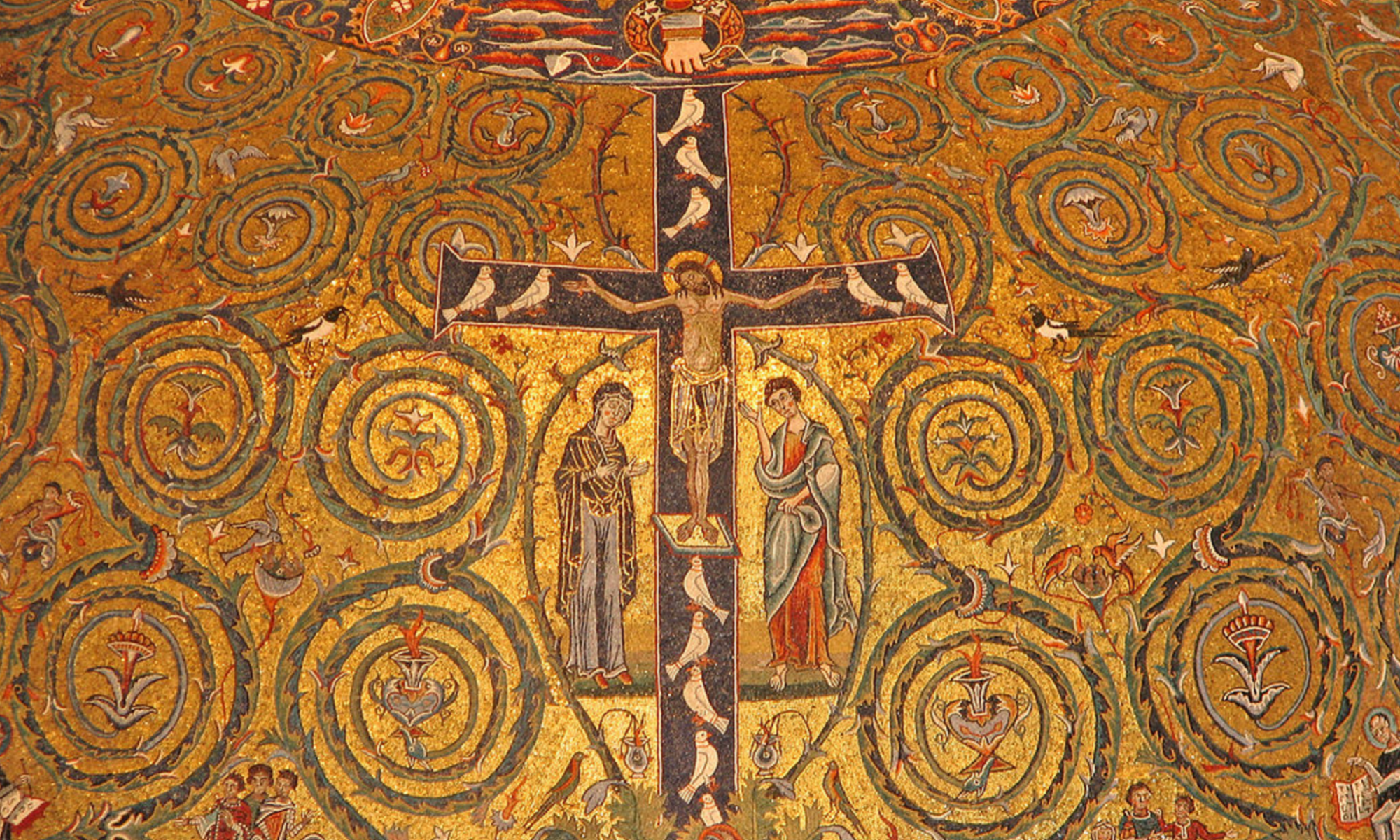
We can ask an obvious question: What distinguishes a “mature” from an “immature” Christian? For Paul, it is simple: the mature Christian has embraced Christ Crucified, and is willing to sacrifice himself with Jesus. Paul warns strenuously against those who are “enemies of the cross of Christ,” whose “minds are set on earthly things” (Phil 3:18-19).

Sadly, some of the approaches to gradualness by some Church leaders today have become the equivalent of avoiding the Cross.  Yes, patience and gradualness are important, but so is finishing the journey, fighting the fight, running the race to the end! We are wise to begin with gentleness, sweetness, and patience. But in due time, full conversion is the goal. We must never forget that! With Paul, may we all truly take on this attitude of constant conversion and inspire others to embrace the same: “This one thing I do: forgetting what lies behind and straining forward to what lies ahead, I press on toward the goal for the prize of the heavenly calling of God in Christ Jesus” (Phil 3:13-14).

Gradualness: More Lessons from Alcuin

At the end of the 8th Century, Alcuin of York wrote three fascinating letters in response to King Charlemagne’s efforts to “convert” the Saxons by the sword. Alcuin had learned much from the highly successful evangelization of his homeland of Northumbria.

Last time we learned the essential role of human freedom and holy desires . Today we learn in more detail what that gradual growth and conversion looks like. Alcuin offers a few metaphors to illustrate his point.

First, there is the image of a seedling plant in the vulnerable stages of its early growth: “We must ponder profoundly in what fashion a new plant must be cultivated, such that the first flowerings of faith are gradually brought to fruition: lest they be embittered by a harsh frost, and fail to grow to the sweetness of the hoped-for fruit.”

The “frost” that particularly concerned Alcuin was Charlemagne’s immediate demand for tithing among the converts. Not only were they forced into baptism, but were promptly giving new bishops who fleeced them with a ten-percent tax. Alcuin acknowledges to Charlemagne that tithing is a marvelous spiritual practice that is encouraged in Scripture. But it is not the best way to begin your effort of evangelizing. In his witty use of Latin, Alcuin describes the tithe [decimus] as a decimation of the faith of these poor people. He emphasizes the need for preachers [praedicatores] rather than predators [praedatores].

Faith is a fragile gift, easily lost in the early stages. The preacher should start with the sweeter and more pleasant things and work towards the harder ones. Alcuin appeals to Paul’s evangelizing of the Corinthians, in which he viewed himself as giving milk to spiritual infants, slowly nursing them toward solid food (1 Corinthians 3:1-2).

Alcuin next considers Jesus’ metaphor of not putting new wine into old wineskins (Mt 9:17). Alcuin interprets the cryptic image: “Who are the old wineskins, if not those who have been hardened in the errors of heathenism? If you pass down to them the more austere precepts of new preaching while they are still in the beginning of faith, they will be broken, and will go back to the old comforts of falsehood.” Just as with winemaking, maturing in faith takes patience and time: “The soul that is fortified by the fermentation of sacred faith over a long period of time is stronger than in the initial vintage of fresh preaching.” As an example, Alcuin describes Peter, filled with the new wine of the Holy Spirit, which empowers him to bear bold witness before Nero in the Roman palace as a martyr – quite the contrast with Peter in the house of Caiaphas on Holy Thursday – too terrified to witness even to a slave woman. “Earlier he was more timid, later more constant; earlier an example of fragility, later of fortitude.”

Alcuin adds the example of the woman caught in adultery (John 8:3-11), pointing out that Jesus did not rush to censure her, but rather bowed down in a gesture of humility and wrote in the ground, in order to show teachers how they should acknowledge their own weakness, first looking at their own hearts and writing their sins in the dust that they find there. In doing so, they will find themselves much more gentle when it comes time to confronting the sin of others.

Alcuin then maps out a structured “order” of gradual conversion through faith. He quotes the wisdom of St. Jerome, who is himself commenting on the Great Commission in Matthew 28: “A precise order: He bade the apostles that they should first teach all nations, then immerse with the baptism of faith, and after faith and baptism should command those things that must be observed. And lest we judge those things that were commanded to be light and few, He adds: all things whatsoever that I have commanded you.”  

Notice the order. First comes the hearing of the Gospel, which stirs up in our hearts the first beginnings of faith. Without that foundation of faith in the heart, baptism and the other sacraments will not grow and bear fruit in us.  Then comes incremental instruction designed to help the neophytes grow in faith and bear fruit, as they learn to live Christ’s precepts in all their fullness. Finally comes the fullness of truth and love in Christ. Alcuin frequently suggests that the earlier preaching should focus on “sweetness” and nurturing growth, and only later in the process, when disciples are strong enough, to bring in the “harshness” or “bitterness” that is required for a full observance of Christ’s precepts.

Those who preach the Good News and teach the faith play a crucial role.  Alcuin calls for “pious preachers, of honest morals, educated in the knowledge of the holy faith, and imbued with the evangelical precepts.” He warns against two evils – on the one hand, greedy and ambitious shepherds who prefer wealth, honors, and privileges to heavenly rewards; on the other hand, the damage that is caused when Churches go for a long period of time with no shepherd at all. Alcuin reminds of the need to pray and work to provide suitable shepherds for the “dangerous times of this age, which has fewer helpers in the Lord’s work than are necessary.”

Alcuin articulates the qualities that a preacher and teacher of the faith should have: “He must glow with all the lanterns of the virtues in God’s house, but must be capable in a knowledge of the most sagacious discretion, so that he can know what suits each person, sex, age, time, and place.” A good preacher is a good listener, tuning into what the needs of the person are at this particular time. With an attentive heart and wise mind, he nurtures the gradual growth of faith in the heart, until total conversion takes root.

In so many ways, heathenism is alive and well today. Faith is withering and dying in the hearts of our people. Those of us who preach and teach the faith can learn a lot from Alcuin’s wisdom!

Gradualness: Lessons from Alcuin

Genuine Christian conversion happens gradually, one step at a time. That was the lesson that Gregory the Great imparted to the missionaries in England in the early 600s. By the 700s, there was a great spiritual vibrancy there, particularly in Northumbria. A land still steeped in Anglo-Saxon paganism was transformed in less than a century. In all fairness to my Irish friends, I should point out that Celtic missionaries such as Aidan may have had more to do with that conversion than the Roman missionaries. God can sort that one out! The main point is that gradualness is highly effective, especially when it focuses on inward transformation through conversion.

Enter Alcuin, born in Northumbria in 735. From him we can learn the essential role played by human desire and freedom in the step-by-step journey of conversion.

By the mid-700s, the spreading fire of Christian conversion in Northumbria had ignited many vocations to monasticism as well as an explosion of learning. If you or someone you know has undergone a profound conversion experience, you know how that works. You begin to feel an insatiable zeal to keep learning more about your newly discovered (or newly recovered) faith. It was no different in Northumbria. An influx of manuscripts from the mainland supplied new libraries. At the library in York, Alcuin soaked up all the learning he could: mathematics, literature, law, Scripture, theology, and more.

Enter Charlemagne as king of the Franks. He sought out a circle of intellectual advisers, and persuaded the reluctant Alcuin to come to his court in 782. Alcuin spent eight years in Aachen, educating Charlemagne, returned for a time to Northumbria, then back to Charlemagne’s court, and finally to Tours, where he lived from 796-804.

Perhaps you have heard the stories of Charlemagne forcing conversions among the newly conquered Saxons. Many of them became Christians, not because they desired to, but because they were forced to, upon pain of death. It was a gross misapplication of the Gospel passage: “Go out into the highways and hedges and compel them to come in, so that my house may be filled” (Luke 14:23).

What a difference Alcuin must have noticed! The recently converted Christians in Northumbria were unstoppable in their repentance, their spiritual growth, their eagerness to learn, and in their zeal to go out and evangelize others. By contrast, those forcibly made Christians under Charlemagne were not exactly growing in their Faith.

When Charlemagne began employing the same methods among the Avars in Hungary, Alcuin had seen enough. He wrote three rather scathing letters in 796: a carefully worded one to Charlemagne, a more candid commentary to Arno (Bishop of Salzburg), and an expression of exasperation to his close friend Maegenfrith, one of Charlemagne’s courtiers.

When Alcuin writes Charlemagne, he begins with flattering sentences, but you can detect the veiled sarcasm. He praises the king’s devotion to Christ’s glory, and his prowess in leading the peoples away from the worship of idols and towards the knowledge of the true God. With Charlemagne’s ego sufficiently appeased, Alcuin proceeds to correct the king’s actions, not so much by criticism of the past as by instruction for the future.  He presses upon Charlemagne the urgency to provide worthy and suitable preachers to the newly baptized, in order to foster growth in their faith during this very vulnerable stage. He cautions his king, “If knowledge of the catholic faith does not come first into the soul through the use of reason, the bodily cleansing of holy baptism will be of no avail.”

He is much more candid when he writes to Arno: “The miserable race of the Saxons has so often lost the sacrament of baptism, because they never had a foundation of faith in their heart.” He reiterates the same points to Maegenfrith: “We learn from Saint Augustine that faith is a voluntary thing, not a necessary thing. A man can be attracted toward faith, but not coerced. You can coerce baptism, but it does not profit faith.”

Has this not been the story of “faith” in so many of our Catholic families today? How many kids go to Catholic schools or go through their parish’s religious education program (or get Confirmed) because they have to? How many Catholics still show up at Mass on Sunday not because they eagerly want to be there, but because they feel obliged? Without freedom, without a growing desire, there is no authentic conversion. There is no spark that grows into a blazing fire. Indeed, there is often decline and decay.

Yes, there is a time and place for duty and obligation. It is right and just to give God thanks and praise. Not to gather on Sunday to give him due praise is an injustice against his greatness and his goodness. But even in the virtue of justice and the virtue of religion, there is a willingness and a growing interior freedom. Until there is inward growth, there is not yet virtue.

Many of my best experiences as a priest have come in my work with RCIA, as men and women of all ages find their way into Catholicism or back to Catholicism. Even in those cases where there is painful personal brokenness, the conversion can be amazing and truly transformational. Once that fire is burning, it becomes hard to keep up with the pace of their hearts and their lives.

Children are a different story, yet the same principles apply. In the end, it is desire and freedom that lead to deeply rooted virtue and enduring faith. Early on, we may need to “make” children do things. We may use fear of punishment and eagerness for reward to motivate them. But the long-range goal is to awaken holy desires and motivate them to make a free and wholehearted decision for Jesus. I don’t need to tell you that the raising of children (in the faith and in all things) is a step-by-step process – and not all steps move forward. Alcuin actually appeals to the raising of children as he explains (in some detail) the step-by-step journey of conversion in the heart of a believer. Gregory’s passage about gradualness draws more attention, but Alcuin goes more in depth on the actual steps.

I’ll share more next time.

To be continued…

Gradualness: Lessons from Gregory

Others often ask me to name the single greatest need in parish life today. Without hesitation, I tell them, “accompaniment.” Then I need to explain myself, because they can easily get the wrong impression.

“Accompaniment” and “gradualness” have become divisive buzzwords in the tumultuous era of Pope Francis. On the liberal side, there are some who employ the words as code for avoiding any conversation about objective truth and goodness, especially in the context of marriage and sexuality and gender. On the conservative side, there are some who have an intense visceral reaction against any talk of accompaniment or gradualness. It means you are “one of those” and therefore an enemy of the cause of truth and goodness and right.

This is all too tragic, because both accompaniment and gradualness are incredibly important, and both sides seem to be missing the point. We are called to abide in love and truth. You cannot have one without the other. Both are essential as we walk the path of ongoing conversion. If we fudge the truth in the name of love, we will reach a roadblock in our conversion. But we may never begin the journey if we are blasted immediately with the harder truths – before interiorly receiving the first truth that we are definitively loved. Jesus and the saints understood both points quite clearly. They loved the person in front of them and then accompanied them step by step on the formidable path of conversion.

What do authentic gradualness and accompaniment look like? Many of the saints offer us outstanding examples. I plan to draw from their wisdom in the weeks ahead.

Gradualness (or “gradualism” or “graduality”) means what it suggests – that growth in holiness comes gradually, step by step. It is a long journey of patient and persistent progress.

One of the most memorable examples of gradualness comes from Gregory the Great. He is perhaps my favorite pope of all time – and not just because he once preached about poop. He was a truly wise and loving shepherd during tumultuous decades that were shockingly similar to our own. By the time he was pope (590-604), there was no turning back the clock on the decline and fall of Roman civilization. It was a done deal. Much that was good and true and beautiful was collapsing, never to return. But Gregory refused to become discouraged or demoralized. Even in the twilight of Roman greatness, God worked through Gregory to begin planting the seeds of long-term renewal. He patiently and persistently established monasteries. These became islands of civilization and hubs of missionary activity. Eventually, every barbarian tribe that had run roughshod over Europe came to know Jesus Christ and his saving message. Learning was preserved and the foundations of modern civilization laid down. So much of what is good and true and beautiful in our own American heritage did not happen by accident. It was the fruit of ten centuries of steady monastic influence.

Thankfully, not all of Gregory’s efforts took a millennium to bear fruit. One of the earliest and most enduring evangelizing successes was in England, in the kingdoms of Kent and Northumbria. From Rome, from the monastery formerly known as his family’s suburban villa, Gregory sent out his abbot to travel to faraway England and evangelize the Angles. That reluctant missionary went on to become Saint Augustine of Canterbury. It warms my heart to think of it. I have been in that Roman monastery up on the Caelian Hill. It overlooks the Circus Maximus, an ancient racetrack and site of entertainment. There the pagan Romans had chased after fleeting pleasures and killed so many of the early Christians. That blood of the martyrs, sown with such great love and in such great abundance, truly bore fruit in the mission field in faraway England. By the time Bede the Venerable rolled around (672-735), Northumbria was so thriving in the Faith that it was sending out many missionaries of its own. Today, as we behold things dear to us falling apart, it is good to remember that much can be built up in just a couple of generations – especially when one learns to be patient and proceed step by step.

That was the lesson that Gregory taught in his famous instructions to Augustine and his fellow missionaries in a letter to the Abbot Mellitus dated July 18, 601. One of the greatest pastoral challenges Augustine was facing was how to handle the pagan shrines. One might expect a seventh-century pope to counsel the destruction of those temples, but Gregory’s response was much more nuanced: “Tell him what I have decided after thinking to myself for a long time about the case of the Angles, namely, that the temples of the idols in that nation should by no means be destroyed, but that the idols themselves that are in them should be destroyed. Have holy water prepared and sprinkled in these temples; have altars constructed and relics placed in them.”

Gregory proceeds to address the Angles’ celebrations that involve sacrificing cattle to their gods (or as he puts it, to demons). He urges the missionaries to adapt these celebrations into Christian feasts. Let the people keep on collecting tree branches and erecting their ritual huts. But make sure that their rituals are centered around the newly Christianized shrines. Let them slaughter and eat their cattle (what kind of fool would take away their feasting on steak?). But teach them to do so with prayers of thanksgiving to God, rather than prayers of idolatry. Allow them to enjoy their outward practices, says Gregory – but teach them to transition into the more interior joys of Christian faith.

Gregory then explains the law of gradualness. You cannot root out everything all at once from hard heads or stubborn minds. And you cannot climb a mountain by one great leap, but only step by step.

Notice that Gregory does not suggest that all these practices on the part of the pagans are holy or helpful. He suggests instead that many further conversations will need to be conducted. He is just giving a sense of where to start. After much prayer and discernment, he figures out the first steps that can be taken that will allow conversion to catch fire and accelerate.

Neither of Gregory’s decisions is a permanent solution, but rather a provisional measure developed by a wise and loving shepherd to address a unique pastoral circumstance. Gregory does not want to drive away new converts or potential converts by imposing too many rules too quickly. So he focuses on the most important things. He identifies two objective moral evils: pagan idols and pagan sacrificial prayers. These are direct violations of God’s commandments and have to stop. But he seeks to be as lenient as possible towards other attitudes and practices: attachment to a particular building, use of ritual branches and huts, and the killing and eating of animals. Yes, these attitudes and practices arise from hard heads and stubborn minds who have much to learn. More changes will be needed over time. One step at a time.

In short, Gregory’s view is one of “tolerance” –  but a totally different sort of tolerance than the one promoted today. Gregory’s tolerance is pastoral patience that is willing to walk with people step by step on the long journey of conversion.

His overarching goal is that we will all one day arrive at the peak of the mountain. We will never do that if we permanently settle on a plateau!

In every age the evangelist faces similar challenges. Where to begin? There is so much that is good and true and beautiful in every human heart, and so much that is broken. Thanks be to God, there are those who are finding their way back to faith and the Church. I am so inspired by their holy desires. I am moved to tears by their sad stories and woundedness. I have learned not to start with rules, but to start with love, compassion, and careful listening – tuning into the Holy Spirit who has led this person here in the first place. Not all topics need to be broached in the first or second – or even tenth – conversation. Much patience and tolerance is needed on the long road of conversion. Perseverance is also needed, resisting the temptation to settle for less than the fullness of truth. I find that once the fire of conversion is burning, the rest tends to take care of itself, one step at a time. Gregory understood all those points, and the results speak for themselves.

Lectio Divina Part IV: Contemplation

Read and meditate; pray and contemplate. “Contemplation” is the fourth and final component of Lectio Divina. It is the passive and receptive dimension, and the ultimate good fruit that emerges, as God takes over and does what he wills. He is the one who knows our hearts so much more intimately than we do. He knows our joys and delights, our sorrows and struggles. He tunes in to our wants and needs, and to our deepest desires. He is the one who placed those needs and desires there in the first place!

Contemplation is the highest human experience. It is our ultimate destiny and the deepest perfection our humanity can attain. Aristotle understood this. Even without the benefit of divine revelation, he explained that we humans will either sink down to the level of the beasts, mired in selfish and vicious habits, or we will rise up to the level of the gods, contemplating the fullness of truth.

Aristotle understood that being is prior to doing. This truth is a challenging one for our pragmatic American culture, with its Puritan roots. We tend to see value in achieving or accomplishing far more than abiding or receiving or contemplating. We forget that the most precious blessings in life, by their very nature, are “useless.” Whether listening to our favorite music or enjoying a sunset or spending time with the ones we love, we do not engage in the highest human activities because they are “useful” for obtaining something else. Rather, all that is good or true or beautiful is worth delighting in for its own sake!

As Christians, we can take it a step further. Our ultimate destiny is the Beatific Vision. We will see God face to face and live. Not only that, the experience we will transform us into him. Nor is this simply an individual experience, for God is love. He is a communion of persons and invites us to abide forever together in that eternal love and truth. The one Body of Christ will be perfected in glory. We will fully share in his humanity and his divinity, as every tear is wiped away.

You can sense the awe and the eagerness in the Beloved Disciple’s heart as he explains not only how blessed we are in the present – as beloved children of God – but also how truly blessed will be our final destiny in the eternal contemplation of God: “See what love the Father has bestowed on us that we may be called the children of God. Yet so we are … Beloved, we are God’s children now; what we shall be has not yet been revealed. We know that when it is revealed we shall be like him, for we shall see him as he is” (1 John 3:1-2).

If we wish to appreciate “contemplation,” then, we may need to renounce some of the lies of our culture.

The first lie, already exposed, is exalting doing over being. Our dignity as a human person comes not from what we do, but from who we are. We are beloved children of God and already share in a communion with him. As we grow in prayer, contemplation allows us just to “be” with God, to abide in his presence, and to receive from him whatever he wills to give us. We may or may not understand what he is up to. We don’t need to – any more than a little child needs to understand the delight and nurture and care and protection that his parents are providing. We just need to be receptive and open.

The biggest lie, indeed the original lie to our human race, is that we can “create” the experience, seizing and grasping rather than depending and receiving. The devil enticed Eve, “You will be like gods…” (Genesis 3:5). With this fruit, you can rely on yourself. You can be strong enough not to need God.

Not needing God. It is perhaps the greatest spiritual sickness today. More and more, humans in the affluent nations of the world try to live as though God didn’t exist, as though we can sustain ourselves by our own efforts. And somehow we are stunned at the results. Year by year, month by month, we witness the unraveling, the disintegration, the chaos, the hatred, the confusion, the descent into darkness. The isolation and despair of hell have become daily news. It need not be so.

Herein lies the greatest difference between Lectio Divina and some of the alternative versions of “meditation” that are out there today. It is the difference between the golden calf and the living God. Are we creating the object of our own worship, like those impatient Israelites growing restless in the desert? Or are we learning to abide, to wait upon the Lord, and to receive, like Moses on the mountain or Elijah in the cave?

Yes, we are called to do our part, eagerly and actively, carving out space for the Lord to do his work. We can cut the wood, split the wood, and arrange the wood – but God alone provides the fire. We can plug in the radio, turn it on and tune it in – but God alone decides when and what and how to broadcast. Receiving is so much different than taking or seizing, grasping or manipulating, dominating or controlling.

Over time, for God’s saints, prayer tends to become more and more passive and receptive – much like a truly happy marriage. Couples married 60 or 70 years need not say much or do much to cherish each other. Their presence is enough. Married love is but a sign and symbol. Jesus teaches that no one will be married in heaven (Matthew 22:30). The eternal communion of heavenly love will be infinitely greater. Our contemplative prayer is the next closest thing here on earth. If we are faithful in our daily prayer, we will come to experience that heavenly reality more and more, and even now experience the eternal love of God.

Healing of our Imagination

Of all our human faculties, our imagination is perhaps the most powerful. Imagination sparks every moment of human greatness. Without particularly imaginative individuals, we would never have arrived at modern marvels like the lunar landing or the polio vaccine. Personally, I am even more amazed at some of the prehistoric discoveries: the first writing down of speech,  the first singing of songs, the first riding of horses, and, yes, even the first brewing of beer. Without the gift of human imagination, none of those would have happened.

Unfortunately, the best also becomes the worst. Human imagination, when cleverly or deviously seduced, has spawned some of our ugliest moments: the Holocaust, terrorist attacks, human trafficking, and the multi-billion dollar pornography industry. Indeed, pick any addiction you like, and you will find unhealthy imagination at work. The addict, in his desire to numb his pain or fulfill his unmet human needs, will find himself fantasizing about his drug of choice. He imagines how amazing it will be if only he has a drink, makes a new purchase, eats his favorite snack, and so forth. The promised pleasure quickly gives way to emptiness, disappointment, and shame.

The human experience of disillusionment is not unique to addicts; it is universal to our fallen condition. We all know the feeling of a failed fantasy. Consider the clichés: “the grass is always greener…” or “the pot of gold at the end of the rainbow.” Lured by fantasies, we easily eject ourselves from the present moment and chase after illusions – whether in our relationships, our career, or our leisure activities. We miss the moment.

It is for good reason that Aristotle once declared the products of our imagination to be “for the most part false.” For every one brilliant burst of insight, there are myriads of missteps. He is not wrong. How do navigate the labyrinth? The answer can be found in a sanctified imagination. It is not a curse to be cast aside, but a gift to be healed.

Previously I wrote about the healing of our memory, which is the root of our identity. Our identity will be either distorted or healthy depending on how fully our memory is integrated into God’s eternal memory. Similarly, an unhealed imagination runs wild and creates chaos, but a healed and sanctified imagination begins to participate in God’s own creative action. He designed us men and women to share in his creativity, crafting us in his own image and likeness and setting us apart from the other animals.

When it comes to imagination, we are both alike and unlike the beasts. Thomas Aquinas compares and contrasts human imagination with animal imagination. We both have the capacity to form and store up “images” – not just visual ones – but all sorts of mental impressions of the experiences of our five senses. We hold on to pleasant sights and sounds and smells – or nasty ones – and learn to seek or avoid them accordingly. Not only that, men and beasts alike form connections between one mental impression and another, and react accordingly. A child learns to associate the words “ice cream” with a pleasurable experience. A dog reacts with equal excitement to the words “dog park.” The same holds true for avoidance of danger or discomfort. Animals learn to recognize the presence of predators and elude them. Children learn not to touch things that are pointy or hot, and they quickly avoid uncles who offer to play “52 pickup.”

Human imagination, however, has the capacity to go far beyond the seeking of pleasure and the avoidance of pain. We can do something astounding that animals cannot do. We can take one mental image and pair it up with other seemingly unrelated images. Thomas gives the example of combining “gold” and “mountain” to envision mountains made of gold.

This powerful human capacity to imagine new possibilities points towards God’s perfection, particularly his infinity and his creativity. He alone is truly infinite, having no limits whatsoever. He alone truly “creates,” making something out of nothing. Yet in his abundant goodness he wills us to share in his infinity and to share in his creativity. Imagination, with its endless potential, plays a particularly important role, whether for good or evil. We share in God’s own creativity when we allow our imagination to be ordered to all that is good and true and beautiful.

By contrast, we rupture our relationships when we employ our imagination to “create” in a manner totally independent of God. That is the original temptation of the devil, who is a liar and a murderer from the beginning. He tempts Adam and Eve by appealing to their imagination: “You will be like gods!” Instead of receiving from God and participating in his plan, they seize and grasp and “create” their own version of truth, goodness, and beauty.

We all share in the sin of our first parents. Our imagination has been wounded, and is now reclaimed by the blood of Christ. In him, we have the freedom to allow our imagination to be sanctified, and we have the freedom to fantasize in a way that disconnects us from God and others and self.

 How is our imagination healed and sanctified? Jesus offers answers.

“Blessed are the pure of heart, for they shall see God” (Matthew 5:8). When we Americans hear these words (Puritans that we are) we often think of sexual purity. But the deeper meaning here is an undivided heart, consecrated entirely to God. If we have a fragmented and unsanctified imagination, we will feel pulled in a million directions. As we allow our imagination to be sanctified, a true vision emerges: both of God and of ourselves. We can follow the path which he illumines, step by step, and exit the entangled labyrinth.

This slow and steady sanctification is particularly important if we have struggled with addictive behaviors. In that case, our brain has formed many habitual associations between mental images (sights, sounds, smells, etc.). We can easily be triggered. Indeed, the most deviously imaginative advertisers deliberately market their products so that users will be constantly reminded of them and feel the urge without even realizing it.

But there is hope. Ancient and medieval wisdom tell us that bad habits can be reshaped into virtues. Contemporary brain science tells us about brain plasticity. It turns out that you can teach old dogs new tricks – at least if they desire to learn, and if they are patient and consistent. There are two main ways of purifying and sanctifying our fragmented imagination: regular “exercise” and regular prayer.

By “exercise” I mean any number of activities that flex the muscles of one’s imagination in life-giving ways which correspond to one’s own God-given heart. This could include art, crafts, writing, poetry, music, cooking, hospitality, computer programming, etc. The unique gifts vary from person to person. We have to ask which ones truly cause us to feel like a child of God, which ones make our heart sing.

In terms of prayer, if done well and done consistently, it truly engages all our faculties, especially our imagination – allowing God’s grace to soak in and transform us. What kinds of prayer work well? There are many possibilities, but I know of at least two that are tried and true: Lectio Divina and a daily Examen. I look forward to discussing each of those in the weeks ahead!