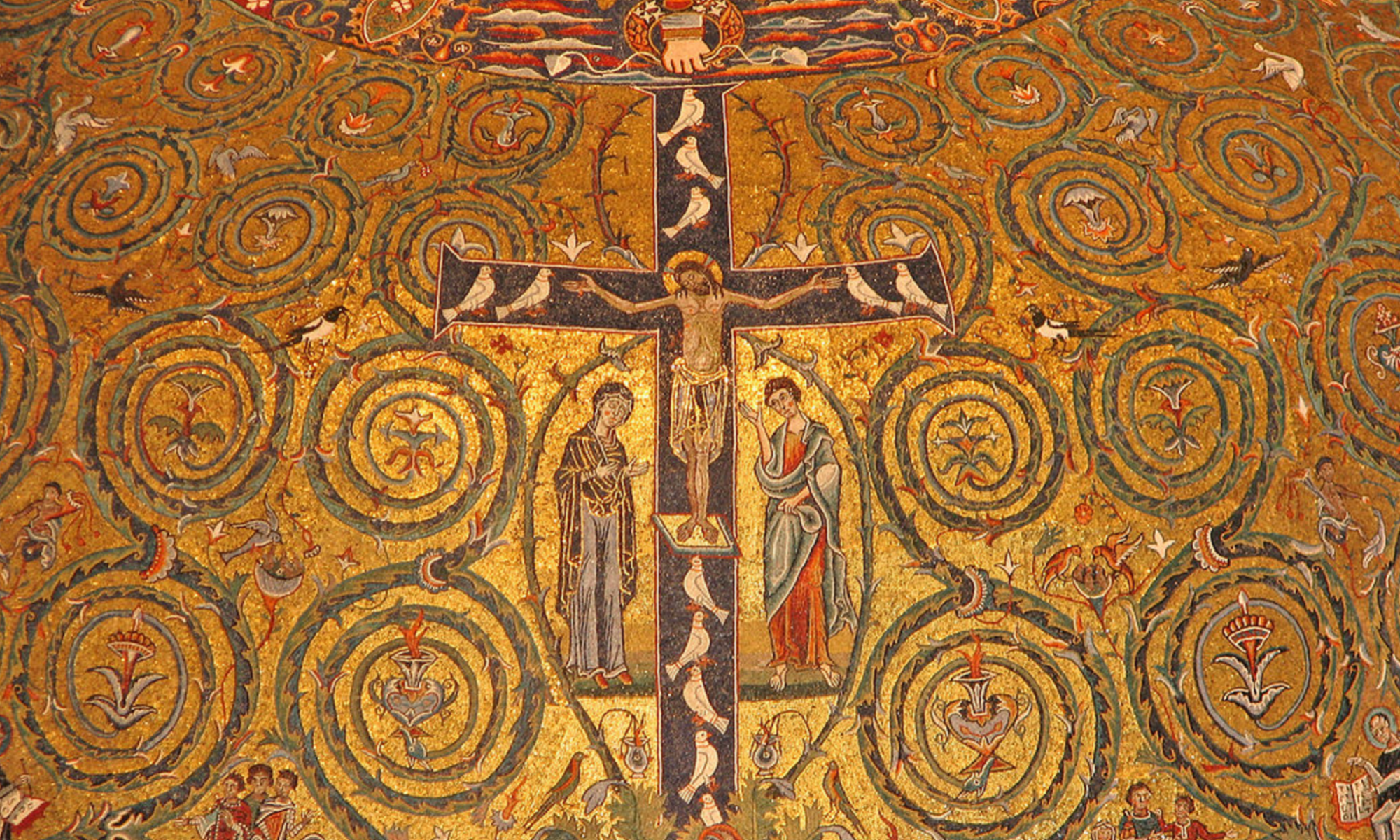
The Tree that Holds the Nest

Ongoing insights from the sermons of Saint Sharbel (1828-1898).

For birds, nest building is a matter of security, survival, and nurturing. They instinctively seek out a safe location and then diligently gather materials to prepare a home in which they can hatch, nourish, and protect their young.

We humans have a similar instinct, both for ourselves and for those in our care. We are hardwired for survival, and we have a deep need to feel safe and secure. Ideally, those needs are met in our early and vulnerable stages in life. Through healthy relationships, intimate and consistent nurturing, and appropriate protecting, we learn to trust God vulnerably and be secure in his protection and love. Unfortunately, many of us have a different story, and continue to struggle with insecurity well into our adult lives.

Saint Sharbel reminds us not to get so intensely focused on our frenzied nest building that we forget all about the tree that holds the nest.

One mistake is to pick the wrong tree! Animals sometimes build their nests in funny places – especially when baffled by the shape and texture of human structures. A year ago my mother kept sending us photos of the duck that had decided to build its nest beneath her water meter, right outside the living room and just two feet from the driveway. In this case, she, my sister, and my nephews were all quite interested in helping protect the eggs that held the ducklings. In other cases, picking the wrong nesting place is fatal for all concerned.

We humans easily build our nest in artificial places – food or drink, status, wealth, luxury, entertainment, sexual fantasies, social media (or the image we project on social media), addictions, and so forth. These surrogate trees feel safe to us in the moment, but they are artificial substitutes for the only thing that can bring true human security and nurture – healthy relationships, beginning with God the Father.

Even as disciples of Jesus, we can get so unduly focused on our nest that forget all about the tree that holds the nest. Sharbel exhorts us, “Care for the tree with the same care that you devote to the nest. Just as you take charge of your nests, take charge of your trees also. Care for the roots, the trunk, the branches, and the leaves.”

This is another way of inviting us to put God’s Kingdom first in every aspect of our life. If the branches of the tree are healthy and full, our nest will have plenty of protection. We do not need to exert so much energy and wear ourselves out building high walls around our nest.

Parents worry a great deal about the safety and security of their children – especially in this age of “helicopter parenting” or (my personal favorite) Zamboni parenting. Such hopes for a life devoid of risk or messiness are unrealistic and serve only to steal away our peace as we chase the impossible. I say “we” because these parents are typiclly my age and because I have done more than my share of freaking out in my role as a spiritual father in parish life. Saint Sharbel gently lifts our gaze to remind us of the true security that we can confer on our children:

“You must give life to your children. Now, there is no life except in Christ. So offer them Christ! But if he is not in you, it will be difficult for you to give him to them. If you do not sanctify yourselves, how do you think you will sanctify your children?”

There are parallel truths at the level of a parish family. How many of the feverish activities in a typical American parish are actually about connecting us with Jesus and helping our children fall in love with Jesus? How many of our parishes are dying because individuals and groups are so concerned with guarding their nests that they fail to notice how rotten or dead the tree has become?

I take the same challenges to heart as a priest, as I celebrate my 17th anniversary this weekend. Looking back over the years, I can think of many moments in which I was far more concerned with “nest building” than with abiding in the love of Jesus. In the early years, I plunged into all sorts of pastoral busyness, often finding that I had – yet again – missed my allotted meditation time or was praying the entire Divine Office at 11pm (or at a later time I will not admit!). The Lord gently and persistently invited me to depend on him and to put prayer first. Without prayer, I wither and die.

I have vastly improved my prayer habits, but I still struggle often with ungodly self-reliance or self-protection. God has revealed to me the deeper truth: he has placed me and my nest in a mighty tree by flowing waters. If I allow that tree to abide by the waters and grow, not only will my nest find protection in those strong branches, so will thousands of others. It is sometimes hard to believe in the depths of my heart that God will provide and protect. It takes so much surrender and humility to trust his branches; it feels so much easier to return to my own frenzied nest building or (at more selfish moments) simply to bury myself in my nest and ignore everyone and everything.

God wills for us to tend to the tree that holds our nest. If the branches are rotting, we may need to ask for help from wise people in our life. We may need to seek spiritual remedies such as prayer, sacraments, fasting, or penance.

Often, we need to go to the roots of the tree. If the soil and the roots are unsound, the whole tree is in danger. Getting to the roots takes determination and courage. As Sharbel explains, “the work of taking root is hidden, it will not appear, and it requires effort and asceticism.” We have to be willing to die to ourselves. It often means a great simplification of our cushy nest – something we tend to resist!

Nest building is a natural part of life, but the Lord invites us to turn our attention to the tree that holds our nest. May each of us have the humility and courage to tend to that tree, and to trust in the protection and care God will provide us there.

Living Torches

The emperor Nero was a troubled soul. In A.D. 64, following the great fire that destroyed much of Rome, he cast the blame on the Christians and put many of them to death. The Roman historian Tacitus paints a disturbing picture: “Some of the Christians were crucified and set on fire at the end of the day, as torches to illumine the night. Nero kept his gardens for this spectacle, hiding among the crowd, dressed as a charioteer.”

Crucified and set on fire. One can only imagine the devil’s delight, just like that first Good Friday. But the devil cannot create. He can only twist or pervert the good things God makes, attempting to mock his Creator’s good designs. God can always untangle the devil’s knots, not only restoring things to their original goodness, but even bringing forth new and unimagined blessings.

As we approach Pentecost, those early Christian martyrs in Nero’s gardens can become a holy icon of our life in the Holy Spirit. If we allow ourselves to be crucified with Christ, if we surrender our hearts to undergo that dying and rising with Him, we shall be set ablaze with the fire of the Holy Spirit. We shall become living torches who light up the night of this world, bringing comfort, joy, and peace to all around us.

Do not quench the fire of the Holy Spirit. That is Paul’s exhortation to the Thessalonians.  The Holy Spirit is to be a flame constantly ablaze within us, drawing in and consuming all the lesser flames of our disordered and unruly passions.

When we prepared for our Confirmation, many of us learned about the 7 Gifts of the Holy Spirit: wisdom, understanding, counsel, fortitude, knowledge, piety, and fear of the Lord. The 7 Gifts are easily misunderstood. Well-meaning catechists tend to use gimmicks or clichés to attempt to make them interesting. The deeper truth is that those Gifts are perfective (seven being the biblical number of perfection). When they are activated in us, we are truly possessed by the Holy Spirit. He becomes the primary agent, and we are willing co-operators.

Without the gifts of the Holy Spirit taking over, even the best parts of ourselves will get in the way. There is that wonderful scene at the end of “Revelation,” a short story by Flannery O’Connor. The main character, the self-satisfied Ruby Turpin, discovers she is not quite so Christian as she had thought. Furious at God and not wanting to take an honest look at herself, she screams out to Him, “Who do you think you are?” In response, she has a vision. The twilight cloud in the sky overlooking the field is set ablaze, almost like a fiery bridge into heaven. Leading the procession are many of the kinds of people she would least expect to find in the Kingdom. By contrast, her own kind, the rule-following and decent kind, are the last and the least. And “she could see by their shocked and altered faces that even their virtues were being burned away.”

Our self-regulated attempts at virtue and holiness, our managing and controlling, protecting and striving, tend to quench that fire of the Holy Spirit.

So does codependency. Christian churches are often full of do-gooders who will jump in to help others with their problems, but resist being vulnerable and receptive themselves. Remember the story of the five foolish virgins, who ran out of fuel for their lamps – in contrast to the wise virgins, who kept their lamps well-stocked, so that they could burn brightly at the coming of the bridegroom. If we do not learn how to receive vulnerably, if we do not abide in the Lord and depend daily upon him, the fire of divine love within us will burn out. Yes, we are called to give and share, but it is the Holy Spirit that is given and the Holy Spirit that is shared. The work does not depend on us. We need only cooperate and yield.

In God’s mercy, he will offer us many invitations to surrender. Most of the time, the invitation comes in that still small voice, gently inviting us into communion. Yes, occasionally the invitation may come à la Flannery O’Connor, in the form of a violent interruption or intrusion, something that splits open a crack in our otherwise impenetrable armor. Moments of crisis can become moments of great opportunity. There is also the very human factor that some of us have to hit rock bottom before we will even think about surrendering. God knows what we need and deeply desires us to be aided by the Holy Spirit.

In whatever fashion those graces come, there is no avoiding the Paschal mystery. We must be crucified with Christ in order to rise with him. That victory needs to be extended to every part of our heart. That death with Christ opens up a space for the new life of the Holy Spirit. It is only when we give all over to God and approach him with empty hands that he can truly fill us. That includes the shameful and feeble parts of our heart that we would rather keep hidden away. It includes our most noble and virtuous parts, which are not quite as amazing as we would like to think. It includes every part of us. Then the Holy Spirt can truly take over. We can burn brightly as God’s living torches.

In our humanity, we shrink back from any form of suffering or dying. Our instincts tell us we will be annihilated. But this pain and this death is different. The fire will not consume us. It heals, unites, and purifies us as it burns. We become like the burning bush that Moses saw. We will be perpetually ablaze, and nothing of value in us will be definitively lost.

As we approach Pentecost, like those disciples in the Cenacle, we join with the Virgin Mary in prayer and beg the Lord to set us ablaze with the Holy Spirit. May we all become his living torches, shining for the world to see.

From Wonder to Wisdom

Childlike wonder is a precious gift.

It is so much fun to observe the awe of children as they plunge into the present moment. They exhibit an eager and relentless curiosity, whether exploring the flora and fauna in the backyard or dismantling their toys to figure out how they actually work. They burst forth with such intense joy during spontaneous play as they gleefully cry out “Again!! Again!!” They tirelessly yearn for the eternal in their experience of the present moment. They instinctively and effortlessly convert a large open room into a playground or an adventure zone. They easily overlook the expensive Christmas gift their parents have purchased, instead playing for hours with the large cardboard box or the shiny wrapping paper.

The common denominator in all of these experiences is a marvelous human capacity to be wholly and wholeheartedly present in the present moment. We do not need to teach our children how to do this; they do it effortlessly. It is hardwired into our humanity. God has put the timeless into our hearts (Ecclesiastes 3:11).

Sadly, the trials and traumas of life often leave us splintered and fragmented, and we “grown-ups” can be much more guarded about entering freely and wholeheartedly into the present moment. We hold parts of ourselves back. This self-protection is so sad because the present moment is the only thing that really exists! The past is irretrievably gone, no matter how much we cling to it or dwell upon it. The future is not yet here and is largely unknown to us, no matter how much we try to control it. Certainly it is wise to learn from the past and plan for the future, but ultimately the “now” of the present moment is the one and only space in which we can encounter the living God. All times are simultaneously and perfectly present to him. There is no before and after, only the “now” of his eternal existence. As the most unique of all God’s creatures, made in his own image and likeness, we humans are most fully ourselves when we abide in the present moment.

We learn in Scripture that the beginning of Wisdom is to be found in the fear of the Lord (Psalm 111:10; Proverbs 9:10). The “fear” that leads to wisdom is not a cowering or groveling fear, and it is most definitely not the paralyzing fear that many of us know all too well. It is what Saint Thomas Aquinas calls “filial fear.”

Thomas describes the difference between “filial fear” and “servile fear.” Servile fear is a slave-like fear, motivated primarily by avoiding punishment. This kind of fear can certainly be a strong motivator, but it is not what sets us apart in the image and likeness of God. The fear of pain or punishment is something that we share with all our fellow mammals. It can be a helpful beginning to wake us up or turn us away from a destructive path. But servile fear will not lead us to grow in Wisdom. Indeed, it is much more likely to pull us out of the present moment. From a brain science perspective, servile fear kicks in our survival response of “fight or flight or freeze.” In those moments, our prefrontal cortex (the higher and more rational part of our brain) goes offline as our survival instincts take over. Survival mode is great when our life is on the line. But it does not allow for childlike wonder.

Filial fear, by contrast, is what sons and daughters have towards a loving, benevolent, and merciful father. They cherish him and their relationship with him. They desire that relationship to grow ever more intimate and shun anything that would turn them away from that joyful communion of love.

Many of us still need to make the journey of maturity from servile fear to filial fear, a journey described so beautifully by Paul in Romans 8: “For you did not receive a spirit of slavery to fall back into fear, but you received a spirit of adoption, through which we cry, ‘Abba, Father!’ The Spirit itself bears witness with our spirit that we are children of God, and if children, then heirs, heirs of God and joint heirs with Christ, if only we suffer with him so that we may also be glorified with him.”

Faith is a gift, utterly undeserved. It moves mountains, removing any and all obstacles that get in the way of us growing into the glorious freedom of the children of God. Restored by Faith, we can rediscover an even greater childlike wonder, which leads us to true Wisdom. We can rediscover the spontaneous joy and gratitude and praise that come from abiding in the present moment.

What a special gift to grow into during this time of COVID-19, in which many are feeling bored or understimulated. The words of G.K. Chesterton come to mind:  “There is no such thing on earth as an uninteresting subject; the only thing that can exist is an uninterested person.”

If we become again like little children, even the smallest blessings of daily life can become an unmitigated experience of wonder and awe in God’s presence. All is gift, and his glory shines everywhere in the creatures he has made. Those who become again like little children can experience it.

What are the cardboard boxes God is dropping into your life today? Are you ready to receive them with awe and praise and gratitude? What is holding you back from being wholeheartedly in the present? Are there parts of your heart that resist, hesitate, or bail out? Will you let the soothing balm of the Holy Spirit calm you, opening all of your heart to receive the glorious freedom of the children of God? It is a freedom that can only be experienced in the “now” of the present moment.

Gradualness: Conclusion

It saddens me that there are some Church leaders who are appealing to “gradualness” and “accompaniment” in a confusing way, as a means of pushing their own agenda. They prefer to avoid difficult conversations about what is objectively true or good, particularly in areas such as marriage or sexuality or gender.

While I wholeheartedly agree that it is often unwise to broach such topics in the first or second (or even tenth) conversation, it is unjust and unloving to avoid them indefinitely. Christian life is all about conversion. Conversion is all about an ever-increasing surrender to the truth and goodness and beauty of God. If we hold back parts of our life in that process, our conversion will falter or fail.

Remember the example of Jesus in John’s Gospel. He always begins with encounter and dialogue. He first sees the people in front of him. He gazes upon them with understanding, empathy, and love. He awakens holy desires in their heart. And then he challenges them with the deeper truth.

The story of the Samaritan woman at the well is a marvelous example. She feels truly noticed, understood, cared for, wanted, accepted, and loved in a way she has perhaps never felt before. As her heart awakens to love, she begins to ache with a deep and intense spiritual thirst. Jesus is accompanying her step-by-step through this awakening and growth. Then, when she shows a strong readiness to follow him, he broaches the difficult subject: “Go, call your husband, and come back” (John 4:16). She admits the truth. The man she is with is not her husband, for she has had five husbands.

Had Jesus started the conversation there, the woman would likely have felt judged and shamed. She would have entrenched herself even more deeply in her misery, loneliness, and self-protection. But Jesus did not begin there. He began with seeing and loving the person in front of him. Indeed, it was precisely because he loved her so much that he also chose to discuss the difficult questions with her – when she was ready.

The apostle Paul, too, understood the fullness of conversion that must take place. His whole life was one relentless desire to belong freely and wholeheartedly to Christ. If anything was ever hindering his love, he desired to be rid of it. How could he truly claim to love Jesus otherwise? To love someone is to grow ever more intimate in the relationship, willing to overcome barriers and obstacles. The growth is gradual and not without much bumbling and stumbling. But when the commitment to growth is unflinching, the progress will continue steadily.

In Philippians 3, Paul warns against those who are “enemies of the Cross of Christ.” They do not want self-denial or suffering. By contrast, the Cross of Jesus is an invitation to pour out our love in free and wholehearted sacrifice.

I truthfully admit that I fear the Cross, that I struggle to trust God and surrender, and that I avoid dying to self on a daily basis. But when I search the depths of my heart, I also see that it is my deepest desire to lay down my life for others! It is my true calling and my true destiny.  I have come to learn that I cannot short-change the receiving of love from God and others. If I do not learn to be vulnerable and dependent and receptive, I will never be capable of sacrificing freely and fully.

God made us to love and be loved. Receiving love means trusting, lowering our defenses, becoming vulnerable, and learning to depend upon God and others. Giving love means sacrifice and (yes) the Cross. Every single disciple of Jesus is called, ultimately, to learn how to love and be loved in this way.

The enemies of the Cross of Christ want a Christianity that does not ask for heroic love. There is no such thing. We are all called, to borrow the image of Gregory the Great, to climb to the top of God’s mountain. It is a rugged and relentless climb, attained only by patience and gradualness. Although we all need to rest and relax, it is utterly unhelpful to settle on a permanent plateau and deny the need to climb any further. If we have sin in our life, we will ultimately need to repent of it. To refuse to repent is to refuse to love.

We in affluent nations are especially susceptible to avoidance of the Cross. We are often unaware of just how anesthetized we have become. We falsely believe that we are entitled to so many comforts and delights (luxuries which billions of others in the human race do not enjoy and never will enjoy). We live with the illusion that we shouldn’t have to suffer. We forget the fall, and the wages of sin, justly deserved. Jesus has paid our ransom and offers us a healing path, but not one that avoids the Way of the Cross. As Paul explains to the Philippians, those who are “mature” understand these things. “Mature” (teleoi) means that one is focused on the telos (the “goal” or the “summit”). No permanent plateaus. Further up and Further in.

It is a grave error to try to separate love and truth. Some focus so much on the truth that they forget to love the person in front of them unconditionally. Others, in the name of love, are willing to ignore or abandon the truth. In the words of Paul, “Love rejoices in the truth” (1 Corinthians 13:6).

Gradualness is so important – NOT as a means of avoiding difficult truths, but as a means of training us, one step at a time, to embrace the truth in all its fullness.

Gradualness: Lessons from Paul

Wise preachers and teachers in every age understand that growth in faith happens gradually, one step at a time. Today we turn to the apostle Paul, the most successful Christian preacher of all time.

Paul’s life and message can be summed up in one word: conversion. He experienced a profound conversion to Jesus, not only once on the road to Damascus, but each and every day of his life.

Paul boldly proclaims, “I have been crucified with Christ; I live no longer I, but Christ lives in me” (Galatians 2:20-21). For Paul, every day was a dying and rising with Jesus: Christ living in him and he living in Christ. Saul of Tarsus encountered the risen Jesus on the road to Damascus. He took on a new name and new identity, and his life would never be the same.

This new identity is not simply a “me-and-Jesus” existence. We become fellow members of the one Body of Christ. Notice what Jesus says to Saul on the road: “Saul, Saul, why do you persecute me?” (Acts 9:4). He does not say “my followers” or “my friends”  but me. To be a disciple of Jesus is to co-exist in Christ as one whole person.

We exist organically as members of the one risen and ascended Body of Christ. Little by little, we become fully alive as members of that Body. It is a gradual and lifelong process. Paul understood that point. His primary task was always his own conversion: “It is not that I have received it or have already attained perfect maturity, but I continue my pursuit in hope that I may receive it, since I have indeed been received by Christ Jesus” (Phil 3:12).

The Letter to the Ephesians speaks often of the “fullness” of Christ. There is a gradual and dynamic growth into that fullness, until at last God’s plan of salvation comes to perfect completion. The entire human race (those willing anyway) and the whole cosmos will be brought into perfect unity under the headship of Christ. He will become all in all.

In the meantime, conversion is all about growing reception and receptivity. We earnestly strive to receive more and more from on high. We receive and give help from and to each other. And most importantly, we are received, taken up into this heavenly Body of Christ that is always beyond us, beckoning us daily to come further up and further in.

At any given moment, each of us receives and is received into this fullness as much as we can. But our capacity for reception depends upon our depth of desire, our freedom, and our willingness to cut out the things that are blocking our receptivity.

That means that we need different kinds of care and different moments. Paul explains the gentle nurturing that is so often needed in the early stages of conversion. While we are still spiritual infants, we need milk rather than solid food (1 Cor 3:1-2). And hopefully we remember the same when it is our turn to nurture the faith of others, whether our own children or the adult members of our churches who are only just beginning to relate to Jesus as a real person. Paul explains to the Corinthians that he guided them, not “with a stick,” but “with love in a spirit of gentleness” (1 Cor 4:21), for he is their father in Christ Jesus through his preaching of the Gospel to them.

But notice the next point. As Paul proceeds in a spirit of love and gentleness, he urges them to use a stick – figuratively anyway – by casting out from their midst the man who is living with his father’s wife. And he urges them not to associate with the sexually immoral, idolaters, revilers, drunkards, or robbers. He concludes pointedly, “Drive out the wicked person from among you” (1 Corinthians 5:13).

This whole “gradualness” thing is complex! On the one hand, our shared membership in Christ constantly impels us to receive one another as Christ has received us (Romans 15:7),  and to be receptive to those who are weak (Romans 14:1, 15:1). Yet there are also moments when we have a duty to hold others accountable and impose consequences.

Remember the lessons learned from Gregory the Great regarding the evangelization of Kent: some attitudes and practices (idols, idolatrous prayers) must be cut off at once; others are to be tolerated patiently with a view to full maturity. Discernment is key.

Paul often draws a distinction. Some Christians are “mature” or “spiritual” while others are “immature” or “fleshly.” We need patient tolerance for those who are immature or still in the flesh – but we also need to keep nourishing and caring for them so that they do not get stuck there!

We can ask an obvious question: What distinguishes a “mature” from an “immature” Christian? For Paul, it is simple: the mature Christian has embraced Christ Crucified, and is willing to sacrifice himself with Jesus. Paul warns strenuously against those who are “enemies of the cross of Christ,” whose “minds are set on earthly things” (Phil 3:18-19).

Sadly, some of the approaches to gradualness by some Church leaders today have become the equivalent of avoiding the Cross.  Yes, patience and gradualness are important, but so is finishing the journey, fighting the fight, running the race to the end! We are wise to begin with gentleness, sweetness, and patience. But in due time, full conversion is the goal. We must never forget that! With Paul, may we all truly take on this attitude of constant conversion and inspire others to embrace the same: “This one thing I do: forgetting what lies behind and straining forward to what lies ahead, I press on toward the goal for the prize of the heavenly calling of God in Christ Jesus” (Phil 3:13-14).

Gradualness: Lessons from Alcuin

Genuine Christian conversion happens gradually, one step at a time. That was the lesson that Gregory the Great imparted to the missionaries in England in the early 600s. By the 700s, there was a great spiritual vibrancy there, particularly in Northumbria. A land still steeped in Anglo-Saxon paganism was transformed in less than a century. In all fairness to my Irish friends, I should point out that Celtic missionaries such as Aidan may have had more to do with that conversion than the Roman missionaries. God can sort that one out! The main point is that gradualness is highly effective, especially when it focuses on inward transformation through conversion.

Enter Alcuin, born in Northumbria in 735. From him we can learn the essential role played by human desire and freedom in the step-by-step journey of conversion.

By the mid-700s, the spreading fire of Christian conversion in Northumbria had ignited many vocations to monasticism as well as an explosion of learning. If you or someone you know has undergone a profound conversion experience, you know how that works. You begin to feel an insatiable zeal to keep learning more about your newly discovered (or newly recovered) faith. It was no different in Northumbria. An influx of manuscripts from the mainland supplied new libraries. At the library in York, Alcuin soaked up all the learning he could: mathematics, literature, law, Scripture, theology, and more.

Enter Charlemagne as king of the Franks. He sought out a circle of intellectual advisers, and persuaded the reluctant Alcuin to come to his court in 782. Alcuin spent eight years in Aachen, educating Charlemagne, returned for a time to Northumbria, then back to Charlemagne’s court, and finally to Tours, where he lived from 796-804.

Perhaps you have heard the stories of Charlemagne forcing conversions among the newly conquered Saxons. Many of them became Christians, not because they desired to, but because they were forced to, upon pain of death. It was a gross misapplication of the Gospel passage: “Go out into the highways and hedges and compel them to come in, so that my house may be filled” (Luke 14:23).

What a difference Alcuin must have noticed! The recently converted Christians in Northumbria were unstoppable in their repentance, their spiritual growth, their eagerness to learn, and in their zeal to go out and evangelize others. By contrast, those forcibly made Christians under Charlemagne were not exactly growing in their Faith.

When Charlemagne began employing the same methods among the Avars in Hungary, Alcuin had seen enough. He wrote three rather scathing letters in 796: a carefully worded one to Charlemagne, a more candid commentary to Arno (Bishop of Salzburg), and an expression of exasperation to his close friend Maegenfrith, one of Charlemagne’s courtiers.

When Alcuin writes Charlemagne, he begins with flattering sentences, but you can detect the veiled sarcasm. He praises the king’s devotion to Christ’s glory, and his prowess in leading the peoples away from the worship of idols and towards the knowledge of the true God. With Charlemagne’s ego sufficiently appeased, Alcuin proceeds to correct the king’s actions, not so much by criticism of the past as by instruction for the future.  He presses upon Charlemagne the urgency to provide worthy and suitable preachers to the newly baptized, in order to foster growth in their faith during this very vulnerable stage. He cautions his king, “If knowledge of the catholic faith does not come first into the soul through the use of reason, the bodily cleansing of holy baptism will be of no avail.”

He is much more candid when he writes to Arno: “The miserable race of the Saxons has so often lost the sacrament of baptism, because they never had a foundation of faith in their heart.” He reiterates the same points to Maegenfrith: “We learn from Saint Augustine that faith is a voluntary thing, not a necessary thing. A man can be attracted toward faith, but not coerced. You can coerce baptism, but it does not profit faith.”

Has this not been the story of “faith” in so many of our Catholic families today? How many kids go to Catholic schools or go through their parish’s religious education program (or get Confirmed) because they have to? How many Catholics still show up at Mass on Sunday not because they eagerly want to be there, but because they feel obliged? Without freedom, without a growing desire, there is no authentic conversion. There is no spark that grows into a blazing fire. Indeed, there is often decline and decay.

Yes, there is a time and place for duty and obligation. It is right and just to give God thanks and praise. Not to gather on Sunday to give him due praise is an injustice against his greatness and his goodness. But even in the virtue of justice and the virtue of religion, there is a willingness and a growing interior freedom. Until there is inward growth, there is not yet virtue.

Many of my best experiences as a priest have come in my work with RCIA, as men and women of all ages find their way into Catholicism or back to Catholicism. Even in those cases where there is painful personal brokenness, the conversion can be amazing and truly transformational. Once that fire is burning, it becomes hard to keep up with the pace of their hearts and their lives.

Children are a different story, yet the same principles apply. In the end, it is desire and freedom that lead to deeply rooted virtue and enduring faith. Early on, we may need to “make” children do things. We may use fear of punishment and eagerness for reward to motivate them. But the long-range goal is to awaken holy desires and motivate them to make a free and wholehearted decision for Jesus. I don’t need to tell you that the raising of children (in the faith and in all things) is a step-by-step process – and not all steps move forward. Alcuin actually appeals to the raising of children as he explains (in some detail) the step-by-step journey of conversion in the heart of a believer. Gregory’s passage about gradualness draws more attention, but Alcuin goes more in depth on the actual steps.

I’ll share more next time.

To be continued…