Admiration ≠ Love

Admiration feels amazing – for a while. It is never enough. It never satisfies our insatiable thirst for love. Admiration is not love.

Consider how many celebrities bask in the admiration of their fans, while secretly struggling with loneliness or depression. Consider the trend to chase after “likes” on social media – often eliciting envy in the onlookers, thrilling for a while, but inevitably leaving the recipient feeling empty and disappointed. Consider the mental health crisis in our schools and universities – including (and especially) among the “high performing” students.

I recall a conversation about university life. One institution was monitoring their students who were at the highest risk of flunking out. A consistent profile was emerging. It was not what many would think – not the party crowd who are getting distracted from their studies. No, by far the larger at-risk group was made up of students who had “performed” at a high level in high school, had presented an “ideal” college application, and were now in desperate trouble.

I was certainly one of those high-pressure students as I entered the university, though it took me another two decades or so to have my perfectionism fall apart. In part, that was because I had some genuine experiences of being loved for who I was (experiences that are increasingly scarce for young people today!). In part, it was because of my intense determination and my many talents. Whenever I seemed stuck, I fought and found ways to keep “succeeding.” I got myself back to a place of being admired by others. And it kept getting lonelier.

It was exhausting being admired, not to mention terrifying. There was no room for rest. Being admired meant that I couldn’t fail. I had to keep succeeding. It meant I couldn’t have any messy emotions or be in need. Shame was always lurking in the shadows – warning me that others would want nothing to do to me if I didn’t keep it up.

What I really needed was love – to be loved for who I really am. Being loved for who I am is so different than being appreciated for all that I do or being celebrated because of how amazing I am at this or that role.

It was incredibly hard to be loved for who I was because I had buried that identity so deeply that I didn’t even know it myself! During most of my childhood, I felt like I was under surveillance. I had to behave a certain way and be a certain way – or else. I discovered over time that I could be a “good” child by not having emotions or needs. I could even receive praise or more privileges if I was highly responsible, dependable, disciplined, and successful. I grew into that role and stayed in it for a few decades. The admiration was a drug that, like other drugs, kept me anticipating the next dopamine release – but ultimately left me feeling hollow. Others were loving me in a role, but they weren’t actually loving me – because I was keeping the real me hidden.

The last seven years have been an arduous but rewarding journey of recovering and reclaiming who I really am – who God created me to be. That journey has introduced me to unexpected companions and new friends. Even in environments with a high level of safety and care, I still find it awkward or scary when others really see me, and all I can do is receive their love – or squirm away from it. My defenses still spring up – though with slowly increasing freedom to notice what’s happening and allow the defenses to settle back down. It still feels easier to be in a “one up” or “one down” position – admired by another or admiring another; clearly “stronger” or “further along” than another or clearly in the position of an admiring (and subtly fawning) disciple.

I am convinced that the deepest wound we can experience is not being loved for who we are. Facing abuse is hard. I’ve done it with my own experiences of abuse, and I’ve very often been there with others. But in every case I have found the deeper wound and the longer road of healing to be around the ache to being loved for who we are. Once we have a chance to work through the fear or hurt or rage at being mistreated or used, we begin to access the deeper heartache of longing for love but not really receiving it. Lack of love is the deepest wound, resulting in the biggest ache.

The more I have healed, the more I see how omnipresent this wound is! Our churches hold up “good” Christian families to be – ahemadmired by the community. And their children or adult sons and daughters often struggle with feeling alone and unloved. Until their parents begin facing their own heartache and receiving what they really desire and need, they will struggle in providing it for their children. I say all this without the least bit of shaming or finger-pointing, but to tell the truth with kindness.

I believe that most of our families have transmitted heartache from generation to generation. How could we not? On a collective level, we have endured massive traumas over the last 150 years: the radical reordering of society and family life wrought by the Industrial Revolution, the struggles of immigration, two global pandemics, the Great Depression, and savage wars that have killed more people than the rest of the human centuries put together. How many of our families have actually faced that heartache and received the needed healing? Until we do, we are bound to keep transmitting the pain – leaving it to the next generation to figure out. Meanwhile, the saddest result is that most children are left entering adulthood feeling insecure and unloved.

I am aware that many readers may be feeling shame about how they have treated others. Notice that – but please don’t let it distract you from receiving what you need. We cannot give others what we have not received ourselves.

Do you tend to seek admiration rather than love? Do you truly feel loved for who you are? Are you playing a role rather than abiding securely in your authentic identity? Would you like to change that? If so, may the Holy Spirit inspire you and illumine the next step or two along the path.

Self-Denial vs. Deprivation

“It is just as much a sin to deprive the body without discernment of what it really needs as it is to indulge in gluttony.”

These were wise words of Francis of Assisi to his band of brothers in the 1220’s. This is the Francis of Assisi who embraced radical poverty, including fasting and prayer vigils that most today would consider austere. He often meditated on the sufferings of Christ, and desired to be one with Jesus on the Cross. But Francis was known above all else for his radiant joy – a heart bursting with praise and gratitude. He surrounded himself with beauty and delight, but never grasped at it. He freely gave it all back to God.

The daily invitation of Jesus was imprinted in Francis’ heart: to deny ourselves, take up our cross each day, and follow him (Luke 9:23). How, then, can we make sense of his caution about not depriving ourselves of what we really need?

Francis of Assisi, with his marvelous grasp of the human heart, understood intuitively what contemporary research proves consistently: there is a connection between unmet human needs and unwanted behavior. Whenever we human beings are chronically deprived of play, rest, connection, community, understanding, safety, nurture, or meaningful purpose in life, it is only a matter of time before we start acting out with entitled behaviors.

Deprivation feeds entitlement. Entitlement then seizes. Our grasping attitude may not be that far from that of Sméogol in Lord of the Rings: “We wants it, we needs it! Must have the precious! They stole it from us!” If you are not a Tolkien fan, then I imagine you can resonate with the words of the apostle Paul, “The good I desire I do not do, but I do the evil I do not want” (Romans 7:19).

The immediate instinct in these cases is to assume that it is a problem of laziness or lack of discipline – often with no small amount of self-contempt and shame. We then punish ourselves by deprivation, telling ourselves we are doing penance and following Jesus. But in many cases, these penances embraced without discernment also begin to cut us off from what we truly need – from the things our hearts (and limbic brains) were looking for in the first place.

As a priest, I’ve worked with hundreds of people over the years who struggle repeatedly with the same patterns of behavior. Any time I have curiously explored, I have always found a significant deprivation of one or more authentic needs. Deprivation is not the primary reason why people get stuck in unwanted behaviors, but it is almost always there as a driving force!

I’ve learned much from contemporary Christian authors like Mark Laaser or Jay Stringer. Mark (now deceased) helped thousands to find freedom from their addiction to pornography or worse, not to mention helping to restore many marriages. Jay conducted research with 3,800 men and women struggling with unwanted sexual behaviors. His book (entitled Unwanted) explores the causes and contributing factors that need to be addressed if a struggling individual desires to live differently. Both make a convincing case for the importance of paying attention to our human needs, whatever our unwanted behaviors might be. Mark and his wife Debbie (in the book Seven Desires) describe how every human needs to be heard and understood, affirmed, blessed, safe, touched in a meaningful way, chosen, and included. Jay discusses the importance of delight, rest, play, creativity, meaning, and purpose. If we have a serious lack in any of these areas, we are likely to find ourselves unfree in our decision making.

Today’s authors give more precise language to these needs, they are by no means the first to notice them! I think of the Rule of Saint Benedict (he lived from 480-547). Most of us today would find their monastic lifestyle quite penitential. But it is moderate compared with the desert monks that Benedict had learned from. His Rule seeks balance and adaptability. He frequently acknowledges the importance of a wise abbot offering accommodations to monks regarding their prayer or eating or sleep, based on what is truly best for them and the community.

And then there is the quotation from Francis. Here is the fuller story from his companion and biographer, Thomas of Celano:

“One night while all were sleeping, one of his followers cried out, ‘Brothers! I’m dying! I’m dying of hunger!’ At once [Francis] got up and hurried to treat the sick lamb with the right medicine. He ordered them to set the table … Francis started eating first. Then he invited the brothers to do the same, for charity’s sake, so their brother would not be embarrassed.”

Francis concludes with the important lesson: it is just as much a sin to deprive the body without discernment of what it really needs as it is to indulge in gluttony. And then he reminds them of the supreme rule of charity (Christ-like love of God and neighbor). Our freedom in receiving and giving love is the ultimate test in discerning the wisdom of any self-denial.

Finally, let us not forget the example of Jesus himself. His human needs mattered. As a human being, he definitely received understanding, safety, nurture, delight, care, connection, rest, and play – not all the time or from everyone, but in ways that left a lasting impact. Throughout his childhood, he received from Mary and Joseph, not to mention his heavenly Father. He spent less than 10% of his life giving in public ministry – and even then he received care from friends like Lazarus or Mary or Martha. Even in Holy Week, Jesus rested in Bethany with those friends – receiving hospitality and love. Even in the Garden of Gethsemane, as he entered his Passion, Jesus reached out to his other friends (Peter, James, and John), asking them for connection and care.

Sometimes we don’t get what we need. Sometimes God even asks us to sacrifice things that we truly need – but usually he doesn’t. Over time, as deprivation of authentic human needs intensifies, our freedom tends to diminish, and with it our ability to receive and give freely in love. Our “sacrifice” will become joyless; our resentment will increase – and with it a Gollum-like grasping of entitled behaviors.

Discernment is the key. Jesus tells us to test a tree by its fruits. If self-denial is leading to growth in freedom, growth in faith, growth in hope, and growth in love, then we know it is being led by the Holy Spirit.

Yes, our greatest calling is to make a total gift of self and become the grain of wheat that dies so as to bear abundant fruit. That self-gift is only possible if (like Jesus) we humbly allow ourselves to receive, again and again, all that we need. Francis of Assisi and many other Saints understood. Their humble acknowledgement of their depth of human need allowed them to receive. Their receptivity opened them to the amazing joy of self-gift. May we learn from their example!

Fatherhood – Concluded

Authentic fatherhood is a sharing in God’s Fatherhood, a manifestation of it in the flesh. Loving fathers don’t seize power for themselves, but exercise their God-given authority for the sake of lifting others up, helping them to be secure and confident in their own identity as beloved children of their heavenly Father.

Whether we speak of dads or or priests or other spiritual fathers, we saw last time how damaging it is when earthly fathers are absent or severe or emotionally enmeshed with their children. All three deviant behaviors cause damage to the children’s identity. Those children become wounded in their capacity to receive and give love.

In John 10, Jesus describes himself as the Good Shepherd. He leads his sheep into a relationship with the Father. He does not abandon his sheep to the wolves, like a hireling (cf. fathers who are absent or who abdicate their authority). He does not steal like a thief or devour like a wolf (cf. a chummy father who uses the children to meet his own emotional needs). He does not beat or abuse the sheep in severity but – as we read in Luke 15 – tenderly places the lost sheep on his shoulders and brings it with joy into the feasting of the heavenly banquet.

We who are called to be fathers are called to imitate Jesus, to be loving shepherds.  To the extent we have authority, it is only for the good of the sheep, never for ourselves. It is ultimately a celebration of and with God the Father, who invites us all into the heavenly feast.

But how?

I am myself so weak and wounded. I am poor and needy. I am insecure and unconfident in my identity as a beloved child of God. How can I pour into others when I regularly feel like I have nothing to give?

Here is where we must look to Jesus, who he is and what he actually teaches. He is from the Father. His entire identity is in the Father. He is one who receives.

Jesus embraced poverty. He allowed himself to be totally and radically dependent upon his Father. In his human existence, Jesus reflected his eternal identity of being “from the Father.” He then invites us to receive from him, as branches on the vine, just as he himself has received all as gift from the Father.

I love the way Jacques Philippe connects fatherhood with the Beatitudes, especially the first Beatitude of poverty of spirit. The Beatitudes are all promises of Fatherly blessing, through the anointing of the Holy Spirit. If we acknowledge and embrace our poverty, if we open up in humble receptivity, the Father blesses us and confers a Kingdom upon us. If we grieve and mourn, we will be comforted (“paracleted”) by the Holy Spirit.

We men who are wounded in our identity can only be healthy and holy fathers if we are willing to grieve and mourn the ways that we ourselves have been wounded. I can only be a loving father to the extent that I am secure as a beloved son. Many of us were ourselves abandoned or abused or used (or possibly all three!). We spend much of our lives avoiding just how painful that was for us rather than grieving it and seeking healing and restoration. If we are willing to walk that path, we experience a dying and rising with Jesus. We discover his secret of relying totally on the Father. We meet God again for the first time, discovering him to be a Father who never abandons, is never harsh, and only desires to pour blessing into us. We become secure as beloved sons.

This spring, I had the joy of returning to the John Paul II Healing Center in Tallahassee, assisting as chaplain on the “Holy Desires” retreat for priests and seminarians. There Bob Schuchts invited me, three days in a row, to play the part of God the Father in a “human sculpting” exercise. Another played God the Son, another the Holy Spirit, along with several human and angelic (and demonic) characters. We followed our intuitions and interacted with each other in a visual scene. We first depicted the sweet intimacy of the Holy Family – Mary, Joseph, and the baby Jesus abiding in the love of the Father and the Holy Spirit. We then rearranged ourselves to sculpt a contrast: a scene of strained marriage and a wounded child. As God the Father, I felt such an ache for all three humans in the sculpt! The next day we sculpted the baptism of Jesus and the Father’s utter delight in him, followed by the baptism of someone else, who was struggling to be secure in his identity. The third day, there was a character struggling with the same sin over and over. Someone else, representing shame, began covering the person’s eyes so that he could not see my loving gaze as God the Father. Jesus and I were there, deeply desiring to love him, but he knew only shame. In my ache to love this child of God, I whispered into Jesus’ ear and asked if it would be okay for me to take the hands of shame and place them over his eyes. He willingly agreed, even though it would cost him. I moved the hands onto Jesus’ eyes, and immediately I sobbed and wept. I weep again just remembering it.

Something shifted in my heart at that moment. So often I have turned to the Father with my deep and intense longing to see his face and to receive his blessing. This time I experienced his longing for me, for you, and for all his beloved children. I know it was just a glimpse, a taste, a small measure – and my chest felt like it was going to explode. What an intense desire! It brings to mind the teaching of Pope Benedict XVI in Deus Caritas Est that God himself has “eros” – a passionate and intense longing as he seeks out his people in love.

When I return to that experience, I find myself having moments in which I can more fully surrender with peace into the Father’s hands. When my own call to fatherhood feels overwhelming or exhausting, when I feel powerless or feel like I am failing, I can enter the Father’s desire that is infinitely bigger than my own. I can be reminded that all will be well, and all manner of thing will be well. God’s fullness will prevail.

The apostle Paul describes this fullness, and our security in the Father’s love, when he names all fatherhood as deriving from God’s Fatherhood. Let us conclude with those beautiful words of Scripture (Ephesians 3:14-21):

For this reason I kneel before the Father, from whom all fatherhood in heaven and on earth is named, that he may grant you in accord with the riches of his glory to be strengthened with power through his Spirit in the inner self, and that Christ may dwell in your hearts through faith; that you, rooted and grounded in love, may have strength to comprehend with all the holy ones what is the breadth and length and height and depth, and to know the love of Christ that surpasses knowledge, so that you may be filled with all the fullness of God. Now to him who is able to do far more abundantly than all that we ask or imagine, according to his power at work within us, to him be glory in the church and in Christ Jesus throughout all generations, forever and ever. Amen.

Fatherhood

Fatherhood is under fire today. Even to talk about it can be taboo. I will take that risk. Authentic fatherhood cuts into the core of Christian faith, because Jesus reveals God as his Father. Read John’s Gospel. Read his three letters. You will hear again and again that Jesus is from the Father. He is in communion with his Father – not just as a human being now in time – but in an eternal communion of intimate love. The bond of love between them is so perfect that it IS a third person, the Holy Spirit. Jesus repeatedly expresses his desire that we come to share in this communion; he invites us to experience God as “Our Father,” to pray and relate to him in that way, both individually and communally.

This poses a problem in a world (and a Church) in which fatherhood has so often failed or harmed. Almost all of us have a distorted view of God the Father, because we are looking at him through the lens of our earthly experiences of fatherhood.

We tend to take the analogy backwards. We are thinking, “God is a Father sort of like these earthly fathers.” It is the other way around! Any authentic earthly fatherhood is rightly called fatherhood only to the extent that it is a sharing in and revelation of God’s Fatherhood.

The Catechism of the Catholic Church warns us against projecting our earthly views of fatherhood onto God:

…we must humbly cleanse our hearts of certain false images drawn “from this world.” Humility makes us recognize that “no one knows the Son except the Father, and no one knows the Father except the Son” … The purification of our hearts has to do with paternal or maternal images, stemming from our personal and cultural history, and influencing our relationship with God. God our Father transcends the categories of the created world. To impose our own ideas in this area “upon him” would be to fabricate idols to adore or pull down. To pray to the Father is to enter into his mystery as he is and as the Son has revealed him to us (n. 2779).

These days you will find anti-patriarchy and pro-patriarchy camps in Christianity. The Catechism here offers sympathy and caution to both sides! Both are speaking certain truths that need to be heard. Both sides also have a tendency to throw the baby out with the bathwater. On the pro-patriarchy side, you will often find culture warriors who are defending, not God, but worldly structures. Those structures are much more about privilege and power than they are about a true sharing in God’s Fatherhood! God is always on the side of the poor and the oppressed, and if we find ourselves blindly defending oppressive fathers (whether dads or spiritual leaders), we may find ourselves far from God! But on the anti-patriarchy side, there is an over-reaction against these abuses. They are right to acknowledge that many men have victimized, dominated, intimidated, used, exploited, excluded, and silenced. Such acts belong not only to isolated individual men, but have often been embedded within structures that silence opposing voices and blame the victim: including governments, businesses, schools, families, and our own churches. But throwing out fatherhood altogether means cutting off our access to the true Fatherhood of God. We are created to receive his blessing, and will remain miserable without it.

Without God as a Father, Jesus himself would have no identity! He simply IS the Son – eternally begotten of the Father. He invites us to discover our own true identity by receiving fatherly blessing. We need fatherhood to remember our story and to know who we really are.

Any authentic expression of fatherhood is a true sharing in God’s Fatherhood. The apostle Paul puts it this way: “For this reason, I kneel before the Father, from whom all fatherhood in heaven and on earth is named…” (Ephesians 3:14-15). More commonly, it is translated “every family,” but in Greek the wordplay is obvious: God is Father (pater) and all patria is from him. Without God’s Fatherhood, there is neither fatherhood nor any other sense of family belonging.

We begin our understanding of Fatherhood by connecting with and meditating on the Trinity. This weekend (eight weeks after Resurrection Sunday), many of our Christian liturgical traditions celebrate “Trinity Sunday.” Jesus is the Son. He is from the Father. He depends upon the Father, and draws his true identity from the Father. When Jesus is baptized, the Father claims him as his beloved Son, in whom he delights.

There are layers of truth here. The Father anoints the humanity of Jesus with the Holy Spirit and declares this human being to be truly his Son. But he is also speaking of their eternal relationship. He is eternally God’s Son – even had he never become one of us, even if he had never created human beings or a universe at all!

The Son is eternally from the Father, yet they are co-equal in dignity and majesty. There is no “greater than” or “less than” in the Trinity. If there were, then Jesus and the Holy Spirit would not truly be God! They would be somehow less than fully God.

Can you see the relevance for human versions of fatherhood or patriarchy? If our fatherhood truly reflects and draws its substance from God’s Fatherhood, then there will be no opposition between equality (on the one hand) and being a source of identity and blessing on the other. That means that we must renounce any counterfeit versions of fatherhood that want to exalt someone on a pedestal. Fatherhood is never about power or privilege. Properly understood, there is an authority there – but it is an authority that lifts others up. True fatherhood pours identity into others, helping them to discover in God the Father who they truly are.

This is true of husbands and dads, but it is also true (in a parallel way) of spiritual fathers: priests or bishops. Each in different ways are a sharing or participation in the Fatherhood of God; each causes grave harm when the God-breathed authority is usurped for the sake of power or privilege.

Perhaps that is why Jesus gave such a stern caution, “Call no man on earth your father – you have only one Father, and he is in heaven” (Matthew 23:9). In point of fact, we do call men our “fathers” – both biologically and spiritually. Paul referred to himself as a spiritual father (1 Corinthians 4:15; 1 Thessalonians 2:11-12); the Letter to the Hebrews exalts Abraham as our patriarch. Jesus is not condemning earthly fatherhood, but reminding us of its true source.

Dads are fathers. Priests are fathers. Others are father figures as well. Like it or not, we who are fatherly have a massive impact on how others form their view of God the Father. We can heal or harm their relationship with God, depending on how we embrace our calling.

To be continued…

Fixing vs. Facing

What is your reaction when confronted with human heartache?

Do you feel the urge to fix it? To prescribe the right book, the right prayers, the right slogan, or the right regimen? Or maybe you crack a joke to lighten the mood; maybe you put things in perspective with a comparison: “Well, at least you’re not like ____________________.”

Fixing feels good at the time. We tell ourselves that we are “helping” the other person – but we are probably helping ourselves. We don’t like that feeling of heartache, and we definitely don’t like feeling powerless – so we back away from the abyss by trying to fix it.

When Job’s friends arrived, they found him sitting on a pile of dung, scraping at his scabs with a shard of pottery. They sat with him for a time, but couldn’t abide his heartache for very long. They shifted to analyzing and fixing, and thereby abandoned him in his pain. Indeed, they blamed him for it!

Giving advice is easy – and not nearly so helpful as we like to think. In some cases, it is our way of backing away from solidarity with the suffering person. In others, it is an arrogant way of saying, “If only you were more like me, your problems would go away.”

I have noticed that subtle message in myself and others – both at the individual and the collective level. I think of Casa Hogar Juan Pablo II – an orphanage in Peru founded by Fr. Joe Walijewski, a saintly priest from our diocese. I have been there five times, usually with a group of young people. The thought process at home is almost always the same – Isn’t it great that we are sending down some of our youth to go and help those poor people? We assume that our affluent (and white) American ways are so much better than theirs. We assume that we have the power, wisdom, and resources to solve their problems. If only they were more like us…

Fr. Walijewski actually saw it the other way around, dreaming of a “mission in reverse.” The mission is not our people going down to Peru. Rather, we go to Peru so that the children there can teach us what it means to be human!

And they have taught us – every time. Amidst material poverty, amidst government corruption, amidst heart-wrenching stories of loss or betrayal, we have encountered stunning beauty and joy. It exposes our own deeper poverty – what Mother Teresa called “the poverty of affluence.” Every single trip I have witnessed the shocked realization in our youths’ faces and tears: How can children possessing so little, children who have suffered so much, be so joyful? How can they love so tenderly and so vulnerably? How can we who possess so much be so joyless?

Jesus invites us to be with each other in communion – both in the agonizing sorrows of life and in the intense joys. As Paul puts it, “Rejoice with those who rejoice; weep with those who weep” (Romans 12:15). That means that the human heart of a saint is never far from tears and never far from laughter. Those who are the most open to tears are also the most capable of joy. That is because, in the Paschal Mystery, Jesus has redeemed human heartache by investing meaning into it. He invites us, not to bypass suffering and the Cross, but to follow him through it to new and abundant life – to follow where the brave shepherd has gone before.

It is only when we face the fuller depths of our humanity – in all its beauty and brokenness – that we can die with Christ and rise with him.  It is in such human encounters that the newness of the Resurrection breaks in. Those who learn to abide in the midst of heartache, staying vulnerable and receptive to God and others, will experience the surprise of the Resurrection and the joy of the Gospel. Jesus assures us that his Father blesses those who are poor, those who grieve and mourn, those who are willing to be vulnerable, those who hunger and thirst. Facing heartache allows us to receive the Father’s blessing. “Fixing” it closes us off and diminishes our receptivity.

Let’s face it – facing heartache is hard! As the great poet T.S. Eliot put it, “Human kind cannot bear very much reality.”

I think that is why, when Jesus died on Good Friday, he said “Behold – your mother!” – not just to John, but to every beloved disciple. Mary was often in situations in which she intuitively understood that God was doing amazing things. She did not at all know how it was going to be okay. I am thinking of the Annunciation, Jesus’ birth in a stable, the flight into Egypt, the cryptic words of Simeon in the Temple, the losing and finding of 12-year-old Jesus in Jerusalem, his torture and execution, and the awful watching and waiting on Holy Saturday. Again and again, mother Mary faced heartache. Again and again she waited with expectant hope and was surprised by the marvels of the Kingdom of God.

The last time the Bible tells us about Mary is in Acts 1. Following Jesus’ Ascension into heaven, yet again she abides in uncertainty and messiness. She prays with the apostles every day in the cenacle – nine days in all. It took those apostles many years and many failed attempts, but they learned to abide and receive. The Jewish feast of Pentecost arrives – the day to bring first fruits of the harvest to God. In a stunning and joy-filled reversal, God gives the first fruits to his Church in the person of the Holy Spirit. Mary recedes, and the early Church comes to birth, set on fire with the Holy Spirit.

The Church is intended by God to be a community that faces heartache vulnerably, open to the Father in holy receptivity and open to each other in true communal fellowship. Rather than trying to fix or advise others so that their story can fit into the preconceived mold of our own story, we expect the Holy Spirit to show up. We expect the Father’s blessing. We expect that the new life of Resurrection will surprise us. Fixing is too constrictive to allow space for God to do his work.

Do we have the courage to face our humanity together, and to abide together in Hope?

Jesus and Abandonment

When I ponder the final words of Jesus on the Cross, I feel intrigued by the word “abandon.” Matthew and Mark recall Jesus’ anguished cry to the Father, “My God, my God, why have you abandoned me?” (Matthew 27:46, Mark 15:34). But Luke recalls Jesus “abandoning” himself into the Father’s hands in trust and surrender, as he breathes his final breath (Luke 23:47). How can two so drastically different human experiences be expressed with the same English word?

I feel a personal connection with both experiences. The one is so full of anguish, sorrow, or panic – even fury. The other is touched with tenderness, intimacy, trust, and security. The one screams out from isolation; the other approaches in sweet intimacy.

During my college seminary years, I drew much consolation from reading Abandonment to Divine Providence by Jean Pierre de Caussade (1675-1751), a French Jesuit. His words spoke into my orphaned heart that struggled to trust and surrender in vulnerable relationships – even though I couldn’t have named the experience at the time.

During that same time, I went on my first ever silent retreat. I look back with a smile on the “me” of a quarter century ago. In my willful heart, there was both a tender longing for intimacy with God and a pharisaical legalism. Like young Saul, I threw all my zeal into the retreat. My 21st birthday came and went; a few friends even sang for me at breakfast. I smiled and blushed, but dutifully kept my silence.

I felt a longing as I recalled our high school chaplain describing the importance of his annual retreats. He had once testified to how God began speaking to him when he stayed in silence long enough. This must be how it works, I thought. So I spent a full three hours in the chapel each afternoon – mostly kneeling. But I didn’t conquer God; he conquered me. On the third day, abruptly and unexpectedly, it was as though a massive wave pulsed through the room and me. I suddenly and intensely felt the the strength and security of his providence – a sense that truly (in the words of Julian of Norwich) “all will be well and all manner of thing will be well.”

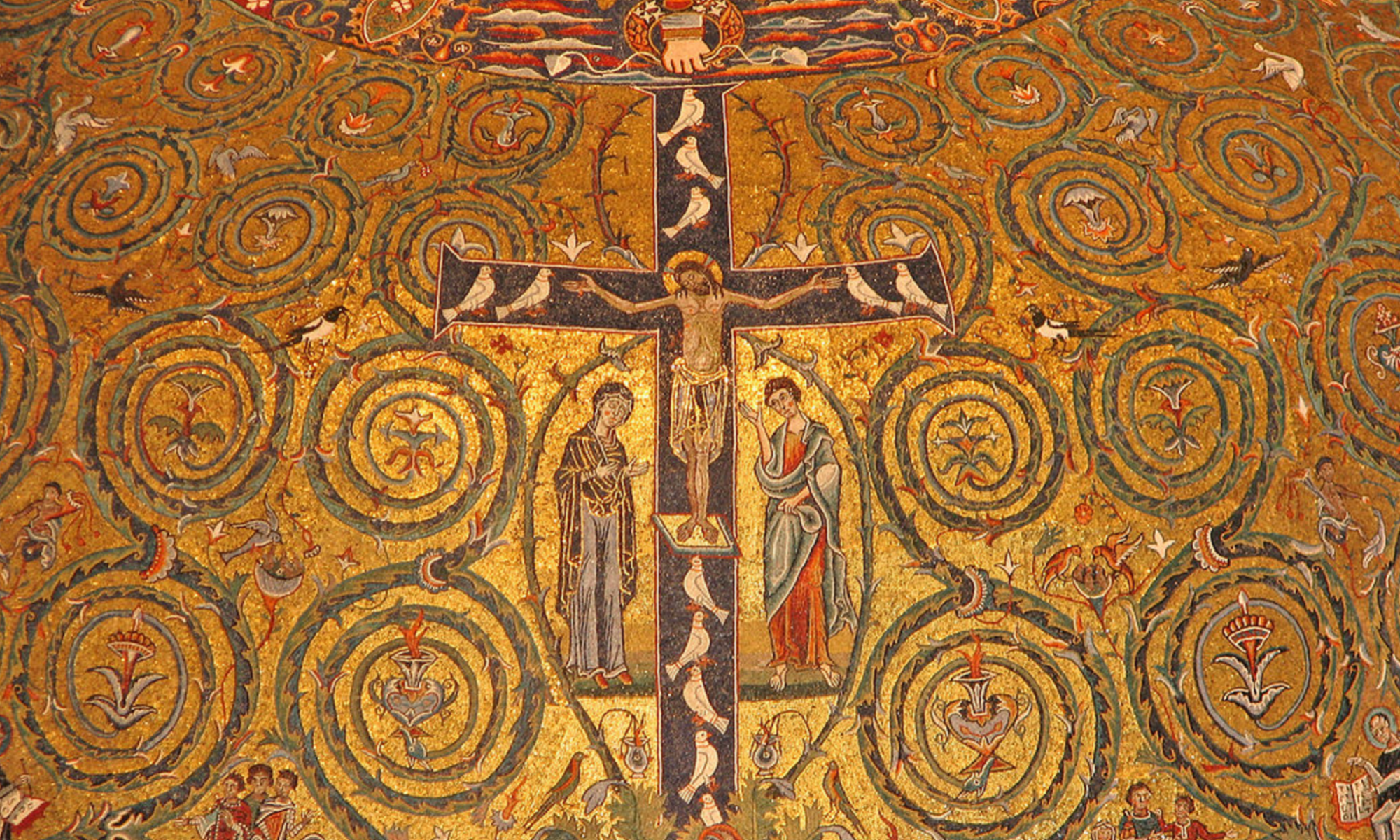
Amidst that peace and an intense desire for more of that peace, I felt convicted of all the times that I was “pushing through” the present moment. I was either enduring that which was unpleasant or devouring that which was pleasurable. Either way, I wasn’t opening myself to the gift that can only be received in the present. He helped me see how often things that felt confusing or overwhelming in the present moment actually led to abundant blessing. He flooded my mind and heart with the image of looking back down the mountain at the twisting path already walked – including steps that made utterly no sense at the time – and marveling at how no other path would have worked. He gave me some felt sense of how he sees all of these things simultaneously; all the moments are one in him; all are “now” for him. He invites me to surrender to him in the “now” of the present moment. I resist. When I left the chapel and felt the throb of circulation as the blood returned to my knees. I paused in the hallway to gaze on a copy of a Pinturicchio painting of the Crucifixion (see above). I felt a jolt of awe as I gazed upon the “now” of Jesus’ once-and-for-all sacrifice on the Cross. Beneath him lay death dismantled, overcome by his love and his shed bled. Behind him was paradise restored, and a felt sense of God’s eternal rest sustaining him in that moment of surrender. I felt Jesus’ trust in his Father and an intense desire to share in that trust.

In the twenty-five years since, I have felt both senses of “abandonment” many times over. Perhaps the most distressing situations for me are those in which I feel left alone by those I thought I could trust – suddenly facing an overwhelming and dangerous threat by myself, when I thought I would have protection and security. That feeling of abandonment is so ancient for me and so familiar. The lies can race through my head at lightning speed: They don’t understand; they don’t care; they can’t be trusted; I am all alone! In some cases, I flee and isolate myself; at other times I attack with an angry outburst and hold others to impossible expectations, as if they are supposed to revolve around my needs. The more I mature in Christ, the more quickly I notice, and the more frequently I choose a different path – or repair if I repeat old patterns.

Again and again, God has also invited me into trust and surrender, reminding me to live in the present moment and look for his gift. If I abide and gaze and receive, the gift is always there, including in those moments in which I am invited to take up my cross with Jesus.

I can only receive the gift of the present moment to the extent that I let down the defenses of my self-protection. Otherwise I limit how much I can receive, and ultimately how much I can give.

The English verb “to abandon” comes from the French abandonner. The French verb has multiple senses, which one way or another are ways of untying, releasing, or relinquishing a band that ties something together. When we do so with a committed relationship or a grave duty (e.g., parenting, governing, leadership), other humans experience abandonment in the first sense (“My God, my God, why have you abandoned me?”). But there is also an untying or letting go when we encounter beauty, when we forgive harm, when we dance, or when we connect with another person.

Jesus, in his Passion, enters fully into both human experiences of “abandonment,” and reconciles them. Those of us who have experienced abandonment in the first sense tend to have spectacular defenses against ever letting anyone close again. Jesus cries out to the Father on our behalf. Jesus also “abandons” in the second sense. He cancels the debt of our sins, releasing all claims to make us pay. He meekly surrenders himself like a lamb, even in the face of contempt, violence, and powerlessness. He releases every merely human solution and entrusts all of it to his Father. He freely submits and becomes the seed sown into the earth that bears abundant fruit. May we claim his victory and allow him to reconcile in our hearts all that impedes our own surrender.

en_USEnglish
en_USEnglish