
Equal Human Dignity

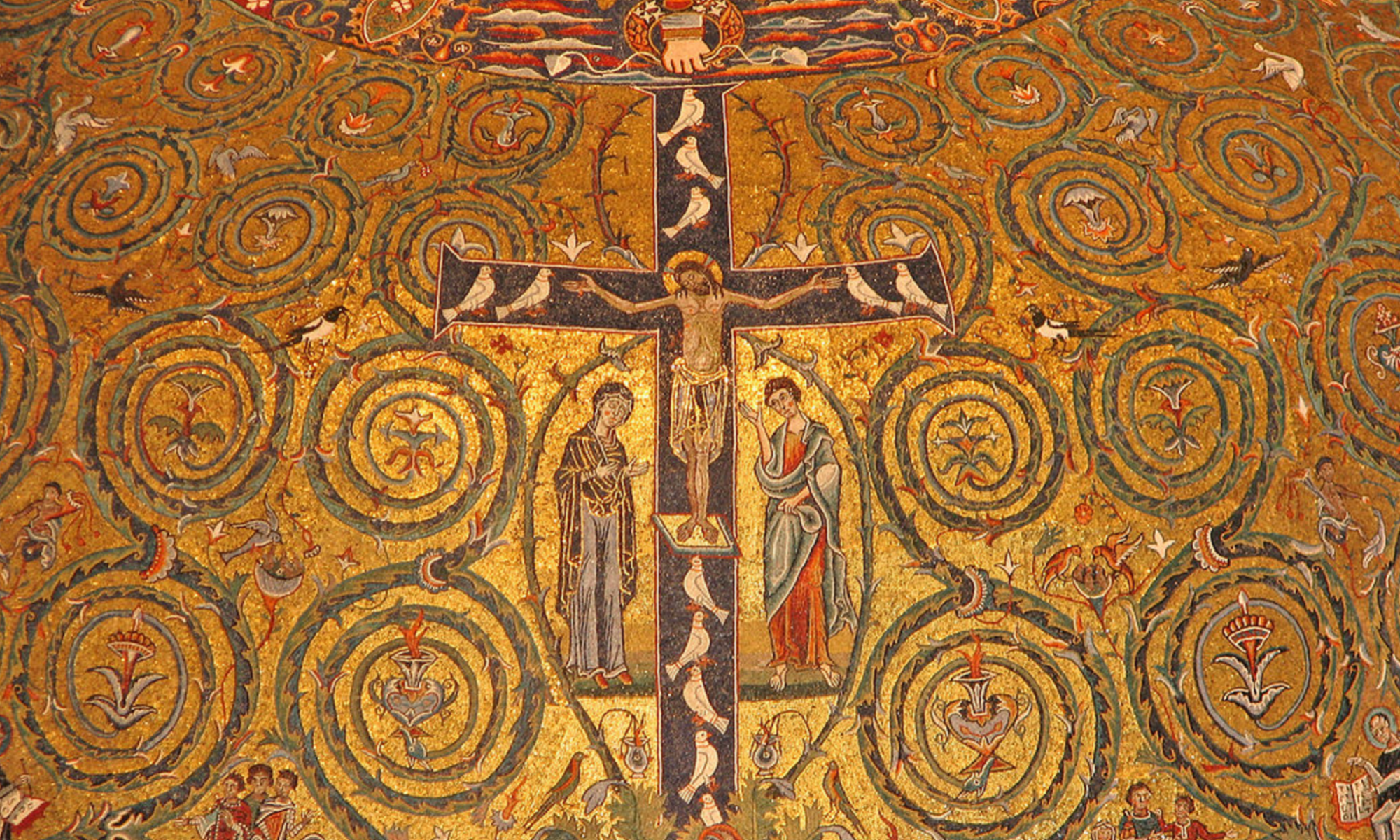
In his new encyclical letter (Magnifica Humanitas), Pope Leo articulates three truths that serve as a foundation for any attempts to build a just society: (1) the human person created in the image of the Trinity; (2) the equal dignity of each human being; and (3) the supreme value of human rights.  Last time I reflected on foundational truth #1; today we move on to truth #2.

All humans have “equal” dignity because every human being has an infinite dignity. At this point, the math nerds in the room may point out that some infinities are larger than others. We are not speaking of “infinity” in any mathematical sense. Human dignity cannot be quantified, period.

You may remember a year ago, when I wrote about Francis Bacon and René Descartes. In the early 1600’s, their thought heralded a seismic shift in the West. Knowledge and scientific inquiry became increasingly focused on quantitative analysis. Bacon boldly declared, “Knowledge is power,” and Descartes insisted that we can only know things if we have clear and distinct ideas.

There is nothing inherently wrong with quantitative analysis. It’s just that not everyone and everything is quantifiable. As amazing as some of the “progress” of modern science is, there is an increasing risk of dehumanization. Can you see the connection to AI here?  At its core, artificial intelligence operates exclusively in the realm of the quantitative.

Quantification can get humans to the moon. It can split the atom. Maybe it can even cure cancer. But there are so many things that transcend the quantitative – including all the qualities Leo lists that set humans apart from artificial intelligence: undergoing lived experiences, embodied joy and pain, maturity, relationships, love, meaningful work, friendship, responsibility, moral conscience, judging good and evil, empathy, understanding, affectivity, spiritual perspective, and growth in wisdom (n. 99). We human beings, bearing infinite dignity, are capable of all these things. Trained AI models are not, no matter how powerful they become. Their power comes from the massive amounts of data utilized in their ongoing training, which allows predicting the “right” answer with an increasing amount of accuracy. The learning remains data-driven and not qualitative.

This may seem shocking to say, but I do not see anything truly “new” in AI. It’s an accelerant on ideas and trends that have been smoldering for four centuries. But AI is far faster and therefore much more powerful.

AI may be able to simulate empathy, but in truth it doesn’t care one bit about human dignity. It can’t. It’s simply not a relational being capable of mutual intimacy.

The more I’ve accompanied survivors of grooming and abuse, the more I’ve come to realize that these trained AI models can behave like abusers – attuning quite skillfully to the emotional state of the participant and exploiting that vulnerability for someone else’s gain at the person’s expense. If those training the models are willing to exploit emotional vulnerability, AI will learn from those biases and amplify the exploitation.

In the early years of social media, we began seeing this trend with “nudges” offered at moments in which a person showed a state of emotional vulnerability – and therefore greater susceptibility to clicking on a link that seemed to offer a solution. Today, a typical social media user is exposed to AI-generated clickbait dozens of times a day. There are also millions who are finding an AI chatbot to be a better emotional companion than any of the humans in their lives – even though the “relationship” and the emotional connection is entirely simulated.

In discussing equal human dignity, Pope Leo is especially concerned about some humans getting treated as having less dignity than others – especially if high-powered AI models increasingly replace human decision-making. Leo calls for transparency regarding the algorithms and the motives behind the humans involved in training those models.

There are many troubling ideologies that do not respect humans as image bearers, nor as bearing a dignity that is beyond calculation. In the words of Leo, “Among these ideologies, I consider particularly insidious the one that suggests that every person must earn or justify his or her own worth, to the point of attributing greater value to those who are more efficient or effective” (n. 51). There are nearly five centuries of a modern western bias that prioritizes doing over being, producing over relating, and profitability over love. Given that AI-training algorithms and data sets tend to be applied with corporate interests, these biases are bound to be reflected in the operating model that emerges and whatever “solutions” it “decides.” The thing is, humans like Ebenezer Scrooge still have a conscience and the capacity to experience moral and spiritual conversion. Machine learning does not.

Leo points out that “dignity” has various meanings when it comes to human beings. We can speak of moral dignity depending on whether human choices are directed towards goodness or evil. We can speak of social dignity by considering people’s living conditions and what level or respect they are receiving from the rest of society. We can speak of existential dignity in terms of how much meaning or purpose each person feels or what their quality of life is like. At the foundational level, however, every human being bears an ontological dignity.  As Leo explains it, “This is the dignity that belongs to every human being simply by virtue of existing, of having been willed, created, and loved by God” (n. 52).

Every human person has an ontological dignity that cannot be quantified or calculated. This inherent dignity runs deeper than any strength, talents, power, or productivity. None of those are the source of our human worth. But the ontological dignity of each human runs yet deeper: “No sin, failure, humiliation or exclusion can diminish the profound value of a human life that God has willed and called into being” (n. 52).

This is the same truth that I heard in person 24 years ago from an aging John Paul II. I stood with 800,000 pilgrims at Downsview Park in Toronto for World Youth Day. Most of us had camped out the night before, endured the morning rains, and now joined him for an outdoor Mass. As the sun burst forth, he boldly proclaimed one of his most-repeated truths: “We are not the sum of our weaknesses and failures, we are the sum of the Father’s love for us and our real capacity to become the image of His Son Jesus.”

What a contrast from the local radio broadcast I had overheard the day before, cynically mocking him – including his age and frailty, his struggles in walking and his drooling. In one sense it was true – gone was the vigorous youth of one who loved to hike, ski, swim, or act on stage. He was nearing the end of his earthly life. It was then, more than ever, that he witnessed to human dignity.

The modern West has increasingly exalted those who show a capacity to be strong, to succeed, to produce, or to stay youthful in appearance. Those who don’t measure up are viewed with contempt, as are those who dare to break the mold and live differently. These tendencies have become so normalized that we no longer notice them as the ocean we have been swimming in. They are, unfortunately, the values with which most AI models have been trained.

Pope Leo is inviting us all to step back and notice our biases. It doesn’t have to be this way. We can show respect to the inestimable dignity of every human person—beginning with ourselves, whom we often hold in contempt more than anyone else. We can extend that same respect to everyone around us. We can demand transparency and accountability for any training of AI models, collaborating at every level to ensure that they align with an unshakable respect for human dignity.

Saruman and Francis Bacon

“Knowledge is power.”

That, at least, is what English philosopher Francis Bacon claimed in 1597. We may have heard that quote as a child, and never thought to question it.

Most people don’t realize just how radically our culture shifted in the West in the 1500’s and 1600’s. In my last post, I mentioned the exaltation of doing over being. There are several other shifts worth noticing – “knowledge is power” being one of them.

One of my earliest encounters with Francis Bacon was while wanting to play a game with my younger brother Jake. We had unearthed an old backgammon board, and I couldn’t remember the rules. Google wouldn’t exist for nearly two decades, so we went to the encyclopedia to look up “backgammon.” When I exclaimed, “I found it!” Jake, in his usual comedic way, pointed to the picture of an Englishman in a frilled collar and asked if the game was called “Bacon, Francis.” For months, he would periodically ask if I wanted to play a game of “Bacon Francis.”

As it happens, the progression from the encyclopedia to internet search engines to artificial intelligence is a progressive development, gradual at first and now exponentially accelerating. Having so much information instantly accessible does indeed bring massive power. According to Tim “The Tool Man” Taylor on Home Improvement in the 1990’s, “more power” is what it’s all about. But if that’s really true, shouldn’t our joy in life be increasing exponentially along with the increase in “knowledge” and power? Clearly, our culture is missing something.

I remember three decades ago, arriving at the University of Saint Thomas, waiting in line by the dining hall, and reading a quote on the wall from T.S. Eliot’s The Wasteland:

Where is the wisdom we have lost in knowledge?
Where is the knowledge we have lost in information?

Bacon was bold, even arrogant. He is acclaimed for paving the way for modern scientific method. Those who are eager to bash the Middle Ages (without really knowing the Middle Ages) have depicted Bacon as one who sets science free from its primitive restrictions.

One of Bacon’s works is entitled the Novum Organum. To be sure, that work offers valuable insight into a scientific process of observation, hypothesis forming, and verification. But he is claiming, in effect, to be a newer and better Aristotle. Aristotle’s six logical works were collectively referred to by his disciples as the Organum – a “tool” or “instrument” used in pursuing knowledge. Bacon is offering a new and better tool – better because it pursues knowledge in a way that allows far more power.

I suppose we could excuse Bacon for claiming to be greater than Aristotle. Vizzini did the same thing in The Princess Bride. But Bacon also subtly compares himself to Jesus. The title of his unfinished work is the Instauratio Magna. It’s a reference to Ephesians 1:10, where Paul praises the Father’s eternal plan “to restore all things in Christ.” Bacon proposes a scientific approach that can restore “the empire of man over all things,” man’s primeval power over nature that was lost in the fall (cf. Genesis 1:26-28). Rather than accepting our powerlessness and entering into a relationship with a savior, we are invited to seize power by means of more information.

Don’t forget the context here. Francis Bacon was also a member of Parliament, and was Lord Chancellor of England in 1620 when the first colonists landed at Plymouth. His writings herald an era that also embraced the imperial subjugation, exploitation of indigenous peoples, and a newly flourishing slave trade. Knowledge is power.

I’ve always been a lover of J.R.R. Tolkien and C.S. Lewis. Their hearts were more at home in the Middle Ages. By no means did they uncritically or naively believe everything to be amazing then. Indeed, Tolkien’s Silmarillion tells more tales of folly and woe than of wisdom or triumph. No, what they preferred was the holistic view of God and humanity in the ancient and medieval mindset – compared to the distortions of the last 500 years, which these days seem to be unraveling all sense of meaning in our human existence.

Tolkien offers a contrast between the two great wizards, Gandalf and Saruman.

Gandalf embodies the classical and medieval approach to knowledge and wisdom. He is genuinely curious about all beings: elves, dwarves, hobbits, eagles, ents, etc. He is powerful, to be sure, but has no interest in exploitation. He desires that everyone flourish in their own proper environment. He shows honor and delight. If you read Aristotle (384-322 B.C.) or Thomas Aquinas (A.D. 1225-1274), you’ll discover an endless curiosity and eagerness to discover truth and goodness and beauty wherever it can be found. That is what “science” did in the ancient and medieval world. In Latin, scientia simply means “knowledge,” which was gained by curiously pursing the ultimate causes of what is observed here and now. Aristotle’s writings range from reflecting on the movement of the stars to the guts of animals to virtue and friendship to politics to the causes of being itself. A few of his conclusions or assumptions seem laughable today, but far less so when you consider the limited tools at his disposal.

Saruman, meanwhile, is an embodiment of “knowledge is power.” He uses his brilliance to manipulate, exploit, and subjugate. He nearly destroys Fangorn forest, fueling his factory, where he is also manipulating the genes of men and orcs to create a more powerful army. He obsesses with the rings of power. He overlooks the goodness and resiliency of the little people. Gandalf laments the folly of Saruman at the Council of Elrond when he declares, “He that breaks a thing to find out what it is has left the path of wisdom.”

Our age desperately needs a rediscovery of curiosity and kindness. I’m not saying that modern science is all bad. I certainly appreciate advances such as dentistry or toilet paper! But we’ve devalued the curious pursuit and discovery of truth and goodness and beauty – something you don’t have to teach to children; it’s already a desire of every human heart!

There is so much delight in seeking and finding. There’s even more delight in shared quests and shared discoveries. Such an attitude is at the core of Aristotle’s description of friendship. Best of all, there is wisdom, humility, and awe in discovering that there is still more to discover. The more we grow in wisdom, the more we know how little we know. Bacon would have struggled as a student of Socrates!

In the words of Bacon’s much wiser contemporary, William Shakespeare, “There are more things in heaven and earth, Horatio, than are dreamt of in your philosophy.” For a season, it was trendy to claim that Shakespeare didn’t really write Shakespeare – he was allegedly too uneducated to be so brilliant. The plays must have been written by someone like Francis Bacon, they said, who was so much more knowledgeable. Needless to say, I disagree.

Knowledge can indeed be turned into power. But to what end? Part of the problem is that modern philosophies also discarded any sense of purposefulness in nature. The only purpose is the one we impose upon nature by willing what we want. That is the spirit of Saruman, to be sure, but a departure from the path of Wisdom.

Truth is Relational

Truth – what is Truth?

The question of Pontius Pilate echoes through the centuries. In the modern era, you tend to find one of two extremes: a relativism that denies the very possibility of finding the Truth, or fear-based clutching onto “truth” in a way that demands rigid clarity.

René Descartes (1596-1650) is famous for his “I think, therefore I am.” His modern approach to philosophy was utterly unlike Socrates, who invited those hungry for Wisdom to pursue Truth and Goodness and Beauty in a communal encounter. and dialogue. His enquiries often left more questions than answers – but at least they were beginning to ask the right questions. By contrast, Descartes isolated himself in his room and began his enquiry with doubt and denial. He could only accept as true that which he could grasp with mathematical certainty. He insisted on clear and distinct ideas. With that insistence, he could not even accept with certainty the reality of the fire in his fireplace or the chair beneath his body. But he could not doubt that he doubted. If he is thinking, he must exist. Notice the disconnect between mind and body!

In reading modern philosophers like Descartes, Hume, or Kant, I find their reasoning itself to be meticulous. It’s their starting points that are questionable! As human beings, we do not begin as isolated thinking individuals and then reason our way out to others and the world. We begin already existing in relationship!

I understood this point well enough a quarter century ago, when I studied philosophy. Now that I have plunged into trauma research and the findings of contemporary neuroscience, I see it even more clearly and distinctly: the human capacity to accept Truth, to grow, to change, and to mature is only possible within the context of secure relationship.

Any spouses who have been in a heated argument can appreciate this point. If the other person feels threatened, shamed, or unappreciated, it does not matter how clearly and distinctly you are making your brilliant point. Genuine receptivity is only possible if the other person feels safe and connected.

Indeed, Truth itself is relational. We are created in the image of a Triune God. “God is love” – that is to say, God eternally exists as a communion of persons. He has placed into the human heart a desire for Truth, Goodness, and Beauty. Little by little, we become more capable of receiving and being received into this infinite abundance.

We see this desire best in children who are curious and full of wonder – or in adults who are willing to become again like little children. Perhaps not all Fairy Tales are true, but it is not hard for little children to believe in them! For little ones, it is normal to abide in awe and wonder in the face of mysteries they do not fully comprehend. It is normal to be surprised and delighted by new unveilings of Truth or Goodness or Beauty.

Trauma responses are a different matter. When under threat – whether immediately or over a long stretch of time – our nervous system is hardwired to survive. If I am being chased by a grizzly bear or about to be hit by a Mack Truck, there is no time or space for curiosity and wonder – nor should there be. Surviving the threat becomes priority #1, and the full resources of my brain and body are immediately diverted for that purpose.

Unfortunately, though, individuals or collective groups (families, communities, or churches) can get locked in survival mode. You can tell it’s there when you hear the black-and-white thinking, the all-or-nothing. It’s us versus them, and other humans are all good or all bad. If you grew up in a family that was stuck a trauma response, you may be able to appreciate how hard it is for each of the children to be pushed into rigid roles rather than loved and cherished in their uniqueness. When an entire society gets stuck in a trauma response, the politics get polarized, with fear and shame at the core of the messaging. In those moments, the people are especially vulnerable to the rise of a dictator. In church life, when the outside environment feels threatening, it’s tempting to circle the wagons and grasp onto a rigid dogmatism – vilifying everyone outside the circle and insisting on a possessive grasp of true or false, good or evil.

Don’t get me wrong – I love Catholic Tradition and love Catholic dogma. It’s just that most people don’t understand what dogma really is! Dogmas are not rigid lists of propositions. Rather, they set the boundaries of the playground in which we can be like children, receptively connecting with the infinite mystery of God. But God is always greater.

Brilliant theologians and mystics like Thomas Aquinas (1225-1274) always understood this point. Thomas goes so far as to say that the essence of God remains utterly unknown to us (Summa Contra Gentiles III, c. 49). He describes a dogma (an “article of faith”) as “a perception of divine Truth tending towards that Truth” (Summa Theologiae II-II, q. 1, a. 6, sc). In other words, a dogma is not itself “the truth” but rather a sign that points beyond itself to a mystery that we do not master. Elsewhere he describes what happens when a human being makes an act of faith: “The act of faith does not terminate at the proposition but at the Reality itself” (Summa Theologiae II-II, q. 1, a. 2, ad 2). In other words, we enter into a relationship with the Truth, rather than grasping or controlling it.

Even when talking about natural human knowledge (of the real things in the world around us), Thomas tends to use the Latin verb communicat. There is a communication and a communion between knower and known. Even though the knower is active in pursuing Truth, she is ultimately receptive and passive – allowing herself to be changed by the Truth, rather than create it for herself. Being in communion with the Truth is different than mastering it, possessing it, owning it, etc. The former is vulnerable and receptive; the latter is self-protective and controlling.

I see it as no accident that it is precisely in the modern era (the last 500+ years) that many Christians have retreated into a rigid dogmatism. The 16th Century in the West was marked by an intense contempt and dominating human behaviors: the resurgence of the slave trade; exploitative colonizing of indigenous peoples; and vilifying, persecuting, or killing those perceived as religious or political enemies. Meanwhile, in the academy, philosophy and science shifted away from any sense of meaning and purpose and focused instead on the imposition of power. Francis Bacon’s famous “Knowledge is power” sounds benign, but marks an ominous shift. No longer is human reasoning an effort to enter into a relationship with Truth and Goodness and Beauty and to flourish in them together (think here of Gandalf in relation to the various races of Middle Earth). No, the goal now is to master, dominate, and subdue (think of Saruman’s factory and experiments at Isengard). The same held true in political philosophy, as seen in Machiavelli. No longer is politics focused on the common good, in which each and all can flourish, but rather it becomes a matter of getting “our people” in power so that they can cast down “those people.” Us versus them. Black and white. Trauma response.

As in Lord of the Rings, the normal temptation in the face of a dire threat is to put on the Ring of Power and cast down the enemy. Only the wise and courageous are able to see the folly in that strategy. It is incredibly hard to hold out a holy imagination for goodness and collective flourishing when feeling threatened or unsafe. It’s hard to retain an unshakable confidence in the Victory that is already assured in the Blood of the Lamb – and to remember that the entire human race is invited to the Wedding Feast.

Truth does not always bring mathematical certainty, nor does it need to. When a little child is safely held by a dad or mom who is both tender and strong, the dangers and chaos of the larger world lose their menacing force. If we are open to it, we get to be held by a Father who is infinitely greater than us. We are already in relationship with him. Jesus has reconciled us, connected us with the Father and with each other. In the Body of Christ, we have all that we need. It’s a living reality that we do not master or comprehend. We just keep growing into it as we walk this pilgrimage together. May each of us rediscover that childlike wonder and vulnerability and become receptive to the Truth that always transcends us.