In his new encyclical letter (Magnifica Humanitas), Pope Leo articulates three truths that serve as a foundation for any attempts to build a just society: (1) the human person created in the image of the Trinity; (2) the equal dignity of each human being; and (3) the supreme value of human rights. Last time I reflected on foundational truth #1; today we move on to truth #2.
All humans have “equal” dignity because every human being has an infinite dignity. At this point, the math nerds in the room may point out that some infinities are larger than others. We are not speaking of “infinity” in any mathematical sense. Human dignity cannot be quantified, period.
You may remember a year ago, when I wrote about Francis Bacon and René Descartes. In the early 1600’s, their thought heralded a seismic shift in the West. Knowledge and scientific inquiry became increasingly focused on quantitative analysis. Bacon boldly declared, “Knowledge is power,” and Descartes insisted that we can only know things if we have clear and distinct ideas.
There is nothing inherently wrong with quantitative analysis. It’s just that not everyone and everything is quantifiable. As amazing as some of the “progress” of modern science is, there is an increasing risk of dehumanization. Can you see the connection to AI here? At its core, artificial intelligence operates exclusively in the realm of the quantitative.
Quantification can get humans to the moon. It can split the atom. Maybe it can even cure cancer. But there are so many things that transcend the quantitative – including all the qualities Leo lists that set humans apart from artificial intelligence: undergoing lived experiences, embodied joy and pain, maturity, relationships, love, meaningful work, friendship, responsibility, moral conscience, judging good and evil, empathy, understanding, affectivity, spiritual perspective, and growth in wisdom (n. 99). We human beings, bearing infinite dignity, are capable of all these things. Trained AI models are not, no matter how powerful they become. Their power comes from the massive amounts of data utilized in their ongoing training, which allows predicting the “right” answer with an increasing amount of accuracy. The learning remains data-driven and not qualitative.
This may seem shocking to say, but I do not see anything truly “new” in AI. It’s an accelerant on ideas and trends that have been smoldering for four centuries. But AI is far faster and therefore much more powerful.
AI may be able to simulate empathy, but in truth it doesn’t care one bit about human dignity. It can’t. It’s simply not a relational being capable of mutual intimacy.
The more I’ve accompanied survivors of grooming and abuse, the more I’ve come to realize that these trained AI models can behave like abusers – attuning quite skillfully to the emotional state of the participant and exploiting that vulnerability for someone else’s gain at the person’s expense. If those training the models are willing to exploit emotional vulnerability, AI will learn from those biases and amplify the exploitation.
In the early years of social media, we began seeing this trend with “nudges” offered at moments in which a person showed a state of emotional vulnerability – and therefore greater susceptibility to clicking on a link that seemed to offer a solution. Today, a typical social media user is exposed to AI-generated clickbait dozens of times a day. There are also millions who are finding an AI chatbot to be a better emotional companion than any of the humans in their lives – even though the “relationship” and the emotional connection is entirely simulated.
In discussing equal human dignity, Pope Leo is especially concerned about some humans getting treated as having less dignity than others – especially if high-powered AI models increasingly replace human decision-making. Leo calls for transparency regarding the algorithms and the motives behind the humans involved in training those models.
There are many troubling ideologies that do not respect humans as image bearers, nor as bearing a dignity that is beyond calculation. In the words of Leo, “Among these ideologies, I consider particularly insidious the one that suggests that every person must earn or justify his or her own worth, to the point of attributing greater value to those who are more efficient or effective” (n. 51). There are nearly five centuries of a modern western bias that prioritizes doing over being, producing over relating, and profitability over love. Given that AI-training algorithms and data sets tend to be applied with corporate interests, these biases are bound to be reflected in the operating model that emerges and whatever “solutions” it “decides.” The thing is, humans like Ebenezer Scrooge still have a conscience and the capacity to experience moral and spiritual conversion. Machine learning does not.
Leo points out that “dignity” has various meanings when it comes to human beings. We can speak of moral dignity depending on whether human choices are directed towards goodness or evil. We can speak of social dignity by considering people’s living conditions and what level or respect they are receiving from the rest of society. We can speak of existential dignity in terms of how much meaning or purpose each person feels or what their quality of life is like. At the foundational level, however, every human being bears an ontological dignity. As Leo explains it, “This is the dignity that belongs to every human being simply by virtue of existing, of having been willed, created, and loved by God” (n. 52).
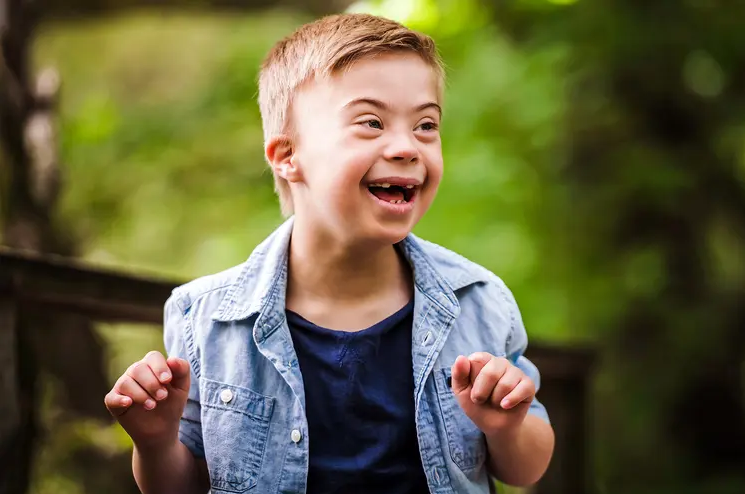
Every human person has an ontological dignity that cannot be quantified or calculated. This inherent dignity runs deeper than any strength, talents, power, or productivity. None of those are the source of our human worth. But the ontological dignity of each human runs yet deeper: “No sin, failure, humiliation or exclusion can diminish the profound value of a human life that God has willed and called into being” (n. 52).
This is the same truth that I heard in person 24 years ago from an aging John Paul II. I stood with 800,000 pilgrims at Downsview Park in Toronto for World Youth Day. Most of us had camped out the night before, endured the morning rains, and now joined him for an outdoor Mass. As the sun burst forth, he boldly proclaimed one of his most-repeated truths: “We are not the sum of our weaknesses and failures, we are the sum of the Father’s love for us and our real capacity to become the image of His Son Jesus.”
What a contrast from the local radio broadcast I had overheard the day before, cynically mocking him – including his age and frailty, his struggles in walking and his drooling. In one sense it was true – gone was the vigorous youth of one who loved to hike, ski, swim, or act on stage. He was nearing the end of his earthly life. It was then, more than ever, that he witnessed to human dignity.
The modern West has increasingly exalted those who show a capacity to be strong, to succeed, to produce, or to stay youthful in appearance. Those who don’t measure up are viewed with contempt, as are those who dare to break the mold and live differently. These tendencies have become so normalized that we no longer notice them as the ocean we have been swimming in. They are, unfortunately, the values with which most AI models have been trained.
Pope Leo is inviting us all to step back and notice our biases. It doesn’t have to be this way. We can show respect to the inestimable dignity of every human person—beginning with ourselves, whom we often hold in contempt more than anyone else. We can extend that same respect to everyone around us. We can demand transparency and accountability for any training of AI models, collaborating at every level to ensure that they align with an unshakable respect for human dignity.