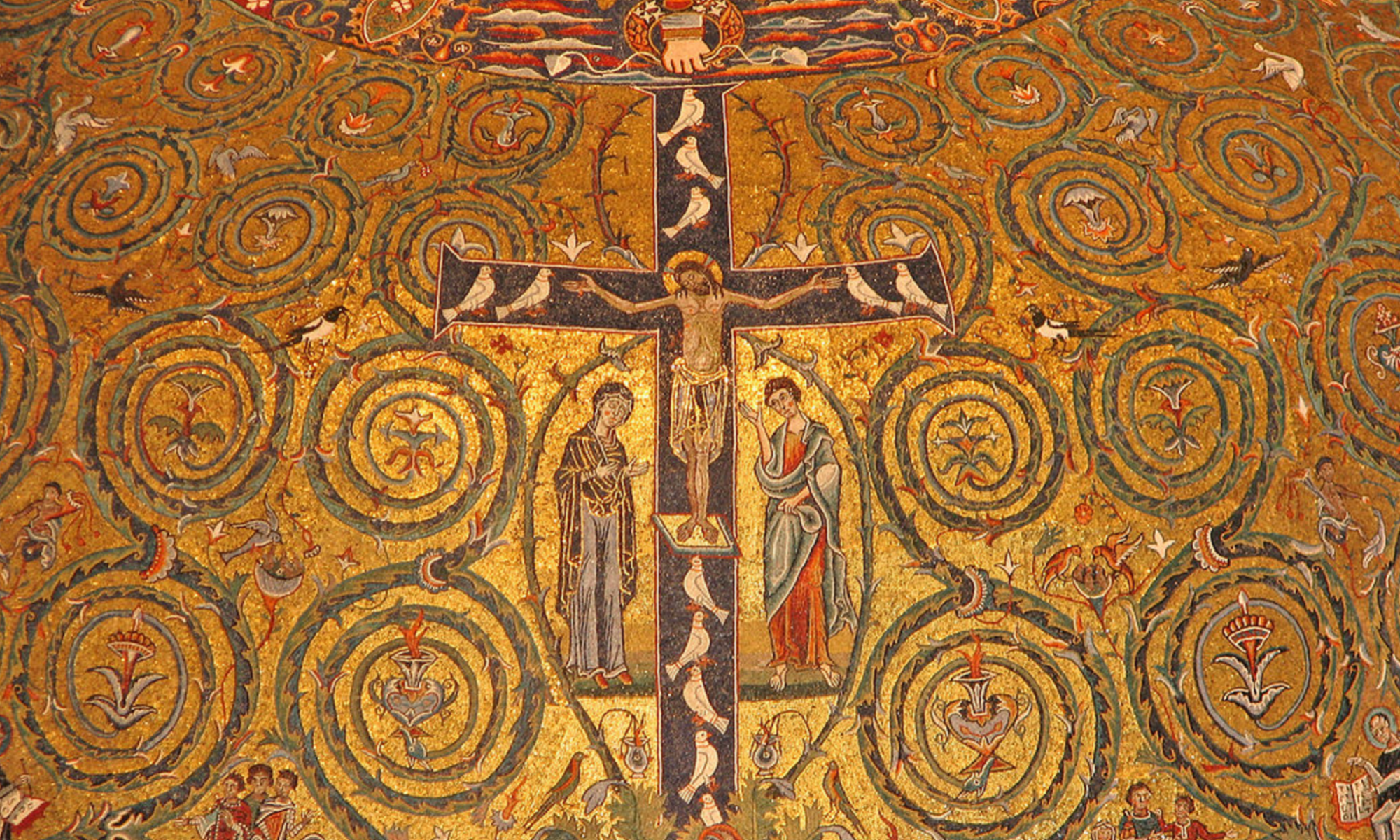
The Way of the Cross has enlivened Christian imagination for centuries. 800 years ago, Francis of Assisi popularized the devotion of imagining, moment by moment, what Good Friday was like for Jesus – from his early morning encounter with Pontius Pilate to the hasty burial in the tomb before sunset.
But have you ever pondered the Way from the Cross? What was it like for the mother of Jesus, or Mary Magdalene, or the beloved disciple when they walked away? What was that Sabbath day like for them?
Remember that the Jewish day begins at sunset. Day One of Jesus’ Paschal Mystery begins with the Last Supper and concludes with his burial in the tomb. Day Two begins shortly after the faithful few walk away from the tomb. Day Two continues as they observe the Sabbath by…by…??? Day Three includes Jesus rising in the night and beginning to surprise his followers with encounter after encounter.
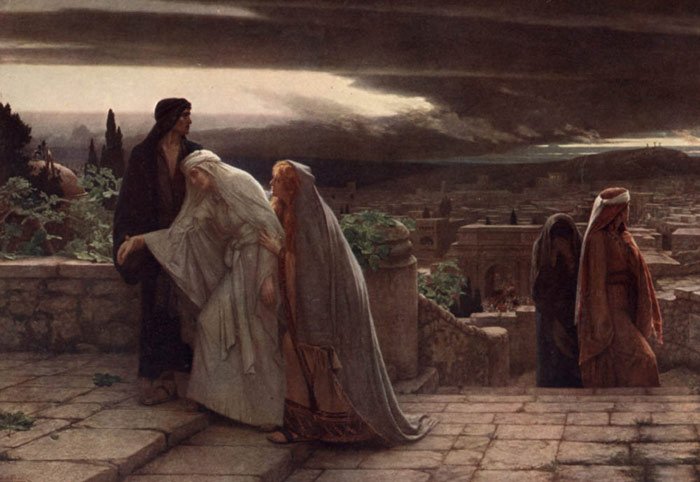
My imagination had never considered the Way from the Cross, until just a few months ago. I received the prompt from a friend of mine, who is a courageous survivor of child clergy sex abuse, including dark ritual abuse and a grave failure of Church leaders to accompany her in the ways she needed and deserved. She shared with me one of her favorite paintings – The Return from Calvary by Herbert Gustave Schmalz. It captures a little-imagined moment in the Christian story – significant not only on that dreadful Sabbath day, but for anyone who has ever felt trapped in the timelessness of trauma.
Abuse survivors tend to be on the margins of our church communities. It’s easy for both leaders and members of our churches to be like the priest and the Levite in the Good Samaritan story by keeping a comfortable distance (which means leaving them alone with their wounds). It is indeed agonizing to hear their stories. “The truth” sounds exciting to many of us, especially if we’re feeling zealous or self-righteous. It’s much harder to pick up a bloodied body and take in the full truth of the evil that has been perpetrated. We’d rather ignore it or speed past it. It’s hard enough, like Mary, to stand at the foot of the Cross. But the timelessness of Holy Saturday is virtually unbearable. For the Virgin Mary, Mary Magdalene, and the other disciples, there was no fast-forward button.
Jesus does not cast judgment on the priest and the Levite in his parable – any more than he condemns his friends and companions when they abandon him and flee (Matthew 26:56). They are his chosen shepherds. Where were each of them on Holy Saturday, I sometimes wonder? We do know that when the agonizing Sabbath is over, he greets them with his perfect Shalom (“Peace be with you”) and breathes his Spirit on them. They are filled with joy and peace. Even then, their conversion is a work in progress.
I pondered these points on my annual retreat last summer. I spent multiple hours each day reading and reflecting on Matthew’s Gospel. Jesus keeps telling the truth with kindness – stating as a matter of fact that they have “tiny faith” (Matthew 8:26, 14:31, 16:8), side-by-side with choosing them, calling them, and reminding them how much worth they have in his Father’s eyes. He’s not shaming them for the smallness of their faith. He’s naming it and reminding them that they can trust the superabundant goodness of his Father.
I don’t trust easily. Or at least I don’t stay in a place of trust for sustained periods of time. It’s easy for me, automatically, to break away from intimacy and connection – especially when it’s abundantly good. My brain and body and nervous system have deeply embedded memories. There is a preponderance of evidence in my story suggesting that it’s better not to surrender myself into the good care of another. I’ve done plenty of renouncing of lies and claiming of the truth of who God is and who I am. Those tools have a place. But learning to stay securely connected in Faith, Hope, and Love – that is a lifelong labor. I still feel the urge to take matters into my own hands.
I can only accompany others to the extent that I have allowed myself to be accompanied. My giving will quickly become fruitless if I am not allowing myself to receive. You and I are branches on the vine, bearing fruit only in intimacy and receptivity.
Most of us spend much of our lives bypassing and avoiding the valleys of death in our hearts. We want Day Three of the Paschal Mystery without fully entering into the agony and powerlessness of Day One, much less the stillness and the indefinite waiting of Day Two.
It shouldn’t surprise us that the Church today is much like the Church during that first Paschal Triduum. Those of us chosen as priests tend to bypass and avoid our hearts, as do the majority of our church members. Then, too, it was only a very small number who chose to stay with Jesus on the Way of the Cross, to stand with him at the foot of his Cross, and to connect with each other on the Way from the Cross. They are the ones who first encounter the risen Jesus. Jesus chooses Mary Magdalene to be the apostle to the apostles. Even then, at first they resist her and do not believe her (Mark 16:11).
The Virgin Mary, Mary Magdalene, and the other Mary stayed connected to Jesus and to each other, not only on the Way of the Cross, but on the Way from the Cross. Even if they did not fully understand his promises, they believed. More importantly, they were willing to persevere in being with. They remain present and receptive amidst the unknown – at such great cost. It is so much easier to close oneself off from receptivity and hide behind locked doors. We sometimes do this as individuals, but we also do it as church communities when we cling to what is comfortable, tidy, and familiar.
I see an amazing renewal at work in the Church. Sometimes I am amazed and overjoyed; other times I feel frustrated and cry out “How long???” There is one thing I know to be true: those at the heart of the renewal are those willing to be together in Christian community both on the Way of the Cross and on the Way from the Cross. Such disciples of Jesus will always be the first chosen witnesses of the resurrected life that he brings. Jesus descends into the darkest and most agonizing places of the human experience. It is there that he overthrows the powers of death and sin.
The Resurrection is actually not Jesus’ victory stroke; it’s a revelation of a victory already won. Jesus already proclaimed “it is finished” on the Cross. He descends into hell not as a powerless victim but with the eternal triumph of Love. Most of us are afraid to walk the Way from the Cross, or to descend into the hell of another’s agonizing story. If we do so on our own strength, we would indeed be fools. But if we go there together with others in healthy Christian community, if we believe in who Jesus really is, we need not fear any darkness. He has descended with the glory of his love into every human heartache. He shines in those darkest places, and the darkness can never overcome him.
