
Hosting An Unexpected Party

Have you noticed during this pandemic that some of your “old friends” keep showing up uninvited? I think you know who I mean – those behaviors so familiar for so long that you naively thought you had left behind. Maybe it’s procrastination or sluggishness. Maybe it’s peevishness or fault-finding. Maybe it’s fretting or freaking out. Maybe it’s binging on food or alcohol or YouTube. Maybe it’s slipping back into pornography or masturbation, after doing “so much better.” You get the idea.

I remember having that experience back in 2008, during my first year of graduate studies in Rome. My first oral exam approached, and lo! My inner procrastinator, whom I had killed and buried (or so I thought) was suddenly alive and well. There I was, at 32 years old, back in the old ways of avoiding studying and wasting hours upon hours of my time – not in deeply satisfying or fun connecting with other people, but in escaping and numbing that left me feeling more and more like a failure.

During the previous five years, in my bustling ministry as a high school chaplain and teacher, I totally thought I had overcome procrastination. I truly changed many habits and discovered the joy of being tidy and organized and responsible – or so I thought. During those five years, I rarely procrastinated because I simply couldn’t afford to. But given the opportunity once again…

Hello old friend.

He made himself at home in my heart as though he had never left.

I now understand that there was so much more going on than procrastination. This was not primarily a matter of discipline or a lack of discipline. The deeper truth is that I was not very connected to my emotions, nor to the deeper needs of my heart. I was feeling lonely, sad, and disconnected. I was fearing failure and struggling with shame. I was feeling very much like I felt when I was 10 or 11 years old.

A wise man I once knew always liked to say “old pain, old solution.” If I am feeling like an emotionally vulnerable 11-year-old, then it’s easy to begin acting like one.

Unfortunately, when we act like 11-year-olds (or 8-year-olds or 3-year-olds) we have a tendency to be frustrated or disgusted or self-shaming. Why do I have to be this way?? What’s wrong with me??

Children in distress need comfort and care, not shaming. We can learn to be kind to ourselves in those moments.

A year ago I was reading The Body Keeps the Score by Bessel van der Kolk. I was moved to tears as he described a trauma treatment called Internal Family Systems therapy. It really resonated with me. IFS describes the all-too-common human experience of having many voices and movements within our hearts at any given time. It’s almost like each of us has multiple personalities within us. We have an assortment of character roles that we can quickly assume, without even thinking about it: the procrastinator, the perfectionist, the fault-finder, the binge eater, the gossip, the worry wart, the hider, the flirt – and so many more.

Internal Family Systems suggests that our deepest, truest self is an integration of all these different “parts” of ourselves. I will give a caveat that there are (unfortunately) some very New-Age versions of IFS that risk turning us into narcissists or Gnostics or worse. But Christians like Chuck DeGroat (author of Wholeheartedness) do a marvelous job of describing the wholeness and integration that Jesus came to bring. All of these inner characters – some of them deeply familiar to us – are good parts of our good hearts, created in the image and likeness of God. Some of these “parts” are still stuck in childhood, still playing the same old role they began playing all those years ago. And they are tired and exhausted. They long to hear the Good News of Jesus.

IFS divides these inner parts or characters into three main groups: exiles, managers, and firefighters.

Often when we experience serious trauma or neglect in life, our survival instincts kick in, and we discover ways to protect ourselves and endure. We instinctively find ways to lock away the most tender and vulnerable parts of ourselves. These become the exiles.

The exiles carry heavy burdens such as shame, fear, loneliness, sadness, anger, or resentment. They also carry our deepest human potential – for trust, vulnerability, dependence, relationships, connection, creativity, innovation, fruitfulness, and self-gift. As long as they stay locked up, we will only be a shell of our true selves. But letting them out feels so scary. It seems so much safer to keep them locked away.

That is where the managers come in (sometimes called the “protectors”). They receive a commission at a very young age – work vigilantly and relentlessly to keep guard over the exiles. Make sure they do not escape!

The Hider

For myself, at a very young age, I learned how to hide myself. Better not to let my true self be seen. That is probably my oldest manager/protector. Many of my other inner characters are variations on how to hide myself – even in plain sight. I learned early and often how to dissociate from the present moment, how to daydream, how to be shy, or how to procrastinate.
The Perfectionist

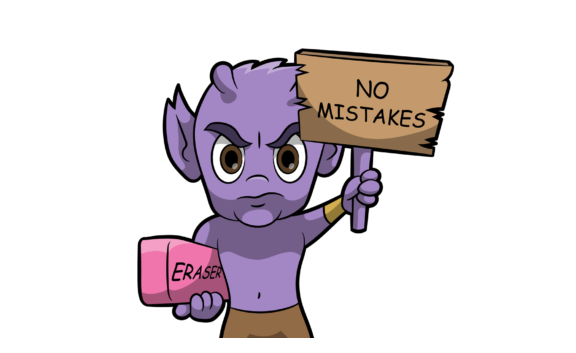
Around age 11, I somehow hired an entire crack team of new managers – headed by the perfectionist.  Working for him were other high-performance managers like the “A” student, the athlete, the achiever, and the Pharisee. Performing and achieving somehow felt so safe – indeed, I stayed in that mode for about 30 more years!


The “A” Student”
The Achiever
The Athlete
The Pharisee

These characters served me so well – until they didn’t. It sure seemed like, with them working so hard, they could somehow find a way to make sure I never make any mistakes and therefore would never be unloved or rejected. It turns out that Love doesn’t work that way. But 11-year-olds still have a lot to learn about Love.

There are many manager or protector roles that we can take on – the worry wart, the future tripper, the planner, or the control freak. And then there is everyone’s all-time favorite: the inner critic – that almost undetectable whisper within that tells us we are going to fail, that we’ll never be good enough. Even that inner critic is a good part of ourselves that means well – trying so hard to protect us from the pain of feeling rejected or unwanted or unloved. Probably there was a time when that voice helped us survive. Eventually, it becomes a torment.

It’s so easy to let our managers be in charge – or live in the illusion that they are in charge. For long periods of time it feels like success! Life seems so great.

Then something truly hard happens, and it begins to feel like our cozy little life is slipping away. We notice that one of our exiles is escaping; we begin feeling bodily sensations or emotions that (according to past experience) are a stern warning of imminent danger – a serious threat is at hand.

In those situations, some of us tend to double down on our managers. I will try even harder, impose even more discipline, become blaming and demanding with others, cling desperately to control – you know the drill.

And then it fails.  The alarm goes off. Security breach. The exiles are on the loose.

Enter the firefighters.

They will put out the fire – whatever it takes. They tend to be “bad boys.” They don’t mind doing all kinds of property damage, so long as they save the exiles and get them back in their cages. Mission accomplished.

It very much reminds me of the hotel scene in Ghostbusters when they capture their first ghost – trashing the ritzy ballroom in the process. When the manager protests paying their fee, they say, “That’s okay, we can just put it right back in there…”  And the manager relents.

Within my own inner “family” of characters, I have more benign firefighters like the daydreamer or the disarming smiler or the jokester. I have more intense ones like the nail biter, the binge eater, or the drinker. Addictive behaviors of any kind definitely fall in the firefighter category.

The Binge Eater

Looking back to my teenage years, my inner perfectionist was in charge most of the time, but when he and his team got exhausted, I spent hours on end escaping into video games. The escapes changed and morphed over the years. Eventually, life got hard enough that none of them were enough. That is when I realized I needed to reach out in new ways for help. So I did. My life has been transformed by the new relationships and new adventures.

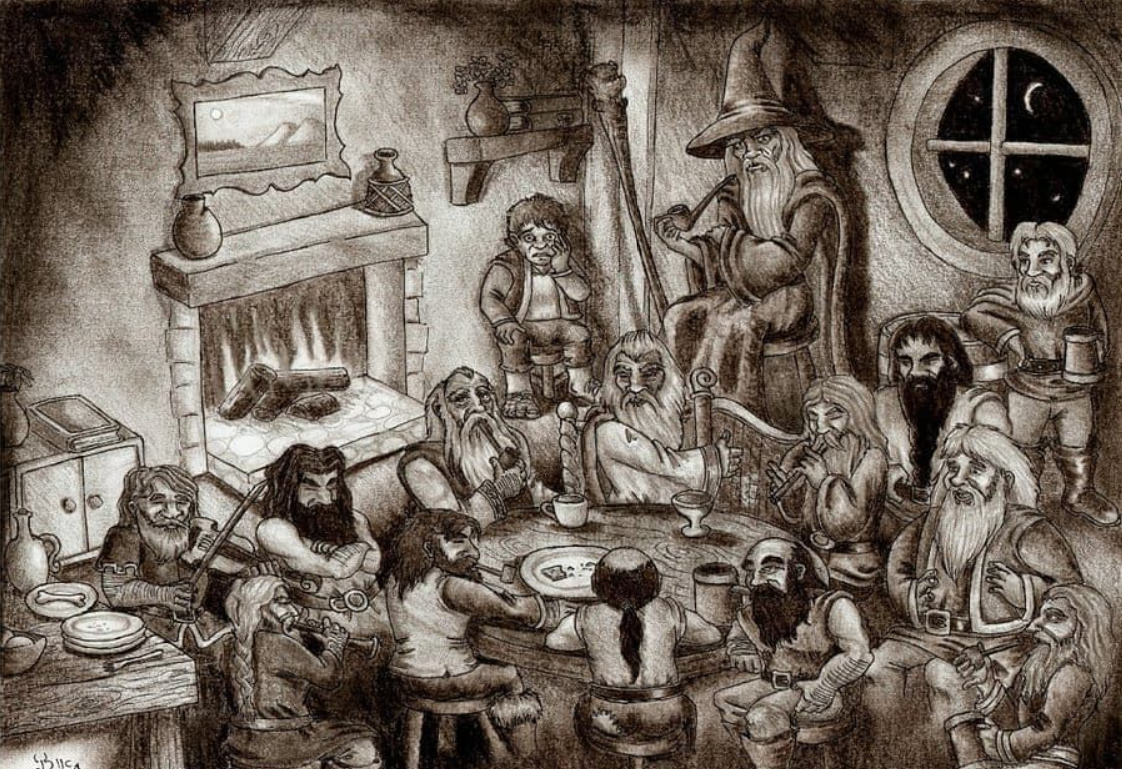
Yes, during this time of COVID-19, I have definitely had moments in which multiple managers or multiple firefighters began showing up unannounced – just like the dwarves at the beginning of The Hobbit.
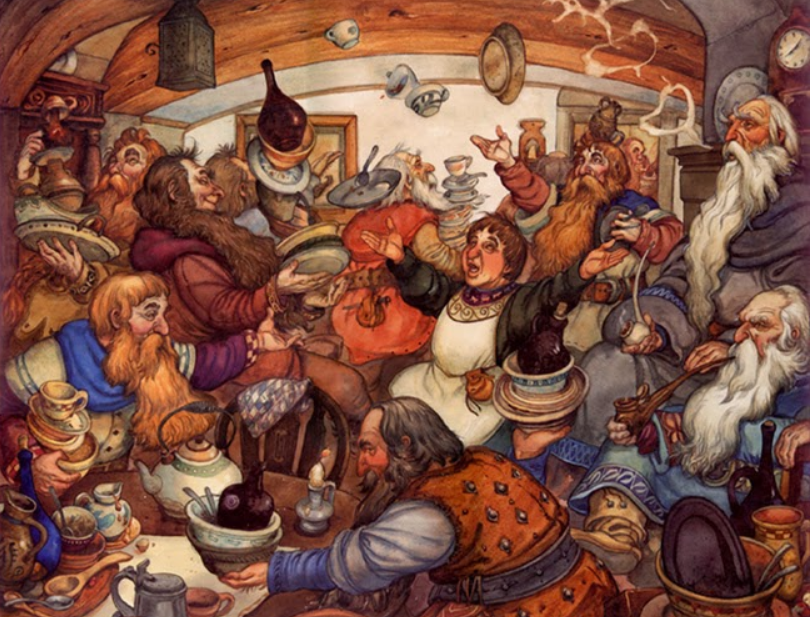
If you are familiar with that delightful tale, you know how Bilbo Baggins (reluctantly at first) shows hospitality to his intrusive guests. That unexpected party ultimately opens an opportunity for Bilbo to embark upon an amazing adventure there and back again that forever changes his life. All would have been different had he driven the dwarves away in disgust.

Here we find an important lesson. These various “parts” within us, these characters or members of our inner family system are not our enemies. They’re sincerely trying to help us; they just don’t know how. This is true even for those parts of the human heart that act out in the form of sexual fantasy or lust or pornography. They are trying very hard to meet a legitimate (non-sexual) need in an illicit way. Human urges may need a lot of untangling but when we get to the roots we will discover something very good.

To be sure, like those dwarves in Tolkien’s tale, our firefighters and managers are not the best ones to put in charge. Their self-interest and narrow-mindedness will get in the way. But if properly led and rightly ordered, they are wonderful travel companions and fierce allies.

The first step, I have found, is gently noticing. Just notice that all these characters have suddenly shown up. Then wonder at why they are really there…

Some of the questions I find helpful in these situations: What’s going on? What am I really feeling right now? Is there something my heart needs right now?  I find when I slow down and truly allow myself to be in the present moment, I often begin weeping, not realizing just what a “party” my heart was having and I wasn’t paying attention to. I also find that it often helps to phone a friend and connect, to begin naming what is happening in the depths of my heart, describing the “unexpected party” of managers or firefighters who suddenly showed up.

In IFS therapy sessions, therapists will actually ask questions of these managers or firefighters. Why are you here? How old are you? What are you so afraid of? When these different characters within ourselves are seen and noticed, heard and understood, thanked and appreciated, then they behave like most real people would in those circumstances – they become more open and docile, willing to be led and guided by someone who is trustworthy. They step aside and allow the exiles to be truly cared for.

Truth is, they don’t actually like their job – it’s a crappy role they were forced to take on at a very young age. They would very much like it if a mature and wise person would step in to lead and direct. But they need lots of reassurance that it’s going to be safe – that the exiles won’t be hurt in the process.

That is why the self-loathing and self-shaming is so toxic. It increases the inner conflicts. Our managers will then become even more overbearing, and our firefighters become that much more sly and cunning. These inner characters are holding on to parts of ourselves that need to be saved. They are good and faithful servants in their own misguided manner. They need to be integrated and unified, not cast aside.

We may feel frustrated that old behaviors come knocking at our door, unwelcome and unexpected. But we can learn empathy and kindness. We can allow the Risen Jesus to enter the scene with his “Peace be with you.” Then the unexpected party can truly become a the beginning of a great adventure. The Paschal Peace of Jesus will begin to give direction and right order to our exiles, our managers, and our firefighters. He will gather and integrate and heal what had been scattered and divided and damaged.

Yes, sometimes this quarantine is really hard. But don’t let it get you down. See it as an opportunity to have tea with some old friends. Invite Jesus to the party and let him give his guidance and wisdom. Accept the help of other friends along the way, and don’t let the unruly dwarves get the best of you. It’s an invitation to a great adventure, one that will lead you to discover your deeper destiny, one that will heal your heart and allow the glory of Jesus to shine.

The Need for Accompaniment

Accompaniment is perhaps the single greatest need in the Church today. With it, amazing growth and renewal happens. Without it, Christendom crumbles and collapses before our eyes.

Unfortunately, “accompaniment” has become a buzzword. Buzzwords can be confusing and unhelpful. So we need to be clear about what we mean by accompaniment in the life of Christ and his Church.

To be accompanied means that someone commits to us in a relationship that shows love and compassion to us in our need. To be accompanied likely involves one or more of the following: to be seen, noticed, heard, understood, loved, delighted in, celebrated, encouraged, included, affirmed, cared for, walked with, nurtured, fed, sheltered, protected, defended, touched in a meaningful way, comforted, calmed, soothed, taught, guided, counseled, corrected, chastised, or even disciplined. When I am accompanied, I experience at a profound level that I matter, that I am not alone, that I am known and loved, that I am safe and secure, that I belong to a reality larger than myself, and that all will be well. I feel free to be truly myself, without having to pretend or put on a mask. I experience an openness and eagerness for all that is true and good and beautiful.

We are familiar with figures in life who provide this kind of accompaniment: mothers, fathers, spouses, friends, nurses, teachers, coaches, mentors, counselors, and clergy. Or, perhaps we should say that these people can provide these things. Sometimes they do the opposite by using or abusing, controlling or manipulating, neglecting or ignoring.

We live in an age very much like that of the early Church, an age in which the greatness of the Roman empire was fading fast, an age in which marriage and family life had broken down. Jesus urges his disciples to look around them and notice that the fields in the world are ripe for the harvest (John 4:35). They have just stumbled upon his conversation with the Samaritan woman at the well. It turns out that the world is full of people like her, people with a deep hunger and thirst, people with a need to be accompanied. Jesus offered her that accompaniment: noticing her, seeing her, understanding her, caring for her, awakening her thirst, and inviting her to embrace the truth. The disciples arrive and ask Jesus about lunch. He explains to them that his food is in doing his Father’s will. He depends upon his Father. He needs to be accompanied by his Father.

This is the first and most important lesson of accompaniment: We all need to be accompanied. This is not simply a need we have as children; it is a human need by God’s design. We are made in his image and likeness. God is love. He is not a solitary God. He is an eternal communion of persons. The call from God is to share in his eternal life, in that eternal communion of love – a far cry from isolation and independence. Certainly, good parents help us to become strong and free and responsible – but hopefully still in a way that knows how to depend upon God and depend upon others. Love of God and love of neighbor are the two great commandments. Love is mutual, not one-sided. If we are not receiving love in a vulnerable way, we have not yet learned how to love.

We begin life utterly vulnerable and dependent,  looking to our primary caregivers, not only for food and clothing and shelter, but for all the other emotional and spiritual needs mentioned above. In God’s plan, these caregivers are a mother and father blessed and united by God in a stable and lifelong covenant of marriage. These days, it is exceptional indeed to find an environment in which mom and dad are intimate friends of God and secure in their covenantal love for each other. In far too many cases these blessings are lacking altogether, or they are only a well-maintained façade, masking misery and dysfunction.  No wonder there is such a gaping need for accompaniment! The fields are indeed ripe for the harvest.

Here in the United States, there are a couple of added challenges. First, there is the false sense of “independence” – which easily becomes an ungodly self-reliance. Is our nation not built upon rugged individualism? We’re just supposed to pull ourselves up by our bootstraps, suck it up, and make it happen. That seems to work so well – until it doesn’t, and life collapses on us. That certainly happened to me – a story for another time.

Secondly, there are many in my generation who became “latchkey children” or “lost children.” Parenting books, from Spock to Ferber, positively encouraged moms and dads to raise “independent” children, to leave even babies alone in their sadness and fear so that they could learn how to “self-soothe” (as if this is something anyone can teach himself!). In other cases, circumstances forced children to be on their own, whether due to divorce or due to dual-paycheck households. When not consistently accompanied through childhood, children certainly learn to be independent – but not necessarily capable of receiving and giving love in a joyful and healthy way.  Many of us graduated to becoming lonely and isolated adults, uncertain how to form healthy relationships. Many more of my peers have emerged as the legendary “helicopter parents” of this generation, fueled by fear, and swooping in to rescue their kids from any real risk or responsibility (or freedom or growth). We are perhaps even more accurately described as “Zamboni parents” or “bulldozer parents.” Still unhealed and insecure from our own lack of accompaniment, and still unable or unwilling to admit our need for it, we are determined that our children will never face danger or risk alone – or at all.

Genuine accompaniment is all about gradualness – aiding someone, step-by-step, to become truly strong and free, capable of receiving and giving in authentic human love. Genuine accompaniment fully respects freedom, nurtures growth, and invites to greater responsibility. Most of us tend to one of two extremes. Either we meddle and micro-manage, or we stay aloof and inconsistent.

Genuine accompaniment is an art – these days, a rare art. I find that those who are best at it are those who themselves have received it – and who are committed to continue receiving it. Think of Jesus, who received accompaniment for the first 30 years of his life – and even then was regularly pulling aside from the crowds to reconnect with his Father in prayer. Jesus never ran from being vulnerable and dependent.

Most of us avoid being vulnerable and do not like to admit that we “need” at a such a deep human level. Receiving is perhaps the hardest human thing to do. If we do not learn to, we wind up grasping or seizing, using or taking, controlling or manipulating.

The Church is the Body of Christ. The lack of accompaniment today is a true crisis. Until each of us learns how to receive the accompaniment we need, we won’t know how to give it. Our members will keep drifting elsewhere in their ache for accompaniment. We lament that our young families are turning instead to athletics, or to yoga, or to social media. Don’t they know what they are missing by leaving the Church? True, none of those other things will fill the void they are experiencing. They are turning there because they find some version of accompaniment. When will we allow ourselves to learn and to begin turning our parishes into places where authentic Christian accompaniment happens – starting with ourselves? I know that if and when we do, the growth will be every bit as explosive as it was in the early Church. The fields are indeed ripe for the harvest.

The Lost Coin – Wisdom from Gregory of Nyssa

You are a beloved child of God. He made you good and beautiful, in his own image and likeness. You are cherished by him, chosen by him, and precious to him. He desires your heart and longs for you to be intimately close to him. He doesn’t want your achievements and accomplishments; he wants you – all of you. His greatest joy, shared by the angels and saints in heaven, is when you turn to him with all your heart and receive his total and unconditional Fatherly love for you.

If you are like me, you know those truths on an intellectual and theological level, but struggle to believe them and receive them with all your heart. In our more reflective moments, we painfully realize the magnitude of our sinful choices. We have damaged our relationships with God and others and self. We have become lost. There is, in the end, no denying that painful truth.

In the menacing shadow of our sinfulness, we fear that we are no longer lovable. Like Adam and Eve in the garden, we hide from love and protect ourselves. We minimize our struggle and our pain in the presence of others and of God. In resisting vulnerability, we “safely” block out the love that is being freely offered to us. Then we end up feeling even more alone and unloved, and the cycle of sin begins anew. In the depths of our heart we yearn to be loved for who we are, but in our fear of rejection we dare not dream that dream.

In the 300’s, Saint Gregory of Nyssa offered a profound reflection on the parable of the Lost Coin in Luke 15. Gregory has to be one of the most overlooked and underappreciated Christian authors of all time. He was an intellectual giant in the fields of philosophy and theology. In an age that was much confused about the Trinity, he offered keen insight into how it is possible for God to be an eternal communion of love, three persons yet truly one God. Others were thinking in terms of separate substances; he was thinking in terms of relationship and an eternal communion of love. He “got it” about God.

He also really “got” the full truth of what it means to be human beings made in God’s image. He takes sin quite seriously, yet views our sinfulness as our condition. It is not who we are. It is not our identity. In our brokenness and distress, we tend to identify ourselves with our sins – but that is not how God sees us. We remain his precious children. The divine likeness that we bear is smeared and soiled, buried and hidden – yet remains what it always was. We are always God’s precious children.

That is where the image of the Lost Coin comes in. We are made in the likeness of God. Just as a coin is stamped with the image of the emperor or king, so are we stamped with God’s own likeness. Just as a coin is made from precious metal, so are we made “very good” in God’s design.

He entrusts us with a universe that is resplendent with truth and goodness and beauty. And we soil and tarnish it. By our own free choices, we choose lesser goods rather than real relationships, and we sully ourselves.

Yes, the shiny coin held proudly in God’s hands chooses to slip out and dive deeply into the muck. In its outward filth and stench, the coin becomes lost and barely recognizable for what it is. Yet inside it remains what it always was. In the words of Jesus, “The Kingdom of God is within you” (Luke 17:21).

Without the grace of Jesus, we cannot recover that lost coin, that inner goodness and truth and beauty that is yet within us. Like the woman in the parable, we can find other coins. We can do good and grow in virtues. We can achieve and accomplish and serve. But, unaided by grace and faith, that one coin will always elude us. Only when we light the lamp of faith and call on the aid of Jesus can we find that lost coin.

Even though sin is secondary, its effects are very real. We will need the purifying grace to Jesus to cleanse the mire and filth that has covered over the coin. It can be quite painful to be vulnerable and surrender ourselves to that purification and cleansing. But then the inner beauty of the coin – always there and never really lost – shines forth once again. At its core it remains the precious metal that it always was. It has lost none of its true worth. It still bears the mark of the King of Kings.

As Luke tells us, the angels and saints are eagerly cheering us on. There is more rejoicing in heaven over one sinner who repents than over all the others who (think they) have no need of repentance. The citizens of heaven yearn for those moments when the light of Christ breaks through, when we “come to our senses” like the prodigal son and surrender ourselves to our Father’s love. They erupt into joyful cheers when we once again believe the full truth about ourselves – that we are precious and beloved children of God, who belong in the house of our Father. Then the healing grace of Christ restores us, and his glory shines forth for all to see.


(For those wanting to read more, Gregory’s reflection on the Lost Coin is found in Chapter 12 of his work On Virginity)

Panic Rooms

Do you have a panic room?

Unless you’re on the wealthy side, you probably don’t have a high-tech security vault that you can escape to in the event of home invasion, zombie apocalypse, visits from the in-laws, or whatever other threats you may experience.

However, many of us have spiritual or emotional “panic rooms” that we flee to when we feel unsafe or threatened, anxious or confused. That has definitely been part of my story.

My childhood was not always easy. My stepfather could be one of the funniest and funnest people to be around. Other days, he would get into fits of rage, yelling and screaming, name calling, belittling, pushing or shoving, slapping, and the like. God and others have helped me to find healing for the fear and shame that I internalized, yes, even to find deep compassion and mercy for him in his woundedness. I love him and forgive him.

It has been a long journey to make the transition from victim of trauma to lifelong survivor to true freedom as a wise and joyful son of God. Well, okay, I can’t claim to have arrived at the last one, but it’s a work in progress.

Our human brains are wired to survive. Like all mammals, we all have the “fight or flight” instinct – or in other cases, the impulse to “freeze” like an opossum. Whether in the savagery of nature, the horrors of the battlefield, or the hidden hells of suburbia, these hardwired instincts serve to save us, protect us, and help us to survive and endure.

But there is a problem. Our brains can get stuck in “survive” mode, keeping us from becoming who we are destined to be. We are more than mere mammals. As human beings, beloved sons and daughters in God’s image, we are called to abide in love and truth, to experience the joy and peace of communion with God and others.

Those who experience full-blown PTSD can be blocked significantly from this experience. They are often numb. They cannot feel what they feel; they struggle to realize what they really need. They become disconnected from their surroundings and their loved ones. They often plunge into addictions as their interior battle rages on.

Even if we don’t have PTSD, I think a large number of us, in one way or another, run away from our more painful emotions or fail to seek out what we truly desire and need. We hide out in our panic rooms.

As a child, I had various panic rooms. I would hide under the covers of my bed or talk with an imaginary friend. I was especially adept at daydreaming. I probably needed daydreaming as a way of getting through the traumas I was experiencing. On the plus side, I also used my imagination creatively, and became a highly reflective and independent person. But I also became an isolated person. It was a struggle to focus in school or during games on the playground. I was disconnected and lonely.

As I entered adolescence, things shifted. I suddenly discovered determination and a laser focus. In my longing for fatherly affirmation, I entered on a path of overachieving – whether in academics or in athletics. The false god of achievement and success haunted me for a long time. But that is a different story for a different time.

I discovered new “panic rooms.” I spent thousands of hours playing video games. It was the ultimate fantasy escape. I especially loved games that were challenging, but which I could eventually overcome through diligence and ingenuity. I would get a thrill from each level of achievement, and a marvelous sense of accomplishment with the praise and accolades at the end of the game. Sure, there were dangers and threats, but nothing the reset button couldn’t fix. It was a safe little universe with predictable rules. And best of all, I didn’t have to think about or feel any loneliness or shame or fear.

Another “panic room” was turning to comfort food. Later in life, I could add alcohol to the mix. I might have a stressful day, but I would know that at the end of it I could fix myself a drink or eat something I liked. For years of my life, I carried extra weight (not just physically, but spiritually and emotionally as well).

Different people have different panic rooms: indulging in food and drink, watching television, pornography, masturbation, smoking, fixing other people’s problems, getting yet another tattoo, intense exercise, careerism, and many more. Some are more destructive than others. Sometimes what is a healthy hobby for one person becomes a destructive escape for another.

Panic rooms are not a bad thing in and of themselves. People spend thousands of dollars on them for a reason. But consider their real purpose. Whether the citadel on ship or a safety room in a mansion, the purpose is to be a temporary place of safety and refuge. It is supposed to be a three-step process: (1) Retreat into the place of safety; (2) Reach out for help; (3) Come back out into the world safe and secure.

Some of us keep hiding in our place of perceived “safety.” We are too stubborn or scared to ask for help, or too proud to admit that we need it. So we stay stuck in isolation, loneliness, or addictions. When we learn instead to reach out to those who are willing to help us, we can leave behind our panic rooms and enter healthy and safe relationships in the big and beautiful world outside. Panic rooms are great for surviving a real threat. But they are no place to abide in.

en_USEnglish
en_USEnglish