
Standing in the Gap

Holy Week invites us into Hope.

Hope sounds lovely, until you actually get into the hoping. There is an often painful gap between what is and what is yet to be!

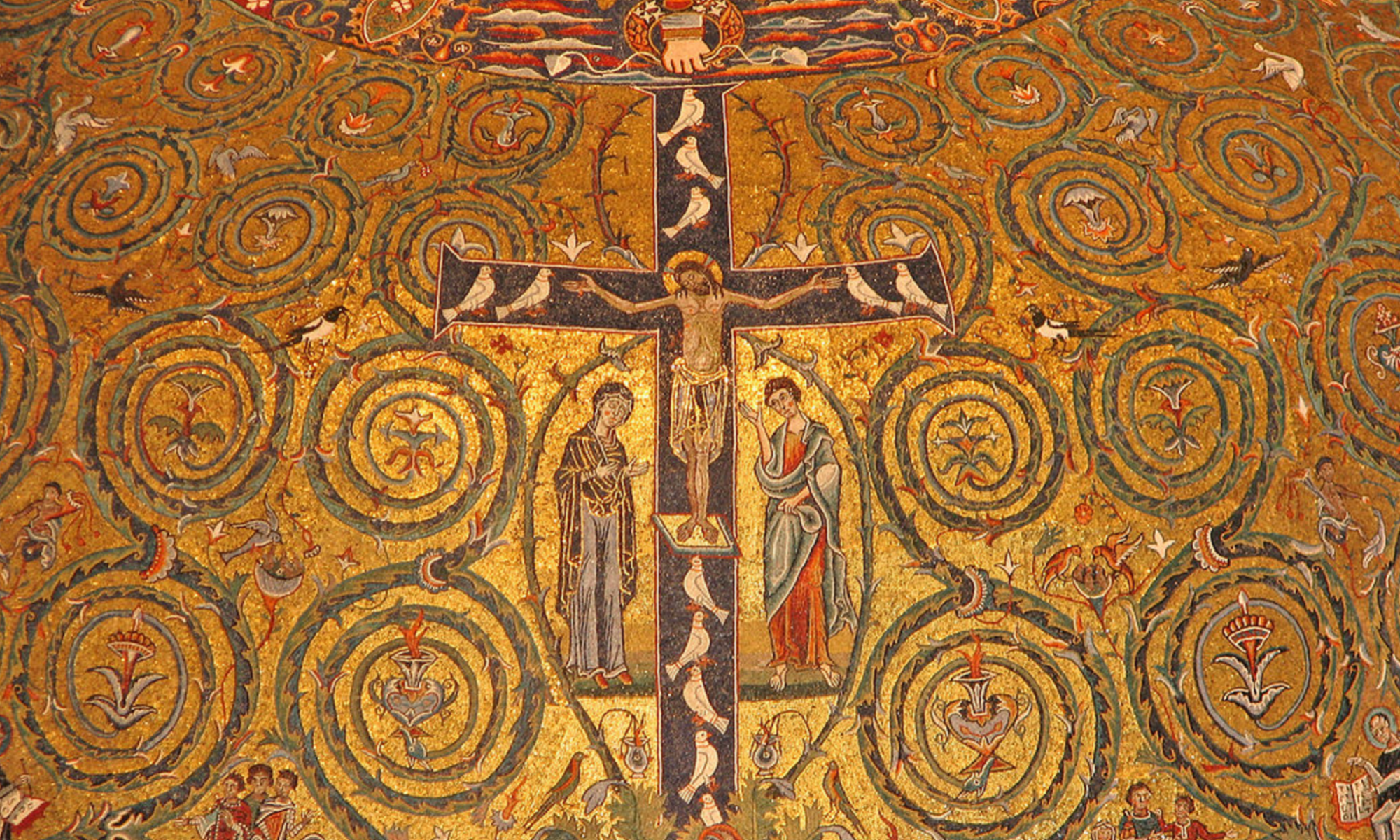
Jesus literally stands in the gap. He is the one mediator between the human race and God, who eagerly desires all men and women to experience his fullness (1 Timothy 2:4-5). Jesus burns with desire to celebrate the heavenly Passover and so share God’s abundance with his beloved children (Luke 22:15). He suffers intensely in his longing – because God’s chosen children so often do not desire what he desires for them, causing him to weep over our hardness of heart (Matthew 23:37).

Jesus stands in the gap between heaven and earth, He stands especially with the poor, the outcast, the abused, and the abandoned. In his Passion, he willingly plunges into the depths of human misery, uniting himself with all the agony that any of us have ever experienced.

My understanding of the Passion shifted significantly over the last decade as I began experiencing the healing love of Jesus. I used to focus more on how much Jesus suffered physically, how hard he tried, or how much he sacrificed. Looking at the Cross would sometimes cause me to feel that I needed to be better or do more. Without realizing it, I was restlessly striving to be “good enough” so that I could be worthy of love.

Jesus reminded me how his Passion is much more about union. He brings his love and truth into all the darkest and most chaotic moments of human existence. He willingly unites himself with the particular sufferings of each member of the human race. He brings the perfect communion of his eternal Love into each and every one of those places. We are no longer alone in our misery. Love wins.

Little by little, he’s shown me how he was always there in my most agonizing moments – not only my worst sins but also all the moments in which I ever felt terrified, ashamed, powerless, alone, abandoned, neglected, or unprotected. Some of those moments were quite early in my life. And then they’ve been reinforced again and again in no shortage of agonizing situations. It’s a very familiar story to me to feel misunderstood, abandoned, and left alone and unprotected in the face of a massive threat. In those moments, it feels not only like I’ll be alone and unprotected in the face of overwhelming chaos, but that my very lovability is on the line as I walk on the edge of that knife. Impossible pressure. Exhausting to try so hard. But so familiar to me.

On any given day, present-day struggles can still elicit embodied memories of all the times I have felt that way. In comes the seduction of the evil one for me to seize control of my life and manage things for myself. That may come in the form of a restless pressure to produce or accomplish. When that gets unbearable and exhausting, then I am prone to escaping and avoiding and self-soothing. And if I begin to feel violently tossed around in that spin cycle, I am even more prone to isolate and not want to be seen and known by others (how could they love me now?). Unchecked, that isolation and fragmentation become a living hell.

I’ve learned from neuroscience that these initial reactions happen automatically and instantly (in a fraction of a second). I’d so much rather not have the reaction in the first place. But that’s not how the brain and nervous system work. God hardwired us so that our bodies can remember, adapt, anticipate, and react for survival – before the rational brain even gets involved.

What has changed in me, little by little, is a growing gentle awareness of reactions as they start happening, and a growing invitation from Jesus to be one with him in his Passion – even when I can’t just shake it off. On retreat this summer, he showed me what it was like for him when every one of the apostles forsook him and fled (Matthew 26:56). He showed me the union between him and me in every moment of abandonment in my life. He didn’t stop these moments from happening, but he was always there, loving me and choosing me. If he and I are one in the Passion, all will be well, and all manner of thing will be well (even if it feels awful in the tension of the present).

The good fruit of this invitation is most obvious to me when he invites me to stand at the Cross of others. In those moments, I get to weep with those who weep, and to witness what it’s really like for them. I get to stand with them in the gap. I know this has been a great gift to many abuse survivors, who often feel like they are unwelcomed and unwanted in our churches. The community and/or the clergy often don’t want to be burdened with the full truth, the messy symptoms, or the painful tension of what it is like for some of the suffering members of Christ. There are times in witnessing the suffering of others that I simply feel the ache of the love of Jesus on behalf of that beloved child of God. Sometimes there are no words, but only tears or groans. They know the difference between someone standing at the foot of their Cross and someone forsaking them and fleeing.

Jesus invites us as beloved disciples to stand with him at the Cross on Good Friday (and to stand with others who are painfully united with him as members of the suffering Body of Christ). He invites us to stand in the gap of Holy Saturday – trusting in his promise of goodness and resurrection and perhaps having no idea how all will be well.

Few do. In the words of the poet T.S. Eliot, “Human kind cannot bear very much reality.” We prefer to flee from the tension of Hope.

Early in my healing journey, I thought that healing would make the pain and tension go away. Had I known that I would suffer even more, I may have fled! Healing is not always the elimination of tension or pain.  It’s an ongoing encounter with God’s love and truth. It shatters our loneliness and brings you and me ever more deeply into love and communion. If we look at the Saints, we see that this lived communion actually brings more suffering, even as it brings more joy and peace.

One suffering I never anticipated was seeing with ever greater clarity what is diseased and unwell in Christ’s Church. The more I heal, the more clearly I see unnamed abuses, an unwillingness to let go of power structures (not just among clergy but also in parish communities), an unwillingness to be with others in big and intense emotions, a preference to spiritualize or intellectualize, and a contempt or marginalization of people who don’t fit the culture of our comfortable club.

I know very few Christians who are really great at standing at the foot of another’s Cross. Sometimes I’ve felt judgment or contempt on this point, but more and more I realize how much it makes sense. This is where the Church was during Holy Week, when Jesus willingly entered his Passion. All of his chosen priests forsook him and fled – just as I often have. One, apparently, came back on Good Friday to stand with the three Mary’s at the foot of the Cross. Mary Magdalene and a few of the faithful women came to the tomb Easter morning (amidst agonizing tension and loss), while the chosen leaders of the Church cowered in the upper room, and most others were nowhere to be found.

I have huge Hope and imagination for what the Church could be like, as I and others begin to embrace the invitation to stand in the gap. This gives me a sense of what Martin Luther King, Jr. must have felt when he gave his “I have a dream” speech. It’s exciting to see Hope surging in the hearts of some. But it’s agonizing and paralyzing when others exhibit hostility, passive resistance, or apathy when invited to the wedding feast.

Meanwhile, you and I are invited to stand in the gap – just as Moses stood between the stubborn and hard-hearted Israelites and the God who was leading them into so much more. No amount of rational arguments or meticulous strategic planning will change people’s hearts. You can’t coerce someone to give up their precious self-preservation and survival tactics. I was so struck on retreat this summer at how Jesus lovingly chose the disciples and told them repeatedly how much they were worth in his Father’s eyes (Matthew 6:28-30; 10:31), even as he told the truth to them about their fear and their turning away from him. He knew that they wouldn’t be ready until they were ready, and that some of them would never want it.

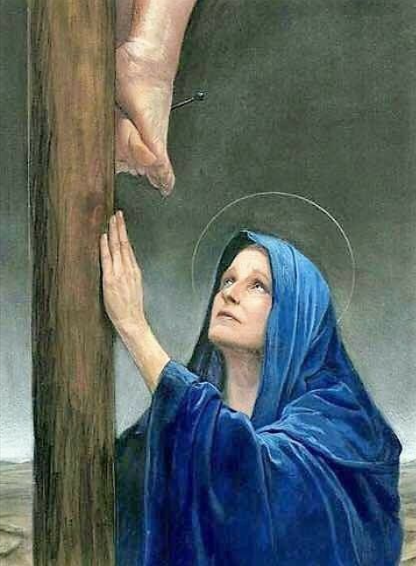
Mother Mary is the ultimate model of Hope. At each moment of her story, she stands in the gap, waiting for God’s promises to unfold. She sees with clarity the flaws and resistance of the apostles, and stands patiently in their midst, trusting and waiting for the divine goodness she knows will ultimately emerge. And it does.

Jesus invites you and me as beloved disciples to join her and the Saints of every age, to stand in that gap, to abide patiently in the tension of already-but-not-yet, to taste and see how good God is while waiting together for so much more.
Embracing Paradox

I’ve been appreciating Brené Brown’s newest book (Strong Ground). She names some of the paradoxes that wise and courageous leaders learn to embrace.

I immediately resonated with the chapter on the importance of “negative capability.” It’s a concept she found in a letter from the poet John Keats (1795-1821). Keats praises this capacity that he perceives in great men like Shakespeare – “when a man is capable of being in uncertainties, mysteries, doubts, without any irritable reaching after fact and reason.”

There are moments when abiding in love and truth is particularly painful. These are the moments of the in-between, when we have only partial insights or unsatisfactory options. We feel the pressure to make something happen and get away from the tension as soon as possible. It becomes almost unbearable to abide and wait for fuller truth and goodness and beauty to emerge.

To be human in a fallen world is to live in this tension. We are stretched by two seemingly incompatible truths. On one side is the harsh reality of impermanence. As much as we attempt to deny it, our earthly existence is fleeting. Nothing gold can stay. On the other side is the nonstop human tendency for meaning-making. We insatiably interpret what is happening and why – a task that our brains engage both consciously and unconsciously, even while we sleep! We don’t like waiting to receive the fuller truth. We both desire and need to belong securely and trustingly to something solid.

To put the paradox differently, our human hearts were not created for endings, and everything good in this world comes to an end. What can we do?

As Brené Brown puts it, “Negative capability is a difficult muscle to build.  We’re wired to resolve tension and seek certainty.  This capability requires the ability to reach inward toward stillness rather than out toward counterfeit facts and reason.”

“Be still, and know that I am God” (Psalm 46:10).

Even in turning to God, we are likely – in our urge to escape the pain of this paradox – to engage in yet another form of irritable grasping or controlling in the face of eternal mysteries that are never for sale, and will repel any attempts as seizing or sieging.

I’ve been reading the comments of a few thousand participants in the listening sessions I facilitated for my diocese this fall. You can feel attempts at grasping among many of our longtime parishioners who (in a world where everything has changed so much and so rapidly) expect their parish church to be the one place where nothing changes – only it already has, many times over. You can feel the grasping in the comments of hundreds of others who expect everyone else to adopt their political or liturgical ideology. If only we all thought this way, or all did things this way, our pain and suffering would go away. They forget the flaming sword that will not permit us to return to Eden (Genesis 3:24).

I empathize with their fear and restlessness because I know those movements in my own heart! I have my own versions of grasping or striving or hiding when the tension feels unbearable.

The real invitation is go deeper into the paradox without trying to escape it, nor to escape the tension found therein. This is exactly what Jesus and Mary do on Good Friday and Holy Saturday.

Jesus, true God and true man, does not erase or eliminate the dreadful consequences of our human freedom. Rather, he brings eternal love into the depths of our humanity, loves us to the end, and invites us back into relationship – with his Father and with each other.

His mother Mary does not do what so many churchgoers do when feeling the powerlessness of this paradox. She offers no fixing, no advice, no comparisons with others who have it worse, no backing away from his Cross. She stands with and witnesses.

Her with-ness and witness continue on Holy Saturday, a day of Sabbath – a day of stillness and rest. “Be still, and know that I am God” – these words sound so pleasant and peaceful in other settings. Not so much on a day of Sabbath rest in which your Son is buried in the tomb, and you are utterly powerless. Even then, rather than grasping or escaping, Mary embraces the promises of Jesus and waits in Hope amidst the paradox, not knowing how he will fulfill these promises until it actually happens.

Even after the Resurrection and Ascension, when so many questions remain unanswered, when the disciples are still downcast and doubtful, she abides with them and prays with them for nine days (Acts 1:10-14). They learn from her the capacity for passion and compassion that she exhibited so beautifully at each earlier moment of her discipleship, a capacity which grew and deepened as each mystery unfolded.

Yes, prayer and liturgy and Church are all part of our human response to this painful paradox – not so much being the answer itself, but the context in which The Answer can be encountered, again and again, stretching our capacity to receive – which also means stretching our capacity to suffer! The suffering of the Saints does not diminish as they grow closer to God. The greater their longing, the greater the gap feels between them and the living God. The greater their willingness to stay connected to others, the greater their capacity to suffer with. Show me even a few such saints, and I’ll show you a church community that is thriving on mission!

I find Brené Brown’s words both comforting and emboldening: “Resist the urge to reach for certainty where it does not exist. The longer we can hold that paradox, the greater our capacity to see and honor one another in our fullness AND in our contradictions.”

Faith and Christian community are essential, not as an escape from the tension of this world, but as a shared receptivity of the eternal, and of the mystery of each human person. It is in abiding relationship and receptivity that we can glimpse and taste the goodness of the Kingdom of God, and can persevere in our sojourning until this world definitively passes away, when Jesus comes again with full righteousness, wiping every tear away and abolishing death forever.

Learning from Joseph

I have to…I have to…I have to… Those words are intimately familiar to me, whether in my workaholism, my perfectionism, my aggressive driving, my people-pleasing, or my shame at “failing.”

For me, it’s not so much the words as the intense sensations in my body – the pulsing energy in my chest, the tension in my shoulders, and the drivenness that pushes forward and pushes through. Even in those many moments when I am a calm haven for others amidst the storm, if I pay attention, I am sometimes holding an enormous tension within.

Saint Joseph has shown up often this past year, teaching me a different way – a way of trust and surrender, a way of poverty and depending, a way of obedience and peace.

This January, I was back in Florida to assist as one of the chaplains at the John Paul II Healing Center for the “Holy Desire” priest retreat. Each day, Bob Schuchts and Kim Glass invited us into a human sculpting exercise. It’s an improvisational group experience in which the participants interact to embody a scene. We begin with familiar stories from Scripture, such as the birth of Jesus at Bethlehem or the baptism of Jesus in the Jordan River. Then we shift the scene: instead of the Holy Family, we see a dysfunctional family with a strained marriage; instead of Jesus as the beloved Son of God in the waters, we see a struggling sinner buried beneath the burdens of shame and fear and confusion. The many different characters attune to their own intuition and to what the others are doing as they interact to form a human sculpture. Characters include the Father, the Holy Spirit, various humans, angels, evil spirits, Mary, and Joseph. You never know what will happen – each sculpt is unique, and it’s surprising how the Lord shows up.

Each day, Kim invited me to be Saint Joseph. Having a devotion to Joseph is one thing. Imagining being him in a living scene is another!

As typically happens in these human sculpts, we all felt a sweet connectedness when Mary and I arranged ourselves along with the Trinity and the angels at the birth of Jesus. As Joseph, I felt both a poverty and a fullness at one and the same time. In terms of skill or power or capacity. I had nothing to offer. Yet I felt how much I mattered in God’s design. I was very much a father, even though all my fatherhood was from the Father. It felt easy because it got to receive from a Father so close at hand. It seemed silly to try to make anything happen on my own, when such abundant resources were right there. I felt a warmth, a calm, and an inner peace.

We shifted to scenes later in Jesus’ life, and to the scenes involving other human characters. I became a heavenly protector, no longer living my earthly life as a carpenter, but still intimately connected with Jesus and with all who are one with Jesus. For those of you less familiar with Catholic devotion, Joseph is the patron and protector of the whole Body of Christ. Just as he was chosen by the Father to be a father and steward in Jesus’ life, he continues to play that role for the entire household of the Church, and for all God’s children in Christ.

As the scenes shifted, my inner peace remained. There was enormous agony in the room as the human characters became cut off and suffered in torment. For many, it felt like those struggling would never be free from the increasing torment by the evil spirits.

Meanwhile, I continued feeling poverty and peace simultaneously. I empathized deeply with the human suffering in front of me, and remained as close as I could, while fully honoring their freedom. The Father never barges in or coerces, and neither would I.

I felt powerlessness and power both at the same time. I was doubly powerless – from within and from without. From within, I humbly acknowledged my poverty, my radical dependence on and obedience to the good Father who was always sustaining me and ready to work through me. From without, I felt powerless so long as and to the extent that the other human characters didn’t desire God’s help.

But I felt doubly powerful, and a deep and peaceful sense that “all will be well, and all manner of thing will be well.” I continued feeling the strength and tenderness of God the Father, flowing in and through me as an inexhaustible supply. I felt a sense of something powerful about to happen, any moment, in the life of the child of God who was agonizing in front of Mary and me. Michael the Archangel was near at hand. In a split second, both he and I could step in with the power of God, and all would shift. With the smallest sliver of desire or the tiniest opening of receptivity, the victory would be claimed.

Joseph has many beautiful titles in Catholic devotion. My favorite has always been “Terror of Demons.” Joseph’s way of living in the present moment, trusting, receiving, and surrendering leaves nothing for the evil spirits to take hold of in a wrestling match. His willing embrace of poverty opens up space for divine strength and power.

I began feeling the meaning of that title (“Terror of Demons”) as I watched and waited – not in anxious hypervigilance but in the swelling anticipation of Advent. Any moment, I knew, the archangel Michael and I would burst onto the scene.

Bob paused our sculpt, checking in with the different characters to see what we were experiencing. As it turns out, the demons and I were experiencing the same sense of divine victory being immanent, with Joseph playing a role. The person playing the spirit of confusion was indeed terrified and declared, “Dude, I don’t wanna be anywhere near Saint Joseph right now!!” He sensed his time was short.

The whole experience was a gentle invitation for me to set down any sense of “I have to” and allow myself to wait amidst the mess with poverty and trust. Victory is already assured, and I don’t have to make it happen. I just get to rejoice in being part of it.

Joseph’s poverty is so different from the sense of scarcity that tends to terrify me. I have a deep-seated fear of abandonment and a sense that it’s all up to me to make something happen. I try so hard to be capable and powerful – often fooling others and myself. But I don’t have to do anything. I get to be loved securely by the Father, and allow his love to flow through me to others.

Becoming like Joseph requires a further repentance on my part – precisely from that idolatrous seduction into a false sense of power. Letting go of “I have to…” means letting go of the very power that helped me survive some really powerless moments in life. I learned to survive – even thrive – amidst the chaos, earning privilege and admiration – neither of which are the same as the love I actually desire.

Those who know me know that I don’t shy away from intense or chaotic situations. I’m often drawn towards them, like the paramedic who runs towards the gunshots. Being the strong and calm one amidst the storm is a familiar role in my story. And I can be a great gift in those situations. The question is, do I do it from a sense of “I have to” or from a place of freedom and peace? Do I do it alone, or in connection with others and with God, welcoming and celebrating the complementary gifts that the others bring?

I’ve been on path of healing for several years. I’m not nearly so much a slave of “I have to…” as I used to be. But that reaction still shows up, and (I imagine) will continue showing up. It’s part of my story. With Joseph as father and teacher, I’m learning that I can engage my daily labors in a much different fashion. I can notice that drivenness and then remember who the Father is and who I am. I can then welcome connection with others. I can be okay amidst the unresolved tension and wait in poverty and trust for the inevitable inbreaking of the Kingdom of God.

What is your experience of work, rest, and play? Do you have any of your own familiar roles – ways of showing up in relationships that may have served you once, but now tend to hinder your freedom? May Joseph be both a model and a mentor for you as you learn to abide In love and truth.

Into the Desert

We begin another Lent. Jesus enters the desert to engage in combat with the devil. He shares in and represents our humanity. “He was tempted in every way we are, but did not sin” (Hebrews 4:15). He allows himself to be weak and vulnerable. He abides in his identity as a beloved Son. With humility, trust, and confidence, he conquers. He shows us that genuine human maturity is possible. We get to share more and more in the “glorious freedom of the children of God” (Romans 8:21).

Sometimes I taste that freedom. Other times, I resonate with the words of the apostle Paul: “I do not do the good that I desire, but the evil that I do not desire is what I keep on doing” (Romans 7:15). Even though I have free will, I often fee unfree!

This is where the ancient Christian Tradition of asceticism comes in. Beginning in the 200’s, many Christian men and women flocked to the desert to engage in spiritual combat and claim more fully the peace that only Christ can give.

Many people today haven’t even heard of “asceticism” or “ascesis.” Or if they have, they are likely to misunderstand or distort what it’s really about. People tend to hate it or love it for all the wrong reasons!

The Greek word askesis literally means “exercise” or “training.” Ascetical practices, when healthy and holy, are like the best of athletic training. Healthy training is directed toward a positive goal. It may include a good deal of self-denial, not to mention rigorous practices that are uncomfortable or even painful.

There can be joy, exhilaration, freedom, and peace in discovering that I am capable of so much more – and then actually experiencing it. I think back to my high school years, and the weightlifting and football training. Through intense discipline and consistent practice, often in community with others, celebrating each milestone, I discovered new possibilities that I didn’t know were within me.

I had similar experiences during the last decade, both with exercise and with how I eat. I remember quite vividly two triumphant moments about ten years ago. One was riding my bicycle up a tall and steep hill, staying in the lowest gear and determined to “just keep peddling.” It was so exhilarating when I actually made it to the top and kept going! Likewise, after months of buildup, I finally made it through an entire rigorous exercise video, muscles burning and heart pounding. It felt amazing. Seven years ago, after conversations with my doctor, I discovered new motivation to be healthier around food and alcohol. More importantly, my work in therapy and group therapy was opening my eyes to my emotions and my needs. I noticed how many times a day I felt an urge to eat (without actually being hungry). I became curious about what was really happening. I made phone calls daily to talk about it with friends. The self-denial around food opened up an awareness of how much within me needed care and healing.

I look back and see how Spirit-led all of it was. I received an abundance of healing; I genuinely matured. I look back, and I also see some pitfalls in the process – my pride and shame. There was a certain impurity in my motives – relishing the positive attention from others, silently making comparisons or judgments, and believing lies that I was somehow more lovable because I weighed less and looked different. More subtly, there was the role (the false identity) that I had adopted in adolescence – that of the golden child, who looks and acts the part and makes the family system look good. I played that role in my family; I played it for my church family; I even played it at times during 4+ years of group therapy. I recall a moment in which the group facilitator made a comment about me being the “poster child” of the group. As has happened so many times in my life, that admiration felt amazing but ultimately left me feeling empty. As I have previously described, admiration is not the same as love; and drivenness is not the same as desire.

Two years ago, I parted ways amicably with that group, as my healing journey went in a new and deeper direction. Those who truly know me and love me describe to me many ways they have seen me continue to grow. I have also “grown” in less desirable ways – externally showing weight gain that belies some of my unhealthy habits that have crept their way back in. And then I battle with the old accusing voice of shame, calling me a hypocrite – here I am, invited in my current ministry to lead other priests into healthier living, and I find myself not living in a healthy way. But that shame is telling me lies. Now I get to seek asceticism out of desire rather than fear or shame. Moreover, I now see more clearly the toxicity that is so often present in the fitness culture, the shame and contempt towards certain bodies, and the idolatry of thinness. Being healthy and holy is not about the shape of your or my body or the number that shows up on the scale. It’s certainly not about gaining the adulation of others. There is a multi-billion dollar industry that is more interested in selling their products and services than in real human flourishing. The messages are often manipulative and shaming. As it turns out, both fitness culture and asceticism have much to offer, and both are full of pitfalls.

The desert is a dangerous place. There are fell creatures there. The devil doesn’t sleep. The combat is not easy. The victory is not a one-and-done, but an ongoing and very non-linear process. When you withdraw from the world and engage in healthy self-denial, it is then that the real combat begins. Sometimes you get your lunch handed to you. Much like the cave in The Empire Strikes Back or the woods of Lothlorien in Lord of the Rings, entering the desert uncovers what already lies within your heart – and then the real combat begins.

The lives of the saints are so often sanitized or glamorized – as though they easily and quickly achieved holiness and purity. Their lived reality was so different! As Bishop Erik Varden describes in his new book on chastity, the virtue of purity is actually exceedingly rare, because it takes many years of patient and diligent effort to mature into it. As the Catechism of the Catholic Church describes (nn. 2337-2445), this process of maturing into purity is a long and exacting labor that must be renewed in every stage of life. It requires lifelong apprenticeship. It is mainly about healthy relationships, emotional maturity, and our capacity to receive and give love.

Let’s not forgot how Jesus begins his combat in the desert. He is not led there out of fear or shame, nor to improve his public image, nor because he is hoping he can change and become lovable. No, he is led there at his Father’s invitation, by the Holy Spirit, immediately following his baptism. He has already been claimed as the Father’s beloved, in whom the Father delights. He is anointed by the Holy Spirit for the battle. It can be the same for us.

Secure relationship comes first. We first are loved and delighted in and belong. We first receive strength from on high. If you are like me, much of the battle will be with the multi-layered lies of shame that keep trying to tell me I can only be lovable if

Shame gets healed in communion – communion with God and healthy community with each other.

This Lent, I feel the Lord inviting me to reclaim healthy discipline, to engage in exercise (ascesis) in both bodily and spiritual ways. I am resolved to do so out of a desire to abide in love, to grow and mature, and to bear fruit. I may once again discover mixed motives; it’s still worth it. Layer by layer, the Lord will keep patiently and gently uncovering my heart. Such was the prophecy of Simeon to Jesus’ mother Mary. As her Son dies on the Cross, he gives her to me as a mother who always delights in me, shelters me, and guides me. I am already loved. I can now grow and keep growing.

Jesus conquers the devil by standing firm in his identity. I pray that you and I may remember who we are as we pray and live into the Collect prayer of Ash Wednesday:

Grant, O Lord, that we may begin with holy fasting this campaign of Christian service, so that as we take up battle against spiritual evils, we may be armed with weapons of self-restraint.

As we enter the desert with Jesus, may we come to share more fully in his Paschal victory, and claim that joy and peace that no one can steal away.

Welcoming Emmanuel

God is with us. God is greater.

With these two simple statements, I invite each of us to be open and receptive to the good news of salvation that Jesus brings, and will keep bringing in ever greater measure. It’s a simple invitation, yet not an easy one!

That is because there is tension in those statements – a tension familiar to Joseph and Mary, and to true believers in every age. God was with them. He showed up in their lives, multiple times – usually in unexpected ways, even though they were looking for him. To announce the coming of Emmanuel, God sends his angel. Each of them welcomes the good news with trust and joyful obedience. But God leaves far more questions unanswered! Mary ponders all these things in her heart. She seeks to understand, without (like Zechariah) insisting on grasping it all. Joseph promptly obeys the message of each dream. He believes God is with him, and recognizes that God is infinitely greater. He obeys with trust, not having any sense of the how or the when of the fulfillment of those good promises. God was with them. God was greater. They allowed that tension to linger and play itself out. They received and kept receiving, in a way that kept expanding with each new unveiling of the mystery.

God has shown up many times in my own life – often in surprising and unexpected ways. Again and again, he reminds me that he is truly with me. When I welcome his presence, I am aware – sometimes painfully – that he is so much greater. I am consumed with a longing that is both joyful and sad – joyful because I am truly drinking in his comforting presence, sad because I sense his grandeur and my own limited capacity to receive. The gap feels insurmountable, even when he reassures me of his goodness.


I can see, over the years, how much he has stretched me, increasing my desire and so increasing my capacity to receive and give. Sometimes I joyfully cooperate and welcome the expansion and growth.  Other times, I resist.

I notice two frequent temptations. One is to “arrive” – to have it all together and all figured out. In response to this temptation, there is the cliché telling us that it’s more about the journey than the destination. That’s not entirely true. The destination matters. It’s just that the journey is so darn long – and has to be – because God is infinitely greater! In his longing to share his fullness with each and all of us, he will offer every opportunity to stretch our hearts and increase our capacity for union with him. My ache to arrive is not bad in and of itself. The Magi felt it in their search for Emmanuel. Joseph and Mary felt it in their search for shelter.

There are moments that indeed feel like “arrival” – Emmanuel moments in which God definitively shows up with a further unveiling. These moments bring immense and intense joy – as we see in the story of the Magi and the renewed movement of the star (Matthew 2:10).  Many of us are then tempted, like Peter, to build our tents and stay there at the moment, as though we’ve now arrived. If we are wise like the Magi or Joseph or Mary, we will humbly recognize that there is still far more to be unveiled, all in due time.

My second temptation is to sabotage the expansive growth God is offering. I sometimes (even often) prefer to stay small and return to my familiar little cell – even when I see signs that those surroundings are increasingly rotting and toxic. Jesus has broken open the bars of that cell and shattered my chains. I am free to step out into expansive Hope. Yet, like so many survivors of a prison camp, the bigness and freedom now available feels unfamiliar and scary. Following the star to an unknown destination includes leaving familiar contexts behind – and I resist. In those moments, I am not so much avoiding pain as avoiding the immensity of the desire and of the increasing goodness that I am entering.

Thanks be to God, my fumbling and stumbling has not for a moment stopped Jesus from remaining Emmanuel – fully present and active. He keeps surprising me and keeps alluring me to grow into the fullness of his Kingdom.

There is a third way, one that invites a holy remembrance of past blessings and an eager anticipation of unknown blessings yet to come. This is the way exemplified by Mary and Joseph. It is the way ultimately embraced every true mystic or saint. It is also what we enter into communally in liturgical seasons and observances, indeed in every Mass. We connect with each other and with God. We confess our unfaithfulness and seek reconciliation. We remember the ways God has been with us. We profess our Hope and pray eagerly for his coming. Healed and nourished, we are sent out eagerly on mission into the world with renewed Faith, Hope, and Love.

I have also learned the importance of having my own personal ways of remembering and anticipating. In my meeting spaces, my workplaces, or my places of prayer, I allow myself to have outward reminders of the ways God has truly showed up on my journey. My friends at the John Paul II Healing Center would call these the “Emmanuel Moments” in my life. My friends at the Allender Center would call my outward reminders “Ebenezers.” Emmanuel is Hebrew for “God is with us.” Ebenezer is Hebrew for “a stone of help” – as in the memorial stones sometimes erected in Old Testament stories to remind people of the ways God has showed up. I can return to these moments – not to cling to them or to stay there, but to be reminded of the twofold truth: God is with us, and God is greater.

Ignatius of Loyola (1491-1556) led thousands of believers through his Spiritual Exercises – indeed, many millions if you count five centuries of retreatants. One of his greatest points of emphasis is “repetition” – returning to experiences of divine consolation in order to soak in more of the blessing and grow into fruitfulness. Here we see a strong conviction in the truth of both statements: God is with us; God is always greater.

“Consolation” is ultimately from the Greek New Testament word that means “paracleting” – that is to say, the undeniable presence and activity of the Holy Spirit. When we know that the Spirit of God has shown up and begun working in us, there is an invitation to keep returning, keep discerning, and keep receiving. In times of desolation, remembering God’s goodness offers us endurance and Hope – resisting the temptation to become discouraged and get small. In times of consolation, returning to those moments allows us to receive even more, resisting the temptation to settle or “arrive” without further growth.

These days, this invitation is especially crucial. So many are feeling afraid or discouraged by the seeming strength of evil. And the toxic currents of our smart phone / social media culture are tirelessly stealing away our rest and sweeping us along, enticing us to keep moving and keep distracting ourselves. Now, more than ever, there is the invitation to allow God to be with us. We can remember the ways he has already shown up, be open to the surprising ways that he is showing up even now, and expect him to increase and expand his blessings upon us in the days ahead. May we all be open to the good news and the salvation that Jesus brings, and will keep bringing, until he becomes all in all.

The Middle of the Story

It’s difficult being in the middle of a great story. It’s challenging enough to be an empathetic reader, feeling the tension in our body as we witness the drama resolving. But we as readers typically know more than the characters in the story, and are free to set the story aside. By contrast, to be the one in the midst of the tale, totally unsure of what will happen next, can be overwhelming, disorienting, or discouraging.

I recently re-read Lord of the Rings – probably my favorite story. This time around, I was captivated by the conversation between Frodo and Sam on the stairs of Cirith Ungol. They have come far in their journey, which seems more and more to be a fools’ errand. Failure feels inevitable.

Then they have a moment’s realization that they are in the middle of a great story. Not only that, they are characters entering and leaving the stage amidst an even grander story, interconnected with all the heroes and villains. Sam cheers Frodo up by imagining their tale told to children by the fireside. “Frodo was very brave, wasn’t he, dad?” “Yes, my boy, the famousest of the hobbits, and that’s saying a lot.”

Frodo laughs in a dark place that hadn’t heard laughter since Sauron came to Middle Earth. He adds to Sam’s musings: “But you’ve left out one of the chief characters: Samwise the stouthearted. ‘I want to hear more about Sam, dad. Why didn’t they put in more of his talk, dad? That’s what I like, it makes me laugh. And Frodo wouldn’t have got far without Sam, would he, dad?”

Then Frodo names well why things are so hard for them: “You and I, Sam, are still stuck in the worst places of the story, and it is all too likely that some will say at this point: ‘Shut the book now, dad; we don’t want to read any more.’”

I have felt more than once in life what it is like to be at the worst places of the story. We can have long moments of felt powerlessness in which we do not see a path forward, and do not feel like we can trust anyone. Sometimes those are distorted perceptions, but not always. In the case of Frodo and Sam, the devious Gollum was their only guide, and they had no obvious options. All they could think to do was keep showing up and see what would happen next. And they did just that.

On the Day of Judgment, Jesus will assemble the entire human race, and have them hear your story and mine – which of course will interwoven with the entire human story. Others will hear all about the heroes and villains and supporting characters in our story. Our full truth will be unveiled.

Jesus, of course, is the ultimate hero of the grand human story. His dying and rising bring meaning and hope. But Jesus very much desires that we participate in his Passover (cf. Luke 22:15). He wants his story to become one with ours, and for you and me to grow as heroes in our own right. It is often in the moments of failure or adversity that we learn the most and become who we are. The apostle Paul teaches that God works all things for the good for those who love him (Romans 8:28). Augustine of Hippo adds the words – even our sins.

Like the hobbits, we are apt to have more moments of foolish blundering than moments of astonishing courage or faithfulness. All the moments matter, and in his covenantal love Jesus turns every one of them into the beginning of a new and better chapter. It’s not a matter of getting it all right or figuring it all out, but of allowing the story to unfold.

We tend to imagine that the glamorous moments of our story will be those in which we fell a giant spider or troll. But when our full story is told, perhaps the listeners will perceive that our greatest moments were those in which we ourselves fell – again and again – and kept getting up and kept showing up. They will gain a glimpse into the moments when we had no idea how we could carry on, what would come next, or who would help us get there – and we chose to show up anyway.

Yes, it’s hard to be in the middle of a story – especially at the worst moments, the moments in which we feel stuck. It helps very much to allow true friends to be near us, to share bread together and sing together, even in the dark moments and places of our lives.

In every case, there is an invitation to Eucharistic renewal. Jesus assembles us, Sunday after Sunday, and we listen attentively the THE story that breathes meaning and hope into our own. We place all the broken pieces of ourselves and our lives on the altar, giving it all over to the one who offers it all to the Father. We receive the flesh and blood of Jesus – our waybread for the journey that lies ahead – even when we do not know the way, and do not know how all can possibly be well. We resist the temptation to go it alone – even when that feels easier. We definitely need community and true companions on the journey. Like Frodo, we may find the most unusual allies in the most unexpected places.

The virgin Mary models for us, again and again, what it is like to be in the middle of an unfolding story and not have all the answers. She never backs away or isolates, nor does she force a solution. She abides. She watches and waits, and when the Lord reveals next steps, she follows with trust. She is willing to abide in the middle of the worst moments. She stands with Jesus in the worst moments of his. Jesus gives us to her (“Behold your mother”) so that she can stand with us in our own worst moments. May we welcome her mothering and learn from her example as we continue into the next chapter of our story.