Living Torches

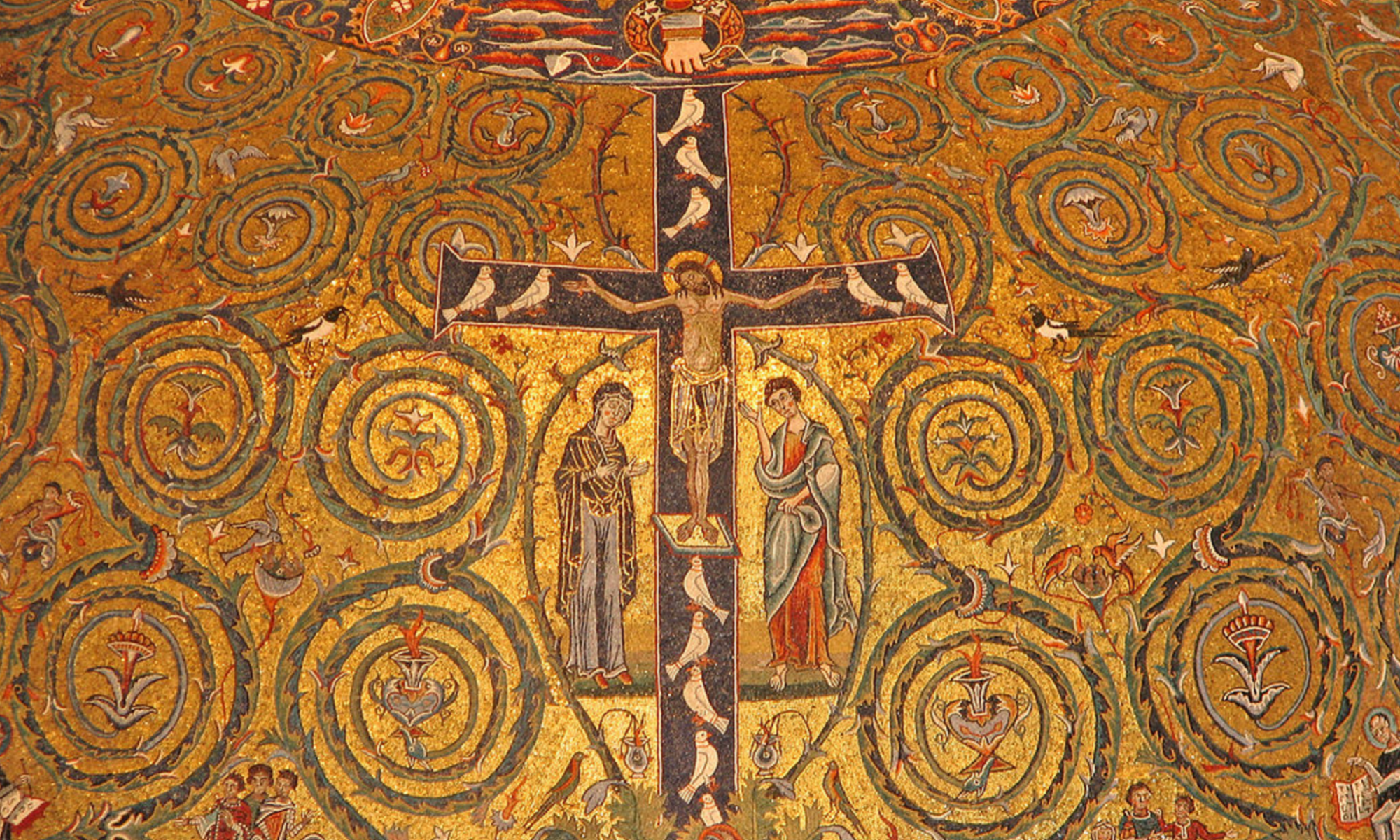
The emperor Nero was a troubled soul. In A.D. 64, following the great fire that destroyed much of Rome, he cast the blame on the Christians and put many of them to death. The Roman historian Tacitus paints a disturbing picture: “Some of the Christians were crucified and set on fire at the end of the day, as torches to illumine the night. Nero kept his gardens for this spectacle, hiding among the crowd, dressed as a charioteer.”

Crucified and set on fire. One can only imagine the devil’s delight, just like that first Good Friday. But the devil cannot create. He can only twist or pervert the good things God makes, attempting to mock his Creator’s good designs. God can always untangle the devil’s knots, not only restoring things to their original goodness, but even bringing forth new and unimagined blessings.

As we approach Pentecost, those early Christian martyrs in Nero’s gardens can become a holy icon of our life in the Holy Spirit. If we allow ourselves to be crucified with Christ, if we surrender our hearts to undergo that dying and rising with Him, we shall be set ablaze with the fire of the Holy Spirit. We shall become living torches who light up the night of this world, bringing comfort, joy, and peace to all around us.

Do not quench the fire of the Holy Spirit. That is Paul’s exhortation to the Thessalonians.  The Holy Spirit is to be a flame constantly ablaze within us, drawing in and consuming all the lesser flames of our disordered and unruly passions.

When we prepared for our Confirmation, many of us learned about the 7 Gifts of the Holy Spirit: wisdom, understanding, counsel, fortitude, knowledge, piety, and fear of the Lord. The 7 Gifts are easily misunderstood. Well-meaning catechists tend to use gimmicks or clichés to attempt to make them interesting. The deeper truth is that those Gifts are perfective (seven being the biblical number of perfection). When they are activated in us, we are truly possessed by the Holy Spirit. He becomes the primary agent, and we are willing co-operators.

Without the gifts of the Holy Spirit taking over, even the best parts of ourselves will get in the way. There is that wonderful scene at the end of “Revelation,” a short story by Flannery O’Connor. The main character, the self-satisfied Ruby Turpin, discovers she is not quite so Christian as she had thought. Furious at God and not wanting to take an honest look at herself, she screams out to Him, “Who do you think you are?” In response, she has a vision. The twilight cloud in the sky overlooking the field is set ablaze, almost like a fiery bridge into heaven. Leading the procession are many of the kinds of people she would least expect to find in the Kingdom. By contrast, her own kind, the rule-following and decent kind, are the last and the least. And “she could see by their shocked and altered faces that even their virtues were being burned away.”

Our self-regulated attempts at virtue and holiness, our managing and controlling, protecting and striving, tend to quench that fire of the Holy Spirit.

So does codependency. Christian churches are often full of do-gooders who will jump in to help others with their problems, but resist being vulnerable and receptive themselves. Remember the story of the five foolish virgins, who ran out of fuel for their lamps – in contrast to the wise virgins, who kept their lamps well-stocked, so that they could burn brightly at the coming of the bridegroom. If we do not learn how to receive vulnerably, if we do not abide in the Lord and depend daily upon him, the fire of divine love within us will burn out. Yes, we are called to give and share, but it is the Holy Spirit that is given and the Holy Spirit that is shared. The work does not depend on us. We need only cooperate and yield.

In God’s mercy, he will offer us many invitations to surrender. Most of the time, the invitation comes in that still small voice, gently inviting us into communion. Yes, occasionally the invitation may come à la Flannery O’Connor, in the form of a violent interruption or intrusion, something that splits open a crack in our otherwise impenetrable armor. Moments of crisis can become moments of great opportunity. There is also the very human factor that some of us have to hit rock bottom before we will even think about surrendering. God knows what we need and deeply desires us to be aided by the Holy Spirit.

In whatever fashion those graces come, there is no avoiding the Paschal mystery. We must be crucified with Christ in order to rise with him. That victory needs to be extended to every part of our heart. That death with Christ opens up a space for the new life of the Holy Spirit. It is only when we give all over to God and approach him with empty hands that he can truly fill us. That includes the shameful and feeble parts of our heart that we would rather keep hidden away. It includes our most noble and virtuous parts, which are not quite as amazing as we would like to think. It includes every part of us. Then the Holy Spirt can truly take over. We can burn brightly as God’s living torches.

In our humanity, we shrink back from any form of suffering or dying. Our instincts tell us we will be annihilated. But this pain and this death is different. The fire will not consume us. It heals, unites, and purifies us as it burns. We become like the burning bush that Moses saw. We will be perpetually ablaze, and nothing of value in us will be definitively lost.

As we approach Pentecost, like those disciples in the Cenacle, we join with the Virgin Mary in prayer and beg the Lord to set us ablaze with the Holy Spirit. May we all become his living torches, shining for the world to see.

Kerygma

Your new vocabulary word for the day is kerygma.

Kerygma means “proclamation.” It is a very simple proclamation, and it changes hearts. Kerygma happens when one follower of Jesus, moved by the Holy Spirit, becomes a herald of good news, and the hearts of the hearer(s) catch fire as they hear the message. When the kerygma happens, one follower of Jesus becomes the instrument whereby the hearer actually “hears” the gospel as good news, and is moved to heartfelt repentance, responding with a resounding “YES!” that starts showing itself in a new way of living.

Kerygma moments happen again and again in the Acts of the Apostles. Peter or one of the other disciples, filled with the Holy Spirit, stand up and boldly proclaim the Good News that Jesus has risen from the dead. It’s such a simple message. Jesus died. He died because of your sins and my sins. Jesus has risen from the dead. He has the power to forgive you and forgive me. He has the power to save you and save me from death. All we need to do is repent of our sins, get baptized and place our trust in Jesus instead of ourselves. Then we can begin following him together on an amazing new journey.

Peter and the apostles, the guys who snoozed and snored while Jesus was sweating blood in the Garden, the guys who left Jesus all alone to die, the guys who denied him and abandoned him – yes, those guys –become heralds proclaiming Good News. Each time they proclaim the simple message of salvation in Jesus, hearts are moved to repentance.

Whether it moves 3,000 hearts (as on the day of Pentecost) or whether it touches just one heart at a time, the power of the kerygma is real. It’s a life-changing experience. God wants all of us to “hear” the good news in a personal way that re-orders our entire life. We change and become “all in,” surrendering ourselves to Jesus.

Notice that it has nothing to do with Peter or the other apostles being smart, or educated, or talented, or strong (they were none of those things!). Indeed, it was precisely their ordinariness and their human weakness that made the Gospel message so compelling to the hearers. These were changed men. Whatever it was that they had, the hearers wanted to experience it.

There are a few core reasons why the kerygma works.

First, it is a work of the Holy Spirit. We are cooperators, but truly led by the Spirit in the process. The same Holy Spirit who raised Jesus from the dead is at work both in the heart of the one proclaiming and the one(s) hearing. And he does his work! He is the principal agent of all evangelizing. We all have access to that Holy Spirit through faith and baptism.

Secondly, the kerygma works because the disciple who is proclaiming has actually been transformed by his personal relationship with Jesus. He’s not just talking about Faith. He’s proclaiming Jesus. Not as an abstract idea, but as a real person who has really changed his life. The change is obvious to the hearers. It attracts them. It’s an open invitation. They hear the Holy Spirit gently whispering in their own hearts, “Wouldn’t you love to have that experience for yourself?”

Thirdly, there is always freedom in the kerygma. Whether it’s Jesus himself proclaiming the Good News of the Kingdom, or those early disciples proclaiming the Resurrection, they respect the freedom of the hearers. There is no forcing or pressuring, no nagging or manipulating, no guilting or shaming. If the hearers aren’t interested, so be it. Those who proclaim the kerygma only want followers who want to follow.

How different this all is from the everyday experience of so many Catholics during the last several decades. The majority of Catholics these days are simply NOT interested in talking openly about their personal relationship with Jesus. As for those who are willing (myself included), it is with deep sadness that I admit that many of us have too often been led more by fear than by the joy of the Holy Spirit. I confess that out of a fear of failure or rejection I have engaged in pressuring, manipulating, shaming, or other methods that were totally NOT used by the early disciples. It’s so hard to trust the Holy Spirit, to wait for God’s timing, and to respect human freedom – especially when it’s our own children or spouses or friends, and especially if we tie the outcome to our own personal worth, somehow thinking were are a failure if they say “no.”

I have definitely learned, slowly but surely, to be both patient AND bold. If the person is not yet ready to hear the kerygma, so be it. But when I notice that the Holy Spirit moving, as at Pentecost, when I sense the person asking “What must I do?” THEN is the moment to proclaim the Good News of Jesus – and in a truly personal way that speaks to her experience. THEN, perhaps for the first time, that person can see Jesus as his Savior.

It is such a privilege to be a herald of the kerygma. You get to be the person who announces good news of great joy to persons who are longing so deeply for it – and it changes their lives forever. What a joy!

But there’s a deeper question. Have I ever really “heard” the kerygma myself? How can I give what I have not myself received? There, I think, is a big part of why we Catholics (yes, even we priests and bishops) have struggled so much to be bearers of good news to a world that longs for good news. We may possess a great store of knowledge, we may faithfully follow many rules. Perhaps we even had an amazing experience of Jesus long ago. But if we are not perpetually being renewed in the Joy of the Gospel, if we have not truly internalized the kerygma, if others do not see in us that Jesus is truly “Good News,” then who will care?

I encourage each of us to ask today, what has been my own experience of receiving the kerygma? When has my heart burned with joy at receiving the good news?

For me personally, there have been many “kerygma moments.” I remember the first time I went to Confession at the age of nine, how honest I was despite my deep fear, and what an incredible joy I felt afterward. I remember many moments on retreats in which God comforted my heart, deepening my desire to trust and surrender to him. I remember the witness of my friend Peter, a seminarian in his late 30’s. During a few years of intense personal struggle for me in the late 1990s (moments in which I felt very unlovable) he kept gently gazing and speaking good news into the places of my heart that feared and doubted. The Holy Spirit was very much at work, consoling my heart at a time when I deeply needed it. When Peter explained that “a good friend is someone who sees right through you – and loves you anyway” I not only grasped the words intellectually; I truly “felt” their truth. It changed me.

I remember Peter tragically and unexpectedly dying that fall of 1999, after only five months ordained as a priest. I remember surviving a fire a month later, losing nearly all of my possessions. Truth be told, I would have gladly thrown them all away to have Peter’s friendship back.  Then I remember astounding graces and spiritual encounters during the Jubilee Year 2000. I received deep healing as others prayed over me and stood with awe and gratitude as others receive astounding graces and healings when I prayed over them. God knew what my heart needed and gave it to me; he assured me yet again that I could trust him and surrender.

Even then, there were parts of my heart that I was keeping locked away and out of sight. I simply wasn’t ready yet to receive totally or to surrender totally. I continued through life as a perfectionist, secretly fueled by shame, secretly insecure about not being good enough or loveable. Too often, I tried to “get life right,” to try harder or work more. I slowly got more disconnected and burnt out, losing sight of the good news of Jesus and of my identity as a beloved child of God.

Theologically, I knew the teachings of Scripture – God loves us while we are yet sinners. Salvation is a gift. We cannot earn our way to receiving love. But that was not what I was believing internally. There were layers of my heart that had still never heard the Gospel proclaimed. I was not yet ready.

Eventually, the trials of life wore me down. A few years back, I reached a point of recognizing that my life was totally unmanageable. I wanted to be well. I was ready to die to self. I allowed myself to surrender and to become vulnerable in ways I would previously have thought impossible. I began letting myself be “seen” by a few trusted people – letting all of myself be seen, mind you.  It has allowed me, more and more, to believe with all my heart that I am truly a beloved child of God – no matter what. Now that I no longer felt like I had to perform (or at least much less frequently felt that way) I discovered, to my amazement, that old habits of sin melted away.

I still have a long way to go, but the more I have internalized the kerygma, the more I have discovered that the Holy Spirit is opening up new opportunities for others around me to receive the good news. I find myself more frequently able to show kindness and mercy because I have been learning what it is to receive it.

It’s an old axiom of the first universities in the Middle Ages: nemo dat quod non habet (“a thing can’t give what it ain’t got”). We will not be able to proclaim Good News to others if we are not allowing Jesus to be good news for us.

What about you? Have you experienced the kerygma? Ask the Holy Spirit to help you remember any “kerygma moments” in which someone proclaimed good news to you and the Holy Spirit totally changed your heart.

If you can think of those moments, I encourage you to revisit them with gratitude and allow you heart to be touched once again.

If you cannot think of any, would you like to be moved by the Holy Spirit in that way? Would you also like to experience the joy of the Gospel? If so, you can ask God for that. And you can seek out someone who has experienced it, and ask that person for help. The Risen Jesus and the Holy Spirit just might surprise you with what comes next.

From Wonder to Wisdom

Childlike wonder is a precious gift.

It is so much fun to observe the awe of children as they plunge into the present moment. They exhibit an eager and relentless curiosity, whether exploring the flora and fauna in the backyard or dismantling their toys to figure out how they actually work. They burst forth with such intense joy during spontaneous play as they gleefully cry out “Again!! Again!!” They tirelessly yearn for the eternal in their experience of the present moment. They instinctively and effortlessly convert a large open room into a playground or an adventure zone. They easily overlook the expensive Christmas gift their parents have purchased, instead playing for hours with the large cardboard box or the shiny wrapping paper.

The common denominator in all of these experiences is a marvelous human capacity to be wholly and wholeheartedly present in the present moment. We do not need to teach our children how to do this; they do it effortlessly. It is hardwired into our humanity. God has put the timeless into our hearts (Ecclesiastes 3:11).

Sadly, the trials and traumas of life often leave us splintered and fragmented, and we “grown-ups” can be much more guarded about entering freely and wholeheartedly into the present moment. We hold parts of ourselves back. This self-protection is so sad because the present moment is the only thing that really exists! The past is irretrievably gone, no matter how much we cling to it or dwell upon it. The future is not yet here and is largely unknown to us, no matter how much we try to control it. Certainly it is wise to learn from the past and plan for the future, but ultimately the “now” of the present moment is the one and only space in which we can encounter the living God. All times are simultaneously and perfectly present to him. There is no before and after, only the “now” of his eternal existence. As the most unique of all God’s creatures, made in his own image and likeness, we humans are most fully ourselves when we abide in the present moment.

We learn in Scripture that the beginning of Wisdom is to be found in the fear of the Lord (Psalm 111:10; Proverbs 9:10). The “fear” that leads to wisdom is not a cowering or groveling fear, and it is most definitely not the paralyzing fear that many of us know all too well. It is what Saint Thomas Aquinas calls “filial fear.”

Thomas describes the difference between “filial fear” and “servile fear.” Servile fear is a slave-like fear, motivated primarily by avoiding punishment. This kind of fear can certainly be a strong motivator, but it is not what sets us apart in the image and likeness of God. The fear of pain or punishment is something that we share with all our fellow mammals. It can be a helpful beginning to wake us up or turn us away from a destructive path. But servile fear will not lead us to grow in Wisdom. Indeed, it is much more likely to pull us out of the present moment. From a brain science perspective, servile fear kicks in our survival response of “fight or flight or freeze.” In those moments, our prefrontal cortex (the higher and more rational part of our brain) goes offline as our survival instincts take over. Survival mode is great when our life is on the line. But it does not allow for childlike wonder.

Filial fear, by contrast, is what sons and daughters have towards a loving, benevolent, and merciful father. They cherish him and their relationship with him. They desire that relationship to grow ever more intimate and shun anything that would turn them away from that joyful communion of love.

Many of us still need to make the journey of maturity from servile fear to filial fear, a journey described so beautifully by Paul in Romans 8: “For you did not receive a spirit of slavery to fall back into fear, but you received a spirit of adoption, through which we cry, ‘Abba, Father!’ The Spirit itself bears witness with our spirit that we are children of God, and if children, then heirs, heirs of God and joint heirs with Christ, if only we suffer with him so that we may also be glorified with him.”

Faith is a gift, utterly undeserved. It moves mountains, removing any and all obstacles that get in the way of us growing into the glorious freedom of the children of God. Restored by Faith, we can rediscover an even greater childlike wonder, which leads us to true Wisdom. We can rediscover the spontaneous joy and gratitude and praise that come from abiding in the present moment.

What a special gift to grow into during this time of COVID-19, in which many are feeling bored or understimulated. The words of G.K. Chesterton come to mind:  “There is no such thing on earth as an uninteresting subject; the only thing that can exist is an uninterested person.”

If we become again like little children, even the smallest blessings of daily life can become an unmitigated experience of wonder and awe in God’s presence. All is gift, and his glory shines everywhere in the creatures he has made. Those who become again like little children can experience it.

What are the cardboard boxes God is dropping into your life today? Are you ready to receive them with awe and praise and gratitude? What is holding you back from being wholeheartedly in the present? Are there parts of your heart that resist, hesitate, or bail out? Will you let the soothing balm of the Holy Spirit calm you, opening all of your heart to receive the glorious freedom of the children of God? It is a freedom that can only be experienced in the “now” of the present moment.

When Hope Hurts

As followers of Jesus, we are people of Hope – especially during Holy Week and Easter.

This year we will experience a Holy Week like no other – gathering the family around our tablets and TVs to view the live stream of the holiest liturgies of the year.

I think back to the middle of March – which now feels like ancient history – and remember how I wept and sobbed over the cancellation of public Masses. The part that was the most painful for me was when it fully dawned on me that our faith communities would not be gathering together for Holy Week and Easter. Having had time to process my grief, I am now grateful that we’re doing our moral duty and serving the common good by joining in the shared effort of social distancing. I’m grateful for all the creativity and innovation that has opened up new opportunities. I’m getting accustomed to Mass on facebook live and Zoom meetings. But let’s face the facts: it’s still hard.

Since the middle of March, there have been far greater hardships for many than the temporary disruption of prayer gatherings and public Masses. Some find their entire livelihood in grave peril; others are under enormous daily stress; many others have died of COVID-19 or lost a loved one.

All of us have felt our daily lives turned upside down. Almost everyone I know seems to be experiencing a significant spike in anxiety or a resurgence of unwanted behaviors. So much is uncertain and unknown; so much can change so quickly. We trust God, but it’s incredibly hard at times to keep believing that it’s somehow all going to be blessed by God as part of his greater plan.

Hope is hard. The Christian virtue of Hope is not rosy optimism; it’s not a feel-good pretending like everything is just swell. Hope involves longing and desiring, watching and waiting. Hope stretches our human hearts far beyond what feels easy or comfortable. Indeed, keeping Hope alive in our heart can be painful. It’s so much easier to try to avoid, it, numb it, or even kill it – choosing instead a path of self-soothing or self-reliance. But we cannot save ourselves.

Holy Week is a time of Hope. The death and resurrection of Jesus, his Paschal Mystery, constitutes THE human story. Without Jesus dying and rising, our human existence becomes empty, fruitless, and meaningless. On the contrary, as we allow ourselves to be plunged into those saving events, we are brought to new and more abundant life.

In the “in between” of that transformation stands the virtue of Hope, like a brave soldier standing in the breach. It can be far more agonizing than we may realize. It’s quite possible that only a few Christians these days are truly steeped in Hope.

Hope is the virtue of Holy Saturday – a day that is easily overlooked. Many are bustling about preparing for Easter; others are pre-binging on food or Netflix or some other pleasure. The invitation of Holy Mother Church – rarely accepted – is to engage in fasting and silence and prayer as best we can, to continue keeping our vigil at the Tomb of Christ, watching and waiting in Hope.

Think of the various characters in the Gospels and imagine what their experience of Holy Saturday was like. Think of Peter and the other apostles, having suddenly lost their Lord and their friend Jesus – and under the shameful circumstances of having abandoned him or denied him. Jesus had recently given a glimpse of glory to Peter atop Mount Tabor in the Transfiguration. Maybe that remembered experience emitted some faint glimmer of Hope amidst his overwhelming feelings of grief and disillusionment, fear and doubt, guilt and shame.

Think of Mary Magdalene and the other faithful women, holding Jesus in their hearts, continuing to love him even when it hurt so much. Their instinctive and intuitive Hope drew them to the tomb on Easter morning, even if they didn’t understand what was happening in their hearts.

Think of Jesus’ own mother Mary, who had borne him in her womb, nursed him, taught him to walk, taught him to read the Scriptures, taught him to pray, and so much more. Over the course of 33 years, she was more intimately close to him and held more conversations with Him than any other human being. Scripture does not record these, but Luke does tell us more than once that Mary kept pondering these mysteries in her heart. She is perhaps the one person who was not entirely surprised at his Resurrection.

But even for Mary – nay, especially for Mary – there was that agonizing in-between moment of Hope between the first day of Good Friday and the third day of Resurrection. If the experience was anything like the previous patterns (the birth of Jesus, the Flight into Egypt, the Presentation in the Temple), she knew and believed God’s promises, but did not know how those promises would be fulfilled.

That is what is so hard about Hope. It is an invitation to plunge into the depths of Jesus’ suffering – which involved far more than physical torments. He freely chose to dive into the depths of our fallen human experience – including the isolation, the loneliness, the fear, the shame, the rejection, and the abandonment that so many of us experience. When he cries out “My God, My God, why have you abandoned me?” He is crying out with and for each of us from the depths of our hearts – places we are often not willing to go ourselves, because they hurt so much. Jesus allows himself to feel the pain of rupture from God and rupture from neighbor that is part of the story for each of us who are fallen.

Then it’s our turn. Like the Virgin Mary, like Mary Magdelene, like so many of the other disciples, we are invited to keep vigil at his Tomb. We are invited to keep believing his promises – even when it seems impossible anything will ever change. For each of those followers, Easter morning was a wonderful surprise. The risen Jesus brought them joy in a way they had never imagined possible.

During “normal” Holy Weeks, Catholics show up in large numbers for Good Friday, and are often moved to tears at the torments Jesus endured on the Cross. This year, only the priest celebrant will get to kiss the Cross.

During “normal” Holy Weeks, most Catholics give little thought to the experience of Holy Saturday. This year, we all have an extended Holy Saturday opportunity. We have been given a share in Jesus’ suffering and death. In the form of all this unrest and all these unknowns, we have an opportunity to share in the same disorienting and agonizing experience of those early disciples on that first Holy Saturday. Like most of them, we do not know how long it will last, whether it will get better, or how it will get better. We surrender in Hope; we wait in Hope, even when it hurts.

We are free to choose. We can plunge fully into the deep waters of Hope. Or we can keep popping up for air. There are any number of ways we can do that. Some turn to the false soothing of food or alcohol or pornography. Others minimize or deny, pretending like it’s not really that hard (thus distancing themselves from genuine Hope). Still others crack a joke or enter into fault-finding and peevishness – anything that will distract us from the present agony of abiding at the Tomb in Hope.

These are normal ways of avoiding – and they make sense. We all do at least some of them. The truth is that tt is terrifying to be under water for a long period of time! For many of us, it feels like it will be too much or too long. Indeed, that is the whole point of being plunged into the waters of Baptism – we actually die with Christ!

We Catholics think often of Good Friday and of suffering with Jesus. This year, I invite each of us to think especially of Holy Saturday, and give ourselves permission to experience the full depth and breadth and length of Christian Hope. It is not for the faint of heart! If we allow it, it will grow and crescendo into an earthquake that will finally break open the cave of our heart; it will roll away the stone so that we, too, can be surprised by the joy of the Risen Jesus.

Vulnerable AND Safe

For many of us, vulnerability is one of the hardest human experiences to manage. It can be terrifying and overwhelming. It can cause us to feel exposed, naked, unprotected, or unsafe – and we can find fifty ways to run or to hide.

Fleeing from vulnerability is a story as old as the human race itself. Following the fall, the whispers of shame urged Adam and Eve to run and hide themselves, and to try to cover their nakedness.

Unfortunately, I cannot be in an intimate relationship with God if I am hiding and protecting myself from Him. I cannot experience close connection with other human beings if I am hiding and protecting myself from them. You are perhaps familiar with the famous quote from C.S. Lewis:

To love at all is to be vulnerable. Love anything and your heart will be wrung and possibly broken. If you want to make sure of keeping it intact you must give it to no one, not even an animal. Wrap it carefully round with hobbies and little luxuries; avoid all entanglements. Lock it up safe in the casket or coffin of your selfishness. But in that casket, safe, dark, motionless, airless, it will change. It will not be broken; it will become unbreakable, impenetrable, irredeemable. To love is to be vulnerable.

In the Incarnation, Jesus chose to be vulnerable. The eternal Son of God who was immortal willingly took on our human flesh. One motive was to be able to offer himself on the Cross, to pay the price of our redemption. As God, he could not die. As man, he could. But becoming flesh was not simply about paying a ransom on the Cross. The deeper motive was to love us, to show us how to love, and to make us all capable of loving in that way. From start to finish, vulnerable love was the motive of Jesus becoming flesh and of everything he said and did in the flesh.

“And the Word became vulnerable and dwelt among us” (John 1:14). That would be another way of putting it. To be human is to be vulnerable. This is the profound insight of Curt Thompson in The Soul of Shame: “So much of what we do in life is designed, among other things, to protect us from the fact that we are vulnerable at all times. To be human is to be vulnerable.”

At all times we humans are vulnerable – able to be wounded, abandoned, rejected, excluded, betrayed, injured, or killed. Sometimes we barely notice our vulnerability, and other times we feel it intensely. But it’s always there.

Jesus shows us how our human condition of vulnerability need not be an experience of shame and isolation, but can be transformed into an experience of healing and salvation. When we listen to the Gospels closely, we hear one story after another of Jesus modeling vulnerability for us. His heart remains wide open in love, even when others are misunderstanding, accusing, rejecting, or abandoning him. He does not break off to hide himself. Yes, he spends forty days in the desert, but that was actually an even deeper experience of vulnerability, enduring temptation as well as allowing himself to be comforted by the angels God sends.

Many of us resist and avoid vulnerability because we tend to associate being vulnerable with feeling shame – and shame is perhaps the most painful human emotion. When we feel shame as Adam and Eve felt it, we feel unlovable and devoid of dignity. We do not want to be seen or known. So we hide and isolate. Shame thrives in isolation. What begins as one traumatic experience – genuinely painful – becomes a perpetual cycle that we do not know how to break. Jesus, the New Adam, breaks our cycle of shame and opens for us a vulnerable path to salvation.

This path includes connecting with God and others. Again, Jesus is our model of what it means to be truly human. He does not go it alone. He consistently reaches out to his Father and to his friends – even when they choose to abandon him. He establishes the Church as a community of believers, calling each by name, but always into a community of faith. When we hear the story of the early Church in the Acts of the Apostles it is a story of community and communion, not of isolation. Salvation happens in Christian community.

The name Jesus means “Savior,” and salvation means becoming safe by becoming whole and holy. It is safety that we are seeking when we hide from our vulnerability. But we will not find wholeness or holiness in our hiding. We may need it for a time, especially when our survival truly depends on it. But our places of hiding, our panic rooms, will indeed become tombs and places of death if we refuse to let ourselves be seen and known.

The invitation to salvation is an invitation to become vulnerable AND safe. We may understand this at intellectual level, but it is important to experience it as well. That means finding a safe community in which we can truly be seen and known, heard and understood, cherished and appreciated and encouraged.

There are many in twelve step programs who have claimed that they find an experience of Jesus much more easily in the church basement (in their group meetings) than in the church itself, where they find plenty of people putting on masks, bustling about, rigidly following rules, judging and gossiping, or following familiar routines – but precious few people opening up humbly in vulnerable human connection. That is quite an indictment! Is that true of me or of my parish community?

To put it differently – when broken people walk through our doors, feeling their shame deeply, what will they encounter here? Will they find a friendly face who shows them that it is safe to be vulnerable here? Or will they find fifty new ways of hiding from their vulnerability?

Those are questions that we can all take to prayer this Lent!

To Wonder and be Curious

This post is an important corrective and counterbalance to the previous one. The spiritual weapon of “talking back” (antirrhēsis) is indeed powerful in the moment of temptation. Like Jesus in the desert, we can willfully claim and assert our glorious human dignity and freedom. We can swiftly and decisively fight back against evil before the temptation has a chance to grow.

But what about all the calmer moments that precede? Jesus’ victory in the moment of temptation flowed forth from all that came before: being claimed as God’s beloved Son in his baptism and then spending forty days receiving spiritual strength through prayer and self-denial. It was his childlike dependence on his Father that won the deeper and more decisive victory. He came to the battle as one fully awake and aware, fully alive in his humanity. We who are members of his Body are invited to share in the same childlike trust, including the amazing human capacity for curiosity and wonder.

Jesus encourages us to become like little children. Every healthy human child discovers the power of “No!!” and “Mine!!” and “You can’t make me!!” Those words, properly learned and properly harnessed, can become wonderful weapons in the moment of temptation. Every healthy human child goes on to discover an even more powerful word: “Why?” What a precious gift it is to have curiosity and wonder at why things are the way they are. From philosophers to poets to scientists, all our greatest human achievements, all of our most shining successes emerge as fruits of childlike curiosity and wonder.

It is so easy to lose that curiosity and wonder. For one thing, it is exhausting to parents to hear the word “Why?” a hundred times a day. It is tempting to stifle children in their pursuit of wisdom. For another thing, it is incredibly hard to have wonder and awe in moments of trial or trauma. Whether war or abuse or addiction or mental illness, when our daily living environment becomes a fight for survival, we do not tend to take time to smell the roses or to marvel at why things are the way they are. We need to feel safe and secure to be able to do that. Jesus faced Satan with an incredible sense of safety and security in the Father’s love and in his own human dignity.

I have written before about the importance of getting down to the roots. Sure, we can lop off the dandelion heads time and again – they will keep growing back until we uproot the plants. This is especially our human experience if we are struggling with habitual patterns of sin or addictive behaviors. In those cases, we may find ourselves fighting temptation again and again. We may win 99 out of 100 battles, only to fall hard once again into the same sin or struggle. Certainly we can celebrate those 99 victories and not wallow in shame over the one defeat. But even more importantly, we can give ourselves permission to step back calmly, to remember that we are a beloved child of God (even in our moments of sin). Basking in empathy and kindness and grace, we can look upon our situation and begin asking questions, engaging that gift of childlike curiosity and wonder. We can begin to asking   “Isn’t that interesting…?”  “I wonder why that would happen just now…?” And so forth.

Far too often, we engage in self-loathing and self-shaming. I can think of things I used to say often to myself: Why do I have to be this way?” “There I go again.” “What’s wrong with me?” I’m sure that most of you have your own inner critic in those moments as well. It doesn’t have to be that way. We can shift gears, choosing empathy and kindness, and can begin asking questions with curiosity and wonder.

For myself, one of my most frequent struggles is to feel the urge to eat something even when I am not at all hungry. I have learned (sometimes anyway) to “just notice that” and wonder at it. Isn’t it interesting that I would feel the urge to eat something just now? I know I’m not hungry…

Actually, my curiosity and self-reflection (and talking to others about it) has led me to identify forty-two different behaviors that spring up in me during times of unrest. Some are more sinful; others are benign. All of them are ways of surviving and protecting me from feeling vulnerable and exposed. I am learning that it is not really those behaviors that I am wanting, but instead I am reacting to feelings of insecurity, shame, fear, loneliness, or sadness. These are learned behaviors that have helped me survive in the past. I don’t need them anymore.

I have begun looking at them as a cast of characters, as a members of the family in the drama of my interior life. When ten or twenty of them start showing up at once, it’s a sign to me that I really need to pay attention. Rather than running away, rather than becoming disgusted with myself, I need to reach out and connect with someone who cares – God, certainly, but also others in the flesh who can be a listening ear and an empathizing heart. These different parts of myself are not actually evil – they are trying to help me, but need to be integrated, re-organized, and directed. As the prophet Isaiah promises, a little child will guide them all – first and foremost with his wonder and awe in God’s presence.

This process is so counter-intuitive for many of us. Our tendency in the face of temptations is to run and to flee, and to see our habitual temptation as bad. Instead, we could look at it much more like an indicator light on the dashboard of our car. It’s there to get us to pay attention and look under the hood – calling on experts if need be. In cases like mine, that may mean reaching out to a trained therapist or a support group, in addition to a spiritual mentor and good friends. Whatever helps us feel safe and secure and rediscover the power of childlike wonder.

Our hearts are made in God’s own image and likeness and are very good. That means that even our most twisted fantasies or darkest thoughts, at their roots, begin as legitimate human needs and good desires. That means that fighting temptation is not our only tactic. We need connection and safety in healthy human relationships; we need to reactivate our capacity for curiosity and wonder, becoming like little children and in so doing becoming whole and holy.