Watching and Waiting

Revised from the original posting on Dec 1, 2018

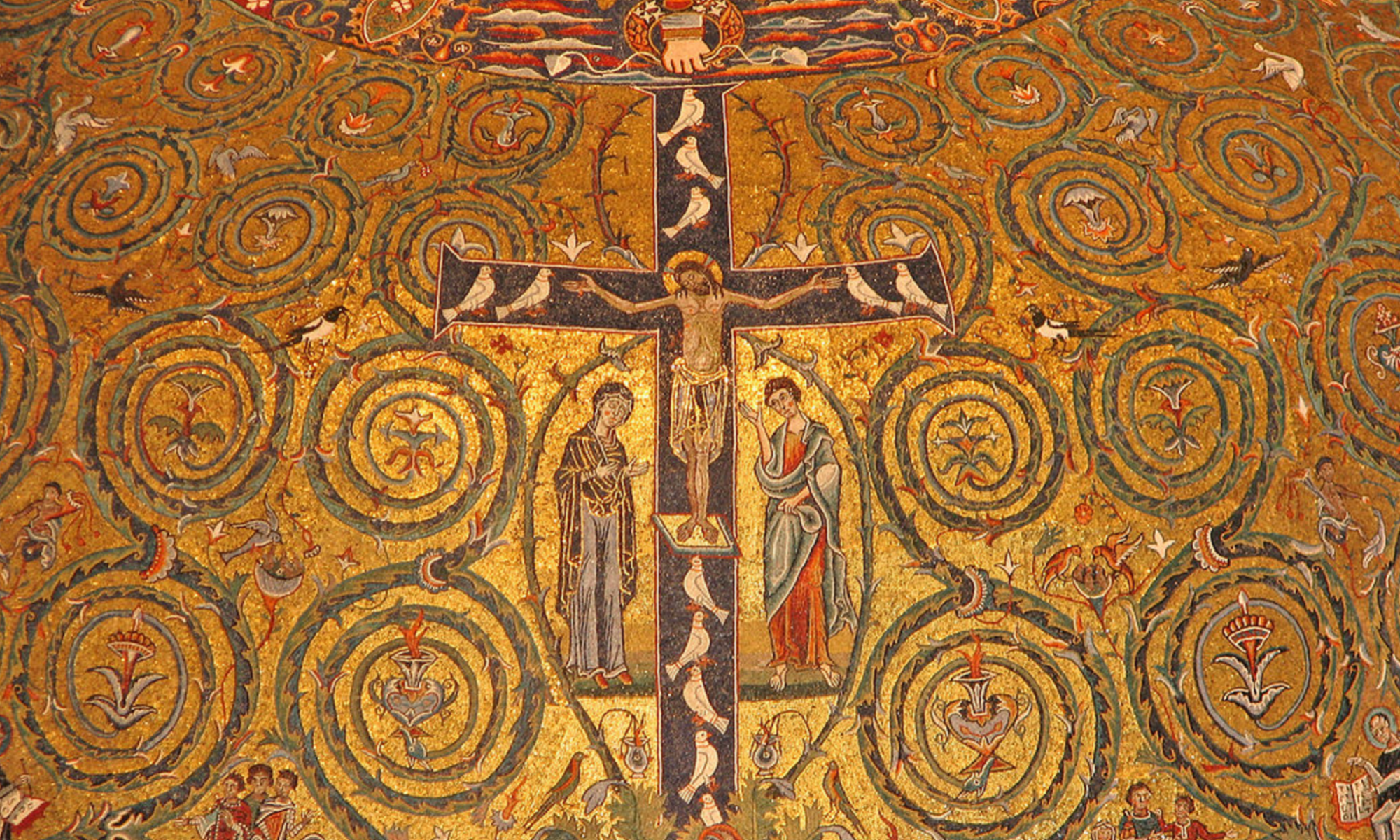
Advent is a season of watching and waiting, a time of abiding in expectant hope, confident in the coming of the King.

Advent is so much more than preparing for Christmas. The early days of Advent focus especially on the second coming of Jesus. Our watching and waiting for his coming is not static or sterile, sitting here idly until some future day when he eventually comes. Rather, theologians speak of an “already but not yet.” Christ has not yet come in glory, but he is already growing and bearing fruit in the lives of his holy ones.

There is a famous Advent homily in which Bernard of Clairvaux (1090-1153) describes a third coming of Jesus, in between his birth at Bethlehem and his coming in glory. No, he is not talking about “the rapture,” but rather the coming of Jesus into the heart of every true believer. As Jesus promised at the Last Supper, “If anyone loves me, he will keep my word, and my Father will love him and we will come to him” (John 14:23).

This coming into our heart is a dynamic process of nurture and growth. As we abide in expectant hope, our desire for the Lord increases. That desire itself springs from a seed planted by the Lord.  The more we desire his coming, the more our capacity to receive him grows. The greater our capacity, the more we receive. The more we receive, the more deeply we desire. And the cycle of “already but not yet” continues until he comes again.

Think upon the parable of the sower (Matthew 13:1-23). Christ sows his Word. Some seeds fall on the path, others on rocky ground, others among thorns, and others into good soil. Advent is a time to become good soil, totally receptive, growing in faith and hope.

That is the sad irony of December in the modern world. In the midst of Advent, we are constantly exposed to commercialism and consumerism and unneeded busyness. The self-indulgence of “the season” stands in stark contrast with the penitent cry of John the Baptist to “prepare the way of the Lord!” We can easily heap excessive expectations upon ourselves, thinking of all the things that we “have to get done.” Then we find ourselves too busy or stressed out to do any watching or waiting (except perhaps binge watching Netflix).

With God’s help, we can recognize some of the weeds and thorns in our heart, obstacles that need to be uprooted with firm resolve. We also have hard and dry places in our hearts, tough soil that needs the gentle dew of the Holy Spirit to soften and moisten, freeing us to become receptive, like Mary and Joseph.

Our free cooperation matters much. But in the end, God is the one who provides the growth and the fruit. We are called to abide in love. The watching and waiting is the most challenging part! We are so conditioned to expect instant gratification and easy results.  The parable of the sower reminds us to be patient and receptive.

Henri Nouwen wrote often about our powerlessness, and how challenging it is for us to be humble and patient. We depend totally upon God for the growth – much like the farmer in the field. Nouwen offers the image of an impatient gardener periodically digging up the plant to check on its growth. That tactic definitely doesn’t work! We hate to wait. Our restless hearts resist and sabotage the Father’s rest. All the while he gazes upon us with delight, inviting us to trust that we are his beloved children.

The growth will happen on his timeline, as we learn to abide in him. The fruitfulness will come in due time, so long as there is steady growth. By contrast, we will wither and die if we cut ourselves off from the source of all growth.

Healthy Christian community helps so much. True Christian friends will notice what God is doing in us and encourage us. It is good to notice the growth and to praise him for it. That thankfulness and praise stirs up the desire of our heart all the more. There is no risk of pride when our heart is Christ-centered and full of praise.

Psalm 1 offers an image of the tree that is planted beside the flowing waters, putting out its roots to the stream, staying green amidst the drought, whose leaves never fade, prospering and bearing fruit. Contrast that with the ways of the wicked, who cling to fruitless desires. They are like the chaff that gets blown away.

It is easy – especially at this time of the year – to become anxious or overwhelmed and then flee into one of our “panic rooms” – reaching for our phone, grabbing extra food or drink, plunging into pleasures that don’t actually bring peace.

Instead, we can choose to be patient and gentle with ourselves. It is normal to feel unsettled during changes of seasons and when reconnecting with family. Instead of isolating ourselves, we can choose to stay present to our minds and bodies, present to Christ, and present to those around us. We can receive grace and grow in patience. The fruit will come in due time.

Advent has always been a favorite season of mine. It touches the deepest desires of the human heart. May God give each of us the courage to root out the weeds from our hearts. May he cultivate and soften the hard and unreceptive places. And may he help us to abide in expectant hope, watching and waiting patiently as Christ comes to us, gives us growth, and bears much fruit.

St. Benedict and Conversion

Today we conclude a three-part reflection on the vow taken by many monks and sisters who follow in the footsteps of Benedict of Nursia. They enter a covenant of obedience, stability, and conversion of life.

Conversion is the most important of the three dimensions, balancing the other two and served by them. Obedience is for the sake of conversion. Stability is for the sake of conversion.

Without conversion, obedience and stability become toxic structures of decay and death.

There is an impostor stability that resists needed reform. It happens in every institution! There will be some who resist risk, while cheering for the changes to fail. They feel a perceived need to keep things the same, and an obstinate refusal to see the evident truth that the status quo is failing. This pseudo-stability is the idolatry of comfort . It is trying to serve God and mammon. It is wanting to have happiness in this world, rather than accepting our status as strangers and sojourners. It is a refusal to die and rise with Jesus.

There is also an impostor obedience that kills conversion. It comes in many forms, both among leaders and followers.

Some leaders rigidly demand obedience. At its “best,” this becomes authoritarianism within a benevolent dictatorship. At its worst, it is a dumpster fire of narcissism, in which the leader demands unquestioning loyalty and the admiration of all. On the flipside, many of us leaders resist responsibility for the hard stuff – which always means being hated and persecuted by some. Who wants that unless he or she is truly committed to dying and rising with Christ?

For followers, too, there is an impostor obedience that refuses to walk the path of conversion. There are always the kiss-ups who ambitiously angle for power of their own, with no interest in seeking first the Kingdom of God. Much more toxic and dysfunctional is the tendency of institutions to equate obedience with a demand for loyalty, even when loyalty means a loss of honesty and integrity. Well-meaning followers, in the name of obedience, will collude in cover-ups, stay silent in the face of failing policies, protect the perpetrator, or blame the victim.  Rather than abiding in love and truth, this impostor obedience is governed by fear and shame.

Now let’s state the obvious: disobedience is not obedience. Obstinate disobedience is a self-exalatation and a hardening of the heart. It is the opposite of conversion.

There are many ideological Christians these days (both on the left and on the right) who wish that their church leaders would become noisy political warriors. Their deepest thirst is not for the Kingdom of God – which is not of this world (John 18:36). They are behaving like the disciples of Jesus, who expected him to stick it to the Romans and bring back the good old days of the Kingdom of Israel. At their worst, they are the ones who prefer Barabbas and want no king but Caesar.

We leaders need to hear their concerns, which contain much truth. There are injustices to be upset about, and genuine reasons for fear and concern. What then?

For Benedict, it means we need to have a conversation. The Latin words for “conversion of life” are conversatio morum. It means turning around and following Christ, but it also means a conversation, a willingness to enter into and stay in dialogue in healthy relationships – even with people we dislike or disagree with.

Conversion does not mean hopping onto a social media platform, undermining authority, name calling, mocking, and shaming. That kind of criticism is not courage. There is no conversation and no conversion there. It is much harder to speak face-to-face and to listen with vulnerability and respect. No one possesses the truth; rather, we are possessed by Truth, and it is always greater than us. Conversion means I always have more to learn – even from those who are radically different from me. The disobedient do not tend to be lifelong learners.

One of the monks here compares monastic community with a rock tumbler. A group of hardheaded men are mashed against each other for years. As their rough edges smooth out, they emerged polished and beautiful.

Both obedience and stability are a grind, and our egos resist them. Who wants to be in an ongoing relationship with a bunch of hardheads, some of whom they really dislike?  The answer – someone with a deep desire to die and rise with Jesus!  On the day of their profession, the monks declare: “I desire to share in the sufferings of Christ in this monastery until death, that I may also share in his glory.”

Conversion is about turning around from our present misery and joyfully journeying to our real goal. Benedict urges us to hasten along the path of holiness: “Run while you have the light of life … If we wish to dwell in the tent of this Kingdom, we will never arrive there unless we run there by doing good deeds.” The Latin verb is currere, which means “to run, to move quickly, to hasten.” Think of it not so much as a sprint, but as a marathon or (better yet) a pilgrimage.

I once walked a 120-mile pilgrimage. My longest day was 31 miles. It became 32 miles because I missed a turn at one point. My stomach dropped in dread when I realized my mistake. I felt such an ache to get to my destination, and now it would take longer. In this case, by far my clearest option was to turn right around and go back to the crossroads. But one could easily imagine another scenario in which a new path would be much faster, and going back would be disastrous. Conversion is all about hastening to the true goal.

On a pilgrimage, you ache for your destination – and I mean that you feel the ache all over your body. You might linger here and there to delight in the scenery. Sometimes you sing as you walk and enjoy the journey. Other times it is sheer pain. But the one thing you do NOT want is to journey in the wrong direction. Conversion corrects our course whenever and however necessary.

Most of us prefer to live in denial about the fact that we are pilgrims in this life. Our true homeland is in heaven. Absolutely nothing in this world will last except for faith, hope, and love. The Benedictine vow of conversatio morum is a renewal of the baptismal vow. It is an absolute decision that I want to die and rise with Christ, and that I renounce all seductive counterfeits.

In the Prologue of his Rule, Benedict teaches that God does not will the death of the sinner, but our life (cf. Ezekiel 33:11). God lengthens our lifespan to give us adequate time to turn around and hasten to the Kingdom. God gives us many chances to commit and recommit on our journey of conversion. He is patient with our wanderings and opens up new (even if rugged and longer) paths. He shelters and guides us along our way, and is so eager to welcome us when we finally arrive at the Feast. Will we remember who we are and where we are going?

St. Benedict and Stability

As I finish my final month of sabbatical in a Benedictine monastery, I’ll continue reflecting on their threefold vow of obedience, stability, and conversion of life. Last time we considered obedience. Today we’ll consider “stability.”

Benedictine monks vow to stay in the monastery that they enter, unless obedience sends them elsewhere. Historically, monks were sometimes sent out as missionaries, or to be abbot of another monastery. But normally their promise to God includes a definitive choice that this monastery is going to be their spiritual and physical home for the rest of their life.

Other religious communities, like the Missionaries of Charity or the Jesuits, are mobile by their very nature. They expect to be moved many times during the course of their life.

The hyper-mobile spirituality of some orders and the ultra-stable spirituality of the Benedictines each have their place in the life of the Church. The frequent call to be moved is a reminder that “here we have no lasting city” (Hebrews 13:14). It is a share in the mission of Jesus, who had “no place to lay his head” (Matthew 8:20). It prevents stagnation.  On the opposite side, fruitful growth can only happen with patience and perseverance, through ongoing relational connection. Even when serious reforms are needed – especially when serious reforms are needed – it takes a stable and patient commitment.

We live in the FOMO age in which people young and old spend much of their day avoiding solid commitments as they restlessly “connect” through social media. We live in an age in which people quite easily move from job to job, state to state, or marriage to marriage. Even when such moves are good and necessary, they are incredibly challenging for all concerned. Benedictine stability deserves our attention!

We can begin by naming what stability is not. It is not easy living with a resistance to change. Every virtue has its shadow side. A week ago, I had Mass and coffee with a neighboring community of Benedictine Sisters. One of them wisely suggested that a great temptation in Benedictine life is comfort. Comfort kills. When we settle into an easy life, we will find ourselves unhappy and stuck.  Comfortable living does not bring joy or delight. We can only experience joy if we are also open to risk or loss, to sorrow or death. There is no joy without vulnerability. Healthy relationships only survive and thrive when there is a willingness to make mistakes and repair the damage, to engage in difficult experiences, to work through healthy conflict, to admit truthfully what is not working well, and to move forward into the unknown with a trust that God will bring new life and fruitfulness. The Benedictine vow is threefold – including conversion of life. Stability without conversion brings death and decay.

The true invitation of stability is an invitation to be fully present and engaged – with God; with others; and with one’s own body, mind, and spirit. It is direct spiritual combat against acedia, sometimes called “sloth,” which is not what most people think it is! Too often acedia is viewed as “laziness” – which is to be combatted by discipline and hard work. As a recovering workaholic, I can personally testify that we can numb ourselves with lesser labors just as much as with any other drug! No, acedia, the noonday devil, is the siren call that pulls us away from being truly present, to stop feeling what we are feeling, to disconnect from our people and our environment, to hide and isolate. Yes, it can come in the form of “lazy” escapes, but the noonday devil does not discriminate in his tactics. He simply wants to lure us away from drinking in the present moment in all its fullness – and all the better if he does so without our even noticing.

Today’s restless FOMO culture is a prime example of acedia at work. FOMO (“fear of missing out”) paralyzes millions each day, keeping them glued to their smartphones while sapping their capacity to be truly present, to notice, to receive, to savor goodness, to mature, to give, and to bear fruit.

Even in the early months of social media and smartphones, I remember vividly a New York Times article in 2008, highlighting the experiment of an MIT professor with his economics students. They played a simple computer game, in which they clicked on one of three doors. Behind each door were real cash prizes. But clicking on one door caused the others to shrink, and eventually, to disappear forever. Instead of finding the door of greatest value and clicking on it repeatedly, the majority of students “kept their options open,” terrified of committing to one thing only. FOMO.

Both FOMO and comfort are enemies of authentic stability. On the one side are those who are afraid to commit, even when the pearl of great price is at hand. On the other side are those who would keep clicking on the same door even when it is no longer paying out – indeed, even when it is depleting them! Isn’t it interesting that 1,500+ years of Benedictine history also included sweeping and successful missionary efforts? Stable living in one monastery was the norm, but when those stable monks planted a foundation elsewhere for the sake of spreading the Gospel, their new monasteries often became hubs of faith, culture, and civilization. Evangelization takes much patience and time.

Benedict begins his Rule with some sage commentary on these attitudes of the human heart. He discusses different “kinds of monks.” There are solitary “hermits” (as he once was), and there are “cenobites” – those who live in a stable community life. Then there are the “sarabaites.” Rather than surrendering themselves in obedience and allowing a community to correct them, they build up a self-made rule and a self-given salvation. “Their law is what they like to do, whatever strikes their fancy … Anything they believe in and choose, they call holy; anything they dislike, they consider forbidden.” Sound familiar? It is the attitude of so many towards religion today – picking and choosing for themselves that which is good, true, and beautiful rather than allowing themselves to be changed by the living God.

Finally, Benedict discusses the “Gyrovagues,” who refuse to settle down and tend to drift from monastery to monastery, region to region. They become “slaves of their own wills and gross appetites” and “are in every way worse than the Sarabaites.” At that point Benedict effectively says he should move on, because he has nothing nice to say.

In our age that over-exalts being open-minded and keeping options open, the words of G.K. Chesterton come to mind: “Merely having an open mind is nothing; the object of opening the mind, as of opening the mouth, is to shut it again on something solid.” Benedictines understand that. They find the pearl of great price, and they commit to spending the rest of their life steadily pursing it in conversion of life. I’ll consider that third and final dimension next time!

Spiritual Bypass

This summer marked the 15th anniversary of the animated film Cars. The movie breathed life and personality into dozens of vehicles, including the cocky and arrogant young racecar Lightning McQueen, who unexpectedly gets stranded in the rusted and rundown town of Radiator Springs. Initially seeing no value in this long-forgotten place, he undergoes a deep conversion and learns many life lessons. He also comes to appreciate the story of the town, once great, then sliding into decline with the introduction of the I-40 bypass. Whereas travelers along Route 66 used to take their time to linger and enjoy this scenic stopping point, these days they just zoom on by along the bypass.

As many of you know, I am currently going through a few trainings for pastoral ministry to God’s beloved children experiencing unwanted behaviors or addictions. In them, I’ve come across a strikingly similar metaphor, encapsulated in the term “spiritual bypass.”

Spiritual bypass happens when you or I use our spirituality as a way of avoiding difficult experiences or undesirable emotions. In the name of being spiritual, we can actually evade and avoid the most difficult aspects of discipleship! When we do so, our bodies and souls suffer in much the same way as the town of Radiator Springs. Through chronic neglect, little by little, things begin to crack and crumble. The more this decay happens, the more we prefer to avoid, and the more alluring spiritual bypass becomes. And so the vicious cycle continues.

You can see how these cracks offer fertile soil for the weeds and rotten fruits of addictions. But addictions are only one of many such weeds. The great spiritual authors over the centuries remind us that sins of the flesh (lust, gluttony, drunkenness, etc.) can actually be less serious than envy, passive aggression, gossip, self-righteousness, or pride. Think of the story of the repentant tax collector versus the proud Pharisee (“thank God I’m not like _______”). Think of the story of the younger son and older son in Luke 15. Both are far from the heart of their father; both are avoiding his love; both are miserable.

Spiritual bypass often gets woven into the very fabric of our families and our church communities. For example, we from the upper Midwest are notorious for being “nice” – and thinking ourselves kind. Niceness is not the same as kindness! Niceness avoids conflict. Niceness pretends not to be angry. Niceness does not know how to sit with sadness, but tries to minimize or fix or anesthetize the pain of the situation. Kindness, by contrast, can be intense and messy. It takes great inner strength just to be with someone who feels deeply sad, angry, or ashamed.

In my personal journey, the Lord has definitely been inviting me and teaching me how to stay present in the face of awkward or painful situations. Historically, I did one of two things. Most of the time, I got small, hid my true self, or took the “nice” path out and compromised things that were deeply important. Occasionally I powered up, perhaps shifting my tone or raising my voice, perhaps making a subtly shaming comment that shifted the burden onto the other person. I regret those moments and the damage they caused.

But I am learning to be patient with myself as God works repairs in my heart. Healing and recovery is incredibly hard work. It’s tempting (like Lightning McQueen) to think I can re-pave the neglected and damaged street in a short time. It takes much patience and consistency – not to mention much help and encouragement from true friends. After nearly five years of diligent work walking my own healing path, I am beginning to discover that I can stay present and stay my true self even in challenging situations – without taking the bypass. Every inch of reclaimed pavement is worth celebrating.

I simply wasn’t capable for a long time because I was bypassing my own heart – including neglected streets that were crumbling in sadness, loneliness, fear, and shame. If present interactions caused me to begin feeling those things, it made sense that I would react instinctively and either flee or fight. God made us with survival instincts and defensive capacity.  For a time, we probably need these defenses. We may need, for a season, to be in a state of spiritual bypass. We can’t face everything all at once. We’re not ready until we are ready.

My heart is ready, O God, my heart is ready. So sings the psalmist. After years of preparing my heart, the Lord gently and kindly showed me how very much sadness and loneliness I had stored up. For me, the experience of coming out of spiritual bypass has been amazing, intense, and painful all at the same time. Sister Miriam James Heidland compares the experience with someone coming in from the cold with frostbite. To be in one’s heart and feeling again is both good and intense.

My prayer life has definitely shifted amidst this process. It is more tender and vulnerable, more about a love relationship with the Father, and more about receiving again and again all that I need. Ironically, I pray far more consistently. It’s less and less of a “should.” I simply need it. I need prayer. I need Jesus. I need the anointing of the Holy Spirit. And I desire all these things. I ache for them. I long to see the face of the Father. That, for me, has been the very best part about ceasing spiritual bypass. Returning to my place of heartache also opens up the freedom and capacity for my heart to ache for God. It renews and deepens faith, hope, and love.

Perhaps the best discovery of all has been to realize the stunning beauty of the human heart – my own heart and that of others. Yes, there is sin there. Yes, it’s a mess. AND we are beloved children of God, fearfully and wonderfully made, “very good” in his own image and likeness. You can’t appreciate the beauty of the town from the bypass. You have to slow down and spend time there. Then it captivates you. The beauty God has poured into the human heart is absolutely stunning – if we are willing to abide there amidst the mess.

I invite you to consider your own journey of following Jesus. In what ways do you take the bypass? Does it feel easier to avoid anger, sadness, fear, loneliness, or shame? How do you react when others around you feel or express those? How do they experience you? Do they feel safe and find it easy to open up to you about the deep things of their heart? Why or why not?

Does it feel easier to “say prayers” to open up in a tender and vulnerable relationship? Do you let yourself feel the ache of longing and desiring without yet fully possessing?

Jesus reminds us that the road is wide and easy that leads us to destruction. Taking the spiritual bypass is so appealing because it is wide and easy while pretending to be deeply spiritual. Engaging our story in the town that is our heart involves a dying and rising.

Above all else Jesus commands us to love the Lord, our God, with all our heart and mind and soul and strength. Yes, we may need to use the bypass for a time in our life, especially if we do not have the support and the resources to face the hard work that will be involved. But so long as we stay on the bypass, there are parts of our heart that are not being consecrated to the Lord, and therefore not receiving his blessing.

Wholehearted discipleship is certainly challenging! But it is worth it. You and I are worth it.

The Conversion of St. Monica

Another rerun! This post was first submitted on March 10, 2019.

Monica is an immensely popular saint, particularly among those who fret about the sins and sufferings of their adult children.  Many a mother has fantasized, “If only I could be like Monica…If only I could pray hard enough and shed enough tears to convert my children as she converted Augustine…” In our age of addictions, no wonder she is so popular!

But perhaps she is popular for the wrong reasons. I am convinced that, if we knew her whole story, we would discover a major conversion of her own. Her son Augustine wrote his Confessions, in which he tells one of the most stunning conversion stories of all time. He periodically alludes to his childhood and his parents. Knowing what we know today about sexual addiction and addictions in general, it’s not hard to start connecting the dots. I think Monica’s greatest victory was not the deathbed conversion of her pagan husband Patricius, nor even the tear-filled conversion of her son Augustine. No, her greatest victory was her own recovery from codependency.

Consider the legendary words of the bishop St. Ambrose, when she entreated him with tears about the sins of her son Augustine: “Speak less to Augustine about God and more to God about Augustine.” Wow. I can relate. It is not uncommon for a priest to hear something like this: “Father, you need to help me to fix my children!” Well okay, they don’t usually put it that bluntly. But many mothers and fathers feel like their personal self-worth is on the line. If their children sin or fail, they themselves are failures. That’s a lie.

It is one thing to grieve over the sins of our loved ones. Destructive behaviors are sad indeed. It is another thing to feel personally responsible. The apostle Paul reminds us that each disciple must carry his own load (Galatians 6:5). We cannot fix other people’s problems or manage their lives.

Trying to do so leads to an array of unhealthy and destructive behaviors: perfectionism, judgmental or self-righteous attitudes, bitterness, resentment, depression, hopelessness, avoidance of conflict, self-loathing, self-punishment, manipulative comments, shaming or blaming postures, trying to “fix” others, unsolicited advice, and the like. All the while one ignores the pain and grief of one’s own heart.

These “codependent” attitudes easily thrive in homes where addictions dominate. Monica was married to an addicted husband and reared an addicted son. It is not a stretch to imagine her battling with codependency on her path to sainthood.

In our pornographic culture, I have had conversations now with hundreds of men who have a wound of sexual addiction, whose behaviors are very much like those of Augustine and his father Patricius. Some of those men, like Augustine, have found liberation and peace as they walk the path of recovery. As they heal, they get in touch with their father wounds. Often, their fathers were like Patricius – unfaithful to their mothers, verbally or physically abusive, alcoholic, absent, etc. Recovering addicts begin to realize that their unwanted behaviors are not the real problem; they are only the tip of the iceberg. Lurking beneath are old and unhealed wounds. As prevalent as father wounds are, I am finding it a nearly universal truth that where there is a sexual addiction, there is an unhealed mother wound. I definitely see mother wounds in Augustine’s story.

Let’s tread carefully here. Acknowledging these wounds is not about casting blame on father or mother for the sins of their children. No one gets into an addiction without himself choosing or agreeing at some point along the way. The great Jimmy Buffet teaches us that we are ultimately responsible for our own sins. Additionally, sometimes children are blocked from receiving what they really need for reasons that are not the fault of the parents.

In Monica’s case, it’s not hard to imagine her playing the victim card, casting herself as a silent (or not-so-silent) martyr, subtly manipulating or shaming as she tries to guilt her husband and her son into doing the right thing. As I hear of the deathbed conversion of Patricius, I wonder just how much joy and liberation he felt in his baptism, versus a reluctant agreement mainly to appease Monica. God knows the truth.

Filling in the blanks, I think Monica’s conversion story goes something like this:

Monica is mired in misery, abused and betrayed by her husband and repeatedly wounded by the wanderings of her son. Probably the abuse and mistreatment began with her own father, and she learned how to cope from her own codependent mother. Like so many in her shoes, she fantasizes about how blessed her life would be if only her husband or her son would change. She is hyper-aware of their behaviors and constantly tries to manage the damage. Eventually, she learns to stop lecturing or shaming or manipulating. She heeds the godly advice of Ambrose and talks more to God about Augustine. She talks to God more and more often. Augustine doesn’t seem to change. She harbors a good deal of bitterness against the men in her life, yes, even against God. She won’t admit that, because good Christian women don’t get angry, certainly not at God! Still, she meditates often on the sufferings of Christ and of his mother Mary. She is often moved to tears – sometimes without knowing why. Finally, like the weeping women of Jerusalem, she learns that Jesus wants her to weep for herself (Luke 23:28). She realizes that, when Jesus weeps over the destruction of Jerusalem, he is weeping also for the ruins of Monica’s heart, so often trampled down by others, so often neglected and ignored by herself. She starts learning that God is big enough to handle Augustine’s problems – far better than she can. She learns to surrender and to live in the present moment. Little by little, her heart, numb for decades, begins to thaw. She trembles and gasps and sobs as she feels God attuning her to the swirling anger and torrential sadness of her own heart. But she finally believes that her heart matters and that those who mourn are truly blessed. She lets it happen. Like King David in the Psalms, she pours out her heart to God – all of it. She surrenders all in faith. She begins discovering an unfettered joy and peace, even as she sheds more tears than ever. She is finally free.

It could have happened that way. God knows the truth.

Latin Lessons from Augustine

Today I invite you to learn some lessons in evangelization by reflecting with me on three Latin verbs: docere, ducere, and trahere.

I love Latin – its elegance, its symmetry, its adaptability, its precision, and its breathtaking capacity to say so many things with so few words. Above all else, what I love about Latin is how it opens a window into the hearts of so many amazing men and women – whether ancient poets like Virgil or Horace, or brilliant philosophers and theologians like Augustine or Boethius. You cannot truly learn a language without beginning to think and feel like the people who thought and spoke and wrote in that language. Latin may be a dead language that was uttered by women and men who long ago left this veil of tears, but to me some of them feel like old friends, brave companions, and wise mentors. I am grateful to have known them, and to have gained a glimpse into their souls.

Regarding the current Latin lesson, please don’t take it as a definitive discourse on the actual meaning of Latin verbs – it’s not. Rather, it’s a brief tour into the heart of Augustine of Hippo (a heart with huge desire). It’s an invitation to each of us to be open to what was so transformative for him.

I recently felt transported into “Augustine Land” while participating in a pastoral ministry workshop. The presenter drew a distinction between docere and ducere (if you are reading out loud, you can pronounce those as dough-CHAIR-eh and DOO-chair-eh, and call it close enough).

Docere means “to teach” and ducere “to lead.” The workshop invited us to examine ourselves and the methods we have used in ministering to others.  Have we have tried to operate from a posture of docere (teaching) without actually leading others? Have we given eager advice, or “talked at” the person we are ministering to, seeing ourselves as having right answers and readymade “shoulds”? Have we measured success or failure on whether or not we convince the other person?

Any outstanding teacher knows that this method of teaching will not work – except for a few who follow out of fear. Fear may be the beginning of wisdom; it may motivate us to start a journey. But it never keeps us going when the going gets rough. Only desire can do that – the desire that leads to Love. Perfect Love casts out all fear.

Teaching without leading is the way of the scribes and Pharisees – for whom Jesus saved up his strongest and sternest warnings. There is little vulnerability in that way of cultivating disciples, and therefore little Love and little joy.

I appreciated the presenter’s point, and then found myself suddenly back with my old companion Augustine, with whom I spent hundreds of hours with during my doctoral research in Rome. He offers us a third Latin verb to consider: trahere [TRAH-her-eh]. Over the centuries, it can mean many things: to draw, to drag, to pull. But for Augustine it has much more the sense of attracting or enticing or alluring. God the Father wants us to want him; he stirs us through our holy desire in a way that allows us to grow into his fullness.

Augustine is answering the objections of the Pelagians, who like the scribes and Pharisees overemphasized human responsibility and discipline – to the point of concluding quite wrongly that we humans take the first step in our salvation, that God helps those who help themselves. Augustine quite strongly condemns the notion, insisting with Paul the Apostle that we radically depend upon Jesus as our savior. From the very first moment of the gift to its tender growth and development to its final flourishing and persevering, all is God’s gift; all credit goes to him.

But – the Pelagians object – how does that leave space for real human freedom? Do we not become mere puppets of God?  That is where Augustine quotes Jesus to offer a profound answer to the Pelagians.  “No one can come to me unless the Father who sent me draws him” (John 6:44).

God the Father draws us, attracts us, entices us, allures us – in a way that leaves us totally free to respond (or not). He sows the seeds of desire in our hearts and aids our growth – if we are willing. We are invited to become receptive soil, weeded of the obstacles the hinder us, capable of receiving and growing and bearing fruit; to be branches abiding on the vine; to be living members of his Body.

Augustine uses the verb trahere to describe God’s agency in this process – not at all “dragging” or “pulling” like a stubborn pet, but in the sense of attracting, motivating, and enticing. Just as “teaching” (docere) can become self-righteous or condescending, “leading” (ducere) can become manipulative or controlling. Augustine rejects any sense of ducere that violates the dignity and freedom of the subjects.  God does not coerce; he does not make us do things! He is a loving Father who places holy desires in our hearts and deeply desires us to become fully ourselves. He honors our dignity and freedom – even when we choose to dishonor him.

I wrote last month about religiosity as a counterfeit version of religion. Instead of freely inviting others into relationships, into joyful communion in Christ, too many of us (myself included) have resorted to pressuring, shaming, fear-mongering, or manipulating to try to convince others to follow the right path. God the Father does not operate in that way.

Each of us can consider what this means for evangelization – for inviting others to follow Jesus as disciples. If we look at him in the Gospels, we see an example of the best meaning of all three verbs: docere, ducere, and trahere. Because Jesus is truly connected to God his Father, abiding vulnerably in love, he teaches as one with authority, and not as the scribes and Pharisees. He leads without coercing or manipulating. He allows his followers to stumble, to make mistakes, to misunderstand – yes, even to betray him. He speaks deeply into the deep desires of the human heart – noticing our needs, listening attentively, attuning, and affirming. He encourages and comforts, awakens and allures. Many follow him, discovering within themselves a profound hunger and thirst they had not realized was there – a longing that God himself had placed there. “No one can come to me unless the Father who sent me draws him.”

Teaching, leading, and attracting in this way can be unsettling! We feel quite powerless and vulnerable when we do it – we honor the freedom of the listener and open ourselves to the possibility of rejection. We open our minds and hearts to notice what God is doing – willing to be surprised if he takes us in a new and unfamiliar direction; respecting the God-given uniqueness of the person in front of us and that his or her path might be quite different from our own.

Augustine learned these lessons precisely because of his profound conversion. He finally and deeply allowed God to captivate his heart, to go into his places of shame, and to transform him.  He learned that desire is so much more powerful than fear or control. He came to experience the love of God the Father, and was magnetically effective in attracting others to it.

What about you and me? Will we allow our own hearts to surrender vulnerably to God the Father’s way of attracting human beings to the heart of his Son? Will we allow our churches to become places in which God easily attracts his sons and daughters, and they feel safe and confident coming alive in our presence? God, good Father that he is, will not force us to change our behaviors– but the invitation is there!