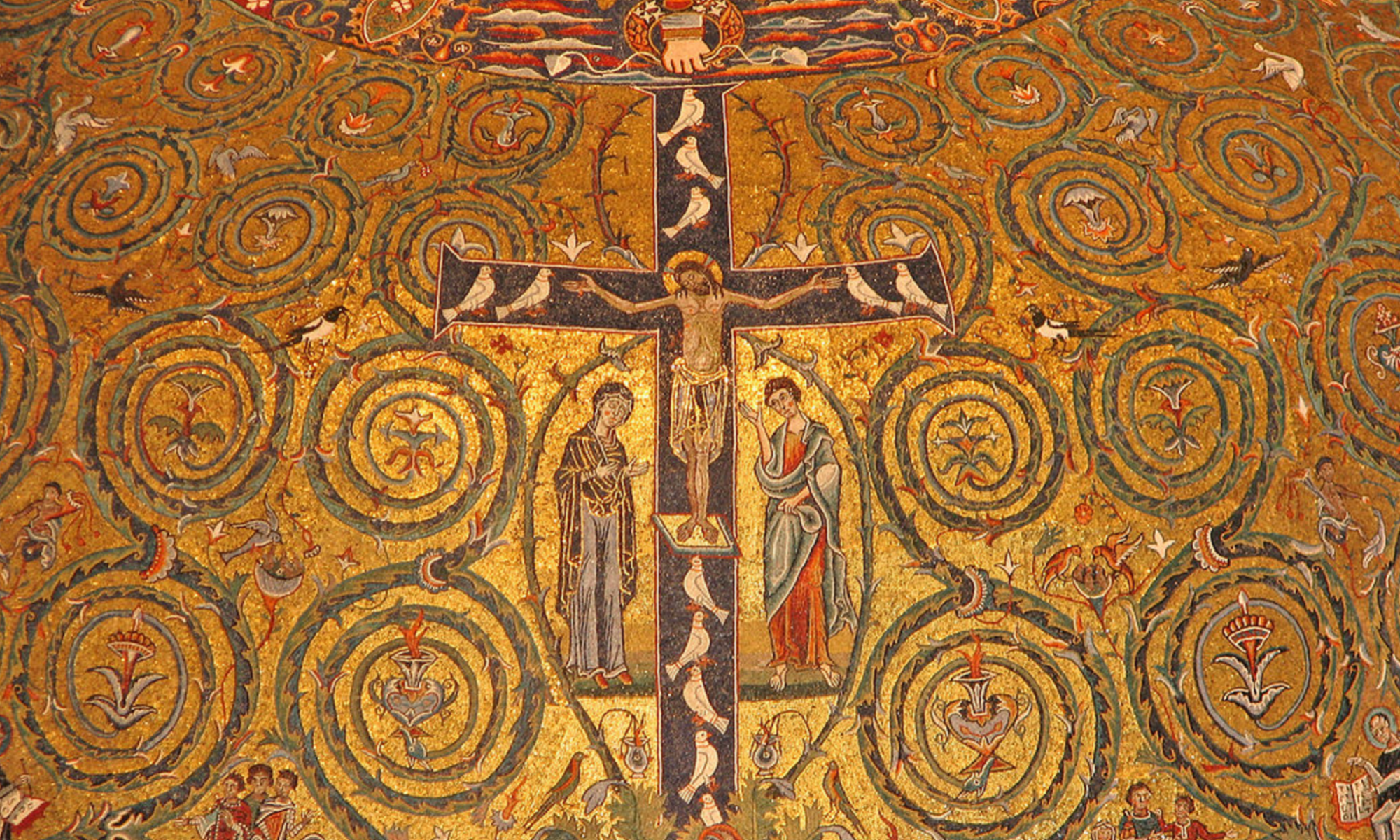
The Conversion of St. Monica

Another rerun! This post was first submitted on March 10, 2019.

Monica is an immensely popular saint, particularly among those who fret about the sins and sufferings of their adult children.  Many a mother has fantasized, “If only I could be like Monica…If only I could pray hard enough and shed enough tears to convert my children as she converted Augustine…” In our age of addictions, no wonder she is so popular!

But perhaps she is popular for the wrong reasons. I am convinced that, if we knew her whole story, we would discover a major conversion of her own. Her son Augustine wrote his Confessions, in which he tells one of the most stunning conversion stories of all time. He periodically alludes to his childhood and his parents. Knowing what we know today about sexual addiction and addictions in general, it’s not hard to start connecting the dots. I think Monica’s greatest victory was not the deathbed conversion of her pagan husband Patricius, nor even the tear-filled conversion of her son Augustine. No, her greatest victory was her own recovery from codependency.

Consider the legendary words of the bishop St. Ambrose, when she entreated him with tears about the sins of her son Augustine: “Speak less to Augustine about God and more to God about Augustine.” Wow. I can relate. It is not uncommon for a priest to hear something like this: “Father, you need to help me to fix my children!” Well okay, they don’t usually put it that bluntly. But many mothers and fathers feel like their personal self-worth is on the line. If their children sin or fail, they themselves are failures. That’s a lie.

It is one thing to grieve over the sins of our loved ones. Destructive behaviors are sad indeed. It is another thing to feel personally responsible. The apostle Paul reminds us that each disciple must carry his own load (Galatians 6:5). We cannot fix other people’s problems or manage their lives.

Trying to do so leads to an array of unhealthy and destructive behaviors: perfectionism, judgmental or self-righteous attitudes, bitterness, resentment, depression, hopelessness, avoidance of conflict, self-loathing, self-punishment, manipulative comments, shaming or blaming postures, trying to “fix” others, unsolicited advice, and the like. All the while one ignores the pain and grief of one’s own heart.

These “codependent” attitudes easily thrive in homes where addictions dominate. Monica was married to an addicted husband and reared an addicted son. It is not a stretch to imagine her battling with codependency on her path to sainthood.

In our pornographic culture, I have had conversations now with hundreds of men who have a wound of sexual addiction, whose behaviors are very much like those of Augustine and his father Patricius. Some of those men, like Augustine, have found liberation and peace as they walk the path of recovery. As they heal, they get in touch with their father wounds. Often, their fathers were like Patricius – unfaithful to their mothers, verbally or physically abusive, alcoholic, absent, etc. Recovering addicts begin to realize that their unwanted behaviors are not the real problem; they are only the tip of the iceberg. Lurking beneath are old and unhealed wounds. As prevalent as father wounds are, I am finding it a nearly universal truth that where there is a sexual addiction, there is an unhealed mother wound. I definitely see mother wounds in Augustine’s story.

Let’s tread carefully here. Acknowledging these wounds is not about casting blame on father or mother for the sins of their children. No one gets into an addiction without himself choosing or agreeing at some point along the way. The great Jimmy Buffet teaches us that we are ultimately responsible for our own sins. Additionally, sometimes children are blocked from receiving what they really need for reasons that are not the fault of the parents.

In Monica’s case, it’s not hard to imagine her playing the victim card, casting herself as a silent (or not-so-silent) martyr, subtly manipulating or shaming as she tries to guilt her husband and her son into doing the right thing. As I hear of the deathbed conversion of Patricius, I wonder just how much joy and liberation he felt in his baptism, versus a reluctant agreement mainly to appease Monica. God knows the truth.

Filling in the blanks, I think Monica’s conversion story goes something like this:

Monica is mired in misery, abused and betrayed by her husband and repeatedly wounded by the wanderings of her son. Probably the abuse and mistreatment began with her own father, and she learned how to cope from her own codependent mother. Like so many in her shoes, she fantasizes about how blessed her life would be if only her husband or her son would change. She is hyper-aware of their behaviors and constantly tries to manage the damage. Eventually, she learns to stop lecturing or shaming or manipulating. She heeds the godly advice of Ambrose and talks more to God about Augustine. She talks to God more and more often. Augustine doesn’t seem to change. She harbors a good deal of bitterness against the men in her life, yes, even against God. She won’t admit that, because good Christian women don’t get angry, certainly not at God! Still, she meditates often on the sufferings of Christ and of his mother Mary. She is often moved to tears – sometimes without knowing why. Finally, like the weeping women of Jerusalem, she learns that Jesus wants her to weep for herself (Luke 23:28). She realizes that, when Jesus weeps over the destruction of Jerusalem, he is weeping also for the ruins of Monica’s heart, so often trampled down by others, so often neglected and ignored by herself. She starts learning that God is big enough to handle Augustine’s problems – far better than she can. She learns to surrender and to live in the present moment. Little by little, her heart, numb for decades, begins to thaw. She trembles and gasps and sobs as she feels God attuning her to the swirling anger and torrential sadness of her own heart. But she finally believes that her heart matters and that those who mourn are truly blessed. She lets it happen. Like King David in the Psalms, she pours out her heart to God – all of it. She surrenders all in faith. She begins discovering an unfettered joy and peace, even as she sheds more tears than ever. She is finally free.

It could have happened that way. God knows the truth.

Latin Lessons from Augustine

Today I invite you to learn some lessons in evangelization by reflecting with me on three Latin verbs: docere, ducere, and trahere.

I love Latin – its elegance, its symmetry, its adaptability, its precision, and its breathtaking capacity to say so many things with so few words. Above all else, what I love about Latin is how it opens a window into the hearts of so many amazing men and women – whether ancient poets like Virgil or Horace, or brilliant philosophers and theologians like Augustine or Boethius. You cannot truly learn a language without beginning to think and feel like the people who thought and spoke and wrote in that language. Latin may be a dead language that was uttered by women and men who long ago left this veil of tears, but to me some of them feel like old friends, brave companions, and wise mentors. I am grateful to have known them, and to have gained a glimpse into their souls.

Regarding the current Latin lesson, please don’t take it as a definitive discourse on the actual meaning of Latin verbs – it’s not. Rather, it’s a brief tour into the heart of Augustine of Hippo (a heart with huge desire). It’s an invitation to each of us to be open to what was so transformative for him.

I recently felt transported into “Augustine Land” while participating in a pastoral ministry workshop. The presenter drew a distinction between docere and ducere (if you are reading out loud, you can pronounce those as dough-CHAIR-eh and DOO-chair-eh, and call it close enough).

Docere means “to teach” and ducere “to lead.” The workshop invited us to examine ourselves and the methods we have used in ministering to others.  Have we have tried to operate from a posture of docere (teaching) without actually leading others? Have we given eager advice, or “talked at” the person we are ministering to, seeing ourselves as having right answers and readymade “shoulds”? Have we measured success or failure on whether or not we convince the other person?

Any outstanding teacher knows that this method of teaching will not work – except for a few who follow out of fear. Fear may be the beginning of wisdom; it may motivate us to start a journey. But it never keeps us going when the going gets rough. Only desire can do that – the desire that leads to Love. Perfect Love casts out all fear.

Teaching without leading is the way of the scribes and Pharisees – for whom Jesus saved up his strongest and sternest warnings. There is little vulnerability in that way of cultivating disciples, and therefore little Love and little joy.

I appreciated the presenter’s point, and then found myself suddenly back with my old companion Augustine, with whom I spent hundreds of hours with during my doctoral research in Rome. He offers us a third Latin verb to consider: trahere [TRAH-her-eh]. Over the centuries, it can mean many things: to draw, to drag, to pull. But for Augustine it has much more the sense of attracting or enticing or alluring. God the Father wants us to want him; he stirs us through our holy desire in a way that allows us to grow into his fullness.

Augustine is answering the objections of the Pelagians, who like the scribes and Pharisees overemphasized human responsibility and discipline – to the point of concluding quite wrongly that we humans take the first step in our salvation, that God helps those who help themselves. Augustine quite strongly condemns the notion, insisting with Paul the Apostle that we radically depend upon Jesus as our savior. From the very first moment of the gift to its tender growth and development to its final flourishing and persevering, all is God’s gift; all credit goes to him.

But – the Pelagians object – how does that leave space for real human freedom? Do we not become mere puppets of God?  That is where Augustine quotes Jesus to offer a profound answer to the Pelagians.  “No one can come to me unless the Father who sent me draws him” (John 6:44).

God the Father draws us, attracts us, entices us, allures us – in a way that leaves us totally free to respond (or not). He sows the seeds of desire in our hearts and aids our growth – if we are willing. We are invited to become receptive soil, weeded of the obstacles the hinder us, capable of receiving and growing and bearing fruit; to be branches abiding on the vine; to be living members of his Body.

Augustine uses the verb trahere to describe God’s agency in this process – not at all “dragging” or “pulling” like a stubborn pet, but in the sense of attracting, motivating, and enticing. Just as “teaching” (docere) can become self-righteous or condescending, “leading” (ducere) can become manipulative or controlling. Augustine rejects any sense of ducere that violates the dignity and freedom of the subjects.  God does not coerce; he does not make us do things! He is a loving Father who places holy desires in our hearts and deeply desires us to become fully ourselves. He honors our dignity and freedom – even when we choose to dishonor him.

I wrote last month about religiosity as a counterfeit version of religion. Instead of freely inviting others into relationships, into joyful communion in Christ, too many of us (myself included) have resorted to pressuring, shaming, fear-mongering, or manipulating to try to convince others to follow the right path. God the Father does not operate in that way.

Each of us can consider what this means for evangelization – for inviting others to follow Jesus as disciples. If we look at him in the Gospels, we see an example of the best meaning of all three verbs: docere, ducere, and trahere. Because Jesus is truly connected to God his Father, abiding vulnerably in love, he teaches as one with authority, and not as the scribes and Pharisees. He leads without coercing or manipulating. He allows his followers to stumble, to make mistakes, to misunderstand – yes, even to betray him. He speaks deeply into the deep desires of the human heart – noticing our needs, listening attentively, attuning, and affirming. He encourages and comforts, awakens and allures. Many follow him, discovering within themselves a profound hunger and thirst they had not realized was there – a longing that God himself had placed there. “No one can come to me unless the Father who sent me draws him.”

Teaching, leading, and attracting in this way can be unsettling! We feel quite powerless and vulnerable when we do it – we honor the freedom of the listener and open ourselves to the possibility of rejection. We open our minds and hearts to notice what God is doing – willing to be surprised if he takes us in a new and unfamiliar direction; respecting the God-given uniqueness of the person in front of us and that his or her path might be quite different from our own.

Augustine learned these lessons precisely because of his profound conversion. He finally and deeply allowed God to captivate his heart, to go into his places of shame, and to transform him.  He learned that desire is so much more powerful than fear or control. He came to experience the love of God the Father, and was magnetically effective in attracting others to it.

What about you and me? Will we allow our own hearts to surrender vulnerably to God the Father’s way of attracting human beings to the heart of his Son? Will we allow our churches to become places in which God easily attracts his sons and daughters, and they feel safe and confident coming alive in our presence? God, good Father that he is, will not force us to change our behaviors– but the invitation is there!

Understanding “Capital Sins”

We are all quite familiar with the seven capital sins: pride, greed, envy, wrath, lust, gluttony, and sloth. Perhaps we learned about them in a classroom setting; certainly we have encountered them in ourselves and others!

Today, I would like to invite each of us to do something we normally don’t do – to feel deeply the Father’s kindness toward us in our weaknesses and our repeated tendency towards sin. Then, with Jesus, we can allow ourselves to be curious about these inclinations that we experience.

As an accomplished sinner myself and as one who offers pastoral care to sinners, I find that we fallen humans tend to feel a great deal of shame and contempt around our weaknesses, our vulnerability to sin, and the details of our acting out. We tend to despise any part of ourselves that feels inclined to think or speak or act in one of these ways. Whether an inclination to numb out in slothfulness, to overeat, to compare ourselves with others and feel sadness, or to enter the realm of sexual fantasizing, we just wish that it would all go away. Shame incites us to see the broken pieces of our heart as worthless garbage to be incinerated, rather than as bearing the image of God and beckoning us back to the heart of the Father.

A deeper understanding of the capital sins – what they really are and why they are called “capital” in the first place – leads us to seek traces of God’s goodness even in those places of our heart that feel totally beyond his reach.

If we speak with greater accuracy, these seven impulses are not “sins” in the full and proper sense. They are tendencies or vulnerabilities in us. They are called “sins” because they come from sin and incline us toward sin. In Catholic theology, we speak of “concupiscence” as a wound in us, a strong inclination toward sinfulness that is part of the human experience as a result of the Fall of Adam and Eve. This wound of concupiscence is, of course, exacerbated by our own choices in life. The more we sin, the more we want to sin. The seven capital sins can then be understood as seven different ways that fallen human beings experience a strong inclination toward sin. We do not find it difficult to allow ourselves to indulge in any one of these seven inclinations. Jesus speaks about the wide gate and easy road that leads to destruction – in contrast to the narrow gate and difficult road that leads to life.

Indeed, we probably best know these tendencies as the “seven deadly sins” – because they easily become toxic, harmful, and deeply destructive. Unchecked, they rupture our relationships with God, others, and self, and ultimately lead towaerd death in every sense – physically, emotionally, and spiritually. Each of us is created in the image and likeness of a God who is love – an eternal communion of persons in glorious relationship. We innately understand just how destructive our acting out becomes – and the devil is all too eager to bury us in shame. His endgame is to tear away as many of us as he can and get us to agree to never ending isolation, misery, and torment.

But why are these seven tendencies called “capital sins”?  The word “capital” comes from the Latin caput – which means “head,” but can also mean “source.”  John Cassian and Gregory the Great reflect on how each of these impulses becomes a source of sinfulness in us – not sins in and of themselves, but, if unchecked, strong impulses that lead us down the road of perdition.

The thing is, the devil cannot create. He is not God. He can only use the good and beautiful things God has created in an attempt to lie and steal and destroy. Ignatius of Loyola refers to the devil as “the enemy of human nature.” He absolutely despises us. He hates the glory of God that shines in each of us. That is where he attacks the hardest – which in a backwards way teaches us an important lesson: if we look deeply into our hearts at the places where we experience the most intense attack in the form of the seven capital sins, there we will find God’s glory the most present. Why else would the devil attack us so intensely there?

In other words, at the core of each of these seven capital sins in us, we find amazingly good desires and needs that God has placed in the human heart. Yes, these seven tendencies can easily become sources of sinfulness that have great potential to lead us astray. But they can also be deeply helpful clues to lead us back to God!

That is where tender kindness, childlike wonder, and holy curiosity come in. Rather than shaming myself, I can start noticing what is happening in my heart. My anger is there whether I like it or not! Yes, I can allow it to leak out in aggression toward others or myself. But it can also be an invitation into the fullness of God’s truth and justice, and an awakening of my prophetic identity in Christ. In my envy I can notice the things my heart deeply aches for – often things the Lord deeply desires for me – but only if I am willing to allow myself to feel the heartache of longing and waiting. In my lust I can notice all kinds of desires and needs – to be desired and chosen, to be safe and secure, to be embraced, to be known and understood, or to be loved as I am, (notice that none of these is really about sex!). In my sloth I may discover much less “laziness” and much more shame and fear – an urge to hide and isolate and turn away when what I actually need is real relationships, in which I can be cared for precisely where I feel the weakest and most vulnerable.

Whatever capital sins we find to be our “personal favorites” are also very likely the places we will find the deepest and holiest longings of our hearts –places in which our loving Father desires us to experience our true dignity, meaning, and purpose as his beloved children. Each of us can become “disciples” – yes, in the sense of discipline, but even more so by allowing Jesus to help us become students of our own heart, which is created in the image and likeness of God and declared by him to be “very good.” If we open ourselves to that experience of authentic discipleship, the places of our deepest sorrow and struggle will become the very places that lead us back to the heart of the Father.

Religion or Religiosity?

Religion isn’t exactly gaining popularity these days. Even though most people believe in God or some higher power, fewer and fewer people are willing to be associated with religion.

“I’m open to spirituality, but I don’t have any interest in religion.” I think some of us experience a visceral reaction when we hear such statements. However, rather than immediately perceiving a threat, rather than shifting to a posture of judgment or discouragement, it may behoove us to be curious and ask, “why?”

Why does this or that individual no longer want anything to do with religion? Each person has a story, and we can often be surprised by what we learn. However, they may not tell us the whole truth unless they really believe we are going to listen. If they intuitively sense contempt or condemnation, control or manipulation, they won’t feel safe enough to share their story (and who could blame them?).

Many of our families – including our church families – have been toxic and dysfunctional. Often, under the pretext of religion, we have been guilty of “religiosity.” As a result, many would-be Christians, some of them deeply hurt and betrayed, have decided they want nothing to do with religion. In many cases, it is not actually religion that they are rejecting (much less God himself), but a “religiosity” masquerading as religion. If so, in some cases the attempt to reject religion may actually be a step in the right direction! When a family becomes dysfunctional, the “black sheep” is sometimes the one with the highest level of personal integrity! For example, I think of that great scene in The Adventures of Huck Finn in which Huck chooses to be a “bad” Christian and to risk “going to hell” by doing the unthinkable and helping a slave escape.

What is “religion” anyway? I would invite everyone back to the root meaning of the word.  Religio in Latin comes from re-ligare: to “to re-bind” or “reconnect.” Authentic religion heals and restores our relationship with God, our relationship with each other, and our relationship with ourselves. It restores wholeness and integrity; it leads us into true and meaningful connection, intimacy, love, and unity. If it does not do those things, it is not authentic religion!

Notice that authentic religion is both objective and subjective, both real and relational. Many today (even Wikipedia!) make the mistake of viewing religion in purely subjectivist terms – as though religion is the product of our efforts to make meaning out of life and human existence. To be sure, seeking and finding meaning is incredibly important. It is God himself who placed that insatiable yearning into our hearts. Yet God is real, independent of human seeking and striving. He has really revealed himself, and he desires us to find fulfilment in our desire for him by being received into real relationship with him. Religion is ultimately initiated by him and freely responded to by us in the new and eternal Covenant.

On the flipside, in the name of “the truth” many Christians today have forgotten about the real relationships involved. Much like the Pharisees, they have slipped into religiosity, which becomes a distortion of authentic religion in a manner that turns people away from the living God.

I confess to Almighty God and to you, my brothers and sisters, that I have often been guilty of “religiosity” in the name of religion. I have focused more on being right than on forming a deep and meaningful relationship with the person in front of me. I have focused more on trying to coax or convince others to do the “right” thing, rather than attuning to the deep desires of their hearts and noticing what God is doing there. I have held contempt toward those who disagree with me rather than practicing empathy and seeking to understand them deeply in their own story, and especially in their suffering. I have clung to resentments rather than entering into authentic grieving, which allows me to manifest God’s mercy from the depths of my heart.

There are some, in their clinging to religiosity and claiming to represent the Church, who have gone so far as to fixate on condemnation and hellfire in unwholesome ways. For them, the “Good News” becomes all about avoiding hell personally and then deciding which other people go there. Loving others means “saving” them by turning them away from hell by whatever means necessary: name-calling, fear-mongering, shaming, manipulating, or coercing.  Perhaps the greatest irony occurs when we Christians call ourselves “Pro-Life” and then engage in these behaviors that are so against the dignity of the human person, and so clearly against Jesus’ commandment to do unto others as we would have them do unto us. Who among us honestly desires others to call us names, to manipulate us, to coerce us, to shame us, or to motivate us by fear? These tactics are spiritual abuse. They are not religion. If we have ever engaged in them, may we repent and make amends!

Yes, hell is real, and the Good News is that I don’t have to live in hell anymore! We tend to think of hell and heaven as future realities, but they begin even now, already-but-not-yet. The humble person is willing to admit that his life has become a living hell, and that he cannot save himself. It is Good News indeed to discover an authentic path to freedom and peace, and to enter into real relationships through authentic religion (authentic “reconnecting” with the living God, restored relationships with others, restored integrity of oneself).

If our religion is real, our relationships will be thriving: the Trinity will dwell within each one of us ever more fully (as our desire increases daily); we will experince vibrant and joyful relationships with each other; we will manifest a deep respect for and rejoicing in the dignity of each human person; we will foster the unique flourishing of each culture; and our unity and love will be palpable. It will not be the bombastic unity of one person playing loudly and insisting that others join the refrain, but the stunning symphonic harmony of many diverse instruments, all conducted by Christ and each breathed into by the one Holy Spirit of God.

I repent of my religiosity and renew my desire to grow into real religion. Do you?

Learning to Saunter

Have you ever had that experience of always assuming you knew what a word meant, only to discover that it actually bears quite a different meaning?

I had one of those moments with the word “saunter.” I had encountered it often in books, usually with the same phraseology: “He sauntered in.”  To me, in context, it always felt synonymous with “strutted,” and I never bothered to look the word up.

But one day I was on vacation, a guest at the home of friends, reading one of those life-coaching plaques in their home (I’ll leave it to your imagination to guess which room of the house it was in).   The plaque gave dozens of tidbits of advice for joyful living.

One of those sage counsels was “Saunter aimlessly.” It didn’t seem to fit with the rest of the phrases on the plaque. “Strut aimlessly”??  I suddenly found myself hearing the admonition of Inigo Montoya:

“You keep using that word – I do not think it means what you think it means…”

So I got out my dictionary. Actually, let’s be honest – I got out my smart phone, which is ironic, because the smart phone is quite possibly one of the greatest disrupters of sauntering in all of human existence.  But it gets the job done as a dictionary. The scales fell from my eyes as I read the following:


saun·ter
/ˈsôn(t)ər/
verb
1. walk in a slow, relaxed manner, without hurry or effort.

It was so much more than an “aha!” moment. It was one of those divine taps on the shoulder. Perhaps I had misunderstood this vocabulary word all my life because I am not so skilled at sauntering.

Well actually, that’s not entirely true. Deep down, my heart LOVES to saunter. Have you seen those Family Circus installments that trace little Billy’s meanderings with a dotted line? I definitely have a little child inside that absolutely delights in sautnering – exploring the nooks and crannies of God’s creation in a spirit of curiosity, awe, and adventure. But many other parts of me rise up to squelch that childlike longing.

My workaholic and perfectionistic tendencies don’t tend to leave space for little Derek to saunter. I experience restless urges within me – an urge to “get caught up,” and urge to be constantly productive, and an urge to meet the impossible expectations of others. My inner critic warns me that there is no time for such childish pursuits. If I stop to smell the roses, an inner alarm goes off, warning me to move on to the next thing or raising my internal level of guilt about being selfish or lazy.

I apparently did not know the meaning of the word “saunter” during my four years living in Italy, but it was often right there in front of me. I recall feeling frequently annoyed at the locals, stuck behind them as they strolled aimlessly down the sidewalk – on those few Roman streets that are actually wide enough to have sidewalks. Somehow one Italian could effectively block an eight-foot wide space, always walking down the middle, often smoking a cigarette, and veering randomly to the left or the right as they sauntered along without a care in the world. Italians are not exactly known for efficiency or industriousness, especially the further south one goes. There I was, descended from neurotic Northern Europeans – and even among my own people bearing a legendary reputation for productivity and overachieving. Needless to say, I did not blend in, nor did I try to. I found ways to beat the system and accomplish the tasks I felt driven to do – but not without resentment and frustration. I could have learned some lessons from those Italians.

In truth, we cannot live as humans without sauntering sometimes. Our ultimate purpose in life is to abide with the Lord forever. Each one of us carries deep within us a yearning for rest. If we do not honor that yearning, it will find ways to express itself – often in fruitless fantasies or mindless escapes that do not actually refresh us.

Desiring our happiness and wellbeing, God commands us to engage in Sabbath rest. He rests on the seventh day and invites us to participate in his rest. Easier said than done!

I remember the summer of 1995, at the end of my freshman year of college. I felt a conviction that, as a student, my labor was academic – which means observing Sunday as a day of rest from my studies. I made the decision not to do homework on the Lord’s Day. I thought it would be incredibly hard to “get my work done” without utilizing Sunday. I was wrong there. Those adjustments proved easy to make, and helped me be more intentional about my time the rest of the week. There was no challenge academically. Rather, what surprised me was how exceedingly difficult it proved to spend the newly found time on Sunday in real rest and rejuvenation. I found my heart restless as it tried to indulge in various kinds of entertainment or pleasure.  My prayer felt scattered and distracted. It surprised me that rest could be so hard!

I remember a similar restlessness on many of my retreats over the years – worrying about “doing it right.” I eventually learned that the Lord would bless me regardless, and now I cherish my retreat days each year. They are one of the rare times in the year that I seem to feel greater freedom to saunter. At so many other times, there is something inside of me that seeks to sabotage authentic rest. It doesn’t feel safe to be blessed and to receive. There is a vulnerability in it that is so wonderful and so terrifying at the same time.

I think “sauntering” can be even harder for me, because sauntering still includes a certain sense of movement and purposefulness, albeit in a more carefree manner.  I tend to set myself up with impossible tasks and then always feel in a hurry, always under stress. I walk fast. I drive fast. I plow through tasks. I am disciplined and driven. In that setup, there is little permission to move at a slower pace, to welcome interruptions as opportunities to receive, to wonder at and delight in the amazing beauty that surrounds me.

These moments of sauntering, puttering, meandering – whatever the right term is – are so essential for me to feel safe, to be open and receptive, to notice and to care, to be in awe and to wonder, to learn, to grow, to be generous, to appreciate, to be grateful, to affirm and encourage others, and to praise God. I am so much less human if I do not allow space for sauntering in my life.

Thankfully beauty often breaks through in spite of my defenses. It sneaks in the back door and catches me by surprise.  At those moments I have a choice to make. Will I rush on to the next thing and miss an opportunity to abide with the one who loves me so much? Or will I be kind to myself, allowing myself to take in the goodness and beauty, to savor it, to delight in it, and to praise the God who gives such good gifts?

Jesus, teach me to “saunter aimlessly” and to learn to be at peace when I do so.

Reflections on Zechariah

Advent is a wonderful time to read the writings of the prophets. Those chosen men, frail human instruments of God, kept their hearts stretched out in expectation, even amidst woes, tears, and lament. Their provocative imagery opens up a vast horizon of Hope. Led by the Holy Spirit, they allowed the depths of their human imagination and emotion to be tapped as they plied their pen to describe God’s desire to come and save us. Many times they offer promises of his salvation that will somehow simultaneously bring a fiery intensity AND a tender gentleness. Justice and Mercy. Love and Truth.

This Advent my heart has been captivated by the final four chapters of Zechariah, which are apocalyptic in nature. Unfortunately, “apocalyptic” tends to mean “easily hijacked.” The final book of the Bible, the Apocalypse (a.k.a. “Revelation”) is the most frequently butchered book, plundered by misguided Christians as they sound alarm bells about the end of the world and claim to have all the answers. Never mind that Jesus told us clearly that no one except the Father knows when the end will actually come (Matthew 24:36), and that we ought not chase after these messianic alarmists (Mark 13:21).

Those who read apocalyptic writings in a way that is unduly fascinated with foretelling the future are largely missing the point. Whether the Book of Revelation or certain passages in Daniel or Zechariah, the apocalyptic writings in Scripture have genuine meaning and relevance for all who read the text – including the original audience; including the many millions of men and women who never saw the second coming of Jesus; including you and me.

“Apocalypse” literally means “unveiling.” The prophetic promises point to an ultimate unveiling that is “already but not yet.” We are meant to enjoy a true taste of them here and now, yet always with a sense that more is yet to come, and we are not yet ready for the fullness.

The coming realities, sharing as they do in God’s infinity, necessarily elude the full comprehension of our present finite experience. It reminds me of a famous episode of The Twilight Zone in which a little girl in her bed somehow stumbles through the wall into a fourth dimension, and her family frantically seeks to rescue her. Her limited human mind cannot process the newness of a fourth dimension. It is overwhelming and disorienting.

As great as human logic is, it can only bring us so far. Every wise theologian has understood this point. Thomas Aquinas described doctrinal propositions as tending towards the Truth, and reminded us that our Faith is not directed towards the propositions of our creed, but rather towards the Truth itself that is pointed to in those statements. God’s Truth radically transcends our expressions of it. Towards the end of Thomas’ earthly life, he had a deep mystical experience of God, after which he expressed that all the allegedly wise words he had written now seemed to him “like so much straw” in comparison to the glory he had glimpsed.

With that “already but not yet” perspective in mind, we can allow the powerful imagery of the prophet Zechariah to captivate our hearts and minds, to speak to our experience and pour blessings upon us here and now, while opening our hearts in Hope, reaching out receptively to the greater realities yet to come.

Zechariah paints a picture of lament and loss. He describes the trees grieving over the felling of many mighty and beautiful cedars, cypresses, and oaks. He describes the weeping of the shepherds over the loss of their glory, the betrayal wrought by shepherds forsaking their flock, and the confusion and woes of a flock that goes unshepherded. As a result, Zechariah foretells that two thirds of the people will fall away. The one third that remains will pass through fire like silver and gold that is tested.

Got your attention yet? To me, it is as though he is describing our present-day experience in the Church. But the point is not to be alarmist about the end of the world. Instead, we can allow the imagery to disrupt us in a way that opens up space for Hope, which is by far the deeper message of these chapters. Hope is also the reason why we read from the prophets every Advent. Again, let us remember that these words of Scripture speak to believers in all centuries, not merely our own. The point is to let them speak to us!

Zechariah proceeds to describe all the nations of the world rising up against God’s people and fighting Jerusalem. Even Judah will rise up against Jerusalem. But they will only injure themselves, like those who try to move an immovable rock. God will fight those who fight her.

Amidst these scenes of strife and loss, Zechariah offers vivid images of Hope, ones that connect closely with Jesus in John’s Gospel and with John’s promises in the Book of Revelation. Zechariah promises a fountain welling up within the house of David. Fresh water will flow from Jerusalem, during both summer and winter, to the East and the West. There will be no more darkness or cold, but only the Day. He promises the restoration of Jerusalem and the inclusion of all the survivors of these great trials – both the Jews and the Gentiles who had rebelled against Jerusalem but now repent. Cleansed by the fountain, they will gather year after year to celebrate the Feast of Tabernacles, bowing down to the King, the Lord of Hosts. On that day, each household in their own tent will find their cooking pot to be sacred to the Lord. No longer shall the Temple be a marketplace, in which people attempt to purchase holiness. Each and every vessel will receive and be filled as from the altar itself; each household will be truly holy to the Lord of Hosts.

A marketplace no more. Intellectually we understand that God’s holiness cannot be bought, and that no amount of magic or manipulation can bend Him to our will. Yet we still try. One way or another, our prayers tend to be varied attempts at praying, “My will be done!” – or more subtly, “This is what you have to do for me, God.” Much more elusive to us is the experience of freely receiving, gently abiding, and humbly depending. We have a tendency to keep grasping at a God we can control and bend to our will. Idolatry dies hard.

Jesus breaks into our brokenness with a newness that flips our paradigms upside down. John’s writings illustrate this point powerfully with the image of “tabernacles” (tents). John begins his Gospel telling us that Jesus, the Eternal Word of God, became flesh and made his dwelling among us. Literally, he pitched his tent in our midst. In the Old Testament, autumn after autumn, God’s people celebrated the Feast of Tabernacles by bringing their harvest fruits to the Temple and constructing their tents around the Temple.

In John 7 and Revelation 7, this imagery is flipped around, in a way that evokes Zechariah’s promises. Jesus goes up to Jerusalem during the Feast of Tabernacles and proclaims, “Whoever believes in me, as Scripture says: ‘Rivers of living water will flow from within him.’ He said this in reference to the Spirit that those who came to believe in him were to receive.” Revelation 7 describes a living fountain issuing forth from the Lamb once slain, and an endless Day shining forth from the Temple. The white-robed army that has endured the time of trial will be sheltered (“tented”) by God himself, day and night. Revelation 21 re-echoes that God will dwell (“tent”) with his people day and night, and will wipe every tear away.

Our tendency from the Fall until now is one of pride and self-protection. Adam and Eve tried to hide from God and cover their nakedness. We, their descendants, spend much of our lives constructing our own versions of holiness and try to become good enough so that God has to give us what we want.

Mercifully, God allows our false props to be stripped away – yes, even by means of harsh trials. They are of our own making – not his – but he turns all things to the good for his beloved children. To those not yet ready to receive and abide and depend, it feels terrifying and seems like punishment – much like the imagery at the end of Zechariah. It is then we can take great assurance in the Hope he promises: “The city will be inhabited; never again will it be doomed. Jerusalem will dwell securely” (Zechariah 14:11). When we remember that the living fountain of the Holy Spirit is always there within our hearts, that the light of the Risen Christ shines brightly, and that the Father himself will extend his shelter over us, then we can begin to take him up on his invitation to abide in his presence in Hope.