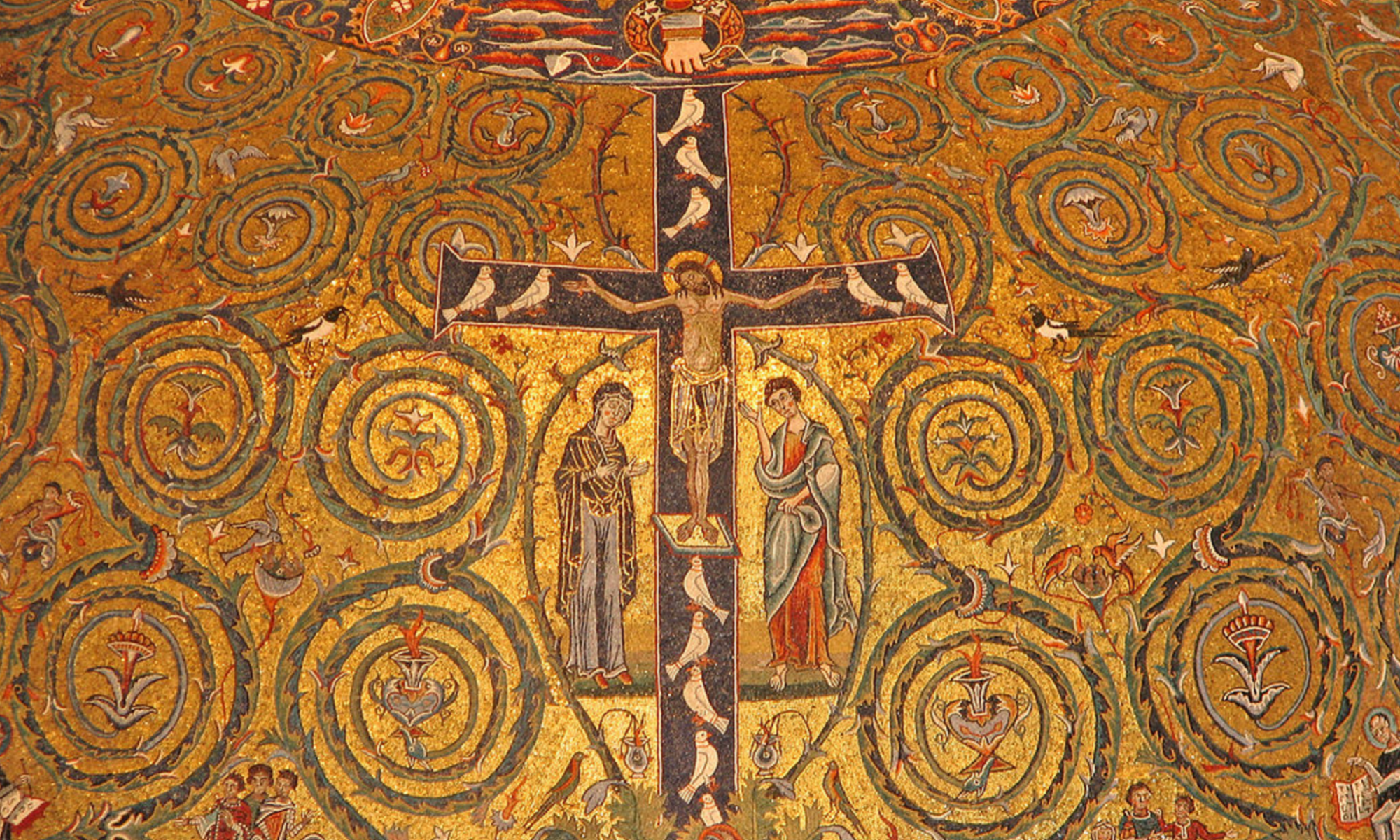
The Tomb as a Womb

It was Easter Sunday: April 12, 2009. I stood in awe at the tomb of Jesus in Jerusalem. I had spent the entire night there in prayer, and was the very first pilgrim to enter that morning. It was a transformative experience that I will never forget, an experience almost too real to remember.

The church of the Holy Sepulcher houses both the location of Christ’s death on Calvary and his tomb, made forever holy by his resurrection. My friends and I joined in the Catholic liturgy at those sites for Holy Thursday, Good Friday, and the Easter Vigil.

It was odd to celebrate those ceremonies in the morning. But Jerusalem is an odd place. Because these holy sites are shared with the Orthodox, the Armenians, and the Copts, there is an age-old “Status Quo” agreement that determines who has access when. The Catholic time is 8am, regardless of the occasion.

A few of us returned to the basilica that Holy Saturday night to observe a personal prayer vigil at the Lord’s tomb. I’m ashamed to admit that it is the one and only all-night prayer vigil of my life. For some reason, when it comes to the Lord, that level of sacrifice and generosity is elusive. Too bad, because the Lord is never outdone in generosity!

Knowing that I would be there all night, I was in no rush to “get my prayers done” or to feel like I had to be doing something at any given time. This turned it into a timeless experience. For the first few hours I simply sat back and absorbed the stream of pilgrims that were coming to the church to try to get into the tomb. Occasionally I read some Scripture passages. I began praying for the many people whom I knew needed my prayers. I was overwhelmed with a deep sense of sorrow over so many suffering souls and so many problems in the world – not to mention my own problems.

Then something happened that (for me) only happens about once every 10 years. I began to get the inklings of a poem swelling up within me. For the moment, I put it aside. After all, I thought, I am not a poet! But eventually I opened myself to the movement. The words came rather quickly. It went something like this:

O Tomb of Christ, this Easter Night
I bring to you man’s lonely plight:
toil, trial, sickness, woe,
unceasing wounds left by our foe,
anger, hatred, factions, fights,
fear-filled days and tear-filled nights,
heartache, heartbreak, darkness, death,
and growing pain with every breath –
but hope, hope-filled sadness
to you, the source of gladness.
O tomb that could not hold the Son
Who on this night the victory won,
I bury all my sadness here
and that of those I hold most dear,
that we may rise to second birth
here at the center of the earth.

I was just finishing as the Orthodox began their 2 a.m. Palm Sunday liturgy (their Easter was still a week away). Their somber and sorrowful chanting was beautifully haunting, and resonated with my heart. The time flew by. I began to write on that sheet of paper the names of any and every person I could think of who needed my prayer, as well as my personal intentions. The ink couldn’t run onto the page fast enough. I finished about the time the Orthodox were clearing out.

Ironically, my watch battery had gone dead on Good Friday, so the night was truly timeless. It must have been around 4 a.m. that I attempted to enter the tomb, like Mary Magdalene, “early in the morning, while it was still dark” (John 20:1). An Armenian priest was setting up for their liturgy, and it seemed quite unlikely I would be allowed in. I began to pray the beads of my Rosary, reflecting on the first glorious mystery – the Resurrection of Jesus – and hoping against hope. For some reason a few of the servers were late, and he waved me in.

I approached, finishing the final Hail Marys, and then entered the inner door on my knees. The moment I reached the threshold I broke down and wept as I had not for a very long time. It was such an unburdening and sense of true peace. The best word I can use is GLORY. I experienced the “Glory of the Father” by which “Christ was raised from the dead” (Rom 6:4), and this Glory filled me with Hope. Without eliminating or minimizing my own sadness or the sadness of others, this Hope permeated my soul with a deep confidence summed up in the words of Julian of Norwich, “All will be well, and all manner of thing will be well.”

I prayed for a few moments before heading back out, not wanting to test the limits of Armenian hospitality. With many tears still in my eyes, I silently thanked the priest for his kindness, and returned to the side of the tomb where I had been praying the past few hours. I wedged that sheet of paper and all those intentions into the side of the tomb and continued to weep and shake for several minutes more. Then I resumed my prayer, turning to Romans 6 and feeling the words come alive in my heart. The resurrection suddenly felt so real!

As the first streaks of dawn were just appearing, I pulled out my Liturgy of the Hours book to pray Morning Prayer. My heart was filled with praise, and so I sang the prayers. How surreal it was to stand at the entrance near the church, chanting the antiphon, “Very early on the morning after the Sabbath, when the sun had just risen, they came to the tomb, Alleluia” – at the very moment that hundreds of pilgrims were streaming in to see the tomb.

I am stunned at what came out of my heart that night. Only during the last six years have I found the courage to plunge deeply into those sad and lonely places of my heart – old places of pain that I didn’t even realize existed. But they were there, and they cried out to the Lord that Easter night in the poem that came out of me. The Lord hears the cry of the poor, and heals the brokenhearted.

The tomb is indeed a womb, giving birth to the newness of the resurrection. That new birth is what my heart longs for – and resists. It seems like it should be easy to welcome the Glory of the resurrection. But the resurrection opens an infinitely vaster horizon of human existence. When a baby passes from the security and comfort of the womb into a vast new world, he needs much nurturing, protection, and guidance to grow into it. So do we. That is why we celebrate the resurrection every single Sunday, and once a year with even greater solemnity. We plunge into death with Christ and rise with him in newness. May you and I joyfully claim even more of that newness this year. A blessed Easter to you all!

Self-Denial vs. Deprivation

“It is just as much a sin to deprive the body without discernment of what it really needs as it is to indulge in gluttony.”

These were wise words of Francis of Assisi to his band of brothers in the 1220’s. This is the Francis of Assisi who embraced radical poverty, including fasting and prayer vigils that most today would consider austere. He often meditated on the sufferings of Christ, and desired to be one with Jesus on the Cross. But Francis was known above all else for his radiant joy – a heart bursting with praise and gratitude. He surrounded himself with beauty and delight, but never grasped at it. He freely gave it all back to God.

The daily invitation of Jesus was imprinted in Francis’ heart: to deny ourselves, take up our cross each day, and follow him (Luke 9:23). How, then, can we make sense of his caution about not depriving ourselves of what we really need?

Francis of Assisi, with his marvelous grasp of the human heart, understood intuitively what contemporary research proves consistently: there is a connection between unmet human needs and unwanted behavior. Whenever we human beings are chronically deprived of play, rest, connection, community, understanding, safety, nurture, or meaningful purpose in life, it is only a matter of time before we start acting out with entitled behaviors.

Deprivation feeds entitlement. Entitlement then seizes. Our grasping attitude may not be that far from that of Sméogol in Lord of the Rings: “We wants it, we needs it! Must have the precious! They stole it from us!” If you are not a Tolkien fan, then I imagine you can resonate with the words of the apostle Paul, “The good I desire I do not do, but I do the evil I do not want” (Romans 7:19).

The immediate instinct in these cases is to assume that it is a problem of laziness or lack of discipline – often with no small amount of self-contempt and shame. We then punish ourselves by deprivation, telling ourselves we are doing penance and following Jesus. But in many cases, these penances embraced without discernment also begin to cut us off from what we truly need – from the things our hearts (and limbic brains) were looking for in the first place.

As a priest, I’ve worked with hundreds of people over the years who struggle repeatedly with the same patterns of behavior. Any time I have curiously explored, I have always found a significant deprivation of one or more authentic needs. Deprivation is not the primary reason why people get stuck in unwanted behaviors, but it is almost always there as a driving force!

I’ve learned much from contemporary Christian authors like Mark Laaser or Jay Stringer. Mark (now deceased) helped thousands to find freedom from their addiction to pornography or worse, not to mention helping to restore many marriages. Jay conducted research with 3,800 men and women struggling with unwanted sexual behaviors. His book (entitled Unwanted) explores the causes and contributing factors that need to be addressed if a struggling individual desires to live differently. Both make a convincing case for the importance of paying attention to our human needs, whatever our unwanted behaviors might be. Mark and his wife Debbie (in the book Seven Desires) describe how every human needs to be heard and understood, affirmed, blessed, safe, touched in a meaningful way, chosen, and included. Jay discusses the importance of delight, rest, play, creativity, meaning, and purpose. If we have a serious lack in any of these areas, we are likely to find ourselves unfree in our decision making.

Today’s authors give more precise language to these needs, they are by no means the first to notice them! I think of the Rule of Saint Benedict (he lived from 480-547). Most of us today would find their monastic lifestyle quite penitential. But it is moderate compared with the desert monks that Benedict had learned from. His Rule seeks balance and adaptability. He frequently acknowledges the importance of a wise abbot offering accommodations to monks regarding their prayer or eating or sleep, based on what is truly best for them and the community.

And then there is the quotation from Francis. Here is the fuller story from his companion and biographer, Thomas of Celano:

“One night while all were sleeping, one of his followers cried out, ‘Brothers! I’m dying! I’m dying of hunger!’ At once [Francis] got up and hurried to treat the sick lamb with the right medicine. He ordered them to set the table … Francis started eating first. Then he invited the brothers to do the same, for charity’s sake, so their brother would not be embarrassed.”

Francis concludes with the important lesson: it is just as much a sin to deprive the body without discernment of what it really needs as it is to indulge in gluttony. And then he reminds them of the supreme rule of charity (Christ-like love of God and neighbor). Our freedom in receiving and giving love is the ultimate test in discerning the wisdom of any self-denial.

Finally, let us not forget the example of Jesus himself. His human needs mattered. As a human being, he definitely received understanding, safety, nurture, delight, care, connection, rest, and play – not all the time or from everyone, but in ways that left a lasting impact. Throughout his childhood, he received from Mary and Joseph, not to mention his heavenly Father. He spent less than 10% of his life giving in public ministry – and even then he received care from friends like Lazarus or Mary or Martha. Even in Holy Week, Jesus rested in Bethany with those friends – receiving hospitality and love. Even in the Garden of Gethsemane, as he entered his Passion, Jesus reached out to his other friends (Peter, James, and John), asking them for connection and care.

Sometimes we don’t get what we need. Sometimes God even asks us to sacrifice things that we truly need – but usually he doesn’t. Over time, as deprivation of authentic human needs intensifies, our freedom tends to diminish, and with it our ability to receive and give freely in love. Our “sacrifice” will become joyless; our resentment will increase – and with it a Gollum-like grasping of entitled behaviors.

Discernment is the key. Jesus tells us to test a tree by its fruits. If self-denial is leading to growth in freedom, growth in faith, growth in hope, and growth in love, then we know it is being led by the Holy Spirit.

Yes, our greatest calling is to make a total gift of self and become the grain of wheat that dies so as to bear abundant fruit. That self-gift is only possible if (like Jesus) we humbly allow ourselves to receive, again and again, all that we need. Francis of Assisi and many other Saints understood. Their humble acknowledgement of their depth of human need allowed them to receive. Their receptivity opened them to the amazing joy of self-gift. May we learn from their example!

More Than We Can Handle?

“God doesn’t give us more than we can handle.”

At least that is what many Christians say in the face of trial or loss. But is it actually helpful? And is it true? I believe it is rather unhelpful, and only partially true.

I’ve written before on the importance of learning to sit with sadness – something we tend to avoid! It’s hard enough when it’s our own sorrow. We’d rather plunge into busyness or fixing or numbing rather than face our grief. But it’s especially hard when we are in the presence of other people’s pain. That’s when the advice or clichés come out!

First, we’ll try to fix it – if there seems to be a way of fixing. We’ll be “generous” and offer to help; we’ll make suggestions for books or podcasts; or we’ll compare this person’s pain with our own or that of a friend – anything to help make the pain go away, because we don’t like to feel it, and we definitely don’t like to feel powerless.

In some cases (tragedies or definitive losses), there is nothing we can do. When fixing doesn’t work, we start grabbing for clichés. Surely one of them will be the magic wand that will make this feeling of powerlessness go away! Surely one of them will help this person feel better so that I can feel better.

Are these clichés helpful? No, I would say not. They often have the effect of “blaming the victim” or shaming others for feeling the way they feel. Rather than compassion (“suffering with”), clichés are a way of stepping back from the pain of others and leaving them to suffer alone.

I suppose there is a time and a place for distracting or diverting from pain. Perhaps we are in a survival situation and lack the time, resources, or energy to engage head on. If mere survival is the best we can hope for at the moment, then we can indeed turn to our arsenal of distractions and find ways to minimize the pain.

Even when we are ready to face heartache, we are still human, meaning we are limited. We can’t face it all the time. It can be appropriate to take a break from our grieving, laugh together at a joke or a movie, plunge into a hobby or game, and so forth. A cliché could be helpful as permission to take a short break from the pain.

But if our Christian families and communities are unable or unwilling to accompany people as they face pain and heartache, then where can they go? Jesus does not want his Church to be a place of mere survival, but God’s own hospital in which we experience healing, redemption, restoration, and total transformation. That only happens by facing our heartache, taking up our Cross, following Jesus, dying amidst our powerlessness, watching and waiting, and experiencing the newness of the Resurrection. If we desire to be “helpful” to those in pain, we must first walk this path ourselves – as Jesus did. We can’t give what we ourselves have not experienced.

Is there any truth to this expression, that “God doesn’t give us more than we can handle”? Sort of.  Here is what the apostle Paul says:

“No trial has come to you but what is human. God is faithful and will not let you be tried beyond your strength; but with the trial he will also provide a way out, so that you may be able to bear it” (1 Corinthians 10:13).

As you can see, the cliché is an oversimplification and distortion of what Scripture actually says.

Paul doesn’t attribute our trials directly to God’s agency. God permits or allows us to endure trials, but they are human. They are the result of a misuse of human freedom – by our first parents, by others who have caused harm, and by our own sins. Directly or indirectly, all trials in this life are the result of human sin. God allows these consequences because he has entrusted us with dignity, freedom, and  real authority amidst our stewardship.

God is faithful. He is absolutely committed to accompanying us through every trial. He will never abandon us, and will never leave us without every means of assistance that we truly need to move through the trial.

God provides a way out. There is a true exit to the trial. We tend to hunker down in our panic rooms, avoiding the heartache – and ultimately getting stuck. But Jesus himself, God’s own beloved Son, has plunged into our trials. He has gone there first, and has opened up a path to new life. If we follow him faithfully, if we share in his suffering and death, we will experience a radical newness and expansiveness – and not just “one day” in heaven.

As we see in the saints, there is an amazing foretaste of this newness that comes even in this life. If you study their lives, you will find a stunning diversity of humans, all with two common features: (1) They endured enormous trials; (2) They were incredibly joyful followers of Jesus.

Like them, we will be able to bear our trials: because God is faithful to his promises, because Jesus has blazed a trail for us, because he accompanies us, and because he won’t allow us to be tested beyond our strength. Therefore, we can hope.

Hope is the answer in the face of heartache. Hope refuses to be killed by suffering (or by clichés!). Hope perseveres – not by naïve optimism, not by secular stratagem, but by waiting persistently for our faithful God to fulfill all his promises. This is the hope of mother Mary standing at the foot of the Cross on Good Friday and at the tomb on Holy Saturday – believing God’s promise, staying present, enduring, pondering, and waiting. The joy of resurrection always comes to those who abide in hope.

May we be people of hope, this Lent and always!

HopeSick

Advent is a season of Hope. We allow our hearts to long for the coming of Jesus. We dare to desire more.

The Church’s liturgy invites us to listen attentively to the prophets, who burned with an eagerness for the coming of the Messiah. Isaiah imagines what things will be like: swords turned into plowshares, a definitive end to war; the desert blooming with flowers; the blind restored to sight, the deaf restored to hearing, the lame leaping with joy; the lion and the lamb living in harmony; the stump of Jesse blossoming and bearing fruit.

In one sense, the longed-for Messiah has come. Jesus was born in Bethlehem. Humans and angels alike who participated in the events of that night were bursting with joy and praise.

In another sense, nothing has changed. There seems to be just as much greed, devouring, exploitation, hatred, contempt, abuse, and violence as in Jesus’ day.

In one sense, Jesus has definitively won the victory. When we get to Holy Week, we will remember his words on the Cross: “It is finished.” At Easter we will celebrate him as the lamb once slain who lives, never to die again.

In another painfully real sense, as you and I embrace everyday life in these challenging times, that victory feels anything but assured.

Many aspects of life went “back to normal” nine months ago. But no amount of socializing or traveling, getting or spending has restored joy or peace. Many of us feel depleted, burnt out, or discouraged. We struggle to remember how long ago things happened, and feel a great uncertainty and dis-ease about where things are headed. Even when we keep returning to our holy desires, we can sometimes feel stuck.

I have a word for this dis-ease: being HopeSick. I’m sure I’m not the first one to think it up. I sometimes feel sick amidst my hoping. And yes, like the prophet Jeremiah, sometimes I cry out to the Lord because I am feeling sick of hoping.

I was expressing this felt heartache to a wise mentor, who suggested the metaphor of sickness – not as a moral failing (any more than Covid or the flu is a character flaw) but as a point of powerlessness. We all know those moments of a disease in which we feel utterly overwhelmed. We can’t change anything; we can’t alleviate anything. Even if we know it will eventually pass, we have no way of knowing how long, and we notice no signs of relenting.

There are also aches or illnesses that will never go away in this life. It doesn’t always get better. Many of you live with debilitating pain day after day. You alternate days of surrender, serenity, and joy with days of discouragement. Darkness is only an absence of light, but it can feel very, very real.

Advent is a time of Hope amidst the darkness. As the warmth and light of the sun flee us, we still dare to Hope. In a time of sickness and powerlessness, we endure in Hope.

Advent is a time of “already but not yet.” The Kingdom of God has indeed broken into this world, in the person of Jesus Christ. He promises to come again with the fullness of justice – and he will. Meanwhile, we watch and wait. And wait. And wait.

If our hearts are anything like the hearts of the prophets (or like the souls of the just in the Book of Revelation), we eventually cry out in agony, HOW LONG??

What joy to be like Simeon or Anna in the temple, keeping prayerful watch for decades and finally, at long last, beholding the object of their desire, embracing and delighting in the newborn Jesus. Simeon was totally ready to die amidst his overflowing satisfaction and joy.

Luke narrates that exhilarating moment of fulfillment. He only hints at the many moments of heartache that preceded. I wonder – how often, through all those decades of waiting, did Simeon or Anna feel HopeSick?

We know that Jeremiah and Job felt HopeSick, as did Abraham and Moses. They often cried out to God in exasperation, feeling as though they couldn’t possibly go on. God met them in their longing, and they went on.

Hope can be precarious because it so often includes a felt powerlessness, and even moments of darkness. For many of us, there have been many such moments – even from a young age. The prince of darkness loves to draw near in those moments, whispering his lies about who we are, who others are, and who God is. See, this is what always happens… Nothing will ever change… What’s the point?… You can’t count on others; just take care of yourself…

Those of us who have known intense moments of trauma experienced an intense powerless in those moments. Whether the “moment” was 15 minutes or 15 years, it didn’t matter. We lost our sense of time.

And our bodies remember. Present day moments of timeless trauma, of feeling stuck in HopeSickness, can bring back old feelings and old lies – and with them old behaviors! And then we can really feel stuck. Or we can begin shaming ourselves or feeling shamed by the well-intended advice of others.

Jesus did not shame the blind, the deaf, or the mute. Nor did he shame those who were sick in their sins. He bore our infirmities and connected with us amidst our anguish.

Most of the advice given to the HopeSick, even when it is totally true, is a way of spiritually bypassing the agony of Hope. But to lose our longing is to settle for less than God is promising! The prophets are those who refuse to let go of their longing – even when they feel sick or stuck.

It is, however, vitally important to stay connected with Jesus as we abide in Hope. It may be necessary to call on Jesus and tell the evil spirits where they can go. We can renounce their lies and proclaim our trust in the promises of Jesus. AND we can cry out to God, asking him “How Long?”. He always answers, though often not in the ways we imagine or expect. Sometimes silence is the best answer. It doesn’t mean he’s ignoring us. When we are in the throes of an illness, we need presence more than words. We need to not be abandoned.

Advent is a season of presence. Advent is a season of renewed Hope.

Fixing vs. Facing

What is your reaction when confronted with human heartache?

Do you feel the urge to fix it? To prescribe the right book, the right prayers, the right slogan, or the right regimen? Or maybe you crack a joke to lighten the mood; maybe you put things in perspective with a comparison: “Well, at least you’re not like ____________________.”

Fixing feels good at the time. We tell ourselves that we are “helping” the other person – but we are probably helping ourselves. We don’t like that feeling of heartache, and we definitely don’t like feeling powerless – so we back away from the abyss by trying to fix it.

When Job’s friends arrived, they found him sitting on a pile of dung, scraping at his scabs with a shard of pottery. They sat with him for a time, but couldn’t abide his heartache for very long. They shifted to analyzing and fixing, and thereby abandoned him in his pain. Indeed, they blamed him for it!

Giving advice is easy – and not nearly so helpful as we like to think. In some cases, it is our way of backing away from solidarity with the suffering person. In others, it is an arrogant way of saying, “If only you were more like me, your problems would go away.”

I have noticed that subtle message in myself and others – both at the individual and the collective level. I think of Casa Hogar Juan Pablo II – an orphanage in Peru founded by Fr. Joe Walijewski, a saintly priest from our diocese. I have been there five times, usually with a group of young people. The thought process at home is almost always the same – Isn’t it great that we are sending down some of our youth to go and help those poor people? We assume that our affluent (and white) American ways are so much better than theirs. We assume that we have the power, wisdom, and resources to solve their problems. If only they were more like us…

Fr. Walijewski actually saw it the other way around, dreaming of a “mission in reverse.” The mission is not our people going down to Peru. Rather, we go to Peru so that the children there can teach us what it means to be human!

And they have taught us – every time. Amidst material poverty, amidst government corruption, amidst heart-wrenching stories of loss or betrayal, we have encountered stunning beauty and joy. It exposes our own deeper poverty – what Mother Teresa called “the poverty of affluence.” Every single trip I have witnessed the shocked realization in our youths’ faces and tears: How can children possessing so little, children who have suffered so much, be so joyful? How can they love so tenderly and so vulnerably? How can we who possess so much be so joyless?

Jesus invites us to be with each other in communion – both in the agonizing sorrows of life and in the intense joys. As Paul puts it, “Rejoice with those who rejoice; weep with those who weep” (Romans 12:15). That means that the human heart of a saint is never far from tears and never far from laughter. Those who are the most open to tears are also the most capable of joy. That is because, in the Paschal Mystery, Jesus has redeemed human heartache by investing meaning into it. He invites us, not to bypass suffering and the Cross, but to follow him through it to new and abundant life – to follow where the brave shepherd has gone before.

It is only when we face the fuller depths of our humanity – in all its beauty and brokenness – that we can die with Christ and rise with him.  It is in such human encounters that the newness of the Resurrection breaks in. Those who learn to abide in the midst of heartache, staying vulnerable and receptive to God and others, will experience the surprise of the Resurrection and the joy of the Gospel. Jesus assures us that his Father blesses those who are poor, those who grieve and mourn, those who are willing to be vulnerable, those who hunger and thirst. Facing heartache allows us to receive the Father’s blessing. “Fixing” it closes us off and diminishes our receptivity.

Let’s face it – facing heartache is hard! As the great poet T.S. Eliot put it, “Human kind cannot bear very much reality.”

I think that is why, when Jesus died on Good Friday, he said “Behold – your mother!” – not just to John, but to every beloved disciple. Mary was often in situations in which she intuitively understood that God was doing amazing things. She did not at all know how it was going to be okay. I am thinking of the Annunciation, Jesus’ birth in a stable, the flight into Egypt, the cryptic words of Simeon in the Temple, the losing and finding of 12-year-old Jesus in Jerusalem, his torture and execution, and the awful watching and waiting on Holy Saturday. Again and again, mother Mary faced heartache. Again and again she waited with expectant hope and was surprised by the marvels of the Kingdom of God.

The last time the Bible tells us about Mary is in Acts 1. Following Jesus’ Ascension into heaven, yet again she abides in uncertainty and messiness. She prays with the apostles every day in the cenacle – nine days in all. It took those apostles many years and many failed attempts, but they learned to abide and receive. The Jewish feast of Pentecost arrives – the day to bring first fruits of the harvest to God. In a stunning and joy-filled reversal, God gives the first fruits to his Church in the person of the Holy Spirit. Mary recedes, and the early Church comes to birth, set on fire with the Holy Spirit.

The Church is intended by God to be a community that faces heartache vulnerably, open to the Father in holy receptivity and open to each other in true communal fellowship. Rather than trying to fix or advise others so that their story can fit into the preconceived mold of our own story, we expect the Holy Spirit to show up. We expect the Father’s blessing. We expect that the new life of Resurrection will surprise us. Fixing is too constrictive to allow space for God to do his work.

Do we have the courage to face our humanity together, and to abide together in Hope?

Gnosticism Resurrected

It seems like every Easter some journalist takes a swipe at Christianity by stirring up some “new” controversy about Jesus and the Church: Did you know that there are “other” gospels the Church doesn’t want you to know about? Did you know that there were early Christian sects who believed in very different ideas – until they were suppressed by Church authorities?

As French author Jean-Baptiste Alphonse Kerr said in 1849, plus ça change, plus c’est la même chose: “The more things change, the more they stay the same.”

As my longtime friends know, if you really want to see me fired up, just start talking about Gnosticism! Maybe it’s because I was ordained a priest on June 28, the feast day of Irenaeus of Lyons. His Against Heresies (written in A.D. 185) offer an in-depth refutation of the Gnostic sects of his day. Maybe it’s because – like Irenaeus – I truly and passionately believe in the dying and rising of Jesus. And I look to that Paschal Mystery for the answers to all our ultimate human questions.

For Gnostics, the answers are found, not in a relationship with Jesus Christ, but in esoteric insight. “Gnostic” comes from gnosis, the Greek word for “knowledge.” We find ourselves stuck in this corrupted cosmos, unable to escape. Jesus is the logos – “the Word” – but in a different sense. He comes from heavenly realms to bring secret passwords, with which we can escape this dimension and enter the pleroma – the spiritual fullness from which we are cut off.

For the Gnostics, Jesus was a spiritual being who only pretended to be human. He didn’t really take on human flesh; he didn’t really die; and he didn’t really rise. So much for Christmas and Easter! There is a reason why the early Church rejected Gnosticism so strongly, and rejected Gnostic gospels as not of God. Gnostic beliefs strike at the very heart of Christian faith: the dying and rising of Jesus as a real historical event that really transforms and restores us.

Gnosticism also distorts the original goodness of God’s creation, including our human bodies. For Gnostics, fleshly existence is a burden, a prison, or an illusion to be escaped. Such views were common in some of the other philosophies or religions of the ancient world. They are common today. Most people I know look on their own bodies with some level of shame and contempt.

By contrast, in the Book of Genesis, Jews and Christians believe that God created us humans as bodily beings, male and female in his own image. He looks with delight upon what he has created and declares our bodies to be “very good.”

We are spiritual bodies (or embodied spirits – take your pick). To be non-bodily is to be less than human. God’s plan is to divinize our bodies – not just to cancel our sins, but to cause us to share in his eternal glory, in our very flesh.

For early Gnostics, one way or another, human flesh was “less than” or corrupt. They could take that one of two ways. Some sects pursued extreme asceticism, shunning all fleshly pleasures (including sexuality and procreation) as a trap. Others were highly permissive of hedonistic indulgence because – after all – what you do with your body doesn’t matter; you are a spiritual being at your core and will one day be rid of your body.

Can you see how these early heresies are finding new life today?

Then and now there is a tendency to look upon our bodies and our sexuality with shame and contempt. Then and now there is a tendency to avoid accountability about what we do with our bodies. Genuine accountability is radically different from shaming (which plenty of Christian families and churches are good at!). Accountability means I am willing to look honestly and truthfully about how kind my choices are toward myself and others. It means I care about my relationships and am willing to repent and repair if I see that I have caused harm. It means claiming the inherent goodness of my body as a temple of the Holy Spirit. It means (like Romans 7 and 8 describe) hoping for redemption and resurrection even when bodily existence in this fallen world feels futile.

Gnosticism shows up at funerals: in the obituaries, in the eulogies, in the burial practices, and on the tombstones. A walk through a cemetery can be quite telling. Where once you found crosses and Scriptures reminding you of God’s promise of resurrection, you now find fishing poles and Green Bay Packers Helmets. Where once Christian prayer ritually remembered the story of the dying and rising of Jesus (and connected it to the baptismal faith of the deceased), there is now only a backward looking celebration of life.

Mind you, it is a blessing to celebrate with gratitude the earthly life of our loved ones. AND we Christians believe in the resurrection of the body and life everlasting. Or we used to. I find that few people actually, truly believe those two truths anymore.

The resurrected body of Jesus was the same body, yet new and different. So will it be with us. This very body – or what is left of it – will be raised from the grave (John 5:29). We will see God as he is and become like Jesus – he who is ascended and glorified in human flesh.

Gnosticism is so tempting because it avoids the pain of Hope. It is easier, in the end, to find a solution that gives up on the redemption of our bodies, and gives up on truly being transformed to be all-holy in Christ. It is easier to answer our deepest religious questions in a way that doesn’t have to enter into a relationship with the living God – and therefore doesn’t risk him disappointing us. It is easier to condemn our bodies in shame.

Disciples like Paul refuse to bypass Hope. If you read Romans 7, you see that he is a sinner like you and me – the good that he desires he doesn’t do; instead he does the evil that he hates. Then in Romans 8, Paul expresses the agony of Hope, using words like futility, labor pains, and groaning. Living a bodily existence this side of paradise often feels that way! But Paul refuses to give up on seeking his answers in the promises of Jesus Christ. Jesus will resurrect this lowly body of ours; he will redeem and restore us, causing us to be fully at peace in his Father’s presence. Where he has gone, we surely will follow – if we dare to Hope.