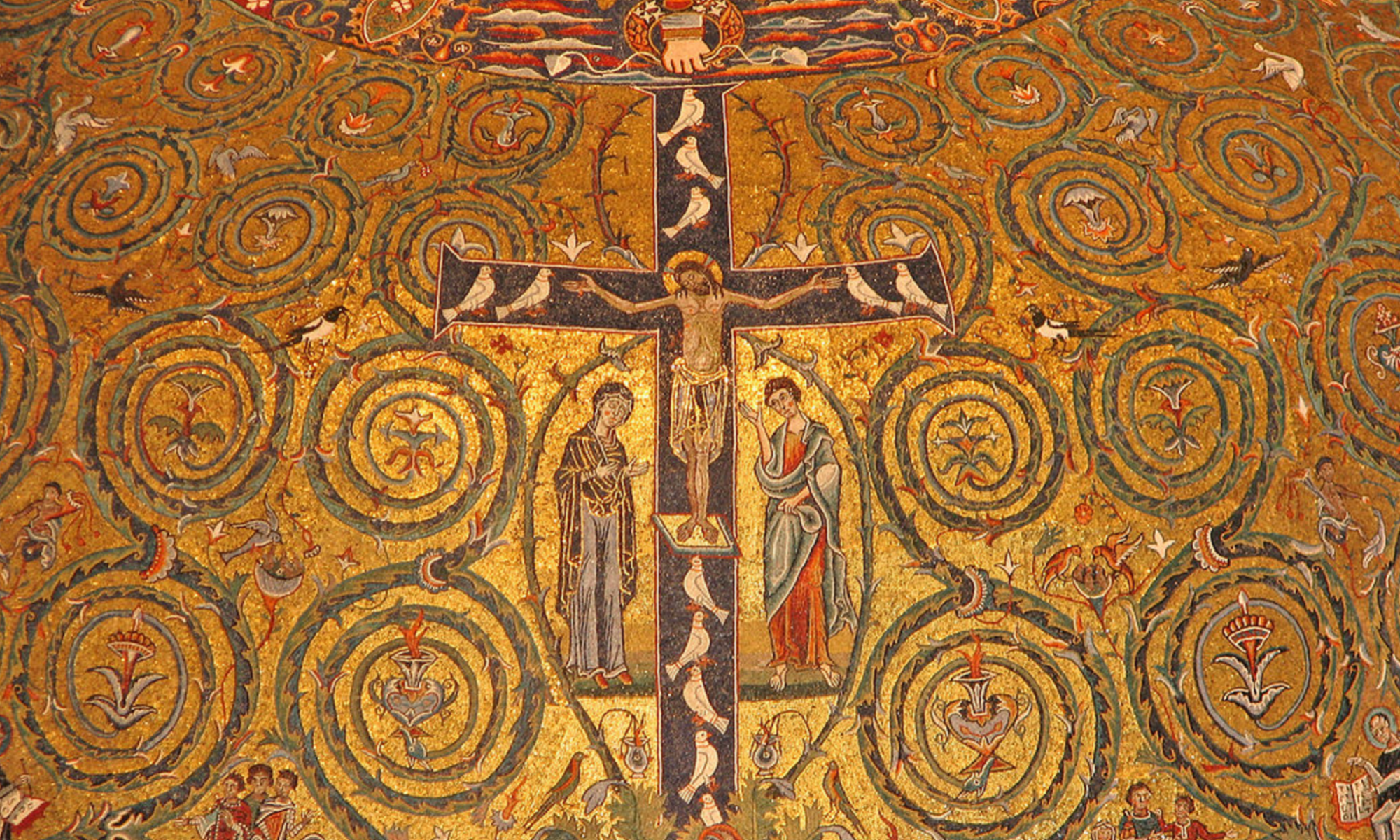
When Hope Hurts

As followers of Jesus, we are people of Hope – especially during Holy Week and Easter.

This year we will experience a Holy Week like no other – gathering the family around our tablets and TVs to view the live stream of the holiest liturgies of the year.

I think back to the middle of March – which now feels like ancient history – and remember how I wept and sobbed over the cancellation of public Masses. The part that was the most painful for me was when it fully dawned on me that our faith communities would not be gathering together for Holy Week and Easter. Having had time to process my grief, I am now grateful that we’re doing our moral duty and serving the common good by joining in the shared effort of social distancing. I’m grateful for all the creativity and innovation that has opened up new opportunities. I’m getting accustomed to Mass on facebook live and Zoom meetings. But let’s face the facts: it’s still hard.

Since the middle of March, there have been far greater hardships for many than the temporary disruption of prayer gatherings and public Masses. Some find their entire livelihood in grave peril; others are under enormous daily stress; many others have died of COVID-19 or lost a loved one.

All of us have felt our daily lives turned upside down. Almost everyone I know seems to be experiencing a significant spike in anxiety or a resurgence of unwanted behaviors. So much is uncertain and unknown; so much can change so quickly. We trust God, but it’s incredibly hard at times to keep believing that it’s somehow all going to be blessed by God as part of his greater plan.

Hope is hard. The Christian virtue of Hope is not rosy optimism; it’s not a feel-good pretending like everything is just swell. Hope involves longing and desiring, watching and waiting. Hope stretches our human hearts far beyond what feels easy or comfortable. Indeed, keeping Hope alive in our heart can be painful. It’s so much easier to try to avoid, it, numb it, or even kill it – choosing instead a path of self-soothing or self-reliance. But we cannot save ourselves.

Holy Week is a time of Hope. The death and resurrection of Jesus, his Paschal Mystery, constitutes THE human story. Without Jesus dying and rising, our human existence becomes empty, fruitless, and meaningless. On the contrary, as we allow ourselves to be plunged into those saving events, we are brought to new and more abundant life.

In the “in between” of that transformation stands the virtue of Hope, like a brave soldier standing in the breach. It can be far more agonizing than we may realize. It’s quite possible that only a few Christians these days are truly steeped in Hope.

Hope is the virtue of Holy Saturday – a day that is easily overlooked. Many are bustling about preparing for Easter; others are pre-binging on food or Netflix or some other pleasure. The invitation of Holy Mother Church – rarely accepted – is to engage in fasting and silence and prayer as best we can, to continue keeping our vigil at the Tomb of Christ, watching and waiting in Hope.

Think of the various characters in the Gospels and imagine what their experience of Holy Saturday was like. Think of Peter and the other apostles, having suddenly lost their Lord and their friend Jesus – and under the shameful circumstances of having abandoned him or denied him. Jesus had recently given a glimpse of glory to Peter atop Mount Tabor in the Transfiguration. Maybe that remembered experience emitted some faint glimmer of Hope amidst his overwhelming feelings of grief and disillusionment, fear and doubt, guilt and shame.

Think of Mary Magdalene and the other faithful women, holding Jesus in their hearts, continuing to love him even when it hurt so much. Their instinctive and intuitive Hope drew them to the tomb on Easter morning, even if they didn’t understand what was happening in their hearts.

Think of Jesus’ own mother Mary, who had borne him in her womb, nursed him, taught him to walk, taught him to read the Scriptures, taught him to pray, and so much more. Over the course of 33 years, she was more intimately close to him and held more conversations with Him than any other human being. Scripture does not record these, but Luke does tell us more than once that Mary kept pondering these mysteries in her heart. She is perhaps the one person who was not entirely surprised at his Resurrection.

But even for Mary – nay, especially for Mary – there was that agonizing in-between moment of Hope between the first day of Good Friday and the third day of Resurrection. If the experience was anything like the previous patterns (the birth of Jesus, the Flight into Egypt, the Presentation in the Temple), she knew and believed God’s promises, but did not know how those promises would be fulfilled.

That is what is so hard about Hope. It is an invitation to plunge into the depths of Jesus’ suffering – which involved far more than physical torments. He freely chose to dive into the depths of our fallen human experience – including the isolation, the loneliness, the fear, the shame, the rejection, and the abandonment that so many of us experience. When he cries out “My God, My God, why have you abandoned me?” He is crying out with and for each of us from the depths of our hearts – places we are often not willing to go ourselves, because they hurt so much. Jesus allows himself to feel the pain of rupture from God and rupture from neighbor that is part of the story for each of us who are fallen.

Then it’s our turn. Like the Virgin Mary, like Mary Magdelene, like so many of the other disciples, we are invited to keep vigil at his Tomb. We are invited to keep believing his promises – even when it seems impossible anything will ever change. For each of those followers, Easter morning was a wonderful surprise. The risen Jesus brought them joy in a way they had never imagined possible.

During “normal” Holy Weeks, Catholics show up in large numbers for Good Friday, and are often moved to tears at the torments Jesus endured on the Cross. This year, only the priest celebrant will get to kiss the Cross.

During “normal” Holy Weeks, most Catholics give little thought to the experience of Holy Saturday. This year, we all have an extended Holy Saturday opportunity. We have been given a share in Jesus’ suffering and death. In the form of all this unrest and all these unknowns, we have an opportunity to share in the same disorienting and agonizing experience of those early disciples on that first Holy Saturday. Like most of them, we do not know how long it will last, whether it will get better, or how it will get better. We surrender in Hope; we wait in Hope, even when it hurts.

We are free to choose. We can plunge fully into the deep waters of Hope. Or we can keep popping up for air. There are any number of ways we can do that. Some turn to the false soothing of food or alcohol or pornography. Others minimize or deny, pretending like it’s not really that hard (thus distancing themselves from genuine Hope). Still others crack a joke or enter into fault-finding and peevishness – anything that will distract us from the present agony of abiding at the Tomb in Hope.

These are normal ways of avoiding – and they make sense. We all do at least some of them. The truth is that tt is terrifying to be under water for a long period of time! For many of us, it feels like it will be too much or too long. Indeed, that is the whole point of being plunged into the waters of Baptism – we actually die with Christ!

We Catholics think often of Good Friday and of suffering with Jesus. This year, I invite each of us to think especially of Holy Saturday, and give ourselves permission to experience the full depth and breadth and length of Christian Hope. It is not for the faint of heart! If we allow it, it will grow and crescendo into an earthquake that will finally break open the cave of our heart; it will roll away the stone so that we, too, can be surprised by the joy of the Risen Jesus.

Gradualness: Lessons from John

Some Scripture passages make conversion sound so simple, like a one-and-done deal: “Immediately they left their nets and followed him” (Matthew 4:20). Would that it were so easy! John’s Gospel, by contrast, is filled with encounters and dialogues that tell the story of a gradual and lifelong conversion in the heart of the disciple.

The encounters are many: Andrew (John 1:35-41), Nathanael (John 1:45-51), Nicodemus (John 3:1-21), the Samaritan woman at the well (John 4:3-26), the woman caught in adultery (John 8:1-11), and of course Simon Peter (John 21:15-19).

Each encounter is unique, yet there is a common pattern. We might called it the S.A.L.A.D. method: (1) See, (2) Attune, (3) Love, (4) Awaken, and (5) a Difficulty Directly addressed, or even a Dart thrown by Jesus.

There are also opposite encounters and dialogues – interactions that evoke a hardness of heart, diminishing receptivity, and ultimately a rejection of Christ. Consider the disciples who cease following Jesus when he declares himself to be the Bread of Life and urges them to eat his flesh and drink his blood (John 6:25-66), or the Jewish leaders who gradually turn against him (John 8:12-59), or the intriguing Good Friday dialogue with Pontius Pilate (John 18:28-40).

Let’s now take a look at the S.A.L.A.D. acronym and the gradualness that Jesus models for us.

See. First, Jesus sees. He looks attentively at the person in front of him. I hope that we have all experienced this kind of seeing. We all need it, especially in our younger years, but throughout our life. It’s a look of love, one that says “I am interested in getting to know you.” It’s a look that desires to understand, to accept, and to encourage. It is a look that is free from expectations or demands. We just get to be ourselves in the presence of that gaze.

Think of what that look must have been like, for example, to the woman at the well or the woman caught in adultery. There were many other looks that they knew quite well: looks of judgment or condemnation, looks of leering or lust – or perhaps all of these at the same time! Jesus begins just by seeing the person in front of him, as one made by God, worth getting to know.

Attune. Secondly, Jesus attunes. He looks deeply into the heart of the individuals in front of him. He gets to know their story, their deepest desires and needs, their greatest joys and most painful heartaches, and so forth. You can tell from each of these encounters that each person felt profoundly understood by Jesus.

Unfortunately, not all of the characters in John’s Gospel are interested in being understood in this way. Some put up defenses. Others insist on wearing a mask and pretending. The same is true of many of us. Not all of us allow ourselves to be understood, even though we all desire it in the depths of our being. It is so easy to feel threatened. Then comes the pride, self-reliance, self-protection, control, power, anger, or blame. I am personally familiar with all of them! Thankfully, God has given me plenty of chances, and in his mercy has allowed my defenses to crack and crumble and collapse.

Love. Jesus loves the person in front of him. It is not a superficial or sentimental love. It is a love that sees right through people – and loves them anyway. Just one experience of love in this way can change one’s whole life. Shame is such an oppressive burden. Many of us are convinced that if others really got to know us, they would want nothing to do with us. The love of Jesus truly proclaims Good News in these dark places of the human heart.

These first three steps of seeing, attuning, and loving are far from a “Pollyanna” approach. Jesus is well aware of the faults of every person he encounters. Just as we have seen in Gregory, Alcuin, and Paul, Jesus chooses to tolerate the evils that still need reforming. The relationship comes first. Unconditional love comes first. First we must be free to be who we are; then we can become free in our acting and doing. Repentance and conversion will come in due time.

Awaken. Jesus awakens desire in the heart of his hearers. Now that they have experienced understanding and love, they once again dare to hope, and the real growth begins. Once desire is awakened, it can catch fire quickly. The Greek word is eros (cf. “erotic”) and it is not uncommon for a convert to “fall in love” with the Lord and show all the eagerness of a lover in a romance. Not only does a lover do anything and everything he can to get to know the beloved and to fall more and more in love, he also feels the urge to proclaim to all the world the wonders of his beloved. I have seen the same when people have a genuine conversion experience. Certainly we see it in John’s Gospel: Andrew rushes off to tell the Good News to his brother Simon. The woman at the well tells anyone who will hear about this man who unlocked the mystery of her entire life.

Difficulties Addressed. Finally – and this point is crucial in John’s Gospel – Jesus addresses difficulties. He waits until the right moment, when he knows the person is ready. Then he hurls a dart or a real zinger. It happens every time.

With the woman at the well, Jesus invites her, “Go, call your husband, and come back” (John 4:16). He first saw her, attuned to her, loved her, and awakened her spiritual thirst. Then he confronts her with the truth. She is ready. She confesses the truth. She has no husband. The man she is with is not her husband because she has been married five times. Note that Jesus does not make concessions to the hard life and harsh treatment that she has almost certainly endured, leading her to the point of making these choices. He does not rationalize or downplay her sin. Nor does she! He has gently and gradually brought her to a moment of conversion, so that she can receive the spiritual water for which she so desperately thirsts.

There are other examples of darts and zingers, of confronting the difficulty head on. Jesus exhorts the woman caught in adultery, “Go your way, and from now on do not sin again” (John 8:11). He jabs at Nicodemus: “Are you a teacher of Israel, and yet you do not understand these things?” (John 3:10). He reminds Pilate that he would have no authority whatsoever if it were not granted him from on high (John 19:11).

With Nathanael it is a bit different. When Jesus “sees” Nathanael, he perceives one who is ready right away. Jesus is immediately blunt, in an almost playful way: “Here is truly an Israelite in whom there is no deceit … I saw you under the fig tree before Philip called you” (John 1:47-48). We never know what Jesus “saw” under the fig tree, but can assume it was something deeply personal and not entirely edifying. Yet Jesus affectionately accepts Nathanael for who he is, promising him much greater things. Nathanael eagerly follows.

Then there is Simon Peter, the ultimate example of gradual conversion. Peter is the epitome of two steps forward, one step back. The interesting thing in John’s Gospel is that the “dart” comes at the very end, after the Resurrection, when Peter encounters Jesus on the seashore, after the catch of 153 fish.

First there is the gentle invitation to Peter to admit and repent of his threefold denial. He who warmed himself and three times denied his master by a charcoal fire on Holy Thursday is now allowed to affirm his love three times by a charcoal fire, drawing near to true warmth.

But there is more. In the original Greek of John’s Gospel, Jesus asks Peter if he loves him with agape – the ultimate gift of self in sacrifice (which Jesus had just shown in his Passion). Peter sheepishly responds that he “loves” Jesus with philia – brotherly love – and is told to feed Christ’s sheep. Peter has come so far, and still has so far to go. Jesus gently but painfully invites him to tell the full truth about his conversion. He truly loves Jesus, but is not yet ready to lay his life down for Jesus. One day he will be. He will grow stronger in due time, and will truly become the good shepherd who lays down his life for the sheep. For now, Peter’s love of Jesus is still a work in progress.  It is enough. Jesus invites him, “Follow me.”

Thus in John’s Gospel we see the human capacity to go either direction in an encounter with Jesus. Some of the characters allow themselves to be seen and understood and loved; they grow gradually in their desire and respond step by step. Others react or resist or retreat. In every case John leaves “the rest of the story” untold. We remain free to go in either direction. One thing is certain: We are either drawing closer or distancing ourselves. In such encounters with the God’s love and truth in the flesh, there is no standing still.