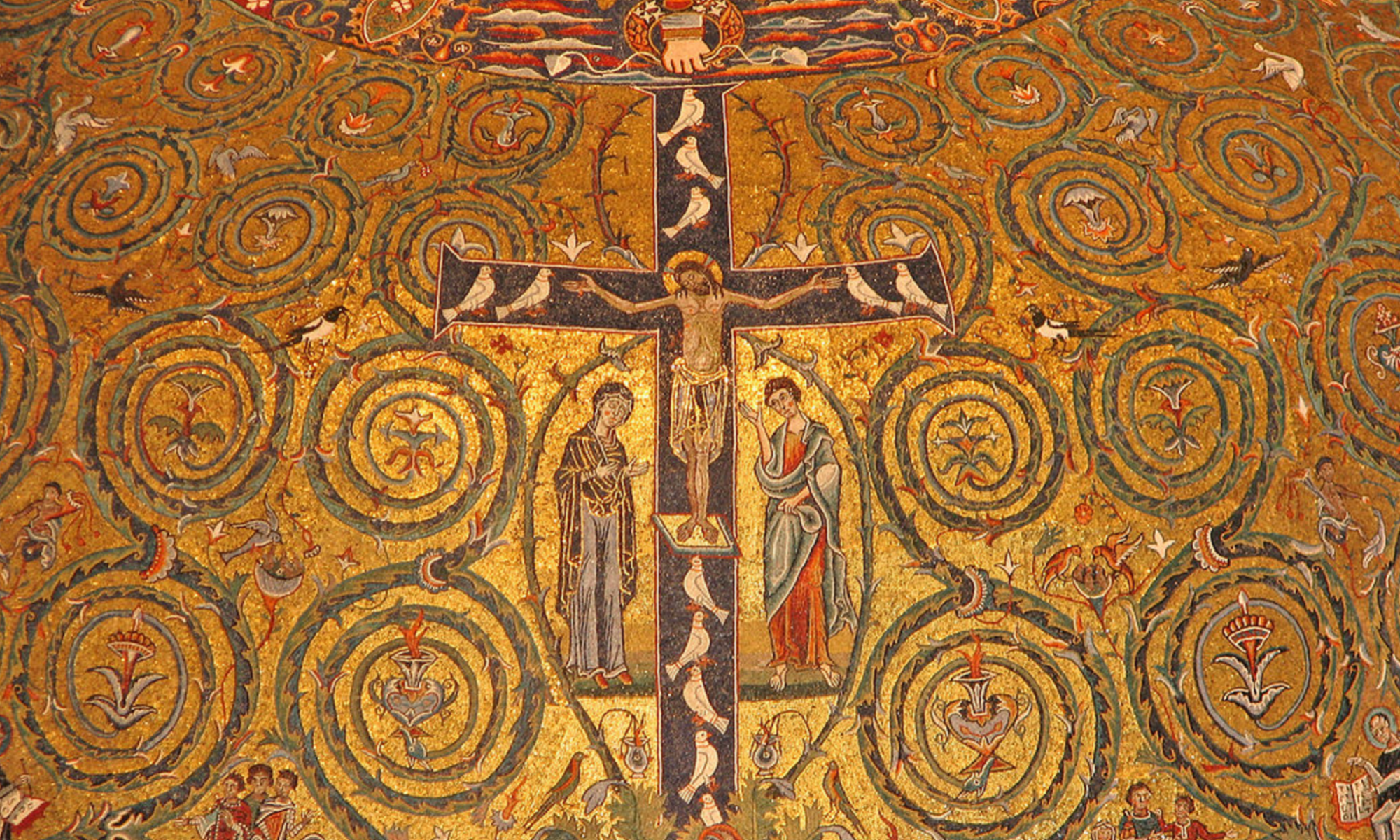
Paschal Triduum

We will soon celebrate the Paschal Triduum. We will enter the holiest three days of the year. We will remember the dramatic story in which Jesus redeemed and renewed us.

“Paschal” is another word for Passover. That connection is lost when we use the common English word “Easter.” On Resurrection Sunday, my Spanish-speaking parishioners will say to me, “¡Feliz Pascua!” which literally means “Happy Passover!”

For us Christians, the Passover observance has been forever changed by Jesus. No longer do we spread the blood of a slaughtered lamb on the doorposts and lintels of our homes. Jesus offers himself as the lamb of God who takes away the sins of the world. He willingly becomes the lamb, once slain, who now lives, never to die again. His dying and rising are one single offering to the Father. They are now, for us, one single celebration.

In terms of calendar time, the Triduum spans three days, beginning the evening of Holy Thursday and concluding the evening of Resurrection Sunday. However, it remains one single event, a seamless moment in time.

Scripture scholars distinguish chronos and kairos, two Greek words for “time.” Chronological time marches along with steady precision, and with utter disregard for our lived human experience. Sometimes time can’t move quickly enough, as on a Friday afternoon when students and employees stare at the sluggish clock. At other times the hours, weeks, or even years seem to be racing past us. By contrast, there are kairos moments within the passage of time. Whether such a moment lasts a few hours or a few months, we remember it as one significant event or era. The Sacred Triduum is THE kairos event of human history.

For many of the disciples, it was largely a trauma event. They abruptly lost their Lord, and found themselves falling away from him. Within moments, they experienced dread, doubt, confusion, betrayal, loss, guilt, and shame. Trauma has its own sense of timelessness. When we feel powerless, it seems like the anguish will never end.

Jesus transforms our human experience. He willingly enters the depths of human drama and human trauma, conquering every single moment with perfect love.

For some of you, “Triduum” is a new word and a new concept. Others among you have been observing it liturgically for decades. Either way, I invite you to gaze and ponder afresh what transpired during those three days. This three-day event is willed by God to become the very heart of every human story.

DAY ONE

Remember that in Jewish tradition, the new day begins at sunset. Therefore, Day One of the Triduum includes Jesus’ suffering, dying and burial. He initiates this new Passover event by sharing a meal with his disciples. They spend much of the meal debating who among them is the greatest. He declares the bread and wine to be his own flesh and blood and commands them to commemorate this offering. He prays to his Father in the garden. He watches his friends abandon him as he faces arrest, trial, torture, mocking, and crucifixion. His physical torment alone is enough to move human hearts to repentance. But his emotional and spiritual suffering were so much more intense. He willingly takes on our own infirmities, freely entering every traumatizing human experience: abandonment, rejection, the violation of his body, shaming comments, and a felt powerlessness. His cry to his Father gives voice to every human heart that ever has or ever will endure such experiences: “My God, my God, why have you abandoned me?” But unlike each of us, Jesus remains faithful and true. He surrenders in trust; he holds out hope; he loves to the end. Day One concludes with his burial and the sealing of the tomb, just in time for the Sabbath.

DAY TWO

Day Two is so easily forgotten by Christians. Jesus’ body remains in the tomb on a Sabbath Day like no other.

Imagine what Holy Saturday was like for the various followers of Jesus. Many had abandoned him or denied him. Imagine the shame they felt! The gospels don’t specify what Peter and the others were up to on this day, but we know that by Sunday most of them were on voluntary lockdown, cowering in the cenacle.

Most of them had their messianic hopes crushed. Despite Jesus’ miracles, parables, and constant proclamation of the Kingdom of God, each follower continued to clutch a more tangible kind of salvation – deliverance from the Romans or restoring the Kingdom of Israel.

Others, like Mary Magdalene, were actively seeking him, like the beloved in the Song of Songs, going out into the night and earnestly searching after the one her heart loves. Desiring and not possessing is an agony like no other – the agony of Hope.

There is also the Hope of Mary, Jesus’ own mother, who had spent thirty years with him, had stood with him at the foot of the Cross, and had always pondered his words and events in her heart. She knew his promises better than anyone.  As at the Annunciation, as at Bethlehem, as during the flight into Egypt, as when seeking and finding Jesus in the Temple, Mary believed that God was ushering in a new and greater human experience. But she couldn’t imagine what it was going to be like. She persevered in Hope. Scripture doesn’t tell us about what it was like when Mary encountered the Risen Jesus, following the agonizing Hope of Day Two. But we can imagine the surprise and the joy.

In Catholic life, each Saturday is a day of devotional remembrance of Mary. We forget that it is her day because Holy Saturday is the day on which she persevered in Hope.

DAY THREE

Jesus rises on the Third Day, during the night preceding the dawn of Resurrection Sunday. No other human being directly witnesses his Resurrection, but the encounters explode, like kernels of corn beginning to pop – at first one by one, and then rapid fire. In every encounter, the Risen Jesus catches them by surprise, and fills their hearts with unimaginable joy. Their narrow and preconceived ideas about the messiah are shattered against the event of his dying and rising. He helps them to understand how everything in the Law and Prophets – indeed everything about our human story – points to this new Passover. This event of his dying and rising (and the agonizing wait in between) is what gives meaning and purpose to your story and mine.

Even still, you and I have a tendency to bypass the Paschal Mystery. Resurrection sounds nice, but what about fully entering with Jesus into suffering, dying, and an agonizing wait at the tomb? Like the characters in the Bible, we prefer perfectionistic rule-following, secular political solutions, or to the old standbys of pleasure, prestige, and power.

This Holy Week, may we allow our minds and hearts to be reawakened to the Faith, Hope, and Love that the Sacred Triduum offers us.

Hoarding vs. Hope

Advent is a season of hope. During these darkest days of year, we watch and wait.

In our human experience of suffering, we abide and keep a sober vigil. In moments of powerlessness, frustration, anguish, agony, or grief, we cry out for a redeemer and savior. We feel the depths of our emptiness and need, and we hope. We feel the ache acutely and cry out with heartfelt longing, Come, Lord Jesus!!

That’s the ideal, anyway. But let’s face it, hoarding can feel safer and easier than hoping.

At the mention of “hoarding,” we immediately visualize particular people, places, or things. I’m not talking about the medically diagnosable condition of hoarding. I am using the word in a broader, all-inclusive sense.

Most of us are hoarders in one way or another. It’s something we do to protect ourselves against feeling powerless, or against feeling grief. It gives us a sense of power. It props up the illusion of being in control.

Sometimes we hoard physical objects. We cling to what we no longer need; we clutter our living space. Throwing things away means feeling grief and loss. It is a death, and we don’t want to die. Keeping an open and inviting living space feels naked and vulnerable. We don’t like feeling powerless.

But we also hoard by cluttering our schedules with unnecessary commitments. We feel less like a failure because of the things we say “yes” to – even though we inwardly resent all the things we “have to” do. We avoid the pain of conflict and live with the clutter and chaos of too many commitments.

We hoard by only tackling the tasks we feel confident about, while repeatedly avoiding the ones that would risk failure or expose our weakness. We may even push those undesirable tasks onto others, shifting the blame onto them, or criticizing the failure of their valiant attempts.

We hoard when we hold onto comfort and ease, resisting needed changes. We want our churches to feel familiar to us, to be our own little nest. First-time visitors may feel uncertain, ashamed, or intimidated. We wouldn’t know, because we talk to the same familiar people, ignoring what others are needing or feeling.

We hoard when we suffer in silence rather than humbly reaching out for help and risking rejection. We cling to others, expecting them to meet our needs without actually asking. We do things for them in “service,” calculating that now they have to give us something in return. If I am entitled, then no one can reject me, right? In all these behaviors, we might even style ourselves a “martyr,” but the real martyrdom is happening in the people around us who have to put up with our behaviors!

We hoard with our addictive behaviors. We soothe ourselves with our screens, with our sugar, or perhaps even with impulsive cleaning and organizing – which may seem the opposite of hoarding. But it depends on why we are doing it. Is it a kindness to self and others, or is it avoiding and numbing what I don’t want to face or feel?

We hoard when we surround ourselves with busyness, noise, or talking. We resist silence and stillness. We cannot stand to slow down and actually feel our loneliness, our grief, or our anger. We would rather pretend they are not there.

But then how can we hope?

Every human heart holds the capacity to hope. As Augustine of Hippo said, “You have made us for yourself, O Lord, and our heart is restless until it rests in you.” Within each of us is an insatiable desire, an intense longing for the living God. But will we allow ourselves to feel it?

Hope can really hurt. To hope is to desire and not yet possess. That means that hope will include suffering. Hope will include grief. Hope will include vulnerability, even feeling powerless. We don’t like those experiences. And we hate to wait!

Thankfully, God is a good Father who delights in us as his children. He sees our struggles and loves us as we are. He knows our tendency to hoard; he gazes lovingly at us even as we repeatedly and relentlessly protect ourselves against him. We are so often like the dog hiding his head under the blanket. God smiles, and calls us by name.

Yet God honors our freedom. He desires us to desire him. He will not force or coerce. Like a lover, he pursues and woos us. He gently prods us, inviting us to admit how naked, blind, and miserable we actually are (cf. Revelation 3:14-20). We desperately need Jesus, but we do not like to feel the depths of our need.

Jesus’ coming brings true comfort, lasting peace, and abundant joy. Even in this world, he helps us to taste and see the goodness of the Lord. He blesses us with an abundance of love. Our hoarding hearts keep crying out, “It won’t be enough!!” and Jesus keeps assuring us, “My grace is enough for you; my power is made perfect in weakness” (2 Corinthians 12:9).

Will we surrender our supposed control? Will we set aside our pseudo-comforts? Will we allow ourselves to grieve and mourn? Will we remember that we have here no lasting city, that we are pilgrims passing through? Will we abide in hope?

Come, Lord Jesus!!

Learning from St. Benedict

This three-month period of Sabbath renewal has been a blessing to me – including my monastic companions here at a Benedictine monastery. Their Rule and way of life offer so many lessons, and I will be glad to share some of them in the weeks ahead.

I had the joy, last month, of traveling to Oregon to join in the celebration at Mount Angel Abbey as five monks made their solemn profession of vows. I wept as I watched the monks freely and wholeheartedly giving themselves over in vows of obedience, stability, and ongoing repentance in their faithfulness to the Benedictine way of life.

The vow ceremony includes stunning rituals that invite the monks into a dying and rising with Jesus. I felt deeply stirred with desire and longing, as Jesus continues inviting me to open my own heart to both sorrow and joy as I learn to abide in love and truth. Over the past four years of my life, I have learned again and again that I cannot experience the intensity of joy without also welcoming the depths of sorrow; I cannot exalt in the surprise of the resurrection without a willingness to enter the heartache of Good Friday and Holy Saturday. The Lord keeps gently inviting me to open my heart freely and fully, assuring me that those who embrace poverty and mourning will be truly blessed by the Father. The vow ceremony gave me so much encouragement and assurance of God’s covenant faithfulness to his promises, and was truly a taste of the feasting we will all share in the Kingdom.

The abbot presided over the vow ceremony – he who will be a longstanding spiritual father to these men in their years ahead. He beckoned them forward lovingly and then asked them what they were seeking. Their response: “I desire to share in the sufferings of Christ in this monastery until death, that I may also share in his glory.”

He spoke to them of the seriousness of the covenant they were about to enter: “I set before you a way of life, which images that of the Lord himself.” It is a renunciation and a dying, but also a claiming of the victory of the Cross. They freely responded “I do” to their vows, and then, one by one, read and displayed to the congregation their signed covenantal letter. The abbot tenderly took each one by the hand and led them to the altar, where they put pen to paper and sign their statement.

Then came the Suscipe prayer, which moved me so deeply that I am still returning to it in my prayer a month later. The five solemnly professed monks processed up the aisle and three times paused to extend their arms out horizontally and cry out to the Father: “Accept me, O Lord, as you have promised. Accept me, and I shall live. Do not disappoint me in my hope!”(Psalm 119, verse 116). I was struck by their posture in making this prayer. It evokes Jesus’ dying on the Cross, but they are also presenting themselves like little children begging daddy to pick them up and embrace them. They are choosing to be totally vulnerable, to risk all, to open themselves up in hope – and surrendering themselves into the Father’s hands. How often have I resisted abiding in hope – it definitely hurts to desire but not yet fully possess. It feels so much easier to distract myself from the longing than to stay in it! Over the years, my heart has both longed for and resisted being taken up into the Father’s hands. This attitude makes sense – given that I have often felt betrayal and powerlessness. The ritual stirred a fire in my heart that melted much of my ambivalence.

My mask was only beginning to be drenched with my tears as they proceeded with the ancient burial ceremony. In front of me this whole time had been one of five black cloths draped over the pew. The five newly professed monks prostrated themselves on the floor as the mentor who had guided them on their journey draped one of these burial cloths over each of them. Meanwhile we somberly chanted words that echo Colossians 3:3 “I have died, and my life is hidden with Christ in God. I shall not die but live, and proclaim the works of the Lord!”

The abbot proceeded with the offertory of the Mass – offering to God not only gifts of bread and wine, but these five newly professed monks. All was to be transformed by Jesus, taken up into the mystery of his dying and rising. The abbot incensed not only the gifts on the altar, but the five prostrate (and “buried”) monks. As all of us priests gathered around the altar for the Eucharistic prayer, the five monks remained in front of us, beneath the veil of death.

Following the Great “Amen,” as the congregation rose to pray the Our Father together, the schola joyfully chanted, “All you who sleep, awake, awake! Rise from the dead! Christ has enlightened you!” And the monks rose to new life with Christ. My heart soared with joy as I watched each of them re-emerge into the light.

The life of a monk is an already-but-not-yet. Even now they claim a foretaste of both the dying and rising of Jesus. Even now they gain a glimpse of his glory. I certainly enjoyed a taste of the goodness of God’s Kingdom that Saturday morning on the Mount of Angels in Oregon, as I shared the experience with them. Such joy never lingers forever, but reminds us of the good things to come!

You can view livestream footage for the entire vow ceremony here.

Spiritual Bypass

This summer marked the 15th anniversary of the animated film Cars. The movie breathed life and personality into dozens of vehicles, including the cocky and arrogant young racecar Lightning McQueen, who unexpectedly gets stranded in the rusted and rundown town of Radiator Springs. Initially seeing no value in this long-forgotten place, he undergoes a deep conversion and learns many life lessons. He also comes to appreciate the story of the town, once great, then sliding into decline with the introduction of the I-40 bypass. Whereas travelers along Route 66 used to take their time to linger and enjoy this scenic stopping point, these days they just zoom on by along the bypass.

As many of you know, I am currently going through a few trainings for pastoral ministry to God’s beloved children experiencing unwanted behaviors or addictions. In them, I’ve come across a strikingly similar metaphor, encapsulated in the term “spiritual bypass.”

Spiritual bypass happens when you or I use our spirituality as a way of avoiding difficult experiences or undesirable emotions. In the name of being spiritual, we can actually evade and avoid the most difficult aspects of discipleship! When we do so, our bodies and souls suffer in much the same way as the town of Radiator Springs. Through chronic neglect, little by little, things begin to crack and crumble. The more this decay happens, the more we prefer to avoid, and the more alluring spiritual bypass becomes. And so the vicious cycle continues.

You can see how these cracks offer fertile soil for the weeds and rotten fruits of addictions. But addictions are only one of many such weeds. The great spiritual authors over the centuries remind us that sins of the flesh (lust, gluttony, drunkenness, etc.) can actually be less serious than envy, passive aggression, gossip, self-righteousness, or pride. Think of the story of the repentant tax collector versus the proud Pharisee (“thank God I’m not like _______”). Think of the story of the younger son and older son in Luke 15. Both are far from the heart of their father; both are avoiding his love; both are miserable.

Spiritual bypass often gets woven into the very fabric of our families and our church communities. For example, we from the upper Midwest are notorious for being “nice” – and thinking ourselves kind. Niceness is not the same as kindness! Niceness avoids conflict. Niceness pretends not to be angry. Niceness does not know how to sit with sadness, but tries to minimize or fix or anesthetize the pain of the situation. Kindness, by contrast, can be intense and messy. It takes great inner strength just to be with someone who feels deeply sad, angry, or ashamed.

In my personal journey, the Lord has definitely been inviting me and teaching me how to stay present in the face of awkward or painful situations. Historically, I did one of two things. Most of the time, I got small, hid my true self, or took the “nice” path out and compromised things that were deeply important. Occasionally I powered up, perhaps shifting my tone or raising my voice, perhaps making a subtly shaming comment that shifted the burden onto the other person. I regret those moments and the damage they caused.

But I am learning to be patient with myself as God works repairs in my heart. Healing and recovery is incredibly hard work. It’s tempting (like Lightning McQueen) to think I can re-pave the neglected and damaged street in a short time. It takes much patience and consistency – not to mention much help and encouragement from true friends. After nearly five years of diligent work walking my own healing path, I am beginning to discover that I can stay present and stay my true self even in challenging situations – without taking the bypass. Every inch of reclaimed pavement is worth celebrating.

I simply wasn’t capable for a long time because I was bypassing my own heart – including neglected streets that were crumbling in sadness, loneliness, fear, and shame. If present interactions caused me to begin feeling those things, it made sense that I would react instinctively and either flee or fight. God made us with survival instincts and defensive capacity.  For a time, we probably need these defenses. We may need, for a season, to be in a state of spiritual bypass. We can’t face everything all at once. We’re not ready until we are ready.

My heart is ready, O God, my heart is ready. So sings the psalmist. After years of preparing my heart, the Lord gently and kindly showed me how very much sadness and loneliness I had stored up. For me, the experience of coming out of spiritual bypass has been amazing, intense, and painful all at the same time. Sister Miriam James Heidland compares the experience with someone coming in from the cold with frostbite. To be in one’s heart and feeling again is both good and intense.

My prayer life has definitely shifted amidst this process. It is more tender and vulnerable, more about a love relationship with the Father, and more about receiving again and again all that I need. Ironically, I pray far more consistently. It’s less and less of a “should.” I simply need it. I need prayer. I need Jesus. I need the anointing of the Holy Spirit. And I desire all these things. I ache for them. I long to see the face of the Father. That, for me, has been the very best part about ceasing spiritual bypass. Returning to my place of heartache also opens up the freedom and capacity for my heart to ache for God. It renews and deepens faith, hope, and love.

Perhaps the best discovery of all has been to realize the stunning beauty of the human heart – my own heart and that of others. Yes, there is sin there. Yes, it’s a mess. AND we are beloved children of God, fearfully and wonderfully made, “very good” in his own image and likeness. You can’t appreciate the beauty of the town from the bypass. You have to slow down and spend time there. Then it captivates you. The beauty God has poured into the human heart is absolutely stunning – if we are willing to abide there amidst the mess.

I invite you to consider your own journey of following Jesus. In what ways do you take the bypass? Does it feel easier to avoid anger, sadness, fear, loneliness, or shame? How do you react when others around you feel or express those? How do they experience you? Do they feel safe and find it easy to open up to you about the deep things of their heart? Why or why not?

Does it feel easier to “say prayers” to open up in a tender and vulnerable relationship? Do you let yourself feel the ache of longing and desiring without yet fully possessing?

Jesus reminds us that the road is wide and easy that leads us to destruction. Taking the spiritual bypass is so appealing because it is wide and easy while pretending to be deeply spiritual. Engaging our story in the town that is our heart involves a dying and rising.

Above all else Jesus commands us to love the Lord, our God, with all our heart and mind and soul and strength. Yes, we may need to use the bypass for a time in our life, especially if we do not have the support and the resources to face the hard work that will be involved. But so long as we stay on the bypass, there are parts of our heart that are not being consecrated to the Lord, and therefore not receiving his blessing.

Wholehearted discipleship is certainly challenging! But it is worth it. You and I are worth it.

Reflections on Zechariah

Advent is a wonderful time to read the writings of the prophets. Those chosen men, frail human instruments of God, kept their hearts stretched out in expectation, even amidst woes, tears, and lament. Their provocative imagery opens up a vast horizon of Hope. Led by the Holy Spirit, they allowed the depths of their human imagination and emotion to be tapped as they plied their pen to describe God’s desire to come and save us. Many times they offer promises of his salvation that will somehow simultaneously bring a fiery intensity AND a tender gentleness. Justice and Mercy. Love and Truth.

This Advent my heart has been captivated by the final four chapters of Zechariah, which are apocalyptic in nature. Unfortunately, “apocalyptic” tends to mean “easily hijacked.” The final book of the Bible, the Apocalypse (a.k.a. “Revelation”) is the most frequently butchered book, plundered by misguided Christians as they sound alarm bells about the end of the world and claim to have all the answers. Never mind that Jesus told us clearly that no one except the Father knows when the end will actually come (Matthew 24:36), and that we ought not chase after these messianic alarmists (Mark 13:21).

Those who read apocalyptic writings in a way that is unduly fascinated with foretelling the future are largely missing the point. Whether the Book of Revelation or certain passages in Daniel or Zechariah, the apocalyptic writings in Scripture have genuine meaning and relevance for all who read the text – including the original audience; including the many millions of men and women who never saw the second coming of Jesus; including you and me.

“Apocalypse” literally means “unveiling.” The prophetic promises point to an ultimate unveiling that is “already but not yet.” We are meant to enjoy a true taste of them here and now, yet always with a sense that more is yet to come, and we are not yet ready for the fullness.

The coming realities, sharing as they do in God’s infinity, necessarily elude the full comprehension of our present finite experience. It reminds me of a famous episode of The Twilight Zone in which a little girl in her bed somehow stumbles through the wall into a fourth dimension, and her family frantically seeks to rescue her. Her limited human mind cannot process the newness of a fourth dimension. It is overwhelming and disorienting.

As great as human logic is, it can only bring us so far. Every wise theologian has understood this point. Thomas Aquinas described doctrinal propositions as tending towards the Truth, and reminded us that our Faith is not directed towards the propositions of our creed, but rather towards the Truth itself that is pointed to in those statements. God’s Truth radically transcends our expressions of it. Towards the end of Thomas’ earthly life, he had a deep mystical experience of God, after which he expressed that all the allegedly wise words he had written now seemed to him “like so much straw” in comparison to the glory he had glimpsed.

With that “already but not yet” perspective in mind, we can allow the powerful imagery of the prophet Zechariah to captivate our hearts and minds, to speak to our experience and pour blessings upon us here and now, while opening our hearts in Hope, reaching out receptively to the greater realities yet to come.

Zechariah paints a picture of lament and loss. He describes the trees grieving over the felling of many mighty and beautiful cedars, cypresses, and oaks. He describes the weeping of the shepherds over the loss of their glory, the betrayal wrought by shepherds forsaking their flock, and the confusion and woes of a flock that goes unshepherded. As a result, Zechariah foretells that two thirds of the people will fall away. The one third that remains will pass through fire like silver and gold that is tested.

Got your attention yet? To me, it is as though he is describing our present-day experience in the Church. But the point is not to be alarmist about the end of the world. Instead, we can allow the imagery to disrupt us in a way that opens up space for Hope, which is by far the deeper message of these chapters. Hope is also the reason why we read from the prophets every Advent. Again, let us remember that these words of Scripture speak to believers in all centuries, not merely our own. The point is to let them speak to us!

Zechariah proceeds to describe all the nations of the world rising up against God’s people and fighting Jerusalem. Even Judah will rise up against Jerusalem. But they will only injure themselves, like those who try to move an immovable rock. God will fight those who fight her.

Amidst these scenes of strife and loss, Zechariah offers vivid images of Hope, ones that connect closely with Jesus in John’s Gospel and with John’s promises in the Book of Revelation. Zechariah promises a fountain welling up within the house of David. Fresh water will flow from Jerusalem, during both summer and winter, to the East and the West. There will be no more darkness or cold, but only the Day. He promises the restoration of Jerusalem and the inclusion of all the survivors of these great trials – both the Jews and the Gentiles who had rebelled against Jerusalem but now repent. Cleansed by the fountain, they will gather year after year to celebrate the Feast of Tabernacles, bowing down to the King, the Lord of Hosts. On that day, each household in their own tent will find their cooking pot to be sacred to the Lord. No longer shall the Temple be a marketplace, in which people attempt to purchase holiness. Each and every vessel will receive and be filled as from the altar itself; each household will be truly holy to the Lord of Hosts.

A marketplace no more. Intellectually we understand that God’s holiness cannot be bought, and that no amount of magic or manipulation can bend Him to our will. Yet we still try. One way or another, our prayers tend to be varied attempts at praying, “My will be done!” – or more subtly, “This is what you have to do for me, God.” Much more elusive to us is the experience of freely receiving, gently abiding, and humbly depending. We have a tendency to keep grasping at a God we can control and bend to our will. Idolatry dies hard.

Jesus breaks into our brokenness with a newness that flips our paradigms upside down. John’s writings illustrate this point powerfully with the image of “tabernacles” (tents). John begins his Gospel telling us that Jesus, the Eternal Word of God, became flesh and made his dwelling among us. Literally, he pitched his tent in our midst. In the Old Testament, autumn after autumn, God’s people celebrated the Feast of Tabernacles by bringing their harvest fruits to the Temple and constructing their tents around the Temple.

In John 7 and Revelation 7, this imagery is flipped around, in a way that evokes Zechariah’s promises. Jesus goes up to Jerusalem during the Feast of Tabernacles and proclaims, “Whoever believes in me, as Scripture says: ‘Rivers of living water will flow from within him.’ He said this in reference to the Spirit that those who came to believe in him were to receive.” Revelation 7 describes a living fountain issuing forth from the Lamb once slain, and an endless Day shining forth from the Temple. The white-robed army that has endured the time of trial will be sheltered (“tented”) by God himself, day and night. Revelation 21 re-echoes that God will dwell (“tent”) with his people day and night, and will wipe every tear away.

Our tendency from the Fall until now is one of pride and self-protection. Adam and Eve tried to hide from God and cover their nakedness. We, their descendants, spend much of our lives constructing our own versions of holiness and try to become good enough so that God has to give us what we want.

Mercifully, God allows our false props to be stripped away – yes, even by means of harsh trials. They are of our own making – not his – but he turns all things to the good for his beloved children. To those not yet ready to receive and abide and depend, it feels terrifying and seems like punishment – much like the imagery at the end of Zechariah. It is then we can take great assurance in the Hope he promises: “The city will be inhabited; never again will it be doomed. Jerusalem will dwell securely” (Zechariah 14:11). When we remember that the living fountain of the Holy Spirit is always there within our hearts, that the light of the Risen Christ shines brightly, and that the Father himself will extend his shelter over us, then we can begin to take him up on his invitation to abide in his presence in Hope.

Resuscitation ≠ Resurrection

Resuscitation and Resurrection are not the same thing. As disciples of Jesus, our true Hope lies in the Resurrection, but we often cling to a much lesser hope of mere resuscitation.

Resuscitation means temporarily going back to how our life was. Jesus called Lazarus from the tomb and gave him back his earthly life. Astounding though it was, a glimpse of things to come, Lazarus’ new lease on life was still only for a fleeting time. He was not yet ready for the glory of the Resurrection.

The Resurrection is something entirely new. Death is definitively conquered.  Jesus, once raised, will never die again. He invades hell and conquers. Beginning on Easter Sunday, he starts appearing to his deeply discouraged and disheartened disciples – astounding and surprising them with unimaginable joy.

Resuscitation does not last. It is not definitive. It does not change the underlying problem. Nonetheless, it has great appeal. Not only does it temporarily extend one’s earthly life, it also allows us to return to what is familiar. We know what to expect, and so we feel in control.

Resurrection is unpredictable and catches us by surprise. It is “New” because it ushers in the New Creation. In the Resurrection, God reigns. We experience his Kingdom in all its power and glory. That means surrendering to the unknown of his infinite goodness and dying to our urge to be in control.

It’s totally understandable that we want to cling to this present existence – it is still so amazing, even though it is only a limited experience of God’s glory. But it won’t last. God truly made us stewards, and we have used our freedom to disobey, allowing corruption and death to have dominion. God will not undermine or erase our freedom. The world as we know it will pass away. But he is creating something new by means of the Paschal victory of his own Son. Through Faith, Hope, and Love we are being initiated into the New Creation.

But there is one catch – we have to die first if we are to rise. And let’s not forget about the agonizing period of watching and waiting in between. What incredible joy it must have been to encounter the risen Jesus on that first Easter Sunday! Peter and the others had left him alone to die on the Cross. Their final moments with their beloved Savior and Messiah were shameful moments of betrayal and weakness. Now that same Jesus suddenly appears to them, clearly victorious and beyond all harm, and speaks astounding words: “Peace be with you.”  What a deep and amazed flood of joy they must have felt!

True Resurrection brings joy, even as its newness surprises us. But it is only possible if we first experience the death and the waiting, if we are willing to go into the depths of grief and loss. We often resist!

“I just want things to back to normal!”

How many of us have said or heard these words the past few months! Pining for the way things used to be is itself a normal human tendency. Change is hard. Loss is hard. Grieving our losses is incredibly hard – even though Jesus promises that those who mourn will be comforted and blessed.

We tend to resist true Hope. We prefer to settle for mere resuscitation rather than endure the pain of watching and waiting, not knowing when or how God will fulfill his promise of new life.

In this resistance, we are in good company. Peter and his friends, even after Easter Sunday, still struggled with wanting things to “go back to normal.” In John 21 Peter declares that he is going fishing – going back to his old way of life before he got to know Jesus. No one stops him. Indeed, the others join him!

Jesus surprises them yet again, leading them to a miraculous catch of 153 fish and inviting Peter three times on the seashore to renew his love. As in the Upper Room, he does not shame them for their weak human tendency to turn away. He meets them in their place of heartache and grief.

It’s so hard to grieve, so hard to lament our losses, so hard to open ourselves to the new and better heavenly realities that Jesus is opening us to.  It’s much easier to deny or minimize. It may be absolutely obvious that things will never go back to the way they were, but we will keep pretending, keep holding out false hopes. Or we will identify a scapegoat that we can blame, someone to lash out at because things are not the way we want them to be. One need only spend a minute or two on social media these days to find many examples of these behaviors!!

It is much harder to lament – to allow ourselves to feel the depth of grief and agony and to express it to God and to others. Lament and hope are intimately connected. Refusing to settle for any false messiah, authentic Christian Hope stays open to the promises of God – even when God seems to be painfully slow and silent in answering.

The most hopeful people I know are those who are willing to cry out to God like little children – to weep, to groan, to sob, or to scream – but always seeking the face of the living God.

Hope is defiant. It resists the cheap substitute of resuscitation. It does not settle for going back to the way things were, but holds fast in Faith to the promises of Jesus. Blessed are those who mourn; they will be comforted. Blessed are those who hunger and thirst for righteousness; they will be satisfied.

Hope hurts. It is much easier to cling to control, to protect ourselves, to numb our pain, or to cast the blame on others. It is so hard to reach out in Hope when we do not know how or when the answer will come (indeed, what if no answer comes?). There is so much vulnerability there. And so much freedom.

Resuscitation can be a good thing. But in the end, it can only bring us back to the present world of corruption – a world still destined to pass away. Only Resurrection can usher in the New Creation, in which God promises to wipe away every tear, in which there will be no more mourning or death.

During these painful and challenging times, you and I have a choice. Will we cling to our flimsy hopes in resuscitation – or will we go into the depths of grief and lament and dare to hold out Hope in the Resurrection?