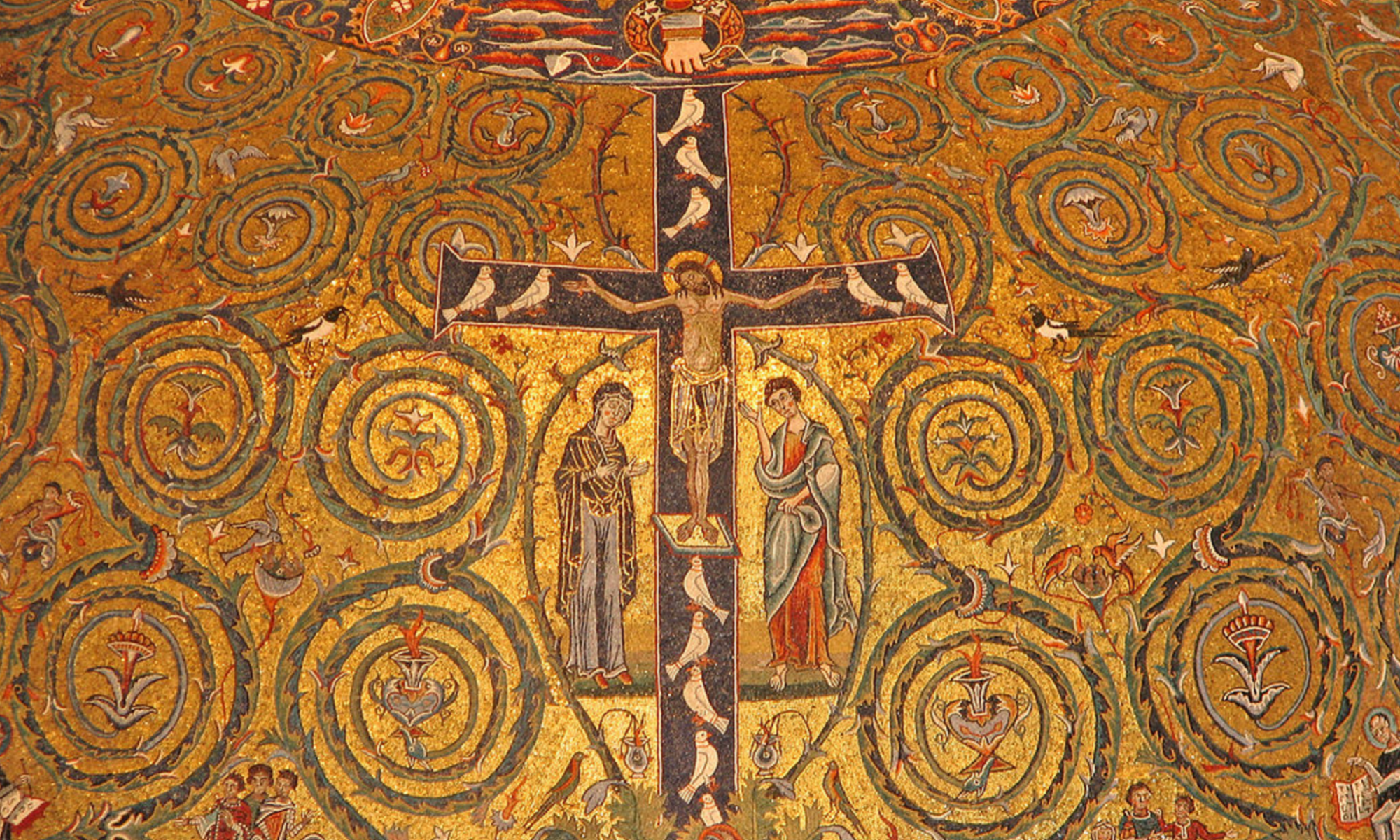
Radiating Christ

“One can only give God through radiating him.”

Apparently this was a mantra often repeated by the French mystic Marthe Robin. It is so true! No amount of doing or striving or “getting life right” on my part will ever be able to connect others with Jesus. But if they see him shining through me, it is an entirely different experience!

Some of you may be familiar with a beautiful prayer that is recited every day after Mass by the Missionaries of Charity – the congregation of religious sisters founded by Mother Teresa of Kolkata, now serving the poorest of the poor in 139 countries of the world. The prayer is often attributed to John Henry Newman:

Dear Jesus, help me to spread Your fragrance wherever I go.
Flood my soul with Your spirit and life.
Penetrate and possess my whole being so utterly,
that my life may only be a radiance of Yours.
Shine through me, and be so in me
that every soul I come in contact with may feel Your presence in my soul.
Let them look up and see no longer me, but only Jesus!
Stay with me and then I shall begin to shine as You shine,
so to shine as to be a light to others.
The light, O Jesus, will be all from You; none of it will be mine.
It will be you, shining on others through me.
Let me thus praise You the way You love best, by shining on those around me.
Let me preach You without preaching,
not by words but by my example,
by the catching force of the sympathetic influence of what I do,
the evident fullness of the love my heart bears to You.
Amen.

I had many Masses with those sisters early on Wednesday mornings during my years in Rome, as I worked on my doctorate. I remember this prayer speaking deeply to my heart, awakening a yearning deep within me to radiate Christ – even if I was blind at the time to some of the obstacles that I was putting in the way.

What does it mean to “radiate” Christ?

Radiating requires a relationship with Christ. It is a way of being rather than a matter of doing. That is so hard for us busy and wounded westerners, who tend to be so focused on doing or achieving or insecurely putting forward a positive image of ourselves.

If we can learn anything from the apostle Paul, we can learn that to be a Christian is to abide “in Christ.” During my doctoral studies, I learned that Paul’s letters use that phrase “in Christ,” or something very similar, 165 times! If I allow myself to be crucified with Christ, to die and come to new life in him, then it is no longer I who live, but Christ lives in me. Paul learned on the road to Damascus that Christ is not just a historical man, but one mystical person, a unity of head and members. Jesus asked him, “Saul, Saul, why are you persecuting me?” Not “Why are you persecuting my followers?” but me. Christ and his body are one. Through faith and baptism all our own efforts are put to death and we enter a new, highly vulnerable, highly childlike existence as a co-member of the Body of Christ, together with all the other members of all times and places who likewise humbly depend upon him for everything.

Jesus invites us to abide in him like branches on a vine. It is such an appealing image of what it means to exist “in Christ.” There is a profound unity of the entire organism, and a sense in which we all thrive or suffer together, grow together, and bear fruit together. But there is no question about the order of causality. It is the vine that gives life to the branches, and not the other way around! Our heavenly Father, the true vinedresser, never ceases to graft new shoots into his Son.

Radiating means receiving. Think of a stained glass window. There are so many pieces of broken glass. An isolated pane is nothing to marvel at – particularly if all is darkness! But when assembled by a master artist, and when flooded with the gift of light, what beauty and radiance!

And so it is with Christ and Christians. We are invited to be vulnerable and receptive. That can feel so scary sometimes! It feels so much easier to carve out a familiar way of doing things, in which I can maintain the illusion of being in control. Even though I pray seriously every day, I have often prayed in a way that lacks vulnerability and receptivity, approaching prayer as a “should” rather than opening up my deep desire for God and letting myself ache for him and receive from him.

Even when we let ourselves beg God like a little child, what is our begging like? Do we not sometimes beg him to help us be strong enough so that we no longer need him? It is challenging to abide like little children who depend on him for our daily bread (and keep coming back the next day and the next day). Like those Israelites in the desert, I sure am tempted to store up a bunch of that manna in a jar so that I don’t have to keep feeling so vulnerable and so dependent upon God. Control feels like safety, even though it leaves me alone and miserable.

Little by little, God is assuring and reassuring me that his love is enough and always will be enough. I can open up the rusty gates of my multi-layered fortress and let the King of Glory enter. It doesn’t matter that I still struggle with my insecurities and sins. He will shine, and there will be no doubt whose glory it is that is shining. To be holy is not to be perfect, but to radiate Christ.

We can close with wise words from the Gregory Nazianzen, an early Church Father:

He wants you to become a living force for all mankind, lights shining in the world. You are to be radiant lights as you stand beside Christ, the great light, bathed in the glory of him who is the light of heaven.

Healing and the Holy Spirit

Have you ever heard testimonies from fellow Christians about powerful healing experiences and secretly doubted or judged them? Or have you perhaps felt threatened by or resentful of the joy and freedom they seem to possess? I admit that I have!

For every person who has a powerful healing story there are dozens of others who have been reaching out for years and (it seems) experiencing no answer. Whether we have a physical ailment, anxiety and depression, a repeated sinful habit, an addiction, or relationship struggles, we can find ourselves suffering painfully for many years.

Reaching out and not being attuned to, not being heard, or not being cared for is one of the most painful human experiences. It can feel far safer to close ourselves off, to believe that healing doesn’t really happen, or to claim that it happened “back then” with Jesus but no longer happens today.

It doesn’t help that plenty of us Christians are prone to exaggerate or embellish, to draw attention to ourselves, or to avoid facing our brokenness by hiding behind a healing story. Even when real healing has happened, it can be tempting to tell a glamorous healing story that turns a blind eye to our ongoing struggles and avoids facing the toilsome work still ahead.

Isn’t it fascinating that sometimes God works powerful graces so swiftly and suddenly, and other times he seems to keep us waiting for SO long?

Lurking in the background here is perhaps the greatest theological mystery, namely, the interplay between God’s omnipotence and our human freedom. He is the all-powerful God AND he always honors the freedom he has given us. This means that the Holy Spirit works with amazing swiftness, but always in a way that respects and honors our human dignity, our desires, our receptivity, our readiness, and our freedom to choose.

Ambrose of Milan comments on this swiftness of the Holy Spirit, reflecting on Luke’s Gospel account of the birth of Jesus. The angel Gabriel comes to Mary and declares her to be full of grace. He invites her to say “yes” and become the mother of Jesus. She freely and wholeheartedly surrenders. Immediately God’s eternal Word becomes flesh in her womb, as the Holy Spirit rushes upon her in a new and special way. The result? She sets out in haste to the hill country. In the words of Ambrose, “Filled with God, where would she hasten but to the heights? The Holy Spirit does not proceed by slow, laborious efforts.”

The Holy Spirit acts with utmost swiftness. Whether impregnating the Virgin Mary, forgiving the sins of the Apostles on Easter Sunday, exorcising demons, healing the sick, or raising the dead, the Holy Spirit needs no time.

It is we who often need time. And God honors us in that need!

I know for myself that my “yes” to God’s invitation, my surrender to him, seems to come with strings attached. I have experienced many grace-filled moments in which I have given everything to him. Yet I keep discovering that I have secretly crossed my fingers behind my back. Somehow I have maintained a contingency plan, withholding some small parcel for myself just in case he doesn’t come through for me. It reminds me so much of the scene in Lord of the Rings in which Bilbo Baggins is called upon to surrender the highly corrupting Ring of Power, passing it to his nephew Frodo. Bilbo agrees and then gets up to leave the house – only to be confronted by the wizard Gandalf with the words, “You have still got the ring in your pocket.”

Like Bilbo, I can so often respond, “Well, so I have.”

And God waits – not with disdain or disappointment, but with eternal kindness and patience. He desires me to desire him. As a loving Father, he patiently watches me grow, without jumping in or coercing.

Receptivity in freedom is not a “one and done.” Even for Jesus and Mary, who were so utterly receptive to the Father’s will, so totally open to being led by the Holy Spirit, receiving was an ongoing reality. Mary was already “full of grace” (Luke 1:28) when she said yes to God – receiving ever greater blessings. She pondered God’s mysteries in her heart as she kept growing in her wisdom and understanding (Luke 2:19, 51). Luke twice tells us that Jesus himself grew in wisdom and in grace (Luke 2:40, 52).

To be truly human is to grow our whole life long. Our human existence is dynamic, not static. We are freely invited by God to become who we are. We are created in God’s own image and likeness, and called to receive love freely and give love freely as we grow in communion with God and each other. We are intended to love and be loved with ever greater depth and fullness and fruitfulness.

Desire and receptivity are key concepts here. We all have holy desires, sown in us by God the Father, who is always drawing us to himself (John 6:44) – often in undetected ways, but always in a manner that honors our freedom to say yes or no.

As we well know, our good and holy desires often get twisted and tangled up. Augustine of Hippo beautifully described the experience in his Confessions. In our unloveliness we plunge ourselves into the lovely things God has created – things which cannot even exist without him. We run far from him even though he is never far from us. And ever he pursues us, ever he invites us to open up and receive.

Desire stretches our hearts. The more we receive and truly experience the living God, the more we thirst for him. Thirst for God is quite possibly the most painful human experience of all – and the one that keeps enticing us to stretch out our hearts in receptivity. The more we willingly thirst, the more we can receive him, and the more the Holy Spirit is then unleashed to rush upon us, to flood us, to possess us, and to lead us in haste to give freely and sacrificially to others.

God alone knows all the reasons why healing does or doesn’t happen in any particular case. In some cases, we may never know in this lifetime. Often, however, what feels like a delay to us is actually a deep honoring of our desires, our receptivity, and our freedom. I believe that the single hardest human thing for many of us is to open up and receive. It is so hard to do what the Virgin Mary did in her fiat – to receive love vulnerably, freely, and wholeheartedly, setting down all our well-crafted defenses, permitting God and others to be and to stay intimately close.

Quite often, we find ourselves in a bind. One part of us deeply aches for connectedness and communion. We ache more than anything else for someone to draw near, to see us, to hear us, to be intimately close to us. And then when a good and trustworthy person actually does that, we freak out and sabotage! I am astounded at the lightning speed with which my defenses engage in situations like this.

The great spiritual question is the question Jesus asked at the pool of Bethesda to the man who had been crippled for 38 years: “Do you desire to be well?” Of course we do! All of us desire to be well, to love and to be loved. God created us for these things and planted these desires in us. But many of us are also chained by our pride and self-reliance, our hiding and self-protection. We need Jesus to break those chains by the power of the Holy Spirit. He will eagerly do so, and with even greater swiftness that our defensive reactions – if and when we deeply desire it. Some of us need many years to grow in those desires and reach a point where the strength of our desire is greater than the strength of our defenses. The Holy Spirit will never force himself – but thankfully he only needs a tiny crack to enter. Faith the size of a mustard seed is enough.

Many of us may need a long time and much breaking up of the hard soil before we are receptively willing to permit the Holy Spirit to act upon us and possess us. Likewise, after powerful moments of healing, the real work is only just beginning. Whether the healing received is physical, emotional, or spiritual (with spiritual healing always being the most important and most amazing), we are then invited in freedom to grow and mature and bear fruit. Only Jesus, through the anointing of the Holy Spirit, can liberate us. He breaks our chains, rolls away the stone that is blocking our self-created tomb, calls out forth, unbinds us and pulls off the masks that have obscured our vision. Once these obstacles are removed, his desire is for us to keep growing in our desires, to keep receiving and giving, and to bear fruit. He wants us to be true sharers in his love, his freedom, and his dignity. We are not robots of puppets. We are no longer slaves but are led by the Holy Spirit to live in the glorious freedom of the sons and daughters of God.

Conversations about faith and good works so easily get sidetracked if we don’t look at them in terms of Love. From start to finish, it is all God’s work – starting with the very desires themselves that he sows in us, continuing with the period of preparation (as long as it takes) for receiving the gift, rushing ahead in powerful moments of healing and grace, sprouting forth with new life, proceeding with everyday moments of patient and laborious growth, and culiminating with superabundant fruitfulness. From start to finish, God honors our dignity and freedom, inviting us freely to grow and mature and bear fruit in love, as we become who we are.

Reflections on Zechariah

Advent is a wonderful time to read the writings of the prophets. Those chosen men, frail human instruments of God, kept their hearts stretched out in expectation, even amidst woes, tears, and lament. Their provocative imagery opens up a vast horizon of Hope. Led by the Holy Spirit, they allowed the depths of their human imagination and emotion to be tapped as they plied their pen to describe God’s desire to come and save us. Many times they offer promises of his salvation that will somehow simultaneously bring a fiery intensity AND a tender gentleness. Justice and Mercy. Love and Truth.

This Advent my heart has been captivated by the final four chapters of Zechariah, which are apocalyptic in nature. Unfortunately, “apocalyptic” tends to mean “easily hijacked.” The final book of the Bible, the Apocalypse (a.k.a. “Revelation”) is the most frequently butchered book, plundered by misguided Christians as they sound alarm bells about the end of the world and claim to have all the answers. Never mind that Jesus told us clearly that no one except the Father knows when the end will actually come (Matthew 24:36), and that we ought not chase after these messianic alarmists (Mark 13:21).

Those who read apocalyptic writings in a way that is unduly fascinated with foretelling the future are largely missing the point. Whether the Book of Revelation or certain passages in Daniel or Zechariah, the apocalyptic writings in Scripture have genuine meaning and relevance for all who read the text – including the original audience; including the many millions of men and women who never saw the second coming of Jesus; including you and me.

“Apocalypse” literally means “unveiling.” The prophetic promises point to an ultimate unveiling that is “already but not yet.” We are meant to enjoy a true taste of them here and now, yet always with a sense that more is yet to come, and we are not yet ready for the fullness.

The coming realities, sharing as they do in God’s infinity, necessarily elude the full comprehension of our present finite experience. It reminds me of a famous episode of The Twilight Zone in which a little girl in her bed somehow stumbles through the wall into a fourth dimension, and her family frantically seeks to rescue her. Her limited human mind cannot process the newness of a fourth dimension. It is overwhelming and disorienting.

As great as human logic is, it can only bring us so far. Every wise theologian has understood this point. Thomas Aquinas described doctrinal propositions as tending towards the Truth, and reminded us that our Faith is not directed towards the propositions of our creed, but rather towards the Truth itself that is pointed to in those statements. God’s Truth radically transcends our expressions of it. Towards the end of Thomas’ earthly life, he had a deep mystical experience of God, after which he expressed that all the allegedly wise words he had written now seemed to him “like so much straw” in comparison to the glory he had glimpsed.

With that “already but not yet” perspective in mind, we can allow the powerful imagery of the prophet Zechariah to captivate our hearts and minds, to speak to our experience and pour blessings upon us here and now, while opening our hearts in Hope, reaching out receptively to the greater realities yet to come.

Zechariah paints a picture of lament and loss. He describes the trees grieving over the felling of many mighty and beautiful cedars, cypresses, and oaks. He describes the weeping of the shepherds over the loss of their glory, the betrayal wrought by shepherds forsaking their flock, and the confusion and woes of a flock that goes unshepherded. As a result, Zechariah foretells that two thirds of the people will fall away. The one third that remains will pass through fire like silver and gold that is tested.

Got your attention yet? To me, it is as though he is describing our present-day experience in the Church. But the point is not to be alarmist about the end of the world. Instead, we can allow the imagery to disrupt us in a way that opens up space for Hope, which is by far the deeper message of these chapters. Hope is also the reason why we read from the prophets every Advent. Again, let us remember that these words of Scripture speak to believers in all centuries, not merely our own. The point is to let them speak to us!

Zechariah proceeds to describe all the nations of the world rising up against God’s people and fighting Jerusalem. Even Judah will rise up against Jerusalem. But they will only injure themselves, like those who try to move an immovable rock. God will fight those who fight her.

Amidst these scenes of strife and loss, Zechariah offers vivid images of Hope, ones that connect closely with Jesus in John’s Gospel and with John’s promises in the Book of Revelation. Zechariah promises a fountain welling up within the house of David. Fresh water will flow from Jerusalem, during both summer and winter, to the East and the West. There will be no more darkness or cold, but only the Day. He promises the restoration of Jerusalem and the inclusion of all the survivors of these great trials – both the Jews and the Gentiles who had rebelled against Jerusalem but now repent. Cleansed by the fountain, they will gather year after year to celebrate the Feast of Tabernacles, bowing down to the King, the Lord of Hosts. On that day, each household in their own tent will find their cooking pot to be sacred to the Lord. No longer shall the Temple be a marketplace, in which people attempt to purchase holiness. Each and every vessel will receive and be filled as from the altar itself; each household will be truly holy to the Lord of Hosts.

A marketplace no more. Intellectually we understand that God’s holiness cannot be bought, and that no amount of magic or manipulation can bend Him to our will. Yet we still try. One way or another, our prayers tend to be varied attempts at praying, “My will be done!” – or more subtly, “This is what you have to do for me, God.” Much more elusive to us is the experience of freely receiving, gently abiding, and humbly depending. We have a tendency to keep grasping at a God we can control and bend to our will. Idolatry dies hard.

Jesus breaks into our brokenness with a newness that flips our paradigms upside down. John’s writings illustrate this point powerfully with the image of “tabernacles” (tents). John begins his Gospel telling us that Jesus, the Eternal Word of God, became flesh and made his dwelling among us. Literally, he pitched his tent in our midst. In the Old Testament, autumn after autumn, God’s people celebrated the Feast of Tabernacles by bringing their harvest fruits to the Temple and constructing their tents around the Temple.

In John 7 and Revelation 7, this imagery is flipped around, in a way that evokes Zechariah’s promises. Jesus goes up to Jerusalem during the Feast of Tabernacles and proclaims, “Whoever believes in me, as Scripture says: ‘Rivers of living water will flow from within him.’ He said this in reference to the Spirit that those who came to believe in him were to receive.” Revelation 7 describes a living fountain issuing forth from the Lamb once slain, and an endless Day shining forth from the Temple. The white-robed army that has endured the time of trial will be sheltered (“tented”) by God himself, day and night. Revelation 21 re-echoes that God will dwell (“tent”) with his people day and night, and will wipe every tear away.

Our tendency from the Fall until now is one of pride and self-protection. Adam and Eve tried to hide from God and cover their nakedness. We, their descendants, spend much of our lives constructing our own versions of holiness and try to become good enough so that God has to give us what we want.

Mercifully, God allows our false props to be stripped away – yes, even by means of harsh trials. They are of our own making – not his – but he turns all things to the good for his beloved children. To those not yet ready to receive and abide and depend, it feels terrifying and seems like punishment – much like the imagery at the end of Zechariah. It is then we can take great assurance in the Hope he promises: “The city will be inhabited; never again will it be doomed. Jerusalem will dwell securely” (Zechariah 14:11). When we remember that the living fountain of the Holy Spirit is always there within our hearts, that the light of the Risen Christ shines brightly, and that the Father himself will extend his shelter over us, then we can begin to take him up on his invitation to abide in his presence in Hope.

The Tree that Holds the Nest

Ongoing insights from the sermons of Saint Sharbel (1828-1898).

For birds, nest building is a matter of security, survival, and nurturing. They instinctively seek out a safe location and then diligently gather materials to prepare a home in which they can hatch, nourish, and protect their young.

We humans have a similar instinct, both for ourselves and for those in our care. We are hardwired for survival, and we have a deep need to feel safe and secure. Ideally, those needs are met in our early and vulnerable stages in life. Through healthy relationships, intimate and consistent nurturing, and appropriate protecting, we learn to trust God vulnerably and be secure in his protection and love. Unfortunately, many of us have a different story, and continue to struggle with insecurity well into our adult lives.

Saint Sharbel reminds us not to get so intensely focused on our frenzied nest building that we forget all about the tree that holds the nest.

One mistake is to pick the wrong tree! Animals sometimes build their nests in funny places – especially when baffled by the shape and texture of human structures. A year ago my mother kept sending us photos of the duck that had decided to build its nest beneath her water meter, right outside the living room and just two feet from the driveway. In this case, she, my sister, and my nephews were all quite interested in helping protect the eggs that held the ducklings. In other cases, picking the wrong nesting place is fatal for all concerned.

We humans easily build our nest in artificial places – food or drink, status, wealth, luxury, entertainment, sexual fantasies, social media (or the image we project on social media), addictions, and so forth. These surrogate trees feel safe to us in the moment, but they are artificial substitutes for the only thing that can bring true human security and nurture – healthy relationships, beginning with God the Father.

Even as disciples of Jesus, we can get so unduly focused on our nest that forget all about the tree that holds the nest. Sharbel exhorts us, “Care for the tree with the same care that you devote to the nest. Just as you take charge of your nests, take charge of your trees also. Care for the roots, the trunk, the branches, and the leaves.”

This is another way of inviting us to put God’s Kingdom first in every aspect of our life. If the branches of the tree are healthy and full, our nest will have plenty of protection. We do not need to exert so much energy and wear ourselves out building high walls around our nest.

Parents worry a great deal about the safety and security of their children – especially in this age of “helicopter parenting” or (my personal favorite) Zamboni parenting. Such hopes for a life devoid of risk or messiness are unrealistic and serve only to steal away our peace as we chase the impossible. I say “we” because these parents are typiclly my age and because I have done more than my share of freaking out in my role as a spiritual father in parish life. Saint Sharbel gently lifts our gaze to remind us of the true security that we can confer on our children:

“You must give life to your children. Now, there is no life except in Christ. So offer them Christ! But if he is not in you, it will be difficult for you to give him to them. If you do not sanctify yourselves, how do you think you will sanctify your children?”

There are parallel truths at the level of a parish family. How many of the feverish activities in a typical American parish are actually about connecting us with Jesus and helping our children fall in love with Jesus? How many of our parishes are dying because individuals and groups are so concerned with guarding their nests that they fail to notice how rotten or dead the tree has become?

I take the same challenges to heart as a priest, as I celebrate my 17th anniversary this weekend. Looking back over the years, I can think of many moments in which I was far more concerned with “nest building” than with abiding in the love of Jesus. In the early years, I plunged into all sorts of pastoral busyness, often finding that I had – yet again – missed my allotted meditation time or was praying the entire Divine Office at 11pm (or at a later time I will not admit!). The Lord gently and persistently invited me to depend on him and to put prayer first. Without prayer, I wither and die.

I have vastly improved my prayer habits, but I still struggle often with ungodly self-reliance or self-protection. God has revealed to me the deeper truth: he has placed me and my nest in a mighty tree by flowing waters. If I allow that tree to abide by the waters and grow, not only will my nest find protection in those strong branches, so will thousands of others. It is sometimes hard to believe in the depths of my heart that God will provide and protect. It takes so much surrender and humility to trust his branches; it feels so much easier to return to my own frenzied nest building or (at more selfish moments) simply to bury myself in my nest and ignore everyone and everything.

God wills for us to tend to the tree that holds our nest. If the branches are rotting, we may need to ask for help from wise people in our life. We may need to seek spiritual remedies such as prayer, sacraments, fasting, or penance.

Often, we need to go to the roots of the tree. If the soil and the roots are unsound, the whole tree is in danger. Getting to the roots takes determination and courage. As Sharbel explains, “the work of taking root is hidden, it will not appear, and it requires effort and asceticism.” We have to be willing to die to ourselves. It often means a great simplification of our cushy nest – something we tend to resist!

Nest building is a natural part of life, but the Lord invites us to turn our attention to the tree that holds our nest. May each of us have the humility and courage to tend to that tree, and to trust in the protection and care God will provide us there.

Living Torches

The emperor Nero was a troubled soul. In A.D. 64, following the great fire that destroyed much of Rome, he cast the blame on the Christians and put many of them to death. The Roman historian Tacitus paints a disturbing picture: “Some of the Christians were crucified and set on fire at the end of the day, as torches to illumine the night. Nero kept his gardens for this spectacle, hiding among the crowd, dressed as a charioteer.”

Crucified and set on fire. One can only imagine the devil’s delight, just like that first Good Friday. But the devil cannot create. He can only twist or pervert the good things God makes, attempting to mock his Creator’s good designs. God can always untangle the devil’s knots, not only restoring things to their original goodness, but even bringing forth new and unimagined blessings.

As we approach Pentecost, those early Christian martyrs in Nero’s gardens can become a holy icon of our life in the Holy Spirit. If we allow ourselves to be crucified with Christ, if we surrender our hearts to undergo that dying and rising with Him, we shall be set ablaze with the fire of the Holy Spirit. We shall become living torches who light up the night of this world, bringing comfort, joy, and peace to all around us.

Do not quench the fire of the Holy Spirit. That is Paul’s exhortation to the Thessalonians.  The Holy Spirit is to be a flame constantly ablaze within us, drawing in and consuming all the lesser flames of our disordered and unruly passions.

When we prepared for our Confirmation, many of us learned about the 7 Gifts of the Holy Spirit: wisdom, understanding, counsel, fortitude, knowledge, piety, and fear of the Lord. The 7 Gifts are easily misunderstood. Well-meaning catechists tend to use gimmicks or clichés to attempt to make them interesting. The deeper truth is that those Gifts are perfective (seven being the biblical number of perfection). When they are activated in us, we are truly possessed by the Holy Spirit. He becomes the primary agent, and we are willing co-operators.

Without the gifts of the Holy Spirit taking over, even the best parts of ourselves will get in the way. There is that wonderful scene at the end of “Revelation,” a short story by Flannery O’Connor. The main character, the self-satisfied Ruby Turpin, discovers she is not quite so Christian as she had thought. Furious at God and not wanting to take an honest look at herself, she screams out to Him, “Who do you think you are?” In response, she has a vision. The twilight cloud in the sky overlooking the field is set ablaze, almost like a fiery bridge into heaven. Leading the procession are many of the kinds of people she would least expect to find in the Kingdom. By contrast, her own kind, the rule-following and decent kind, are the last and the least. And “she could see by their shocked and altered faces that even their virtues were being burned away.”

Our self-regulated attempts at virtue and holiness, our managing and controlling, protecting and striving, tend to quench that fire of the Holy Spirit.

So does codependency. Christian churches are often full of do-gooders who will jump in to help others with their problems, but resist being vulnerable and receptive themselves. Remember the story of the five foolish virgins, who ran out of fuel for their lamps – in contrast to the wise virgins, who kept their lamps well-stocked, so that they could burn brightly at the coming of the bridegroom. If we do not learn how to receive vulnerably, if we do not abide in the Lord and depend daily upon him, the fire of divine love within us will burn out. Yes, we are called to give and share, but it is the Holy Spirit that is given and the Holy Spirit that is shared. The work does not depend on us. We need only cooperate and yield.

In God’s mercy, he will offer us many invitations to surrender. Most of the time, the invitation comes in that still small voice, gently inviting us into communion. Yes, occasionally the invitation may come à la Flannery O’Connor, in the form of a violent interruption or intrusion, something that splits open a crack in our otherwise impenetrable armor. Moments of crisis can become moments of great opportunity. There is also the very human factor that some of us have to hit rock bottom before we will even think about surrendering. God knows what we need and deeply desires us to be aided by the Holy Spirit.

In whatever fashion those graces come, there is no avoiding the Paschal mystery. We must be crucified with Christ in order to rise with him. That victory needs to be extended to every part of our heart. That death with Christ opens up a space for the new life of the Holy Spirit. It is only when we give all over to God and approach him with empty hands that he can truly fill us. That includes the shameful and feeble parts of our heart that we would rather keep hidden away. It includes our most noble and virtuous parts, which are not quite as amazing as we would like to think. It includes every part of us. Then the Holy Spirt can truly take over. We can burn brightly as God’s living torches.

In our humanity, we shrink back from any form of suffering or dying. Our instincts tell us we will be annihilated. But this pain and this death is different. The fire will not consume us. It heals, unites, and purifies us as it burns. We become like the burning bush that Moses saw. We will be perpetually ablaze, and nothing of value in us will be definitively lost.

As we approach Pentecost, like those disciples in the Cenacle, we join with the Virgin Mary in prayer and beg the Lord to set us ablaze with the Holy Spirit. May we all become his living torches, shining for the world to see.

The Need for Accompaniment

Accompaniment is perhaps the single greatest need in the Church today. With it, amazing growth and renewal happens. Without it, Christendom crumbles and collapses before our eyes.

Unfortunately, “accompaniment” has become a buzzword. Buzzwords can be confusing and unhelpful. So we need to be clear about what we mean by accompaniment in the life of Christ and his Church.

To be accompanied means that someone commits to us in a relationship that shows love and compassion to us in our need. To be accompanied likely involves one or more of the following: to be seen, noticed, heard, understood, loved, delighted in, celebrated, encouraged, included, affirmed, cared for, walked with, nurtured, fed, sheltered, protected, defended, touched in a meaningful way, comforted, calmed, soothed, taught, guided, counseled, corrected, chastised, or even disciplined. When I am accompanied, I experience at a profound level that I matter, that I am not alone, that I am known and loved, that I am safe and secure, that I belong to a reality larger than myself, and that all will be well. I feel free to be truly myself, without having to pretend or put on a mask. I experience an openness and eagerness for all that is true and good and beautiful.

We are familiar with figures in life who provide this kind of accompaniment: mothers, fathers, spouses, friends, nurses, teachers, coaches, mentors, counselors, and clergy. Or, perhaps we should say that these people can provide these things. Sometimes they do the opposite by using or abusing, controlling or manipulating, neglecting or ignoring.

We live in an age very much like that of the early Church, an age in which the greatness of the Roman empire was fading fast, an age in which marriage and family life had broken down. Jesus urges his disciples to look around them and notice that the fields in the world are ripe for the harvest (John 4:35). They have just stumbled upon his conversation with the Samaritan woman at the well. It turns out that the world is full of people like her, people with a deep hunger and thirst, people with a need to be accompanied. Jesus offered her that accompaniment: noticing her, seeing her, understanding her, caring for her, awakening her thirst, and inviting her to embrace the truth. The disciples arrive and ask Jesus about lunch. He explains to them that his food is in doing his Father’s will. He depends upon his Father. He needs to be accompanied by his Father.

This is the first and most important lesson of accompaniment: We all need to be accompanied. This is not simply a need we have as children; it is a human need by God’s design. We are made in his image and likeness. God is love. He is not a solitary God. He is an eternal communion of persons. The call from God is to share in his eternal life, in that eternal communion of love – a far cry from isolation and independence. Certainly, good parents help us to become strong and free and responsible – but hopefully still in a way that knows how to depend upon God and depend upon others. Love of God and love of neighbor are the two great commandments. Love is mutual, not one-sided. If we are not receiving love in a vulnerable way, we have not yet learned how to love.

We begin life utterly vulnerable and dependent,  looking to our primary caregivers, not only for food and clothing and shelter, but for all the other emotional and spiritual needs mentioned above. In God’s plan, these caregivers are a mother and father blessed and united by God in a stable and lifelong covenant of marriage. These days, it is exceptional indeed to find an environment in which mom and dad are intimate friends of God and secure in their covenantal love for each other. In far too many cases these blessings are lacking altogether, or they are only a well-maintained façade, masking misery and dysfunction.  No wonder there is such a gaping need for accompaniment! The fields are indeed ripe for the harvest.

Here in the United States, there are a couple of added challenges. First, there is the false sense of “independence” – which easily becomes an ungodly self-reliance. Is our nation not built upon rugged individualism? We’re just supposed to pull ourselves up by our bootstraps, suck it up, and make it happen. That seems to work so well – until it doesn’t, and life collapses on us. That certainly happened to me – a story for another time.

Secondly, there are many in my generation who became “latchkey children” or “lost children.” Parenting books, from Spock to Ferber, positively encouraged moms and dads to raise “independent” children, to leave even babies alone in their sadness and fear so that they could learn how to “self-soothe” (as if this is something anyone can teach himself!). In other cases, circumstances forced children to be on their own, whether due to divorce or due to dual-paycheck households. When not consistently accompanied through childhood, children certainly learn to be independent – but not necessarily capable of receiving and giving love in a joyful and healthy way.  Many of us graduated to becoming lonely and isolated adults, uncertain how to form healthy relationships. Many more of my peers have emerged as the legendary “helicopter parents” of this generation, fueled by fear, and swooping in to rescue their kids from any real risk or responsibility (or freedom or growth). We are perhaps even more accurately described as “Zamboni parents” or “bulldozer parents.” Still unhealed and insecure from our own lack of accompaniment, and still unable or unwilling to admit our need for it, we are determined that our children will never face danger or risk alone – or at all.

Genuine accompaniment is all about gradualness – aiding someone, step-by-step, to become truly strong and free, capable of receiving and giving in authentic human love. Genuine accompaniment fully respects freedom, nurtures growth, and invites to greater responsibility. Most of us tend to one of two extremes. Either we meddle and micro-manage, or we stay aloof and inconsistent.

Genuine accompaniment is an art – these days, a rare art. I find that those who are best at it are those who themselves have received it – and who are committed to continue receiving it. Think of Jesus, who received accompaniment for the first 30 years of his life – and even then was regularly pulling aside from the crowds to reconnect with his Father in prayer. Jesus never ran from being vulnerable and dependent.

Most of us avoid being vulnerable and do not like to admit that we “need” at a such a deep human level. Receiving is perhaps the hardest human thing to do. If we do not learn to, we wind up grasping or seizing, using or taking, controlling or manipulating.

The Church is the Body of Christ. The lack of accompaniment today is a true crisis. Until each of us learns how to receive the accompaniment we need, we won’t know how to give it. Our members will keep drifting elsewhere in their ache for accompaniment. We lament that our young families are turning instead to athletics, or to yoga, or to social media. Don’t they know what they are missing by leaving the Church? True, none of those other things will fill the void they are experiencing. They are turning there because they find some version of accompaniment. When will we allow ourselves to learn and to begin turning our parishes into places where authentic Christian accompaniment happens – starting with ourselves? I know that if and when we do, the growth will be every bit as explosive as it was in the early Church. The fields are indeed ripe for the harvest.