
I am from the river.
When I was one, my family moved back to Wisconsin and purchased a little house along the Wisconsin River.
I could see the river from my bedroom window, pulled open on sweaty summer nights, or through the ice that clung to the curtains in January. The river beckoned, beautiful and dangerous: frozen yet fragile in the winter, rising and rushing in the spring, serene in the summer, reflecting bright bursts of color in the fall.
I spent thousands of hours, endlessly exploring in our backyard, between the deck and the dock I had helped my stepdad build. There, near the river, I would catch toads or turtles or grasshoppers. I would dig up worms for fishing, or get grass stains in my pants as I touched and tasted the flowers (the violets were by far the best!). More than once I wistfully watched as a ball plunged into the waters and floated away, eluding the reach of branch or cane pole.
As Heraclitus once suggested, you cannot step into the same river twice. Visiting home elicits a mixture of emotions. It’s the same basic house and yard, but remodeled, refurnished, and rearranged a few times over. The town has the same streets and many of the same buildings, yet feels noticeably different. For many decades, it was a booming paper mill town. Then they witnessed the loss of hundreds of jobs in the early 2000’s, followed by a total shutdown in 2020. What a change from my childhood and teen years, when Consolidated Papers was a Fortune 500 company and invested $400 million to build the state’s largest paper machine.
This fall, I am facilitating a few dozen listening sessions throughout my diocese, inviting our 156 parishes to pivot from maintenance to mission. For many parishes that are struggling, the invitation is felt as an immediate threat. Are we going to close?? What are we going to lose?
The Lord has often surprised me in this process, especially when I feel overwhelmed, fear failure, or put pressure on myself. It happened again a few weeks ago.
My friend showed me a brand new book by Robert Enright, Forgiving as Unity with Christ. I quickly realized – “O, this is going to be one of those books.” It’s going to take me at least six months to meander through the journaling and meditation prompts, which have already tapped deep places in my heart.
So there I was, working on wounds of resentment and unforgiveness (which include my avoidance of feelings of anger). The exercise invited me to remember a time when I received unconditional love from another human, and to enter vividly into that moment. Memories of 1999 cascaded into my imagination. At that time, I received remarkable compassion and kindness from a few friends, especially Peter. It was healing to recall the lovely ways that they attuned to me, drew near to me, held space for my raw pain, and showed empathy.
My gratitude and consolation were interrupted by the memory of how awful it was to lose Peter that November. He was only five months ordained when he unexpectedly and inexplicably died in his sleep.
Out of nowhere I found myself recalling Robert Frost’s poem “Nothing Gold Can Stay.” It opened some of my deepest wells of grief, and I sobbed, not for the first time, and probably not for the last. I was not only feeling that sudden loss of a friend, who indeed glittered like gold. I was connecting with the universal human experience expressed in Frost’s poem. In this post-Eden world, the most amazing and beautiful moments never linger. It is agonizing. We were not meant for endings.

How painful it is to be like the poets or prophets – to have huge imagination and perceive beauty and goodness where many do not. It’s thrilling and delightful. You are eager to share the goodness with others. It’s awful because, often and even inevitably, the delight evaporates. Or it gets crushed, ripped away, or (perhaps worst of all) dismissed or spurned by others, who could have delighted in it. I think here of Jesus weeping over Jerusalem (Matthew 23:37). He imagines and desires so much more goodness for them – but they don’t want it. Or, if they want it, they are unwilling to repent and receive it.
As I continued to pray, I realized the connection between my own intense feelings in the moment and what Jesus is inviting all of us into in the Rebuild My Church Initiative in my diocese. I often feel unsettled and fearful in the face of future unknowns. I keep catching myself trying to manage or control the process, fearing failure. The Lord keeps reminding me that the people of the diocese doesn’t need a project manager; they need my heart. My own experiences are a microcosm of what I’m inviting everyone else into. I have all my familiar survival strategies that feel so much more appealing than trusting and following the voice of the Good Shepherd into more abundant life.
When people first hear about “reimagining the structure of their parishes” or “pivoting from maintenance to mission,” their reaction is often one of fear, suspicion, and self-preservation. I am listening to them in their fears, while inviting consideration that we need not live our lives out of fear.
But the Good Shepherd has been prompting more in my heart. It’s not only the unknowns or the potential losses of the future that are unsettling; it’s what has already changed and changed again, but remains ungrieved. When hurts are unhealed and losses are ungrieved, our human tendency is to fight to hold on to what is already lost, perhaps even finding a scapegoat to blame for the struggles.
Case in point – the loss of Christendom. Fifty years ago, Fulton Sheen prophetically proclaimed, “We are living at the end of Christendom – not the end of Christianity.” Yet so many Christians and churches want to fight culture wars and save Christendom. Rather than weeping over the ruins and rejoicing that new growth is sprouting up, we are fantasizing that we can still stop the collapse – not unlike the Japanese soldiers on Pacific islands who had not yet heard that the war was over.
I’ve been inviting the participants at these listening sessions to reflect upon changes and losses in their families, communities, and churches that have already happened, but are hard to accept. If we don’t mourn those, we will be less capable of heeding the voice of the Good Shepherd, being surprised with resurrected life, and following him into green pastures and new experiences of more abundant life.
In addition to Robert Frost’s poem, my prayer prompted a recall of the 1990’s movie A River Runs Through It. I remembered my curious discovery in Mexico twenty-five years ago. I spotted the movie in a storefront, only the title in Spanish was Nada Es Para Siempre (“Nothing Lasts Forever”). You can’t step into the same river twice. Nothing gold can stay.
Interestingly, in Spain, the same movie bears the Spanish title of El Rio de la Vida (“The River of Life”). There is a river that gladdens the City of God (Psalm 46), running through the heavenly city of Jerusalem. That river brings healing and life and new fruitfulness (Revelation 22).
Whenever I imagine receiving from those saving streams, I sometimes sob. I feel the parched places in my heart soak in the superabundant goodness. It is wonderfully consoling and intensely painful at the same time. My desires awaken, allowing me to drink in divine life. Then, in receiving more, I ache for still more – and know that I still have to wait, mostly because of God’s kindness allowing me to go at my own pace.
In these listening sessions, the hardest questions for people to reflect on have been questions about Hope. Many of our parish communities, not to mention many of our priests, feel listless or lost! They watch their numbers diminish and fear for their very existence, feeling powerless to change. A few of them, I find, have lost all imagination for more. The felt fear is so intense, and the grip on self-preservation so tight, that there is no longer an imagination for what abundance could look like. It feels too painful and too risky to dream of a feast when you are unsure whether you will eat today or where your next meal will come from. Survival mode and scarcity tend to cling to each other.
When I am tempted to feel frustrated or judgy about this narrow-mindedness, the Lord gently reminds me of how patient and kind he has been with me in the very same attitudes. It is truly sad when I or others don’t desire the goodness or abundance that is right in front of us. Or, more accurately, we bury that desire beneath a hardened façade.
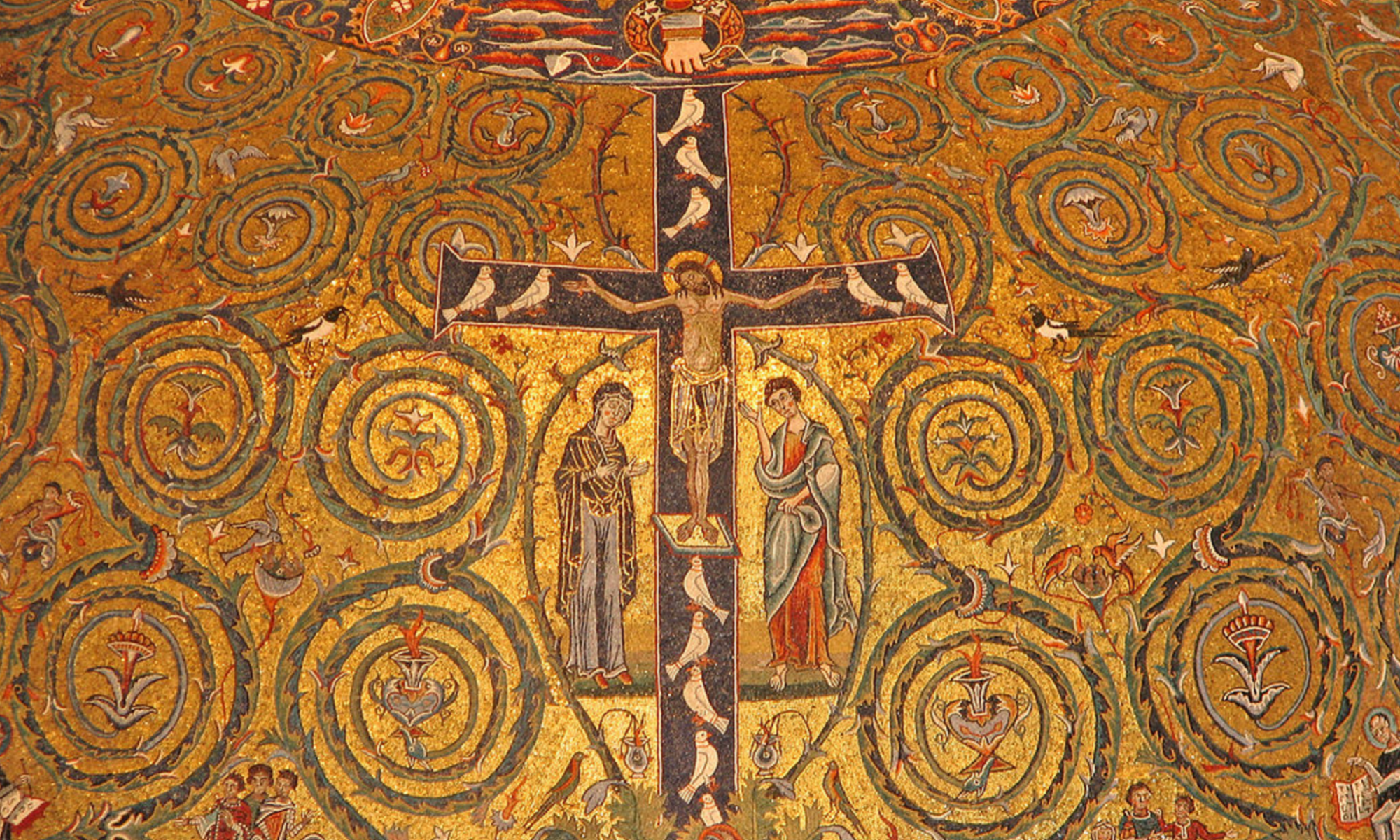
It is very much like the story told in the Pixar film Encanto. As with the Madrigal family there, it can be terrifying when the cracks of our façade begin to show, and the “identity” we had falsely propped gets exposed and collapses. But it’s always an opportunity to access the living God anew and remember who we really are. We get to go to the Cross and drink from the life-given stream that flow from the pierced heart of Jesus. He is the Good Shepherd who promises to lead us into more abundant life.
Yes, there is a river that flows through the Heavenly City. That river, too, is beautiful and dangerous. I ache for it and avoid it. That river runs through my divided heart, much like the river that divides my home town.
I am from the river.
